

Gloria (from Mass in B-flat): SATB Choral Octavo
From Mass in B-flat
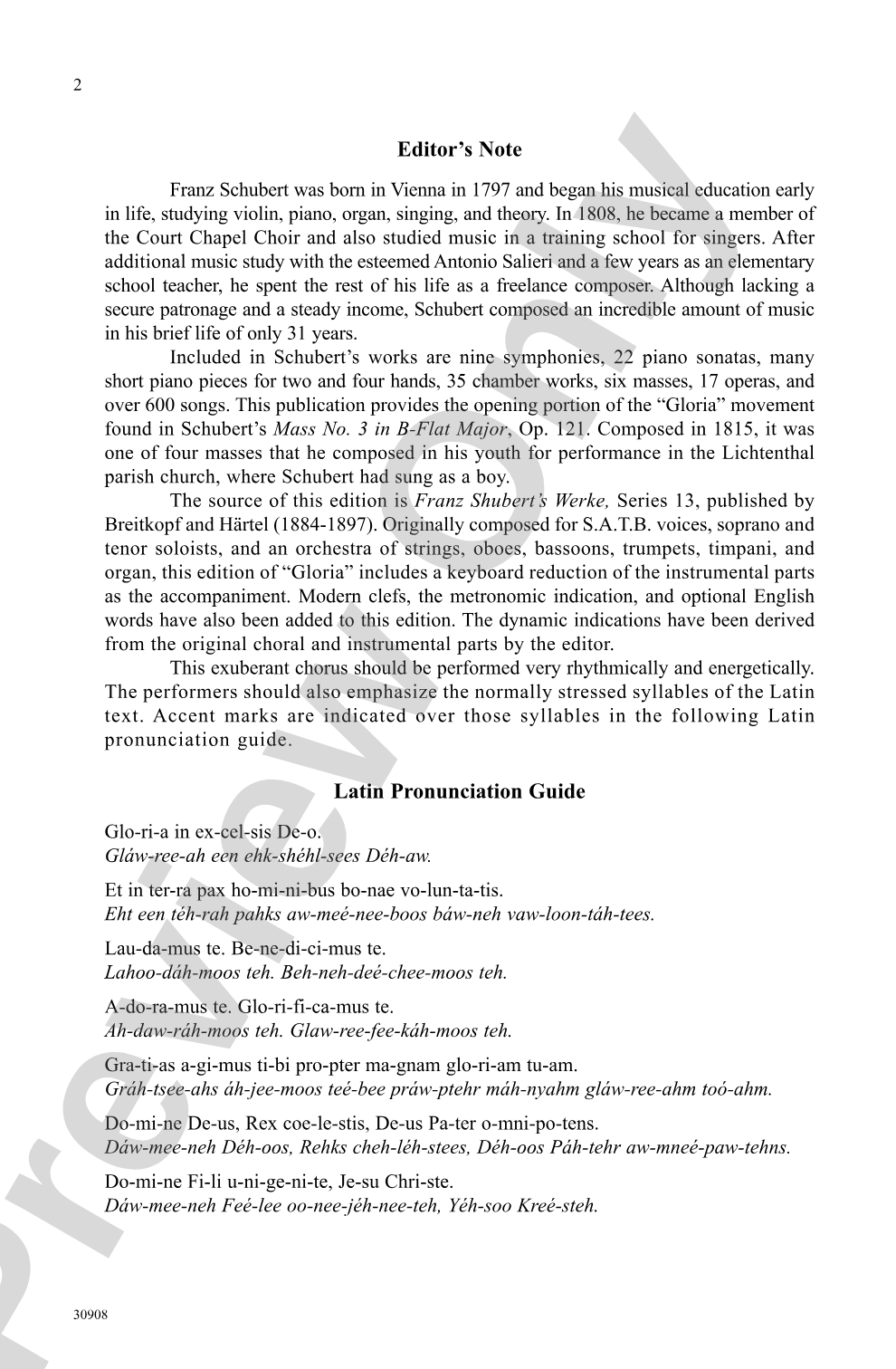
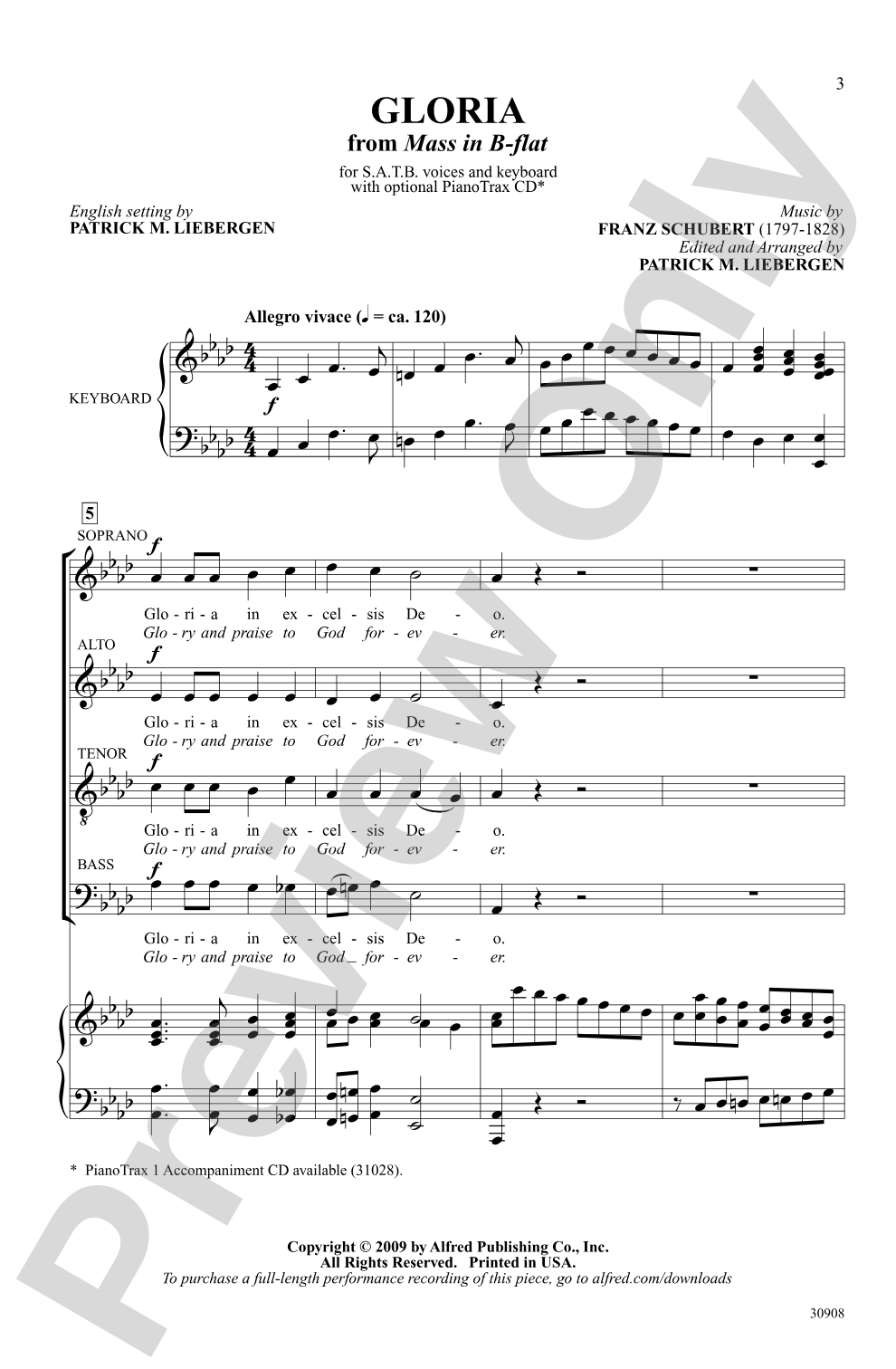
Music by Franz Schubert / ed. and arr., with English Setting, Patrick M. Liebergen
Item: 00-PO-0000704
$1.75
Minimum order quantity: 20 copies
Pickup currently not available
Description
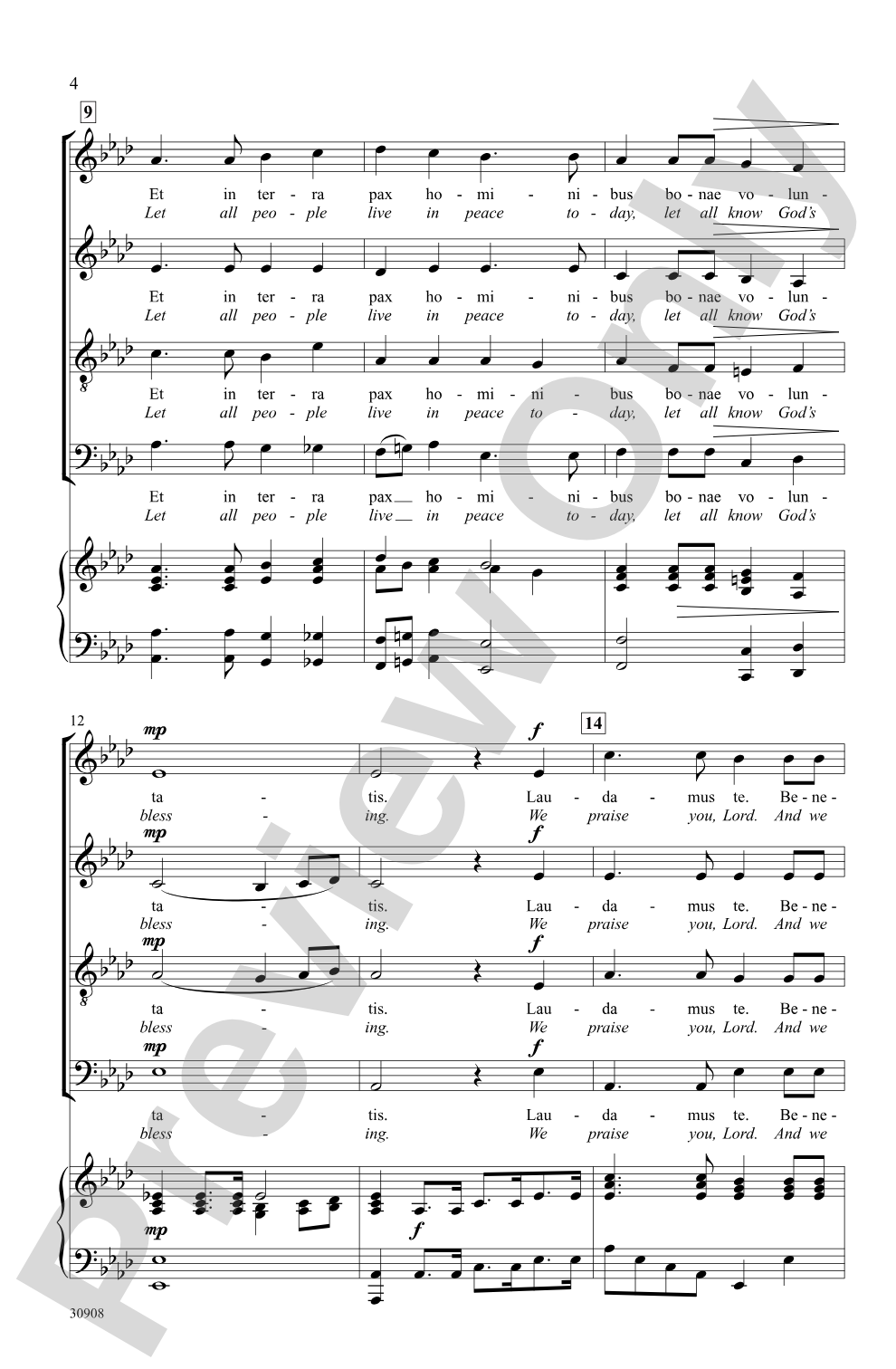
This triumphant chorus, composed by Schubert when he was just 18 years old, has been masterfully edited and arranged for today's choirs. Offers opportunities for Romantic-era choral singing, as well as two optional solo or small ensemble features for your most accomplished voices. Accompaniment included on PianoTrax 1 CD (00-31028).


Gloria (from Mass in B-flat): SATB Choral Octavo isn't in MakeMusic Cloud just yet...but it could be. Let us know you'd like to see it, and you'll help shape what comes next. In the meantime, start a free trial and dive into thousands of interactive titles your students can play along with today.
Request This Title
Tell us you want it.
Start Your Free Trial
Explore everything that's ready to play right now.
Sample Audio
1
Audio File
--:--
0:00
0:00
Sample Video
No sample videos found.
Additional Details
Series:
Alfred Choral Designs
Publisher:
Alfred Music
Page Count:
12
SKU:
00-PO-0000704
More about this title
About the Composer: Franz Schubert
Franz Schubert (1797-1828) composed this Mass in B-flat at eighteen, already demonstrating the harmonic sophistication and melodic gift that would define his later output. Though he lived only thirty-one years, Schubert left behind a vast catalog of sacred works, symphonies, chamber music, and songs that bridged Classical form with Romantic expression.
Schubert's sacred music occupies a unique place in the repertoire. His masses blend the liturgical demands of the form with deeply personal harmonic language and moments of striking emotional depth. This Gloria showcases his gift for writing singable lines that feel both natural and inspired, making his work particularly rewarding for choirs at intermediate and advanced levels.
Why we love this
This arrangement brings one of the Romantic era's most jubilant sacred choruses within reach of choruses that might find the full mass overwhelming. The built-in flexibility, with optional solos for soprano and mezzo-soprano, lets you feature developing singers without compromising the piece's grandeur, and the straightforward SATB voicing ensures clean part singing even during the most energetic passages.
What to expect
Triumphant and luminous, this Gloria radiates the kind of joy and confidence that only Schubert seems to capture. Soaring melodic lines sit comfortably for singers while the underlying harmonies shimmer with warmth, creating moments of exultation that feel both intimate and grand.
Who it's for
Intermediate to advanced SATB choirs seeking substantial Romantic-era sacred repertoire that doesn't require a full orchestral arrangement. This works equally well for concert choirs, church choirs with solid fundamentals, and college or community choruses looking to program a recognized masterwork.
How to get the most out of it
- Shape the repeated text phrases with subtle dynamic variation rather than literal repetition. The Gloria's architecture relies on textual and harmonic repetition, so small changes in intensity and color on repeated sections maintain momentum and keep the listener engaged.
- Balance the alto line carefully in the fuller passages. Schubert sometimes places important harmonic material in the second sopranos and altos, and these voices must cut through without pushing the blend.
- Prepare the optional solo sections well in advance. Whether you use them or not, having singers ready with both the solo and tutti versions prevents last-minute scrambling and allows you to make the choice based on your ensemble's strengths.
How to use it
Program this as a concert centerpiece or as part of a sacred music showcase. Its twelve-page length and brisk tempos make it an ideal anchor for a program mixing shorter motets, allowing audiences to experience a substantial work without dominating the entire set. It also serves well in liturgical settings where a joyful, confident expression of praise is needed.
Skills your students will build
- Singing idiomatic Romantic-era phrasing with period-appropriate text expression
- Balancing solo and ensemble roles within a single piece
- Managing sustained singing at dynamic levels with proper breath support
- Interpreting harmonic language characteristic of early-nineteenth-century sacred music