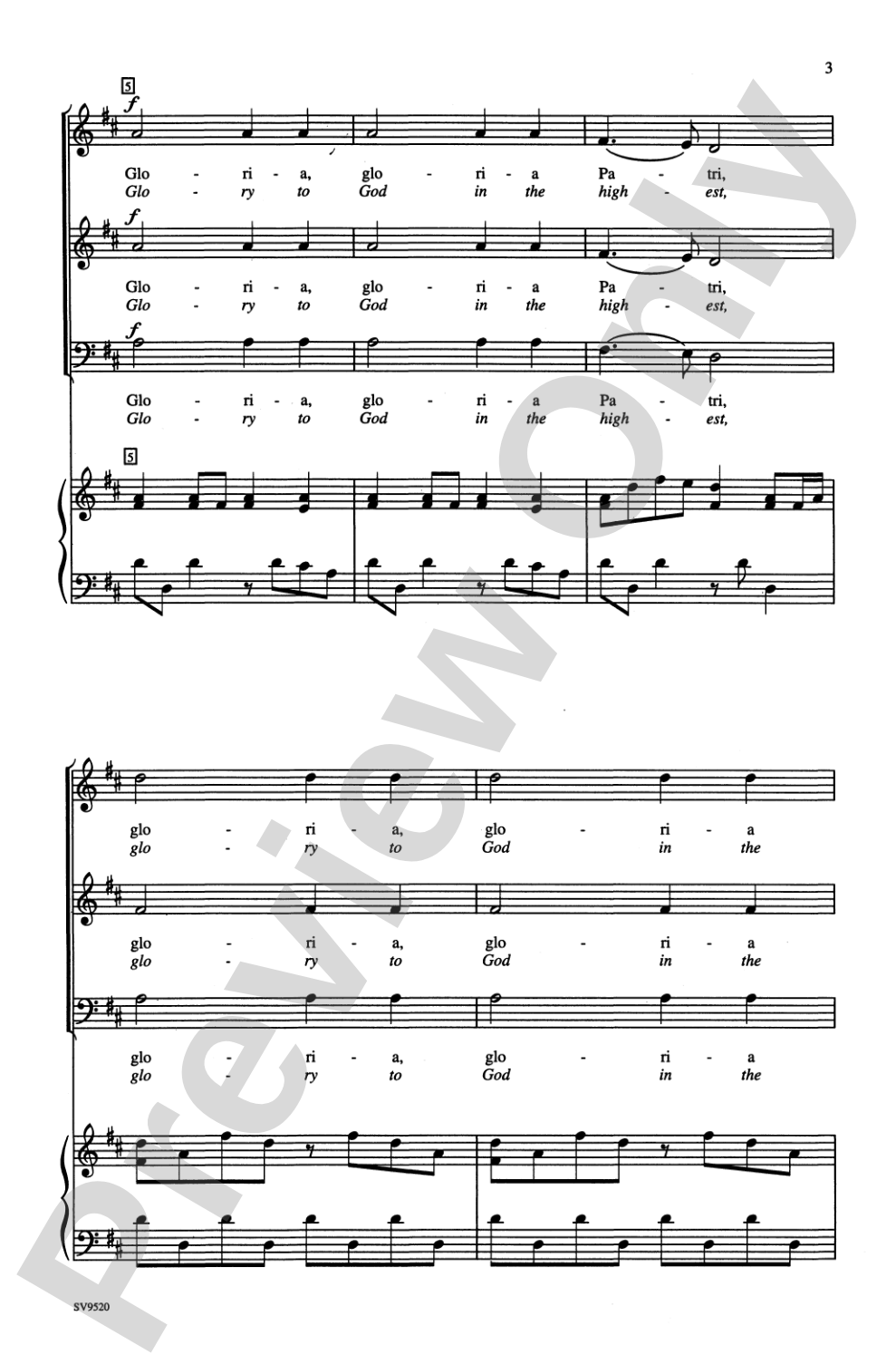
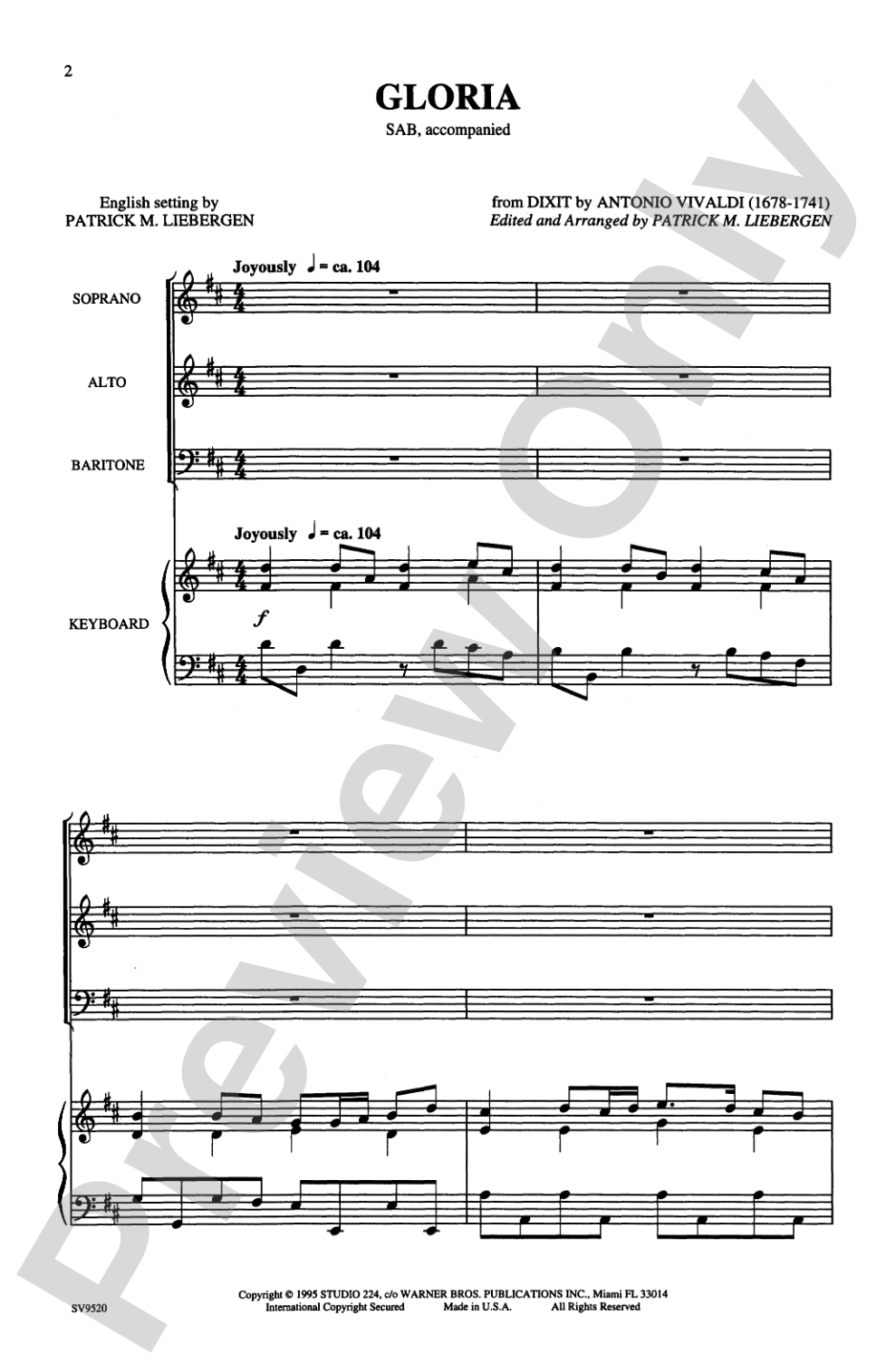
Gloria Sheet Music Preview

Gloria: SAB Choral Octavo

From Dixit

By Antonio Vivaldi / arr. Patrick M. Liebergen

Level: Moderate

Item: 00-PO-0005237

Digital Download
$2.25

Minimum order quantity: 20 copies

Description
This Gloria is from Vivaldi's Dixit. It's up-tempo, fun to sing, and has much of the same musical flavor as Vivaldi's better known work. Sing it in English or Latin. A great work for contest or festival.

Gloria: SAB Choral Octavo isn't in MakeMusic Cloud just yet...but it could be. Let us know you'd like to see it, and you'll help shape what comes next. In the meantime, start a free trial and dive into thousands of interactive titles your students can play along with today.

Sample Audio
No sample audio found.
Sample Video
Additional Details
Series: Alfred Archive Edition: Studio PR Catalog
Publisher: Alfred Music
Page Count: 8
SKU: 00-PO-0005237

More about this title

About the Composer: Antonio Vivaldi

Antonio Vivaldi (1678-1741) stands as one of the Baroque era's most prolific and inventive composers. A Venetian priest and virtuoso violinist, he created hundreds of works across nearly every genre, from concertos and operas to sacred choral music. His ability to craft memorable melodies, energetic rhythms, and vivid orchestral colors made his music instantly recognizable and enormously popular during his lifetime and ever since.

Vivaldi's sacred works, including the Gloria and Dixit Dominus, showcase his gift for blending devotional text with theatrical flair. These pieces balance the solemnity of liturgical music with the vigor and drama that defined his instrumental writing. For choral directors, his sacred output offers accessible entry points into Baroque style without sacrificing musical sophistication or performer engagement.

Why we love this

Vivaldi's Gloria has long been a choral favorite, and this SAB arrangement opens that Baroque energy to more singers while preserving the piece's infectious character. Liebergen's voicing sits comfortably in the middle range, allowing younger ensembles or mixed groups with limited soprano depth to deliver the drama and forward motion that make this work so satisfying. The bilingual text option (English or Latin) lets you choose the performance language that best fits your concert context.

What to expect

Celebratory and luminous, this Gloria radiates Vivaldi's characteristic joy and optimism. Soaring melodic lines dance over a harmonic foundation that feels both grounded and uplifting, creating the sense of a joyful procession or praise. The bright, up-tempo character invites singers to feel the music's momentum and lift.

Who it's for

This arrangement suits choirs with moderate skill who want to perform a recognized masterwork without the complexity of a full SATB score. SAB voicing makes it ideal for middle school and high school ensembles, community choirs, and church choirs seeking repertoire that sounds substantial without requiring advanced reading or range.

How to get the most out of it

  • Keep the tempo brisk but controlled. This piece thrives on rhythmic drive, but rushing sacrifices clarity in the text and articulation that define Baroque style.
  • Shape the phrases with attention to the text; Vivaldi's melodies often align with natural speech patterns and dramatic peaks in the liturgical text.
  • Balance the three parts so the middle voices (altos and tenors) aren't buried. The harmonic foundation they provide makes the sopranos soar more effectively.
  • Consider using light, crisp articulation on repeated notes and scale passages to capture the character of Baroque instrumental writing translated to voices.

How to use it

Program this as a festival or contest selection where you want to showcase both musicality and energy. It pairs beautifully with other shorter sacred works as part of a thematic concert exploring Baroque sacred music, or use it as a standalone opening number that immediately engages the audience with its infectious spirit.

Skills your students will build

  • Singing in Baroque style with appropriate phrasing and articulation
  • Balancing three-part harmony with clear voice independence
  • Interpreting text in both English and Latin with musical intention
  • Sustaining ensemble rhythmic cohesion in fast-moving passages
  • Reading and performing at moderate difficulty level with confidence

You May Also Like