
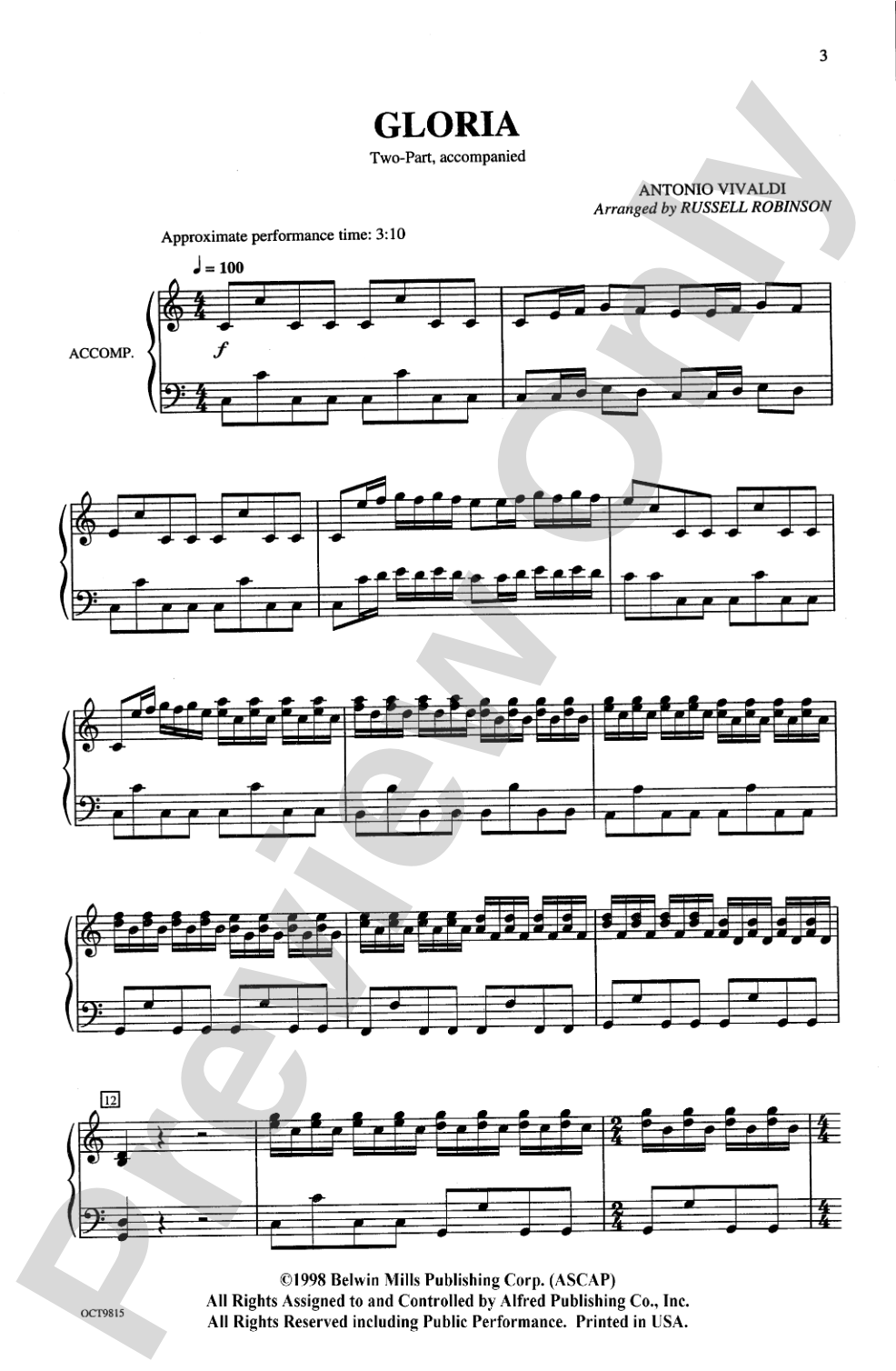
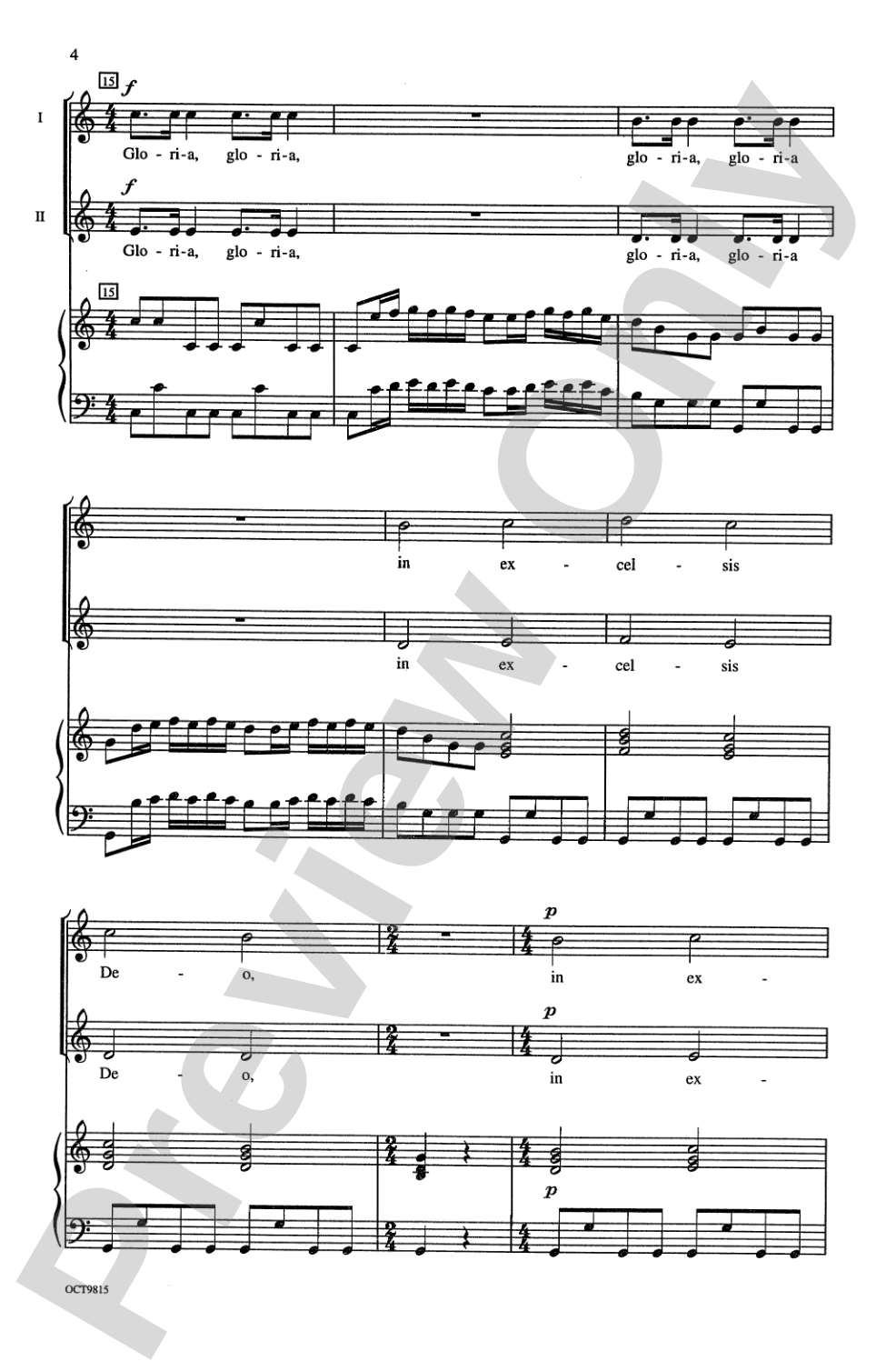

Gloria: 2-Part Choral Octavo
Music by Antonio Vivaldi / arr. Russell Robinson
Item: 00-PO-0005154
$2.25
Minimum order quantity: 20 copies
Pickup currently not available
Description
Your developing choirs may now sing this exceptional masterwork from Vivaldi. Dr. Russell Robinson has captured the quality of the original work while bringing it within the reach of younger choirs. Improve any concert with this extraordinary addition to your repertoire!


Gloria: 2-Part Choral Octavo isn't in MakeMusic Cloud just yet...but it could be. Let us know you'd like to see it, and you'll help shape what comes next. In the meantime, start a free trial and dive into thousands of interactive titles your students can play along with today.
Request This Title
Tell us you want it.
Start Your Free Trial
Explore everything that's ready to play right now.
Sample Audio
No sample audio found.
Sample Video
No sample videos found.
Additional Details
Series:
Alfred Archive Edition: Belwin Festival Series
Publisher:
Alfred Music
Page Count:
12
SKU:
00-PO-0005154
More about this title
About the Composer: Antonio Vivaldi
Antonio Vivaldi (1678-1741) stands as one of the Baroque era's most prolific and inventive composers. A master of instrumental concerto and sacred vocal music alike, Vivaldi wrote over 600 works across multiple genres, establishing harmonic and structural conventions that would influence generations of composers.
Vivaldi's sacred music draws its power from direct emotional expression and virtuosic writing. His Gloria, a multi-movement setting of the liturgical text, exemplifies his gift for combining accessible melodic invention with sophisticated harmonic language. For music educators, Vivaldi's work demonstrates how clarity of voice-leading and memorable thematic material can sustain even complex musical ideas.
Why we love this
Robinson's arrangement strips away nothing essential from Vivaldi's architectural vision while making the score entirely playable for developing singers. The result feels like Vivaldi's own work, not a reduction. Your singers encounter genuine Baroque counterpoint and harmonic movement without drowning in doubled parts or padding.
What to expect
Celebratory and luminous. Vivaldi's Gloria opens with joy and maintains momentum through clear harmonic progressions that feel both ancient and immediate. Singers experience the satisfaction of singing real counterpoint while the familiar glory text anchors them to something sacred and ceremonial.
Who it's for
Developing 2-part choirs, middle school through early high school, who are ready for Baroque repertoire and the rhythmic precision it demands. Directors preparing contest or festival programs will find a work that elevates any concert without overextending vocal technique.
How to get the most out of it
- Maintain steady eighth-note motion in passages where the accompaniment drives forward; younger singers tend to rush when parts begin to overlap, so use your conducting pattern to anchor the pulse visually.
- Shape phrases by listening for the harmonic rhythm underneath. Vivaldi's chord changes are deliberate signposts; land gently on cadences to let the harmony speak.
- Balance the two voice parts by ear rather than dynamic marking alone. The upper line often carries the primary melody, but the lower voices complete harmonic functions that matter.
How to use it
Program this at the heart of a sacred music concert or as a standout during a festival appearance. The work pairs naturally with Renaissance motets or contemporary choral settings, creating a bridge between eras. Its 12-page length makes it substantial enough to anchor a program section without overwhelming a developing ensemble's rehearsal schedule.
Skills your students will build
- Reading 2-part counterpoint with independent melodic lines
- Sustaining Baroque harmonic language and functional harmony
- Executing eighth-note rhythmic precision in paired voice parts
- Shaping phrase arcs in music with clear harmonic signposts
- Balancing ensemble texture between melody and harmonic support