
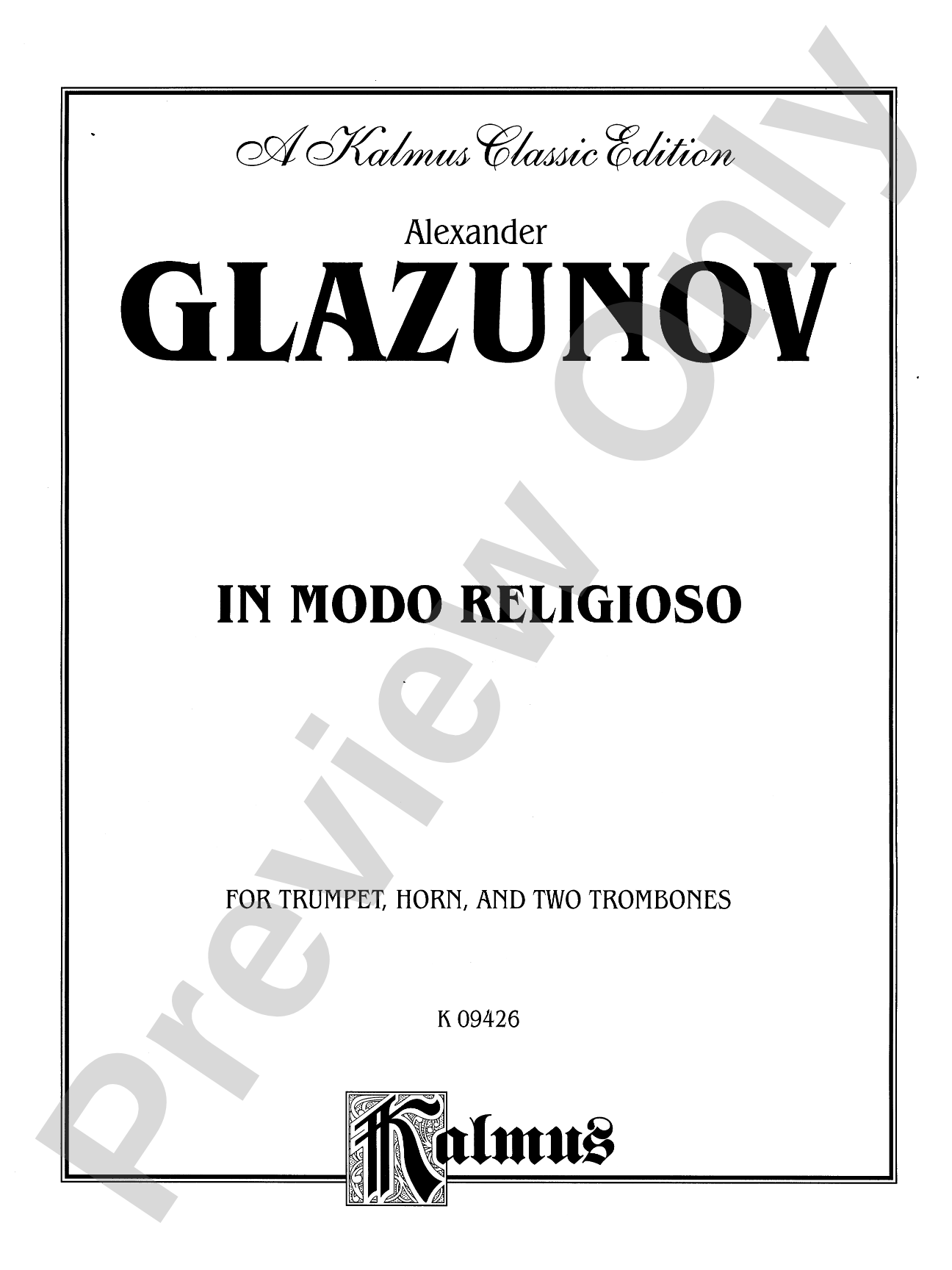
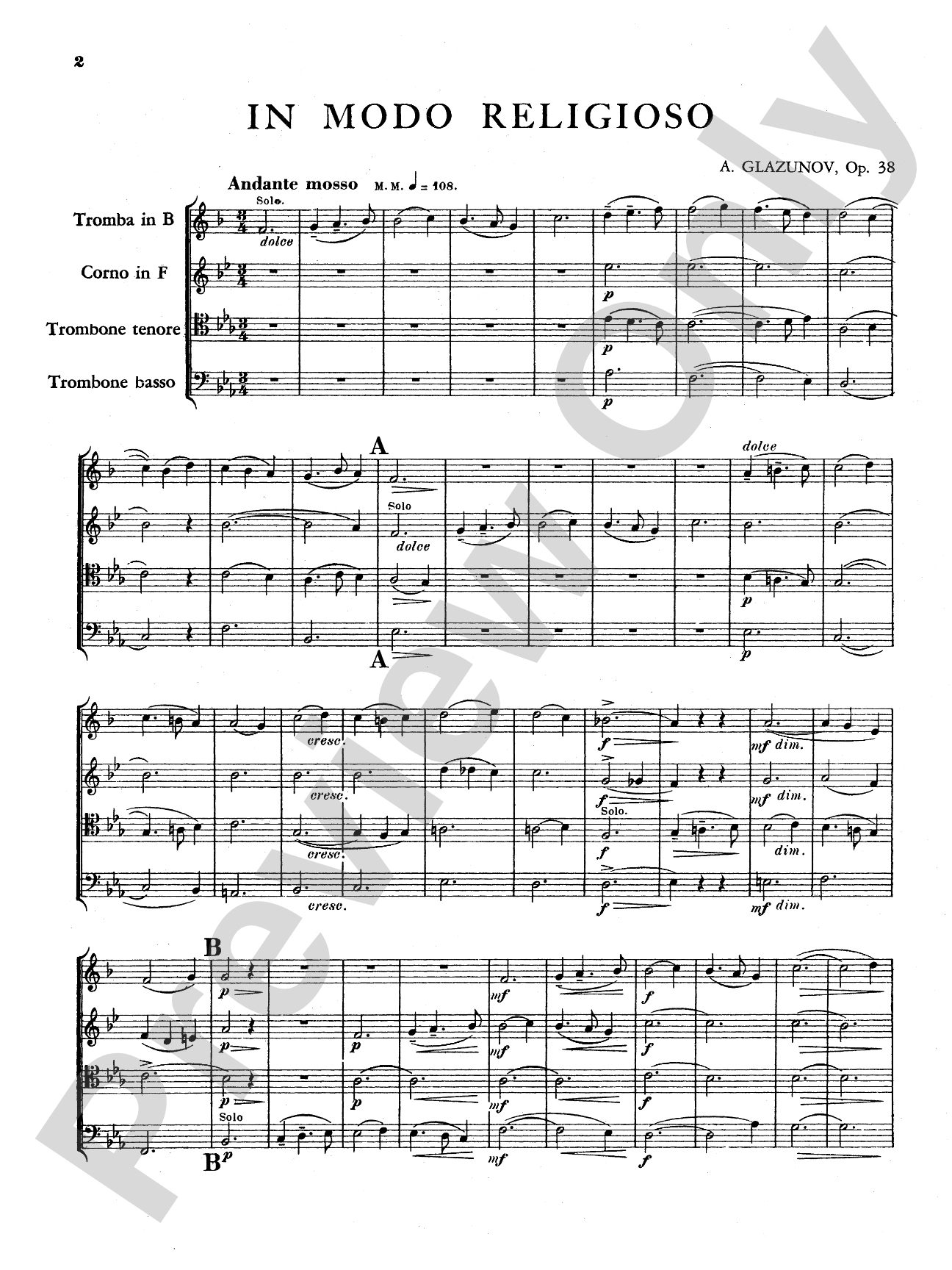
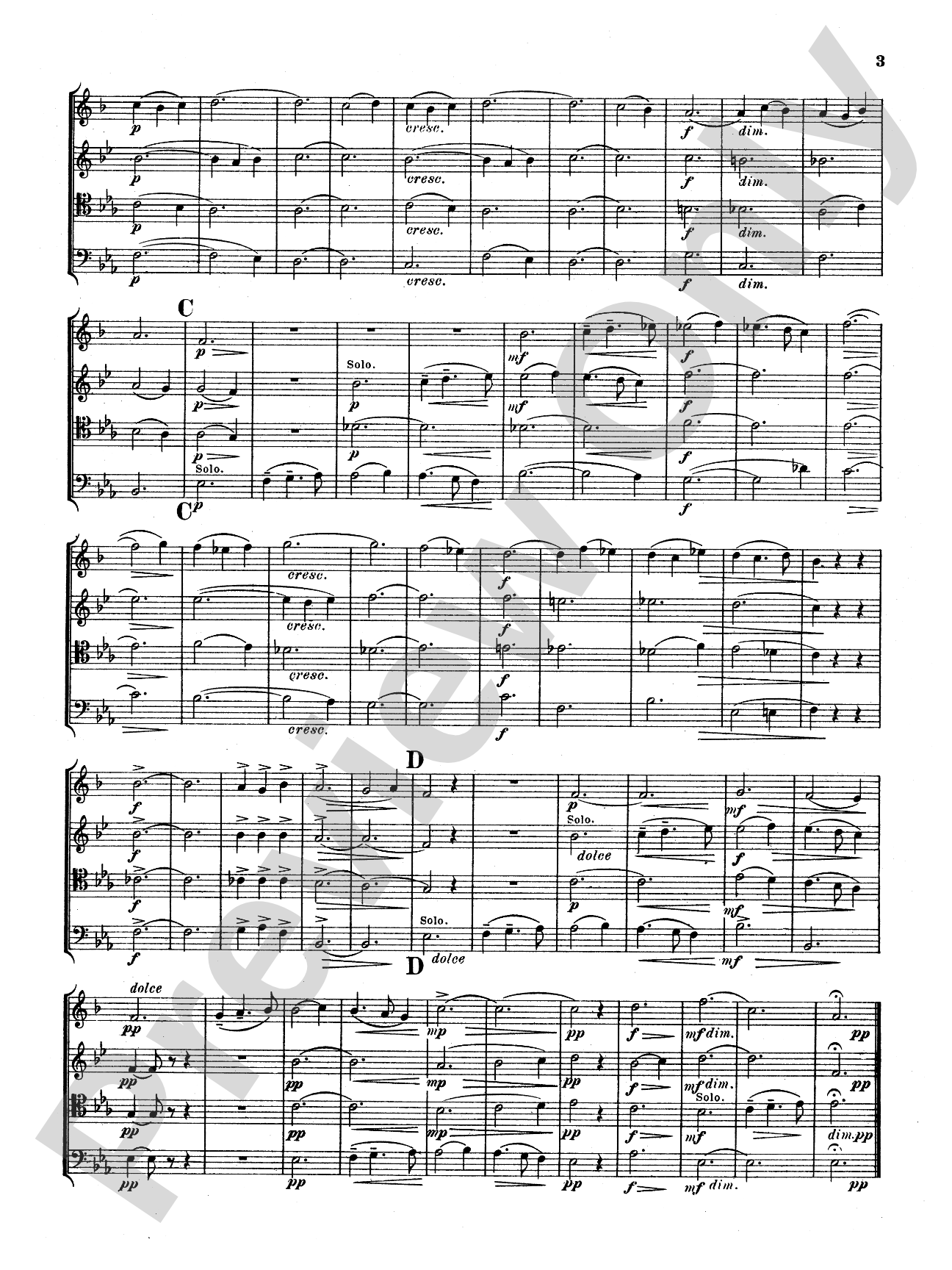


Glazunov: In Modo Religioso, Op. 38: Brass Quartet Book
By Alexander Glazunov
Item: 00-PK-0003737

$7.99
Pickup currently not available
Buy Extra Parts (Digital PDF Download)
| Product | Price | Quantity |
|---|---|---|
| Glazunov: In Modo Religioso, Op. 38 | $6.99 |
Parts Added to Cart!
Description
A quartet composed by Alexander Glazunov for Trumpet, Horn, and two Trombones.


Don't just read it, hear it, play along with it, and watch your students grow with it. In MakeMusic Cloud, Glazunov: In Modo Religioso, Op. 38: Brass Quartet Book comes alive with professional accompaniment, adjustable tempo, and built-in practice tools that turn solo practice into real progress.
Open in the Player
Jump straight in and assign it today.
Start Your Free Trial
Open this title and explore the full library in minutes.
Sample Audio
No sample audio found.
Sample Video
No sample videos found.
Additional Details
Series:
Kalmus Edition
Publisher:
Alfred Music
Page Count:
8
SKU:
00-PK-0003737
More about this title
About the Composer: Alexander Glazunov
Alexander Glazunov (1865-1936) was a Russian composer whose prolific output bridged the Romantic era and early 20th century. A student of Nikolai Rimsky-Korsakov, he inherited the Russian nationalist tradition while developing a distinctive voice marked by lyrical melody, rich orchestration, and formal clarity. His instrumental works span symphonies, concertos, ballets, and chamber music, all characterized by craftsmanship and accessibility without compromise to musical substance.
Glazunov's chamber works reveal a composer equally at home in intimate settings as in the concert hall. His brass writing shows particular understanding of the medium's expressive range, balancing the grandeur and weight of brass timbres with refined melodic writing and sophisticated harmonic language. Educators and performers value his music for its combination of technical interest and genuine musical substance.
Why we love this
This quartet sits in that rare space where the writing is genuinely rewarding for advanced players but also pedagogically sound. Glazunov's melodic gift ensures that the parts sing rather than merely accompany, and the formal architecture gives players a clear sense of musical narrative. The spiritual character of the work ("In Modo Religioso" means "in a religious manner") lifts it beyond technical exercise into genuine artistic expression.
What to expect
Solemn and sustained, with an almost liturgical quality that rewards patient, introspective playing. The work radiates quiet dignity and earnestness, moving through carefully shaped phrases that feel both inevitable and intimate. There is no flash here, only the kind of musical substance that grows richer with repeated hearings.
Who it's for
Advanced brass quartets seeking substantial repertoire beyond the usual European salon pieces and student compositions. This work serves conductors programming concerts that value artistic depth and performers ready to approach brass music with the interpretive maturity typically associated with string quartets.
How to get the most out of it
- Treat the principal melodic voice with operatic phrasing; this is lyrical writing that demands singing tone, not declamation, even in a brass context.
- Balance the harmonic voices carefully so that inner parts support rather than obscure the primary melody. Test your balance at slow tempos before adding realistic concert speed.
- The reverent character asks for deliberate control of dynamics and articulation. Avoid letting the piece drift into mechanical predictability by varying subtle shadings of tone and breath placement across repeated sections.
- Coordinate entrances with precision even in slower passages; any sloppiness in attacks will undermine the spiritual gravity of the work.
How to use it
Position this as a contemplative centerpiece in a concert that might otherwise lean toward lighter brass fare or larger ensemble works. It also serves perfectly as an opener that establishes a serious artistic tone before moving into other repertoire. The brevity and emotional weight make it ideal for chamber recitals, liturgical settings, or educational concerts emphasizing musical substance over novelty.
Skills your students will build
- Balancing inner harmonic voices while supporting a lyrical melodic line
- Sustaining tone quality and intonation across extended passages in a harmonic context
- Shaping longer phrases with intelligent breath placement and dynamic control
- Ensemble coordination in slow, reverent tempos where every entrance and transition is audible