
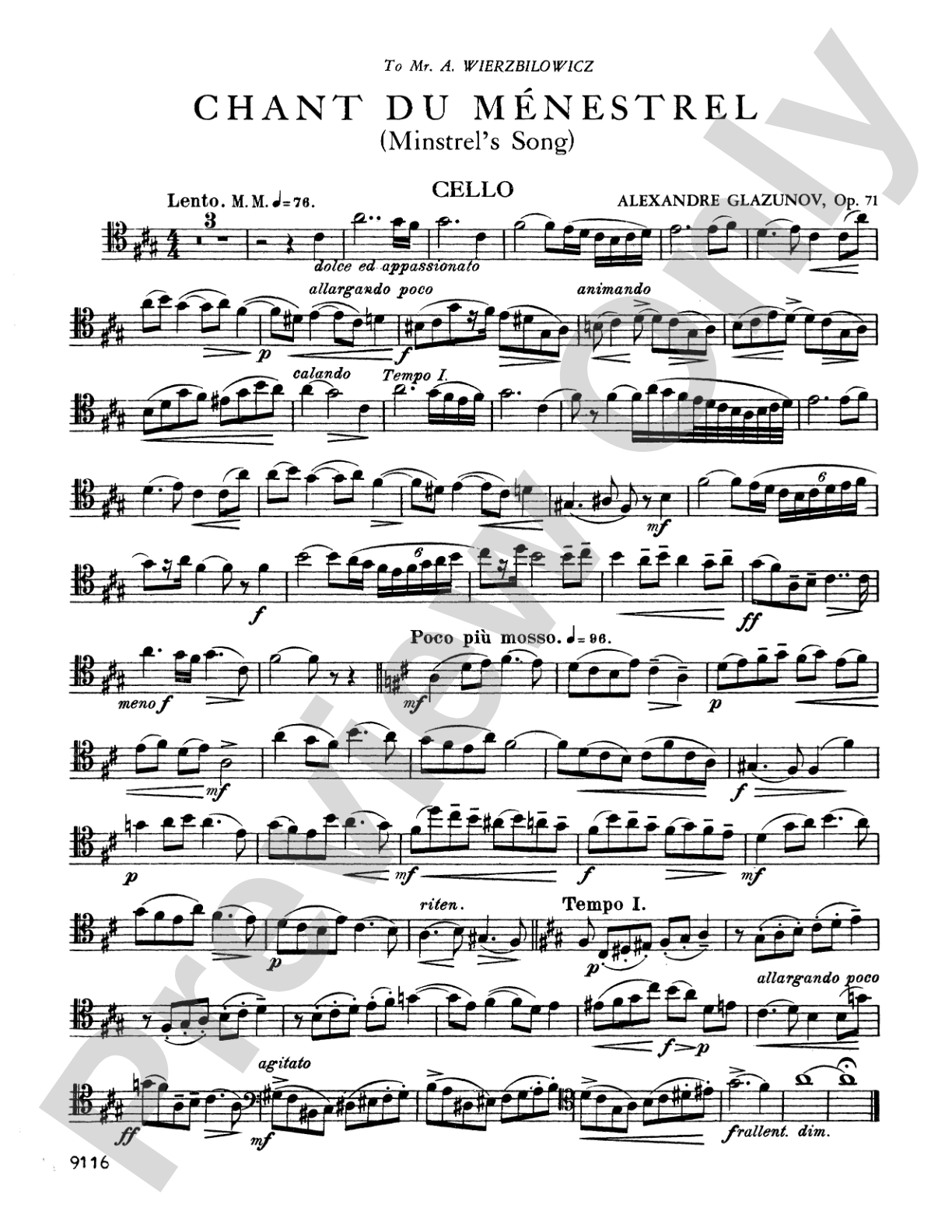

Glazunov: Chant du Ménestrel, Op. 71: Cello Book
By Alexander Glazunov
Item: 00-PK-0003688

$7.99
Pickup currently not available
Buy Extra Parts (Digital PDF Download)
| Product | Price | Quantity |
|---|---|---|
| Glazunov: Chant du Ménestrel, Op. 71 | $2.99 | |
| Glazunov: Chant du Ménestrel, Op. 71 | $2.99 |
Parts Added to Cart!
Related Items
Chant du Menstrel, Opus 71: Cello Book |
$7.99
|
View |
Description
A Cello solo with Piano Accompaniment composed by Alexander Glazunov.


Don't just read it, hear it, play along with it, and watch your students grow with it. In MakeMusic Cloud, Glazunov: Chant du Ménestrel, Op. 71: Cello Book comes alive with professional accompaniment, adjustable tempo, and built-in practice tools that turn solo practice into real progress.
Open in the Player
Jump straight in and assign it today.
Start Your Free Trial
Open this title and explore the full library in minutes.
Sample Audio
No sample audio found.
Sample Video
No sample videos found.
Additional Details
Series:
Kalmus Edition
Publisher:
Alfred Music
Page Count:
9
SKU:
00-PK-0003688
More about this title
About the Composer: Alexander Glazunov
Alexander Glazunov (1865-1936) was a Russian composer who bridged the Romantic and early 20th-century musical worlds with exceptional technical mastery and lyrical gifts. His prolific output includes eight symphonies, concertos for virtually every major instrument, and a body of salon and character pieces that remain staples of the recital repertoire. Glazunov's music combines the orchestral richness of the Russian tradition with the formal clarity and melodic elegance of Western European models, making his works both structurally sophisticated and deeply expressive.
Why we love this
The Chant du Ménestrel sits comfortably in the sweet spot between showpiece and genuine artistry, offering cellists a work with real substance that doesn't demand superhuman virtuosity. Glazunov's gift for spinning a lyrical melody without excess sentimentality shines here, and the piano part remains genuinely supportive rather than overshadowing, making this ideal for recitals where the focus belongs squarely on the soloist. Contest and festival judges respect this piece because it reveals musicianship: tone control, phrasing maturity, and interpretive presence all register immediately.
What to expect
The Chant du Ménestrel evokes the gentle nostalgia of a traveling musician's song, with a melody that unfolds naturally over a supportive harmonic foundation. The character is introspective and graceful, never bombastic, with moments of tender lyricism interrupted by brief surges of urgency that intensify rather than disrupt the intimate mood. Its emotional landscape feels timeless in a distinctly Russian way: elegiac without being tragic, forward-moving without urgency.
Who it's for
This solo is crafted for cellists working at the intermediate-advanced level who have solid fundamentals and the interpretive maturity to honor Glazunov's Romantic sensibility. It functions equally well as a recital showcase, a competition choice, or a festival performance piece. Teachers seeking a substantial but manageable work that develops tonal expressivity and phrasing sophistication will find it endlessly rewarding.
How to get the most out of it
- Shape the opening melody with a warm, singing tone; Glazunov's line rewards legato playing and careful attention to breath points even though the cello breathes differently than the voice.
- Collaborate with your pianist on tempo flexibility in the developmental passages; the piece moves through subtle mood shifts that respond well to gentle rubato without losing forward momentum.
- Balance technical passages with their surrounding lyrical material; when the writing becomes more figural, keep the accompaniment subservient to the larger melodic arc.
- Invest in the cadenza sections with confidence; they're written idiomatically for the cello and demand both technical security and musical conviction to land effectively.
How to use it
Position this work on a recital alongside contrasting repertoire—perhaps a Bach suite movement or a contemporary piece—where its Romantic sensibility anchors the program without dominating it. It pairs naturally with other Russian salon works or with lyrical concertos from the standard repertoire. For festivals and competitions, it stands confidently in both traditional and contemporary-leaning programs.
Skills your students will build
- Singing vibrato and sustained tone control across longer phrases
- Interpretation of Romantic-era melody with period-appropriate phrasing
- Balance and sensitivity in ensemble playing with piano
- Technical fluency in moderate passages without sacrificing lyrical continuity
- Structural navigation of multi-section forms with contrasting character