
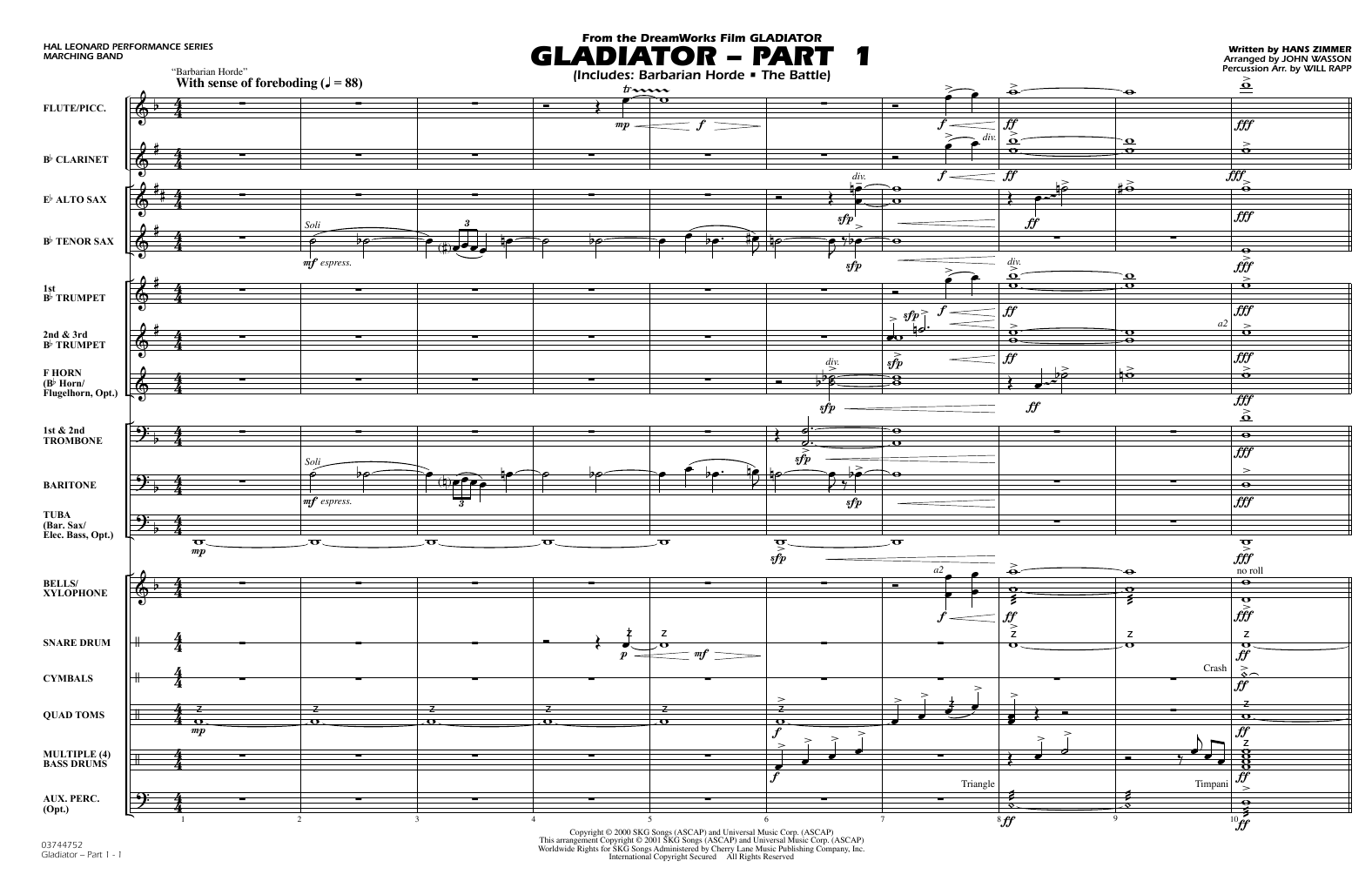

Gladiator Part 1 (arr. Rapp Wasson): Marching Band Conductor Score & Parts
By Hans Zimmer / Arranged by Will Rapp / Arranged by John Wasson
Grade: 3-4
Item: 35-PK01814248
$65.00
Pickup currently not available
Buy Extra Parts (Digital PDF Download)
Parts Added to Cart!
Description
The dramatic and powerful themes of Hans Zimmer helped define the action in this Academy Award-winning movie blockbuster. Skillfully adapted for the marching field by John Wasson and Will Rapp, here is a complete show based on this emotional music. Part 1 includes Barbarian Horde and The Battle. This opener starts out mysteriously before building to the flowing main theme. An intense percussion pattern leads to the exciting battle sequence that closes out this powerful arrangement.


Discover MakeMusic Cloud: thousands of interactive titles your students can play along with today.
Sample Audio
No sample audio found.
Sample Video
No sample videos found.
Additional Details
Publisher:
Hal Leonard
SKU:
35-PK01814248
More about this title
About the Composer: Hans Zimmer
Hans Zimmer stands among the most influential film composers of the past three decades, known for orchestral writing that balances grandeur with emotional depth. His work across action blockbusters, intimate dramas, and experimental scores has shaped how contemporary audiences experience music in cinema, making him an essential study for musicians interested in how instrumental music drives narrative and emotional stakes.
Why we love this
Zimmer's Gladiator themes carry the weight of genuine cinematic storytelling; Wasson and Rapp preserve that impact while making it playable and visceral for marching ensembles. The arrangement builds from mysterious tension into sweeping melodic lines, giving your band both the atmospheric opening and the payoff audiences expect. This is the kind of opener that captures attention before a single note fades.
What to expect
Barbaric energy and ancient conflict give way to sweeping orchestral grandeur. The writing moves from shadowy, unsettling textures into soaring, heroic melodies that feel both cinematic and timeless. By the battle's climax, your ensemble will feel the rush of conquest.
Who it's for
Marching bands at the Grade 3.5 to 4 level ready to tackle a show opener with real dramatic arc and contemporary film music appeal. This works equally well for programs seeking a single feature-worthy piece as for bands building a full Gladiator show concept.
How to get the most out of it
- Shape the mysterious opening section with deliberate dynamic control; the percussion pattern that follows should feel like an inevitable march toward conflict rather than an abrupt shift.
- Invest in the legit melody when it arrives. This is Zimmer's core theme, and it deserves the kind of sustained tone and phrasing that makes it soar above the rhythmic foundation.
- Balance the intensity of the battle sequence with clarity. Intricate percussion writing can blur if players rush; lock tempo early and trust the groove.
- Let the woodwinds breathe during sustained harmonic passages. Zimmer's orchestrations leave space for color, and that space matters on the field.
How to use it
This Part 1 opener creates an ideal entry point for a film music-focused show or a strong standalone competitive piece. Program it early in your set to establish tone and energy, or use it as a stepping stone into the full Gladiator narrative if your band plans to perform subsequent parts.
Skills your students will build
- Layering independent rhythmic patterns across sections while maintaining ensemble cohesion
- Sustaining expressive phrase shape at multiple dynamic levels
- Executing rapid articulation changes in percussion parts
- Responding to conductor cues that signal transitions between contrasting musical sections
- Balancing harmonic color in dense, contemporary orchestral textures