
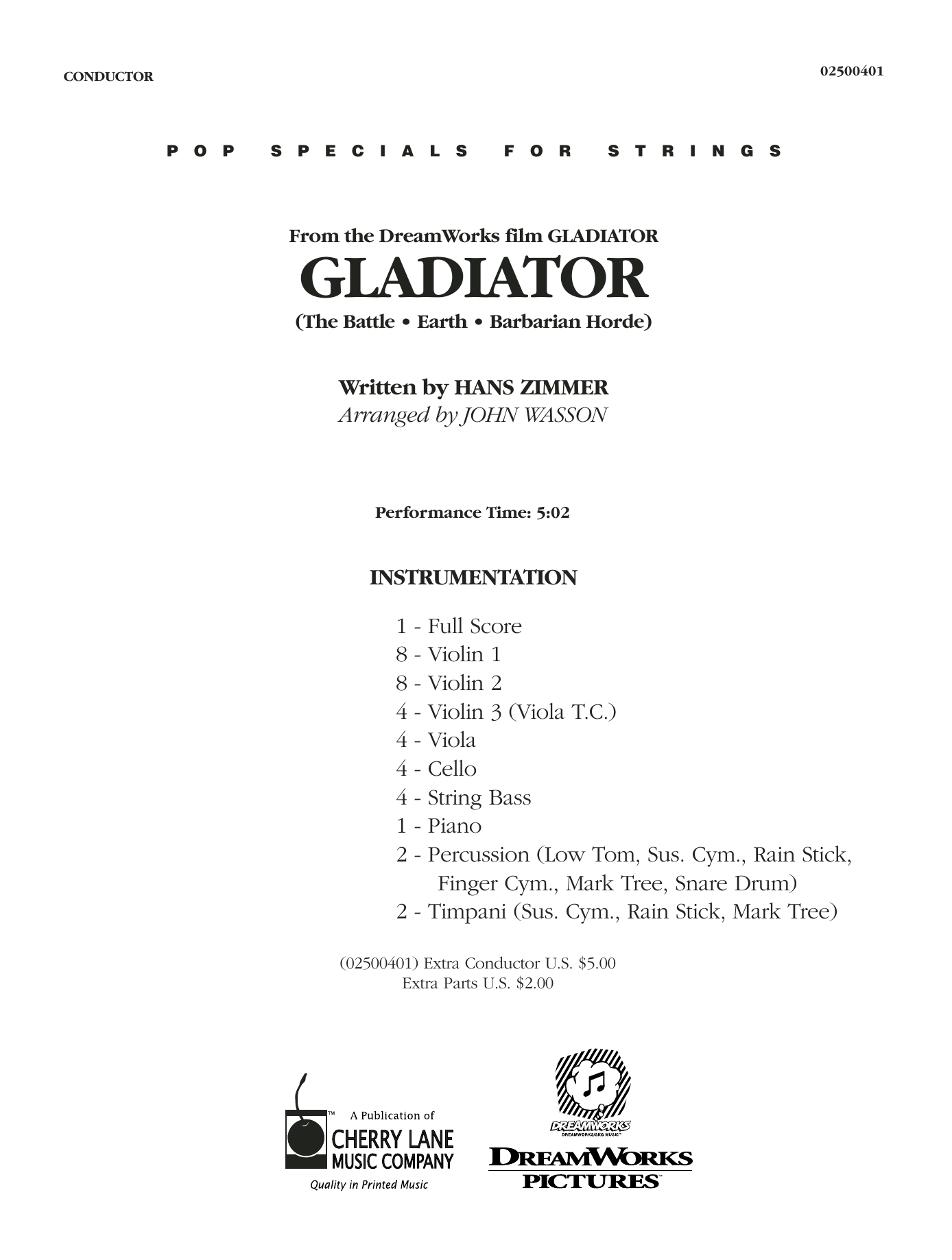

Gladiator (arr. John Wasson): String Orchestra Conductor Score & Parts
By Hans Zimmer / Arranged by John Wasson
Item: 35-PK01412231
$45.00
Pickup currently not available
Buy Extra Parts (Digital PDF Download)
Parts Added to Cart!
Description
John Wasson superbly arranges bold and dramatic music from this Oscar-winning film for strings. Your players will love the effective, programmatic style of this music and its rhythmic action sections. Outstanding!


Gladiator (arr. John Wasson): String Orchestra Conductor Score & Parts isn't in MakeMusic Cloud just yet...but it could be. Let us know you'd like to see it, and you'll help shape what comes next. In the meantime, start a free trial and dive into thousands of interactive titles your students can play along with today.
Request This Title
Tell us you want it.
Start Your Free Trial
Explore everything that's ready to play right now.
Sample Audio
No sample audio found.
Sample Video
No sample videos found.
Additional Details
Publisher:
Hal Leonard
SKU:
35-PK01412231
More about this title
About the Composer: Hans Zimmer
Hans Zimmer has shaped the sound of modern film for over three decades, composing scores that range from intimate character studies to sweeping historical epics. His work across genres reveals a composer equally comfortable with orchestral grandeur, electronic textures, and hybrid approaches that blur traditional boundaries. In the classroom, Zimmer's film scores offer invaluable models for understanding how instrumental writing creates narrative tension, emotional depth, and visceral impact.
Why we love this
Wasson's arrangement captures the raw kinetic energy of Zimmer's film score while staying firmly within the technical grasp of serious string players. The rhythmic drive and dramatic arc feel contemporary without sacrificing the sweeping, heroic quality that makes this music memorable. Your strings get to own material that feels important, not derivative.
What to expect
Cinematic drama written for strings, all swelling heroic lines and driving momentum. The arrangement channels the original's grandeur into textures that resonate in concert hall acoustics, with moments of aggressive rhythmic urgency balanced against soaring melodic passages that linger in the air.
Who it's for
String orchestras at the intermediate to advanced level will find material that challenges intonation and rhythmic precision without requiring soloistic virtuosity. Directors seeking contemporary concert repertoire that engages audiences and excites performers will recognize the immediate appeal of this film music arranged for ensemble.
How to get the most out of it
- Treat the rhythmic action sections as propulsive rather than metronomic. Allow slight breathing room at phrase boundaries to let the momentum build naturally across larger structural units.
- Balance the first violins' melodic statements with enough resonance from the lower strings that the arrangement sounds full rather than top-heavy.
- Mark cue points clearly for ensemble coordination during the programmatic shifts, particularly when the texture changes density or the rhythmic profile pivots.
How to use it
Position this as a centerpiece in a pops or film music concert where it can anchor a thematic program. The dramatic range and audience recognition also make it effective as a finale that sends the crowd out energized, or as the bookend to a program exploring how string writing creates narrative in contemporary contexts.
Skills your students will build
- Maintaining rhythmic precision in driving, syncopated figures
- Shaping sustained melodic lines with dynamic control
- Balancing ensemble texture when primary material sits in varying registers
- Responding to programmatic shifts in tempo and density