Glad To Be Unhappy Sheet Music Preview

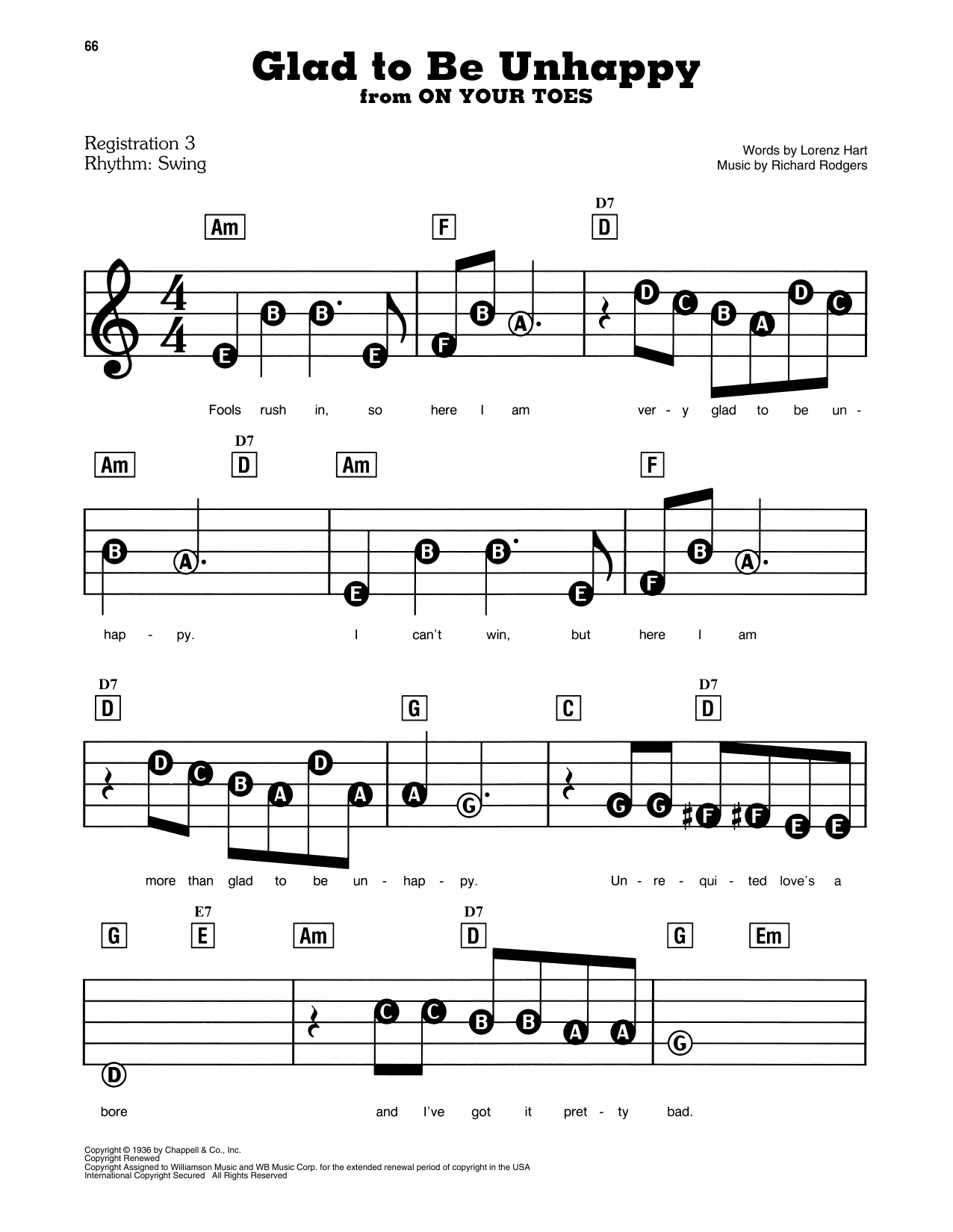
Glad To Be Unhappy: E-Z Play Today

Item: 35-DS00450592

Digital Download
$4.99
Description

Glad To Be Unhappy: E-Z Play Today isn't in MakeMusic Cloud just yet...but it could be. Let us know you'd like to see it, and you'll help shape what comes next. In the meantime, start a free trial and dive into thousands of interactive titles your students can play along with today.

Sample Audio
No sample audio found.
Sample Video
Additional Details
Publisher: Hal Leonard
Page Count: 2
SKU: 35-DS00450592

More about this title

About the Creator

Rodgers and Hart shaped the American songbook in ways that still resonate with musicians today. Their partnership produced some of jazz and theater's most enduring melodies, marked by sophisticated harmonic movement and emotionally nuanced lyrics that reward close listening.

Why we love this

The E-Z Play format makes this standard accessible without sacrificing the harmonic richness that makes "Glad To Be Unhappy" such a satisfying jazz vehicle. Students encounter authentic song changes and get to experience how a great melody can carry emotional weight through unconventional progressions.

What to expect

There's a bittersweet quality to this tune that sits between contentment and resignation. The melody carries itself with grace despite the somewhat melancholic harmony, creating space for expressive interpretation and emotional storytelling.

Who it's for

Piano students who have moved beyond lead sheet reading and want to dig into jazz standards with real harmonic substance. This works equally well for independent study or as part of a jazz history unit exploring the Great American Songbook.

How to get the most out of it

  • Pay attention to the lyrical arc when shaping phrases; the title's irony works best when you let the melody breathe through longer lines rather than mechanically marking beats.
  • Experiment with tempo flexibility in the bridge to reflect the song's emotional turning point, then return to a steady groove for the final A section.
  • Listen to classic interpretations to hear how different artists voice the chords and approach the comping patterns underneath the melody.

How to use it

Slot this into a jazz or American songbook recital where you want to feature a standard that appeals to both musicians and listeners. Its modest length makes it ideal for pairing with another tune of similar scope in a casual performance setting.

Skills your students will build

  • Reading jazz chord changes and voice leading
  • Interpreting swing rhythms and syncopation
  • Managing harmonic movement in the bridge section
  • Stylistic balance between melody and accompaniment

You May Also Like