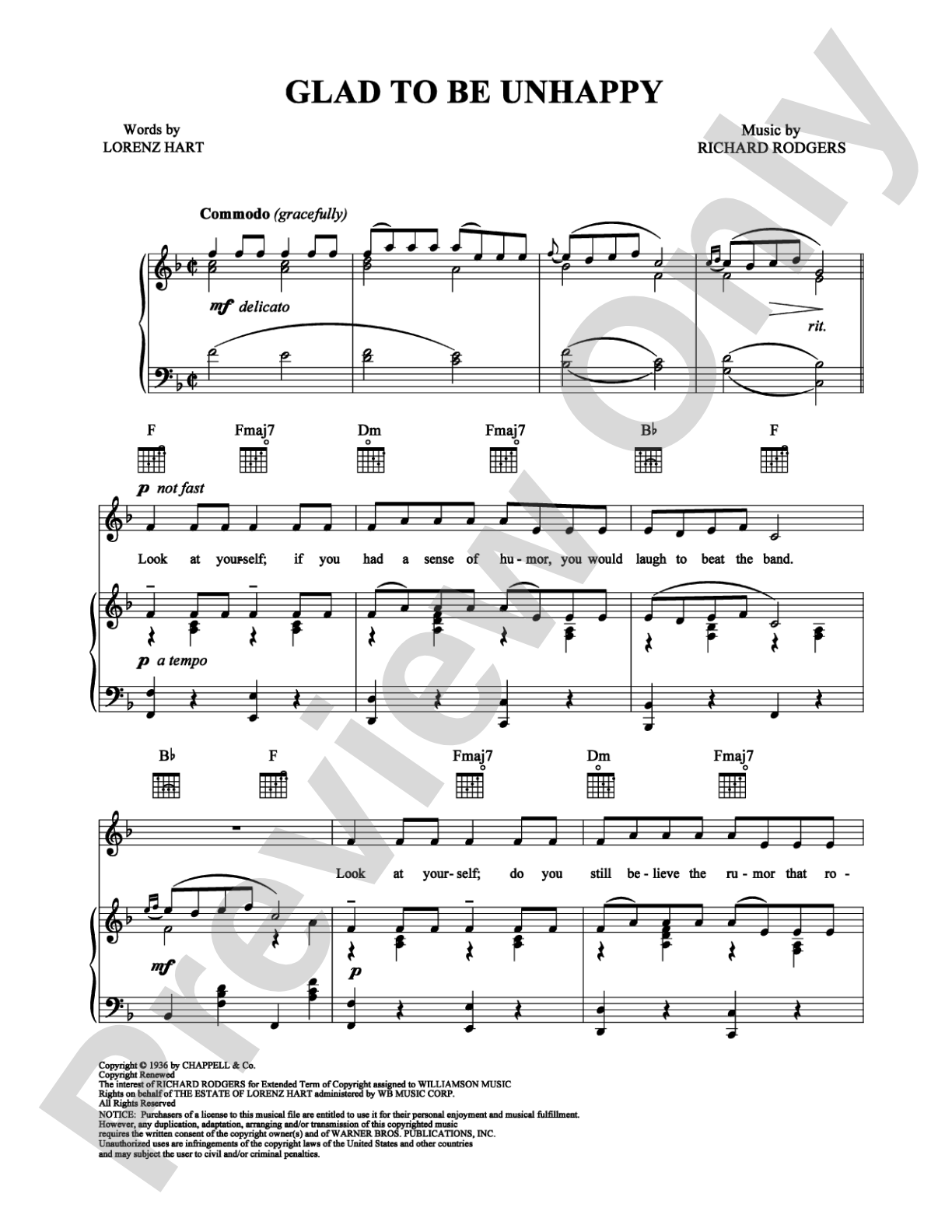
Glad to Be Unhappy: Piano/Vocal/Chords Digital Sheet Music

Glad to Be Unhappy: Piano/Vocal/Chords Digital Sheet Music

Richard Rodgers, Frank Sinatra, The Mamas and The Papas

Item: 00-PS-0004505

Digital Download
$3.99
Description

Glad to Be Unhappy: Piano/Vocal/Chords Digital Sheet Music isn't in MakeMusic Cloud just yet...but it could be. Let us know you'd like to see it, and you'll help shape what comes next. In the meantime, start a free trial and dive into thousands of interactive titles your students can play along with today.

Sample Audio
No sample audio found.
Sample Video
Additional Details
SKU: 00-PS-0004505

More about this title

About the Artist: Frank Sinatra

Frank Sinatra (1915-1998) shaped American popular singing across seven decades, from swing bandleader to solo artist to film star. His influence on phrasing, dynamics, and interpretive depth set the standard for vocal jazz and standards repertoire that music educators still reference when teaching expression and musicality.

Why we love this

This standard reveals the emotional architecture behind a deceptively simple title. The harmonic movement and melodic contour reward singers who dig into the lyrical paradox, making it an excellent teaching piece for students learning how to build dramatic tension through vocal line and accompaniment interplay.

What to expect

The title's irony sits at the heart of the piece: resignation mixed with defiance, loneliness softened by acceptance. The melody moves with a gentle inevitability, and the harmony carries enough chromaticism to create intrigue beneath what sounds, at first, like a simple love song.

Who it's for

Vocalists preparing standards repertoire for recital, jazz ensemble, or solo performance will find this a direct introduction to mid-twentieth-century songwriting craft. Pianists can use the lead sheet to develop improvisation skills and comping techniques, while vocalists learning the Great American Songbook benefit from a melody that rewards lyrical interpretation.

How to get the most out of it

  • Shape the melodic line through subtle dynamic shaping rather than obvious crescendos; let the harmony do much of the emotional work while your voice remains conversational.
  • Coordinate with the pianist on the chord voicings and rhythm section feel to establish whether you're aiming for a laid-back ballad or a more propulsive swing interpretation.
  • Pay close attention to phrase length and breathing; resist the urge to resolve too early or too dramatically at cadences.

How to use it

Include this in a recital program of standards or jazz vocal pieces, pairing it with other compositions from the Rodgers and Hart songbook for thematic cohesion. It also works well as a teaching demonstration of how chord changes and lyrical content align, bridging classical song study and jazz interpretation.

Skills your students will build

  • Reading chord symbols and understanding harmonic movement
  • Phrasing and breath management in extended melodic lines
  • Lyrical interpretation and emotional subtext
  • Jazz comping and accompaniment voicing (for pianist)
  • Coordination between voice and piano in a lead sheet format

You May Also Like