Give A Little Whistle (from Pinocchio) Sheet Music Preview

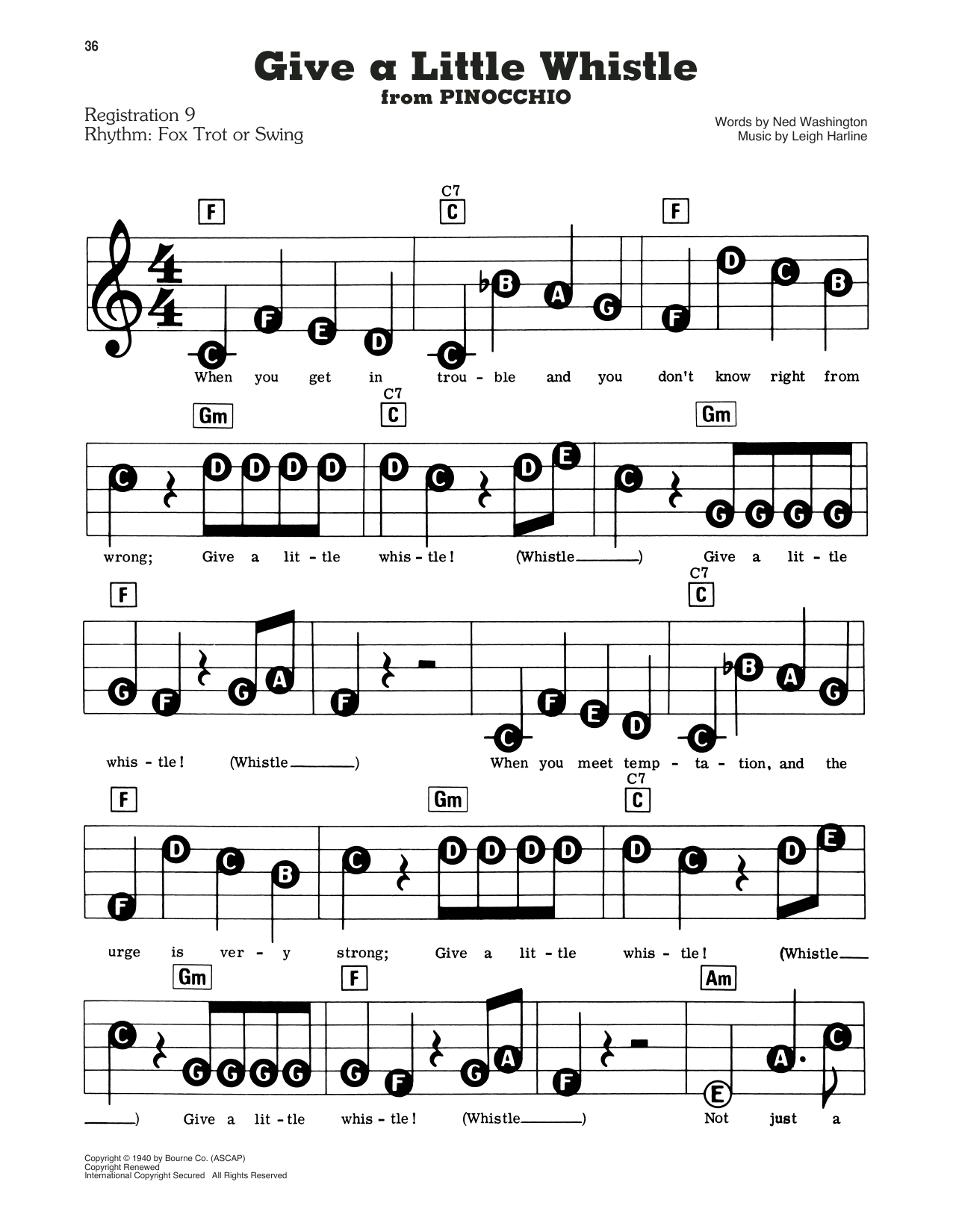
Give A Little Whistle (from Pinocchio): E-Z Play Today

Item: 35-DS00458690

Digital Download
$4.99

One moment…

One moment…

Description

Give A Little Whistle (from Pinocchio): E-Z Play Today isn't in MakeMusic Cloud just yet...but it could be. Let us know you'd like to see it, and you'll help shape what comes next. In the meantime, start a free trial and dive into thousands of interactive titles your students can play along with today.

Sample Audio
No sample audio found.
Sample Video
Additional Details
Publisher: Hal Leonard
Page Count: 2
SKU: 35-DS00458690

More about this title

About the Creator: Leigh Harline

Leigh Harline composed the score for Disney's 1940 animated film Pinocchio, creating some of the most enduring melodies in animation history. His gift for writing memorable, singable tunes in a classical idiom made him a natural fit for early Disney features, and his work on Pinocchio earned him an Academy Award nomination for Best Original Score.

Why we love this

This arrangement strips away nothing essential from the original melody while keeping the technical demands reasonable for early intermediate pianists. It's the kind of song that students instantly recognize and want to play, making it an effective tool for building enthusiasm without sacrificing musicianship.

What to expect

Optimistic and gently encouraging, this tune radiates the kind of straightforward cheerfulness that defined classic Disney animation. There's an infectious lightness to it, the musical equivalent of a friendly nudge toward doing the right thing.

Who it's for

Early intermediate pianists benefit most from this E-Z Play arrangement. Students developing their ability to balance melody and accompaniment, and those building confidence with straightforward harmonic progressions, will find this approachable and rewarding.

How to get the most out of it

  • Shape the melody phrase by phrase rather than playing it note to note; listen for where the tune naturally breathes and lets that guide your phrasing.
  • Keep the accompaniment light and rhythmically steady so the melody sits forward and remains the clear focal point.
  • Pay attention to any dynamic markings as guides for where the song wants to swell or pull back emotionally.

How to use it

Slot this into a film music or family concert where its instant recognition works in your favor. It also serves as a confidence builder within a studio lesson sequence, particularly for students moving from beginner to early intermediate repertoire.

Skills your students will build

  • Balancing melody and accompaniment textures
  • Maintaining consistent rhythmic pulse in the left hand
  • Phrasing a simple melody with intentional shape and direction
  • Reading basic lead sheet notation (if applicable to the edition)

You May Also Like