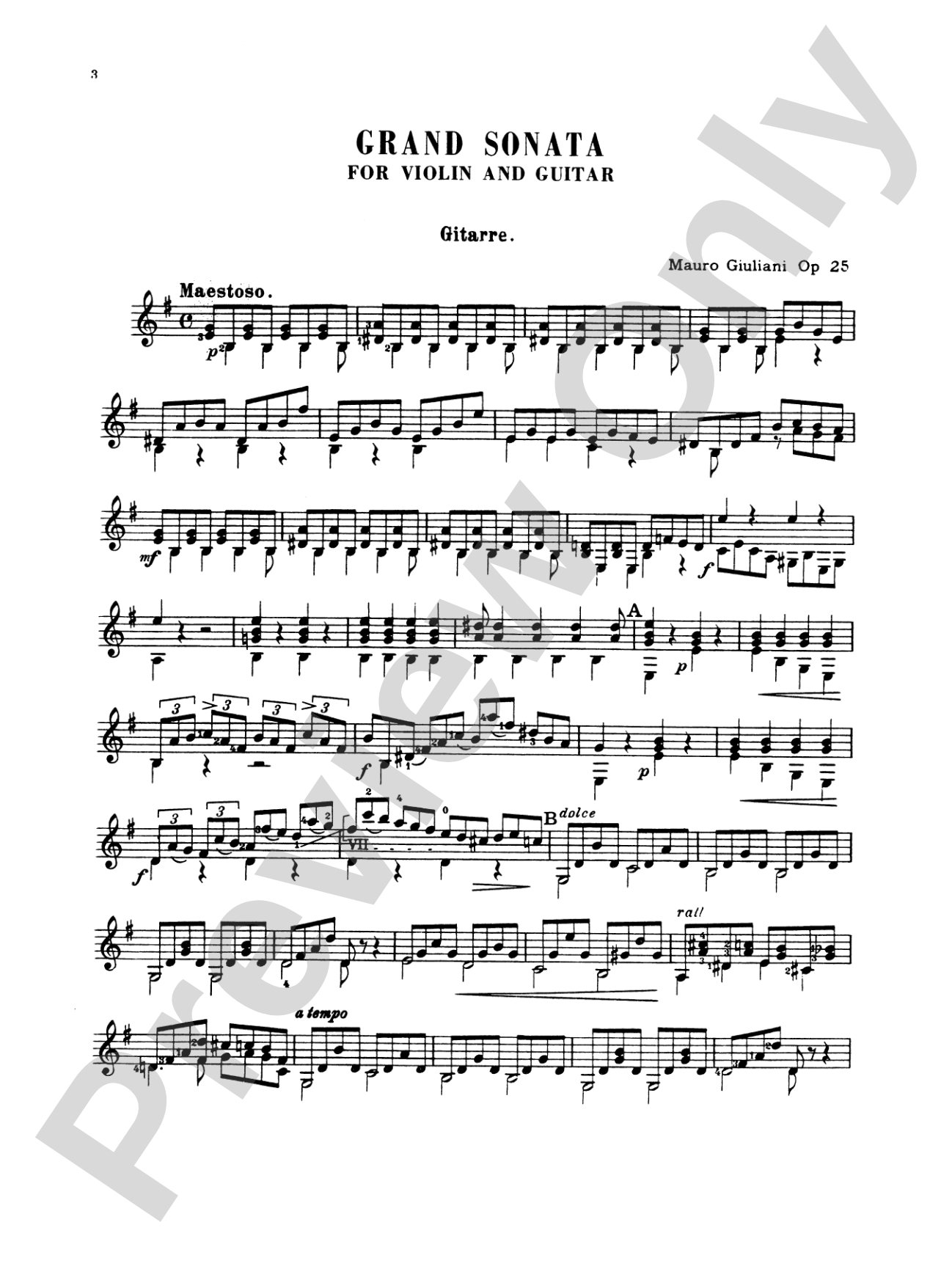
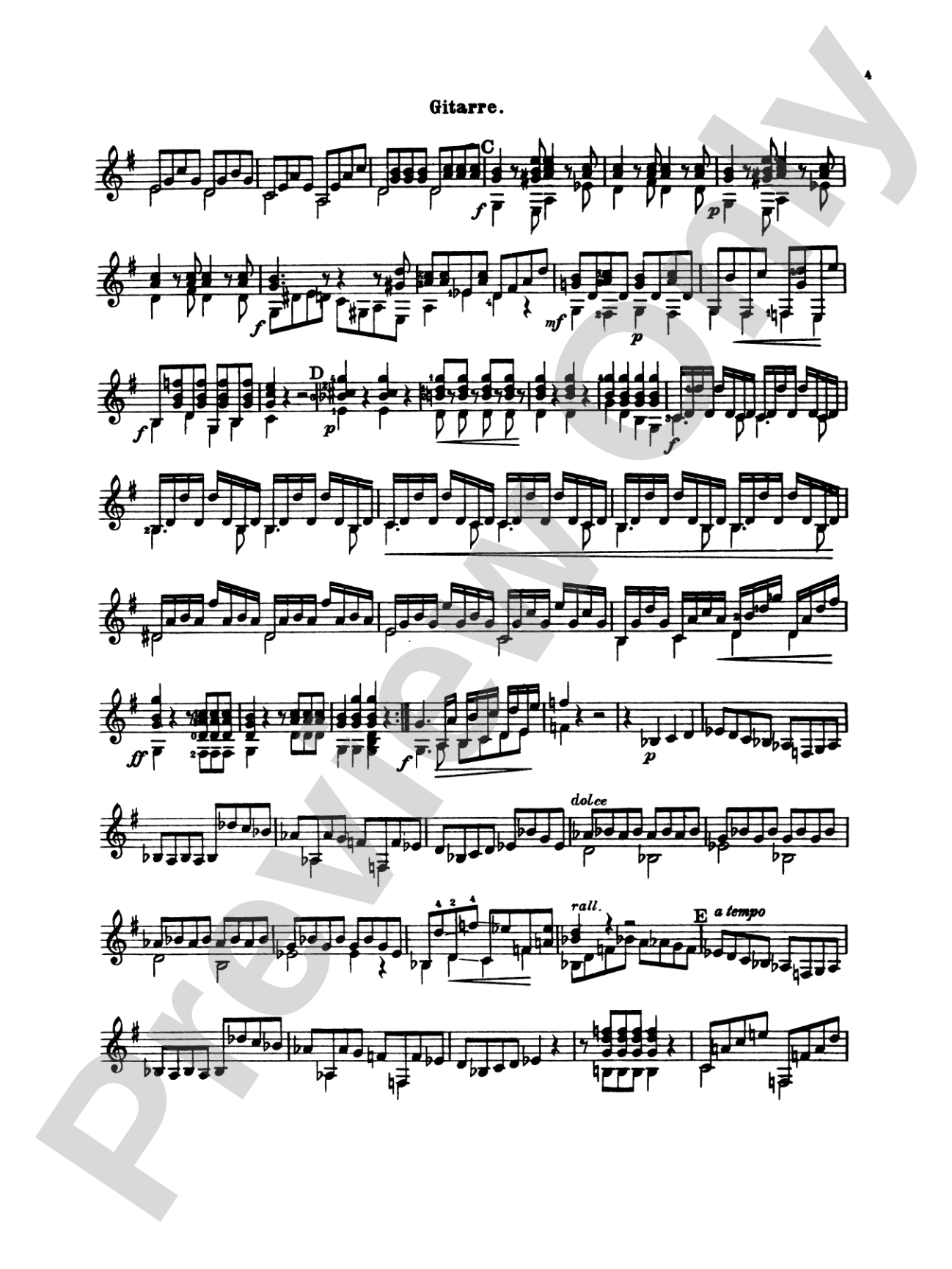
Giuliani: Grand Sonata for Violin and Guitar, Op. 25 Sheet Music Preview

Giuliani: Grand Sonata for Violin and Guitar, Op. 25

For Violin and Guitar

By Mauro Giuliani

Item: 00-PC-0010942

Digital Download
$3.99
Description
For violin and guitar. As recorded by Itzakh Perlman and John Williams.

Don't just read it, hear it, play along with it, and watch your students grow with it. In MakeMusic Cloud, Giuliani: Grand Sonata for Violin and Guitar, Op. 25 comes alive with professional accompaniment, adjustable tempo, and built-in practice tools that turn solo practice into real progress.

Sample Audio
No sample audio found.
Sample Video
Additional Details
Series: Kalmus Edition
Publisher: Alfred Music
Page Count: 24
SKU: 00-PC-0010942

More about this title

About the Composer: Mauro Giuliani

Mauro Giuliani (1781-1829) was an Italian guitarist and composer who elevated the classical guitar from a popular salon instrument to a serious concert vehicle. He wrote extensively for guitar in dialogue with violin, piano, and other instruments, creating a substantial chamber music repertoire that remains central to classical guitar education today.

Giuliani's sonatas and concertos reveal deep understanding of the guitar's capabilities and limitations. He wrote with idiomatic clarity, demanding both technical command and musical maturity from performers. His work helped establish the guitar as an equal partner in ensemble settings during the early Romantic period.

Why we love this

This sonata sits at the intersection of three musical worlds: it's virtuosic enough to showcase serious guitarists alongside professional violinists, yet the writing is transparent enough that motivated students can access it meaningfully. The recorded version with Perlman and Williams sets a standard for interpretive balance—neither instrument dominates, and the dialogue between them reveals Giuliani's elegant structural thinking.

What to expect

The sonata unfolds with the elegance of early Romantic chamber writing, full of lyrical conversations between violin and guitar. Passages of virtuosity arrive naturally from the musical argument rather than as display, and quiet moments of reflection balance the work's more showy passages. The overall effect is intimate yet sophisticated, speaking directly to listeners regardless of ensemble experience.

Who it's for

Advanced classical guitarists performing chamber music and violinists seeking substantial Romantic-era duo repertoire. This is equally valuable for guitar and violin teachers building a shared concert library with advanced students or working with student chamber ensembles.

How to get the most out of it

  • Establish a clear harmonic framework in the guitar part before adding violin melodic lines; Giuliani's guitar writing carries significant harmonic responsibility, especially in passages where the violin rests.
  • Shape the guitar's phrases with the same attention to rubato and phrasing that the violin part demands; this is not accompaniment writing, and mechanical rhythm will flatten the music's expressive contour.
  • Balance tone production between instruments by matching vibrato and sustain strategies; the guitar's natural decay requires intentional voicing choices to sit evenly alongside the violin's sustained lines.
  • Work backward from the recorded version by Perlman and Williams to hear how tempo flexibility and character shifts between movements shape the overall arc.

How to use it

Program this as a centerpiece for a chamber music concert or as the anchor for a classical guitar recital featuring duet repertoire. It pairs well alongside sonatas for cello and guitar or works for violin and piano, offering a refreshing alternative to string duo literature that dominates chamber programming.

Skills your students will build

  • Sustaining harmonic clarity while executing rapid passage work on guitar
  • Balancing melodic and accompaniment roles within a true duet texture
  • Interpreting Romantic-era rubato and phrasing across a 24-page form
  • Coordinating articulation and tone production between different string instruments
  • Reading and performing idiomatic classical guitar writing at an advanced level

You May Also Like