

Giovani Lieti: SAB Choral Octavo
From Le nozze di Figaro
By Wolfgang Amadeus Mozart / arr. Patrick M. Liebergen
Item: 00-PO-0006547
$2.95
Minimum order quantity: 20 copies
Pickup currently not available
Description
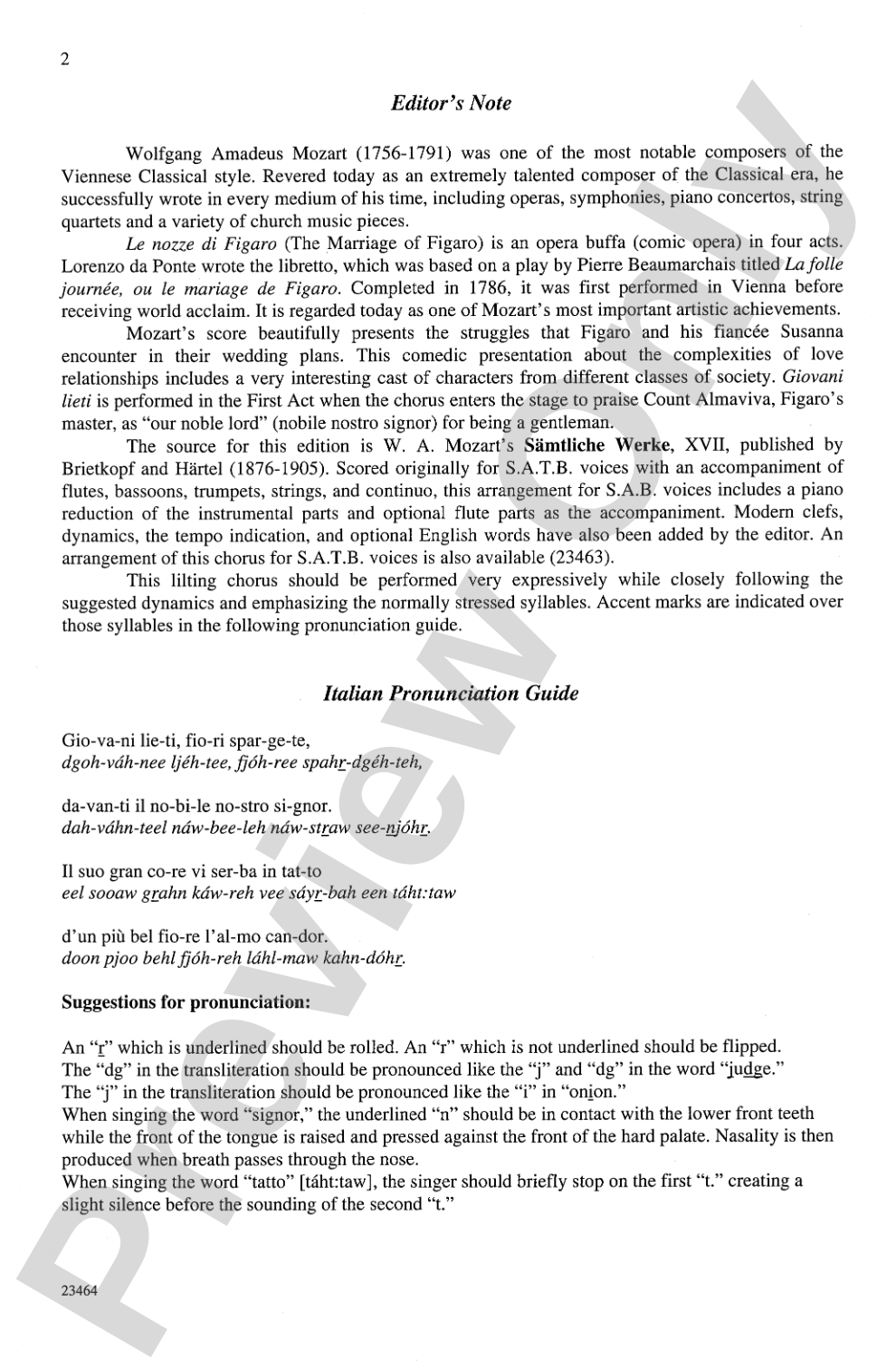
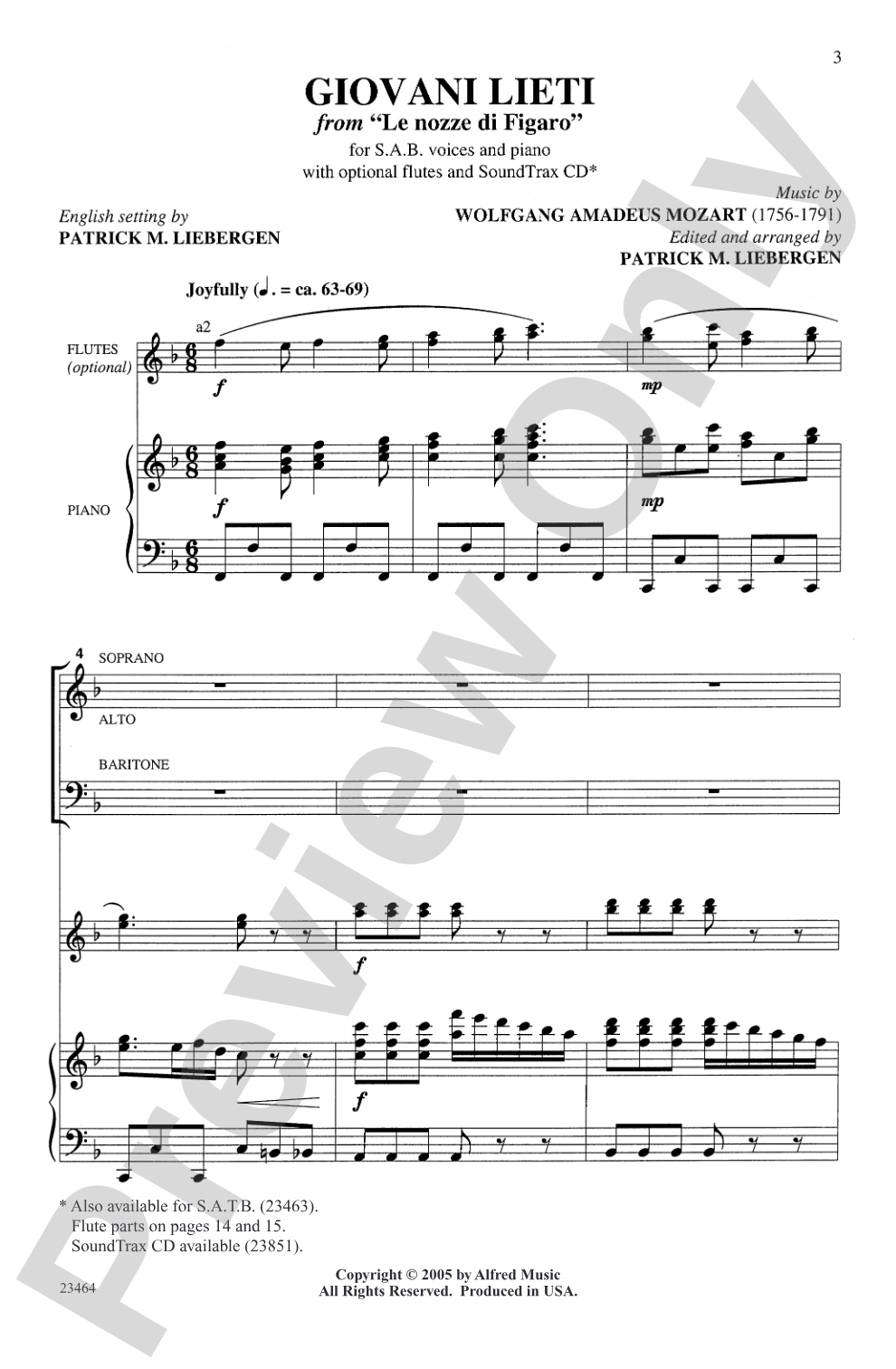
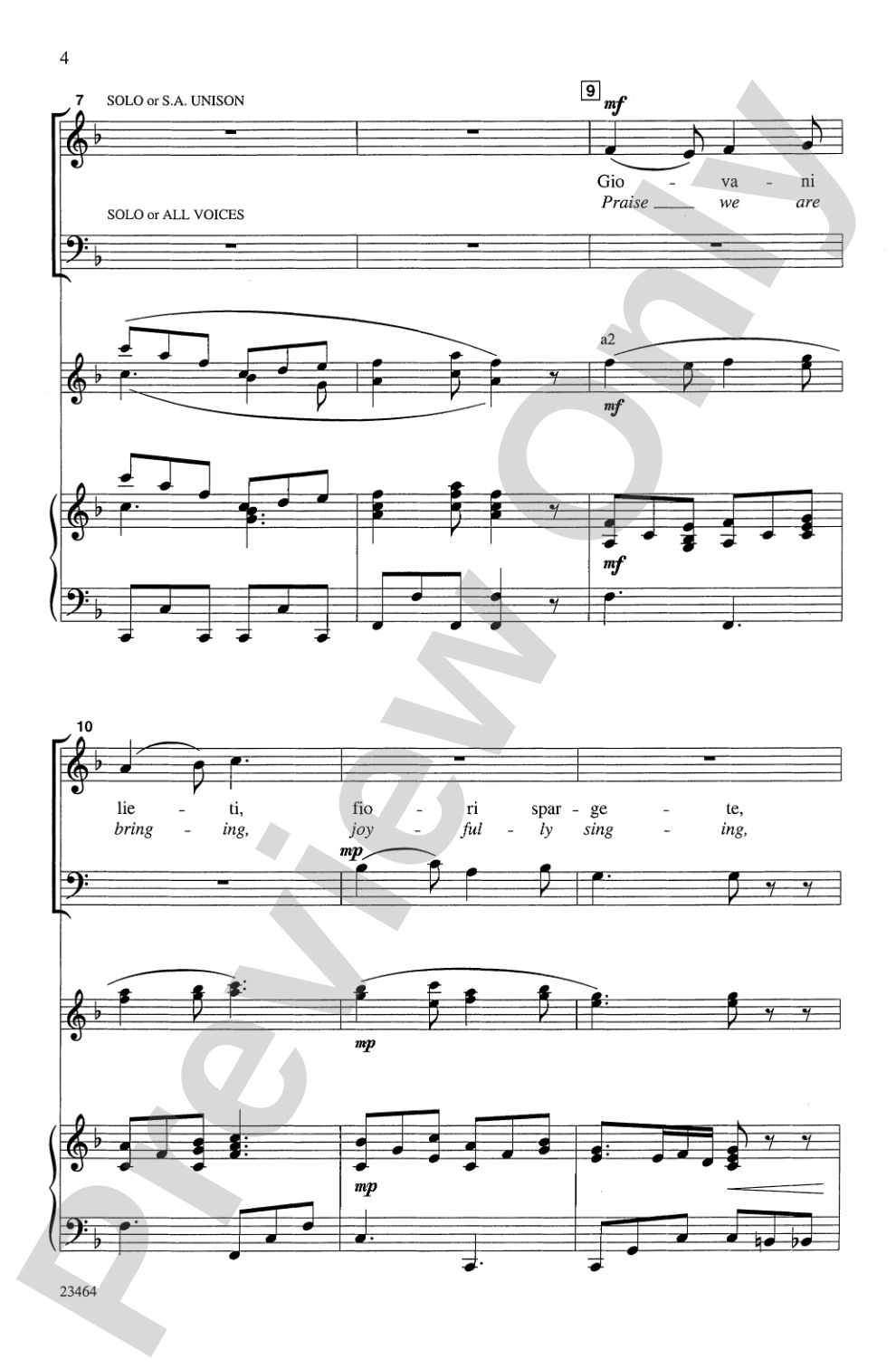
Celebrate Mozart's 250th birthday (in 2006) with a chorus from one of his most famous operas, The Marriage of Figaro. Classical chords and a traditional tunefulness make this a singable waltz in either English or Italian. Two talented soloists joyfully start the festivities, or use your full group throughout. An optional flute duet can be played live or heard on the SoundTrax CD.


Giovani Lieti: SAB Choral Octavo isn't in MakeMusic Cloud just yet...but it could be. Let us know you'd like to see it, and you'll help shape what comes next. In the meantime, start a free trial and dive into thousands of interactive titles your students can play along with today.
Request This Title
Tell us you want it.
Start Your Free Trial
Explore everything that's ready to play right now.
Sample Audio
1
Audio File
--:--
0:00
0:00
Sample Video
No sample videos found.
Additional Details
Series:
Alfred Choral Designs
Publisher:
Alfred Music
Page Count:
16
SKU:
00-PO-0006547
Instrumentation:
Opt. Flutes
More about this title
About the Composer: Wolfgang Amadeus Mozart
Wolfgang Amadeus Mozart (1756-1791) composed over 600 works across every major genre, from symphonies and concertos to operas and chamber music, often while traveling across Europe as a prodigy performer. His facility with melody, harmonic innovation, and dramatic storytelling made him one of history's most influential composers, and his operas remain central to the standard repertoire. For choral educators, Mozart's vocal writing offers accessible yet sophisticated models of text setting, phrase architecture, and the integration of soloists with ensemble textures.
Why we love this
This excerpt from The Marriage of Figaro arrives in an arrangement that preserves Mozart's melodic grace while keeping the voicing manageable for three-part ensembles. The optional flute duet adds a layer of sophistication without requiring extensive rehearsal time, and the choice between English and Italian text lets you match your program language and audience.
What to expect
A glimpse into the elegance and joy of Mozart's opera house, wrapped in the familiar rhythms of a waltz. The melody moves with grace and inevitability, the harmonies are never harsh, and the presence of soloists singing into a chorus creates the warmth of a celebration.
Who it's for
This piece works well for mixed choirs at the intermediate level or above, especially those with at least two singers capable of carrying solo lines. It suits programs celebrating Mozart, anniversaries, or lighter concert moments, and the optional instrumental part makes it appealing to schools with flute players looking for ensemble repertoire.
How to get the most out of it
- Shape the opening solo lines with care; they set the festive tone for the full chorus. Let the soloists breathe generously and articulate the text clearly, whether in Italian or English.
- Balance the flute duet against the choir so it floats above rather than competes. If using the recorded accompaniment, have players rehearse independently first, then blend in gradually.
- Keep the tempo steady and dance-like; a waltz loses its character if it drags. The classical harmonic language invites a light, buoyant treatment.
How to use it
Pair this with other classical or contemporary light choral works to create a focused program section, or position it as a contrast between heavier pieces. Its operatic origin and festive character make it ideal for a pops concert or a gala celebrating a milestone.
Skills your students will build
- Singing classical text declamation in both Italian and English
- Balancing solo and ensemble textures
- Maintaining steady waltz rhythm and dance-like phrasing
- Blending three-part harmony with clear voice independence