Gibbons: Album Sheet Music Preview

Gibbons: Album

By Orlando Gibbons

Item: 00-PC-0007295

Digital Download
$0.99
Description
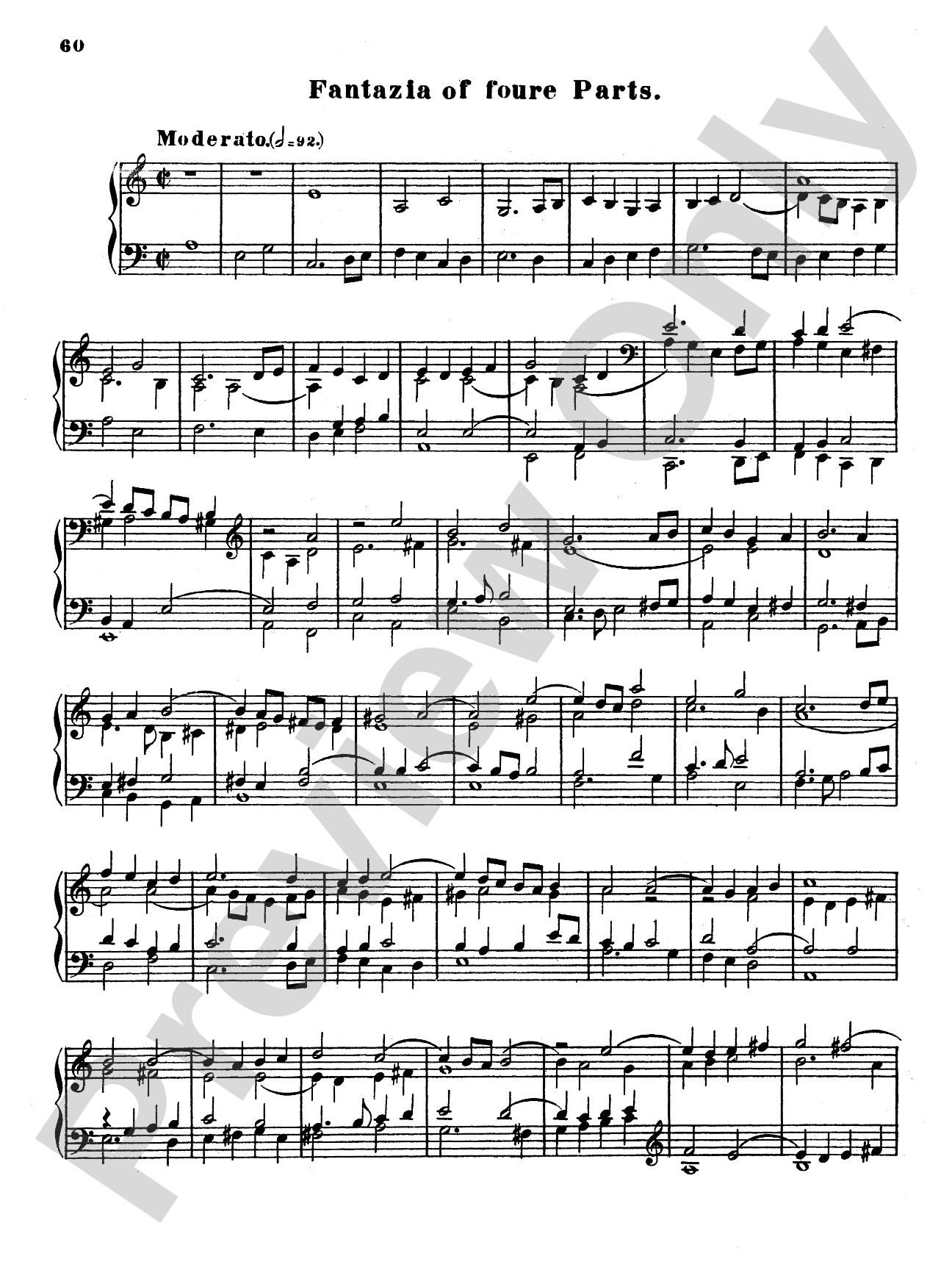
A collection of piano solos composed by Orlando Gibbons.

Don't just read it, hear it, play along with it, and watch your students grow with it. In MakeMusic Cloud, Gibbons: Album comes alive with professional accompaniment, adjustable tempo, and built-in practice tools that turn solo practice into real progress.

Sample Audio
No sample audio found.
Sample Video
Additional Details
Series: Kalmus Edition
Publisher: Alfred Music
Page Count: 20
SKU: 00-PC-0007295

More about this title

About the Composer: Orlando Gibbons

Orlando Gibbons (1583-1625) was one of the most accomplished English composers of the early Baroque, working during the reigns of Elizabeth I and Charles I. A master of both sacred and secular music, he served as organist at the Chapel Royal and composed anthems, madrigals, and keyboard works that established him as a central figure in English musical life. His keyboard music, in particular, demonstrates the sophisticated harmonic language and contrapuntal skill that made him influential among his contemporaries and relevant to performers today.

Gibbons's keyboard works reveal a composer comfortable with both the English virginals tradition and emerging Baroque conventions. His pieces combine structural clarity with expressive depth, offering pianists a window into Renaissance and early Baroque keyboard writing without the dense chromaticism of Continental composers. For music educators, his work provides accessible entry points into historically informed performance and the development of keyboard technique grounded in musicality rather than virtuosity alone.

Why we love this

Gibbons's keyboard writing sits at a fascinating intersection of Renaissance polyphony and Baroque form, giving pianists material that demands both rhythmic clarity and lyrical control. This collection offers substantive yet approachable work for intermediate to advanced students studying historical keyboard idioms, without the technical extremes that can overwhelm developing musicians. Programming these pieces signals serious musicianship and provides concert variety that moves beyond the standard Classical-Romantic canon.

What to expect

These pieces blend the orderly, dance-like rhythms of the Renaissance with hints of Baroque expressiveness, creating music that feels both balanced and emotionally alive. The writing is elegant without being ornate, inviting the performer to shape phrases with sensitivity while maintaining the integrity of the harmonic and contrapuntal design. There is a particular English restraint and clarity to the musical speech that distinguishes this work from Continental masters of the same era.

Who it's for

Intermediate to advanced pianists seeking historically grounded repertoire and teachers programming concert recitals with Renaissance and early Baroque material. Students studying keyboard history, music theory, or performance practice will find these pieces illuminating examples of English keyboard writing at a pivotal moment in music history.

How to get the most out of it

  • Approach the ornamentation with restraint. Gibbons's keyboard works benefit from an understanding of Renaissance embellishment practices; research period conventions for divisions and passaggi rather than applying Baroque or Classical ornament style.
  • Honor the implied harmonic structure. The voice-leading often suggests underlying chord progressions that may not be explicitly spelled out; identifying these foundations will clarify phrasing and articulation choices.
  • Manage the texture with evenness. These pieces often feature running figuration in one hand against sustained or slower-moving lines in the other; maintain consistent voicing and avoid obscuring inner parts through heavy pedal.
  • Consider the acoustic properties of the keyboard at hand. Gibbons composed for virginals and organs with different touch and sustain characteristics than the modern piano; adjust articulation and pedaling to reflect the clarity and decay of Renaissance instruments.

How to use it

Feature these works on recitals devoted to early keyboard music or historical surveys that trace the evolution of the piano repertoire. A single Gibbons piece can serve as an effective interlude between later Baroque works (Handel, Bach) and Classical material, demonstrating continuities in keyboard writing and giving audiences a taste of an underperformed but historically significant English voice.

Skills your students will build

  • Reading keyboard texture across two staves with independent voice-leading
  • Understanding Renaissance and early Baroque harmonic language and chord function
  • Interpreting historical ornamentation within period-appropriate conventions
  • Shaping Baroque phrasing with clarity and control over pedal use
  • Developing evenness and independence between hands in contrapuntal passages
  • Recognizing and performing English keyboard idioms distinct from Continental traditions

You May Also Like