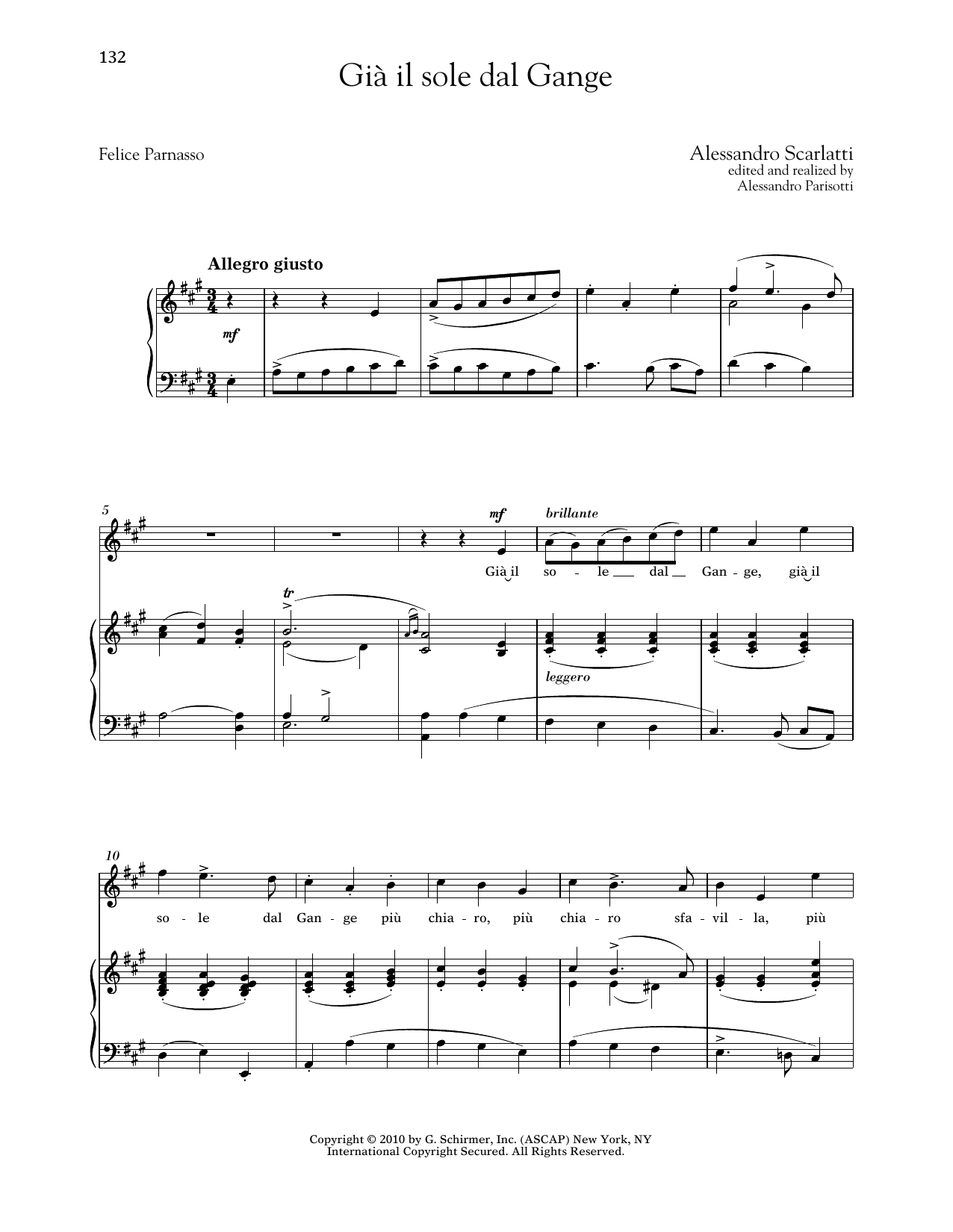
Gia Il Sole Dal Gange (High Voice) Sheet Music Preview

Gia Il Sole Dal Gange (High Voice): Piano Vocal

Edited by Richard Walters / Edited by Alessandro Parisotti (ed.)

Item: 35-DS01567611

Digital Download
$5.99
Description

Gia Il Sole Dal Gange (High Voice): Piano Vocal isn't in MakeMusic Cloud just yet...but it could be. Let us know you'd like to see it, and you'll help shape what comes next. In the meantime, start a free trial and dive into thousands of interactive titles your students can play along with today.

Sample Audio
No sample audio found.
Sample Video
Additional Details
Publisher: Hal Leonard
Page Count: 5
SKU: 35-DS01567611

More about this title

About the Creator: Alessandro Scarlatti

Alessandro Scarlatti (1660–1725) was a foundational figure in the development of Italian opera and vocal music. His prolific output across operas, cantatas, and sacred works established many conventions that would define the genre for generations to come. Scarlatti's gift for melody and his sophisticated harmonic language made him one of the most influential composers of the late Baroque, and his vocal writing remains a touchstone for singers seeking to master the lyrical Italian style.

Why we love this

This aria has the kind of effortless elegance that makes high voice singers sound their absolute best. The writing sits perfectly for the voice, with a shape that feels inevitable rather than showy, and the piano part provides just enough harmonic richness to frame the melody without cluttering it.

What to expect

A sunrise at the Ganges River becomes the vehicle for a meditation on beauty and constancy. The music unfolds with gentle momentum, never rushing, wrapped in the warmth of the sun's metaphorical presence. There's an underlying serenity here, a sense that the singer is observing something eternal rather than performing for an audience.

Who it's for

High voice singers with solid foundational technique who are developing their ability to sustain long lyrical lines and navigate Baroque vocal writing. This works equally well for advanced soloists preparing recital repertoire and for singers seeking a study piece that builds musicality without extreme technical demands.

How to get the most out of it

  • Shape the opening phrase as one continuous arc, resisting the urge to break it into smaller units; let the legit tone carry the line all the way through.
  • Keep the accompaniment rhythmic and light rather than thick; the voice needs room to bloom without competing for acoustic space.
  • Pay attention to the text setting and allow the Italian vowels to inform your phrasing; Scarlatti's prosody rewards singers who commit to the language.
  • Find the balance between Baroque clarity and the warmth this melody demands; it's closer to Classical purity than to ornate early Baroque style.

How to use it

Pair this with other high Baroque or Classical vocal repertoire to anchor a recital or concert sequence focused on Italian vocal traditions. It also serves as an excellent studio piece for high voice students working through standard vocal literature, offering a piece that's approachable in length but substantive enough to reward repeated study.

Skills your students will build

  • Sustaining long vocal phrases with consistent legit tone production
  • Reading and interpreting Italian text with proper vowel placement and phrasing
  • Balancing lyrical expression with Baroque harmonic sensibility
  • Navigating the relationship between vocal melody and piano accompaniment

You May Also Like