Ghosts of the Taman Negara: 2nd Percussion Sheet Music Preview

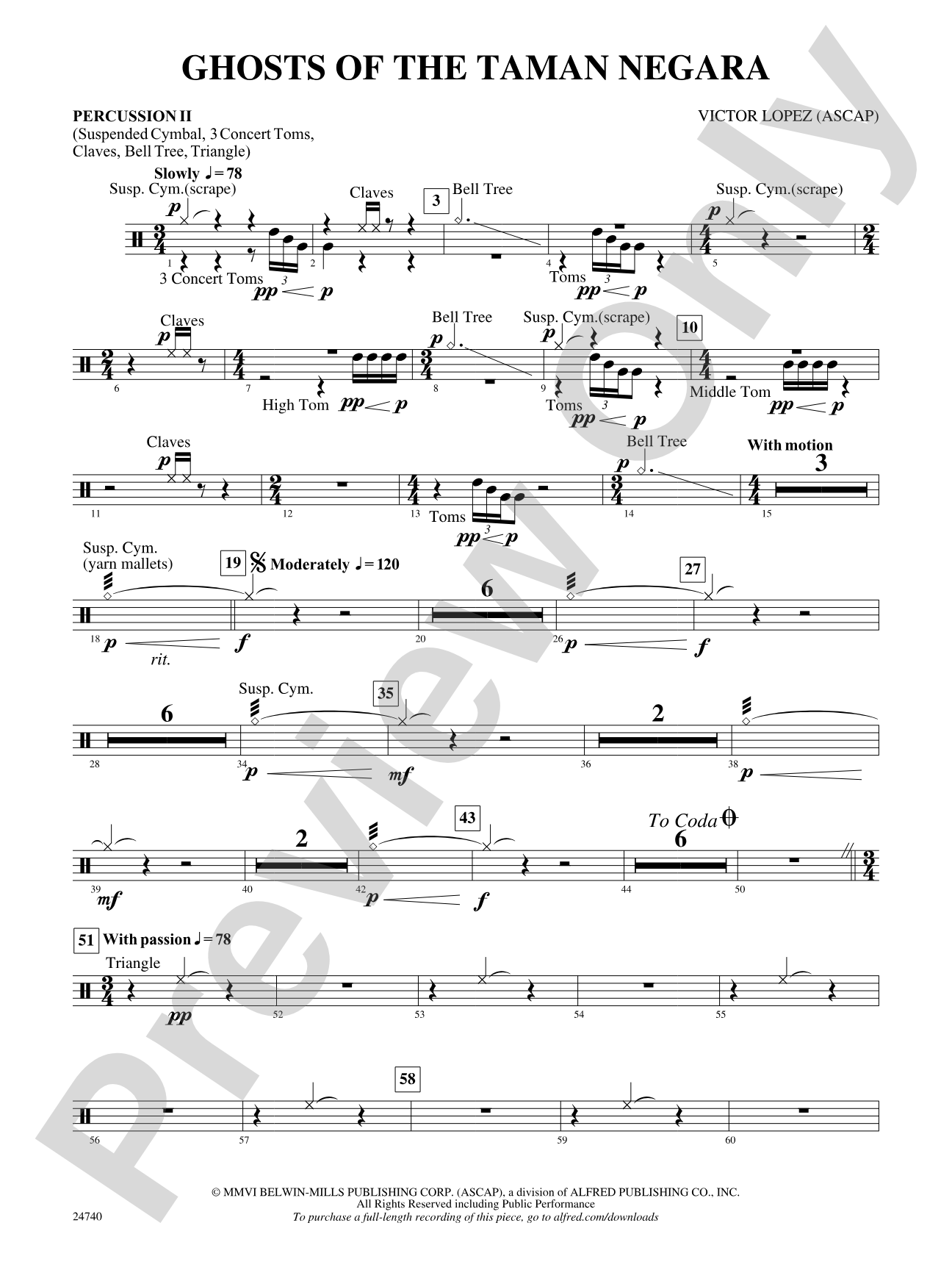
Ghosts of the Taman Negara: 2nd Percussion

By Victor López

Grade: 2.5 (Easy to Medium Easy)

Item: 00-PC-0000891_PC2

Digital Download
$3.00
Description
This original composition is based on a wildlife research study which took place in Malaysia's largest national park, the Taman Negara. Researchers embarked on an expedition in the jungle tracking that wildest of wild animals, the tiger. Despite spending nearly three years in the rainforest, the researchers never saw a single tiger, hence the "ghost" aspect of the title. The composer's intent in this composition is to take you on an expedition tour and emulate the experience of the jungle. The work is characterized with mysterious melodic themes intertwined with exciting bold flashes of sound. Ghosts of Taman Negara is an embracing and emotional addition to the young band literature from the pen of Victor López.

Don't just read it, hear it, play along with it, and watch your students grow with it. In MakeMusic Cloud, Ghosts of the Taman Negara: 2nd Percussion comes alive with professional accompaniment, adjustable tempo, and built-in practice tools that turn solo practice into real progress.

Sample Audio
0:00
0:00
Sample Video
Additional Details
Series: Belwin Young Band
Publisher: Alfred Music
Page Count: 258
SKU: 00-PC-0000891_PC2

More about this title

About the Composer: Victor Lopez

Victor López is a prolific composer and arranger whose catalog spans concert band, wind ensemble, and orchestral works. His compositions for young and developing bands demonstrate a gift for crafting accessible yet musically sophisticated pieces that engage students while respecting their technical capabilities.

Why we love this

López builds narrative tension without overcomplicating the score. The piece uses transparent orchestration and memorable thematic material to paint the jungle soundscape, making it engaging for audiences while remaining playable for developing musicians. A Grade 2.5 work that feels like a full concert experience rather than an educational exercise.

What to expect

You move through a humid, shadowed rainforest where tension builds in whispered passages and then erupts in sudden bursts of sound. The mystery of an unseen predator permeates the journey; even as the orchestra swells with energy and drama, there's an elegance to the orchestration that keeps the listener suspended between wonder and unease.

Who it's for

This work suits young concert bands and developing wind ensembles at the Grade 2-3 level who are ready for programmatic storytelling without advanced technical demands. It pairs well with curricula exploring nature-inspired music or introducing students to original contemporary band compositions.

How to get the most out of it

  • Balance the mysterious opening passages by keeping the low woodwinds and brass supportive rather than dominant; the melodic lines need to float above the harmonic foundation.
  • Shape the bold, exciting flashes of sound with clear dynamics and articulation; these moments create the emotional peaks the piece needs to land effectively.
  • Use the sectional rehearsal approach to lock down the intertwined melodic themes independently, then weave them together gradually during full-band rehearsals.
  • Trust the programmatic arc; resist the urge to push the tempo during exciting passages, as the composer's pacing decisions are built into the emotional storytelling.

How to use it

Program this as a centerpiece for a concert themed around nature, exploration, or contemporary composers. Its accessible difficulty level makes it ideal for a mid-concert placement where you need a piece that showcases musicality and engagement without requiring virtuosic technical passage work. The programmatic content also works beautifully as an educational tool to discuss how orchestration and thematic development create narrative in instrumental music.

Skills your students will build

  • Balancing transparent orchestration across multiple voice parts
  • Executing contrasting dynamics and articulation within a programmatic narrative
  • Shaping and sustaining melodic lines within ensemble texture
  • Responding to sudden dynamic and textural shifts
  • Following large-form structure across a multi-section work

You May Also Like