Ghostbusters (from Ghostbusters): E-flat Alto Saxophone Sheet Music Preview

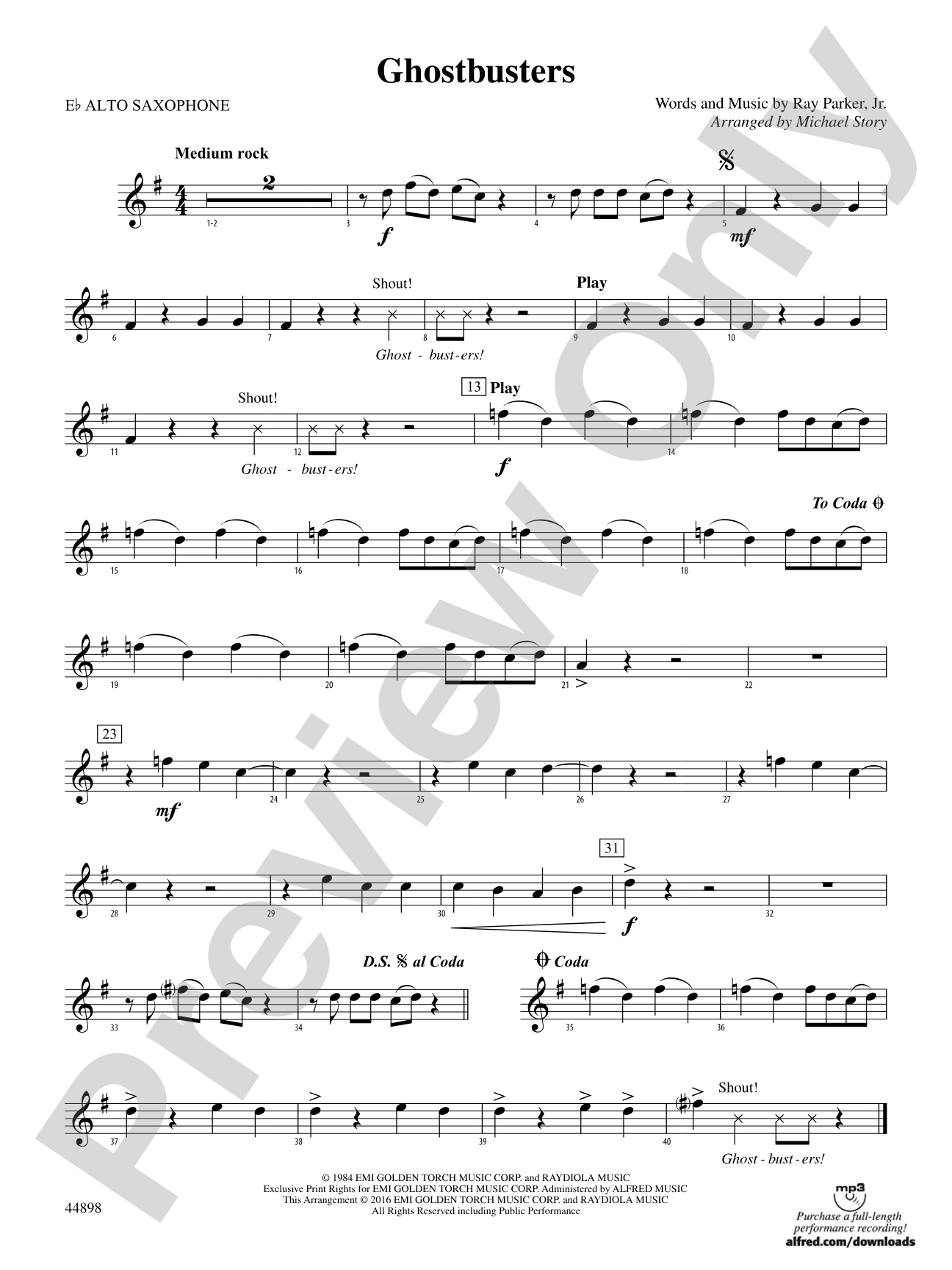
Ghostbusters (from Ghostbusters): E-flat Alto Saxophone

Words and music by Ray Parker, Jr. / arr. Michael Story

Grade: 1 (Very Easy)

Item: 00-PC-0017391_AX1

Digital Download
$3.00
Description
From the blockbuster movie franchise, it's always time to bust some ghosts at Halloween or any time of the year. Utilizing introductory accidentals, a dal segno with a coda, and the flexibility required to play and perform the vocals, there's plenty of teaching in this infectious tune. The familiarity of this tune is a quick fit for every beginning band and the vocals punctuate the energy. Who ya gonna call? (2:00)

Don't just read it, hear it, play along with it, and watch your students grow with it. In MakeMusic Cloud, Ghostbusters (from Ghostbusters): E-flat Alto Saxophone comes alive with professional accompaniment, adjustable tempo, and built-in practice tools that turn solo practice into real progress.

Sample Audio
0:00
0:00
Sample Video
Additional Details
Series: Pop Beginning Band
Publisher: Alfred Music
Page Count: 138
SKU: 00-PC-0017391_AX1

More about this title

About the Composer: Ray Parker

Ray Parker Jr. is a multi-talented musician and songwriter who rose to prominence in the 1980s as both a recording artist and composer for film and television. His work on the Ghostbusters theme became a cultural touchstone, reaching number one on the Billboard Hot 100 and winning a Golden Globe nomination. Parker's gift for crafting catchy, memorable melodies that work equally well in pop contexts and ensemble arrangements has made his music a staple in both commercial and educational settings.

Why we love this

Beginning bands love the instant recognition and energy this tune brings to rehearsal, and the infectious hook keeps everyone engaged from first read-through to final performance. Michael Story's arrangement respects Grade 1 accessibility while layering in genuine teaching moments: introductory accidentals arrive gradually, the dal segno and coda structure rewards students learning formal notation, and the optional vocal sections give your ensemble a chance to perform with confidence despite limited technical demands.

What to expect

Playful, upbeat, and immediately recognizable. The melody bounces with comic-book charm while the rhythm section carries a steady pulse that feels modern and danceable even at a beginner level. There's an infectious energy here that makes students want to nail their parts.

Who it's for

Beginning band students in Grades 1-2 who need repertoire that feels fun and relevant without overwhelming technical challenges. Directors programming fall concerts, Halloween festivals, or pops concerts will find an arrangement that engages young players and audiences alike.

How to get the most out of it

  • Shape the familiar melody with clarity from the first note. Students will want to rush the iconic opening hook, so lock in the rhythmic pocket early and let the band find the groove together.
  • Balance the vocal lines carefully against the instrumental section. If you're using singers, rehearse them separately first so they can deliver the words with good diction without overshadowing the band.
  • Keep articulation crisp and uniform across sections, especially in the rhythmic figures that drive the piece. This tune lives or dies by groove, not by lush phrasing.
  • Use the dal segno marking as a teaching tool for form recognition. Point out how the return creates narrative closure and helps students understand why composers write repeats.

How to use it

Program this as a set closer or opening number at any concert between September and November, especially Halloween-themed or pops events where audience familiarity matters. The short duration (2:00) and high engagement factor make it ideal for community concerts or pep band situations where you need something that lands immediately.

Skills your students will build

  • Reading and performing accidentals in a pop context
  • Understanding dal segno and coda forms
  • Maintaining steady rhythmic groove in ensemble
  • Balancing melody and accompaniment across sections
  • Performing with optional vocal components

You May Also Like