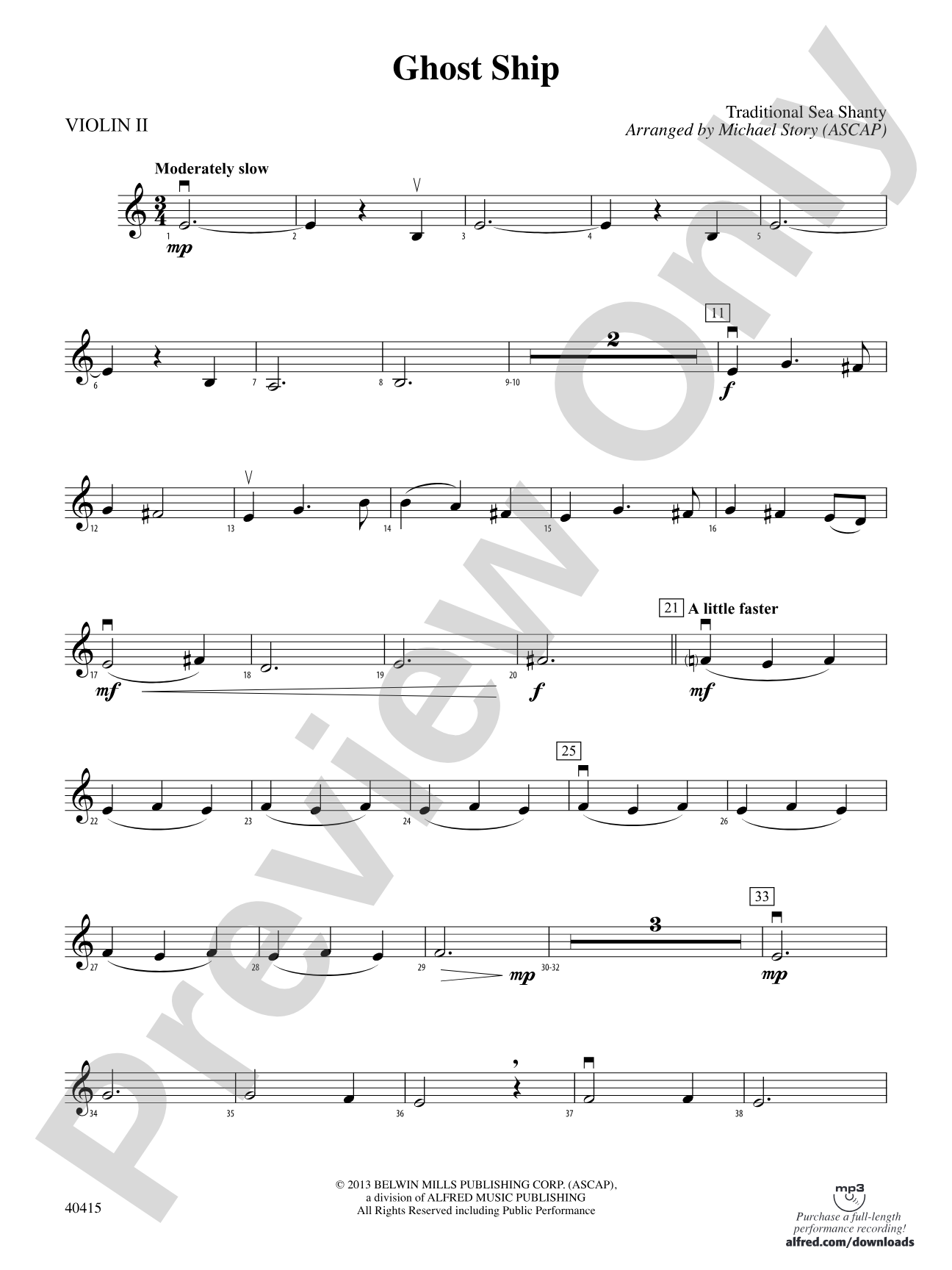
Ghost Ship: 2nd Violin Sheet Music Preview

Ghost Ship: 2nd Violin

Traditional Sea Shanty / arr. Michael Story

Grade: 1.5

Item: 00-PC-0015949_VN2

Digital Download
$5.99
Description
Engage the imagination to build expressive playing as the orchestra plays out this old story of a lost ship. Combining original material as well as the sea shanty "Spanish Ladies," this piece will be perfect on any concert program.

Don't just read it, hear it, play along with it, and watch your students grow with it. In MakeMusic Cloud, Ghost Ship: 2nd Violin comes alive with professional accompaniment, adjustable tempo, and built-in practice tools that turn solo practice into real progress.

Sample Audio
0:00
0:00
Sample Video
Additional Details
Series: Belwin Beginning String Orchestra
Publisher: Alfred Music
Page Count: 152
SKU: 00-PC-0015949_VN2

More about this title

About the Arranger: Michael Story

Michael Story has established himself as a prolific composer and arranger for student ensembles across all instrumental families. His work balances musical substance with accessibility, creating pieces that challenge young musicians without overwhelming them technically. Story's arrangements are known for respecting the integrity of source material while adapting it thoughtfully for developing orchestras.

Why we love this

Ghost Ship pairs narrative engagement with genuine musical growth. The integration of "Spanish Ladies" feels organic rather than forced, and the programmatic framing gives your orchestra a story to play into rather than just notes on a page. At grade 1.5, it delivers real musical substance without sacrificing playability.

What to expect

Ghost Ship conjures the eerie, timeless quality of a sea legend retold around a fire. There's mystery in the opening, recognition when the familiar sea shanty emerges, and an underlying sense of voyage that keeps the listener invested in where the piece is heading. The orchestration respects the Grade 1.5 level while creating an immersive sonic world.

Who it's for

String orchestras at the early intermediate level looking for programmatic material with narrative pull. Conductors who want to teach expressive playing through storytelling rather than abstract exercises will find this especially valuable for engaging younger musicians in purposeful interpretation.

How to get the most out of it

  • Build the atmosphere gradually in the opening sections; resist the urge to rush the mysterious passages. Let silence and space work for you as much as the written material.
  • Shape the sea shanty quotation distinctly from the surrounding original material. Think of it as a recognizable landmark in the piece's journey rather than blending it into the texture.
  • Use dynamic contrast to heighten the narrative arc. The piece will feel more cinematic when you commit fully to both the quieter, eerie moments and the more energetic sections.
  • Encourage violins to shape their lines with intention, especially in passages that suggest the ship's movement. This isn't background filler; every voice contributes to the story.

How to use it

Schedule this for an autumn or Halloween concert where thematic programming enhances the audience experience. It works equally well as a standalone feature or paired with other folk-based or narrative pieces that explore storytelling through music. The moderate length makes it accessible for young orchestras tackling their first programmatic works.

Skills your students will build

  • Expressive phrasing and dynamic shaping within accessible ranges
  • Responding to programmatic context to inform interpretive choices
  • Balancing melodic independence with ensemble cohesion in simple textures
  • Sustaining tone quality through moderate-length musical phrases
  • Recognizing and interpreting thematic material (the sea shanty quotation)

You May Also Like