
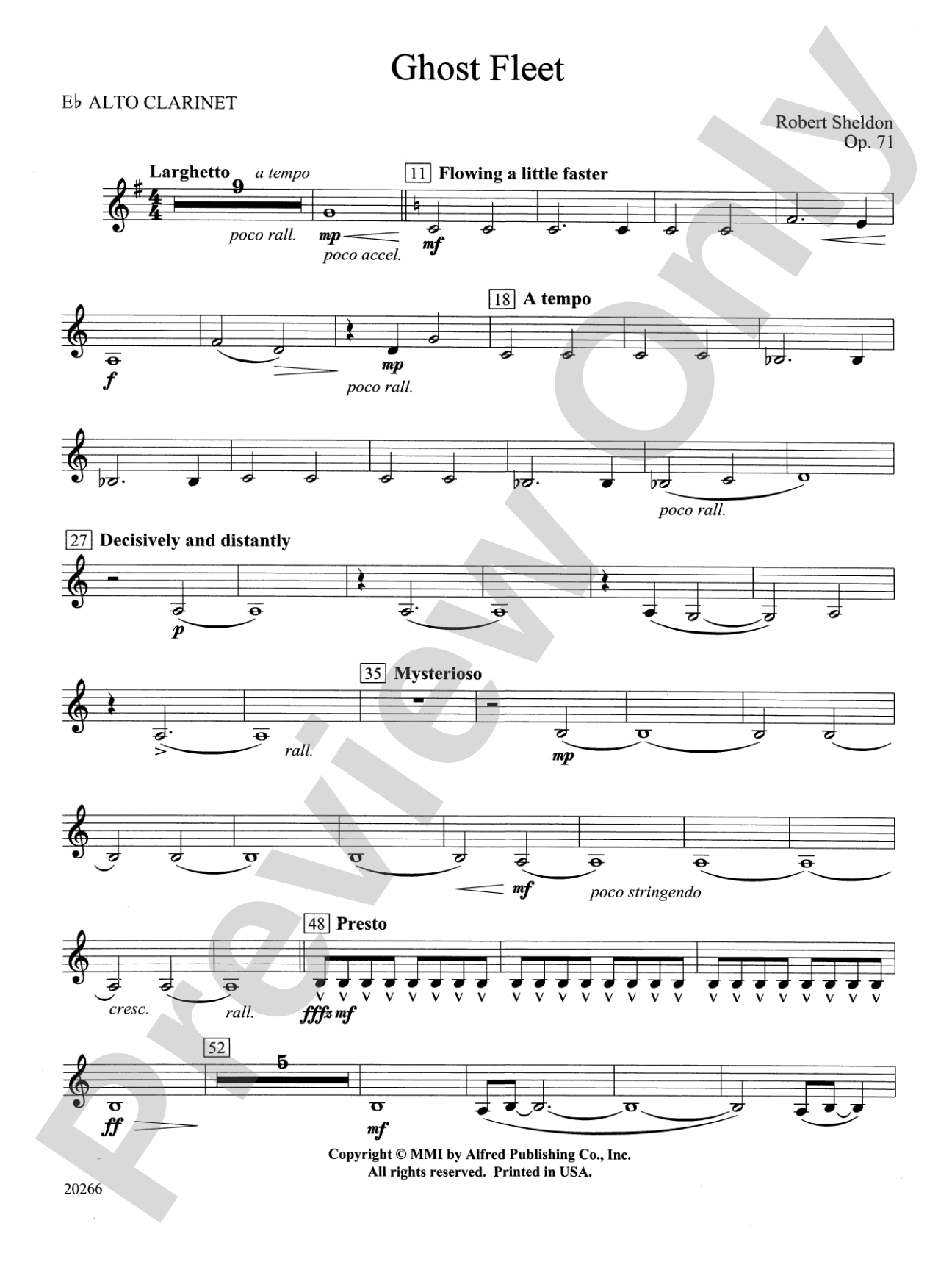

Ghost Fleet: E-flat Alto Clarinet
By Robert Sheldon
Grade: 3 (Medium)
Item: 00-PC-0000372_AC1
$3.00
Pickup currently not available
Description
With lush harmonies and contemporary compositional techniques, "Ghost Fleet" takes you on the journey of long-forgotten warships as their "spirits" break free, returning to the high seas and former days of glory. Sure to be a staple on many contest lists, "Ghost Fleet" is a must-have for every concert band. An instant classic!


Don't just read it, hear it, play along with it, and watch your students grow with it. In MakeMusic Cloud, Ghost Fleet: E-flat Alto Clarinet comes alive with professional accompaniment, adjustable tempo, and built-in practice tools that turn solo practice into real progress.
Open in the Player
Jump straight in and assign it today.
Start Your Free Trial
Open this title and explore the full library in minutes.
Sample Audio
1
Audio File
--:--
0:00
0:00
Sample Video
Additional Details
Series:
Alfred Concert Band
Publisher:
Alfred Music
Page Count:
296
SKU:
00-PC-0000372_AC1
More about this title
About the Composer: Robert Sheldon

Robert Sheldon stands among the most frequently performed composers in the wind band repertoire. His catalog includes hundreds of works performed internationally, and his commissions arrive regularly from ensembles seeking music that balances technical sophistication with genuine emotional impact. He authored Sound Innovations for Concert Band and has earned recognition from the American School Band Director's Association, Phi Beta Mu, and ASCAP.
Sheldon's work as guest conductor, clinician, and educator keeps him deeply connected to the rehearsal room. He has conducted at Carnegie Hall, Symphony Hall, the Kennedy Center, and major venues across six continents. In 2020, VanderCook College of Music awarded him an honorary doctorate in recognition of his sustained contributions to wind band music and music education.
Why we love this
Ghost Fleet succeeds because Sheldon writes with remarkable clarity about decay and resurrection. The programmatic arc unfolds naturally through harmonic color and orchestration choices rather than heavy-handed effects, giving directors room to shape the narrative alongside their ensemble. At Grade 3, the technical demands stay manageable while the compositional sophistication keeps players and audiences genuinely engaged.
What to expect
Ghost Fleet moves through mystery and melancholy toward liberation. The opening sections evoke shadowy, long-submerged vessels with shadowy harmonies and restrained orchestration; the middle unfolds a gradual awakening as the instrumental colors brighten. By the climax, the band celebrates a kind of bittersweet restoration, music that sounds both triumphant and reflective.
Who it's for
Concert bands at the Grade 3 level seeking repertoire with genuine programmatic depth and contemporary harmonic language. Programs looking to contest literature that engages audiences through storytelling and technical competence in equal measure will find a reliable choice here.
How to get the most out of it
- Treat the opening as a slow reveal. Resist rushing the initial chord progressions; let the lush harmonies breathe and establish the haunted atmosphere before the spirits awaken.
- Balance the contemporary harmonies carefully across sections. In passages where Sheldon stacks unusual chord colors, spend rehearsal time on vertical tuning so the harmonic palette reads clearly.
- The return to former glory needs energy and forward motion. Once the piece shifts into its more celebratory material, encourage the band to lean into the momentum without losing the underlying sophistication of the writing.
How to use it
Position this as a concert centerpiece that showcases your band's ability to sustain a coherent narrative arc. It pairs well on programs with contrasting works in different moods, giving audiences a dramatic anchor point. The programmatic nature also makes it an excellent teaching tool for discussions about how composers use orchestration and harmony to evoke imagery.
Skills your students will build
- Sustaining lyrical phrasing through slowly moving harmonic progressions
- Balancing non-traditional chord voicings for harmonic clarity
- Responding to programmatic intent through dynamic and tonal shaping
- Reading and executing contemporary compositional techniques within a traditional concert band context