
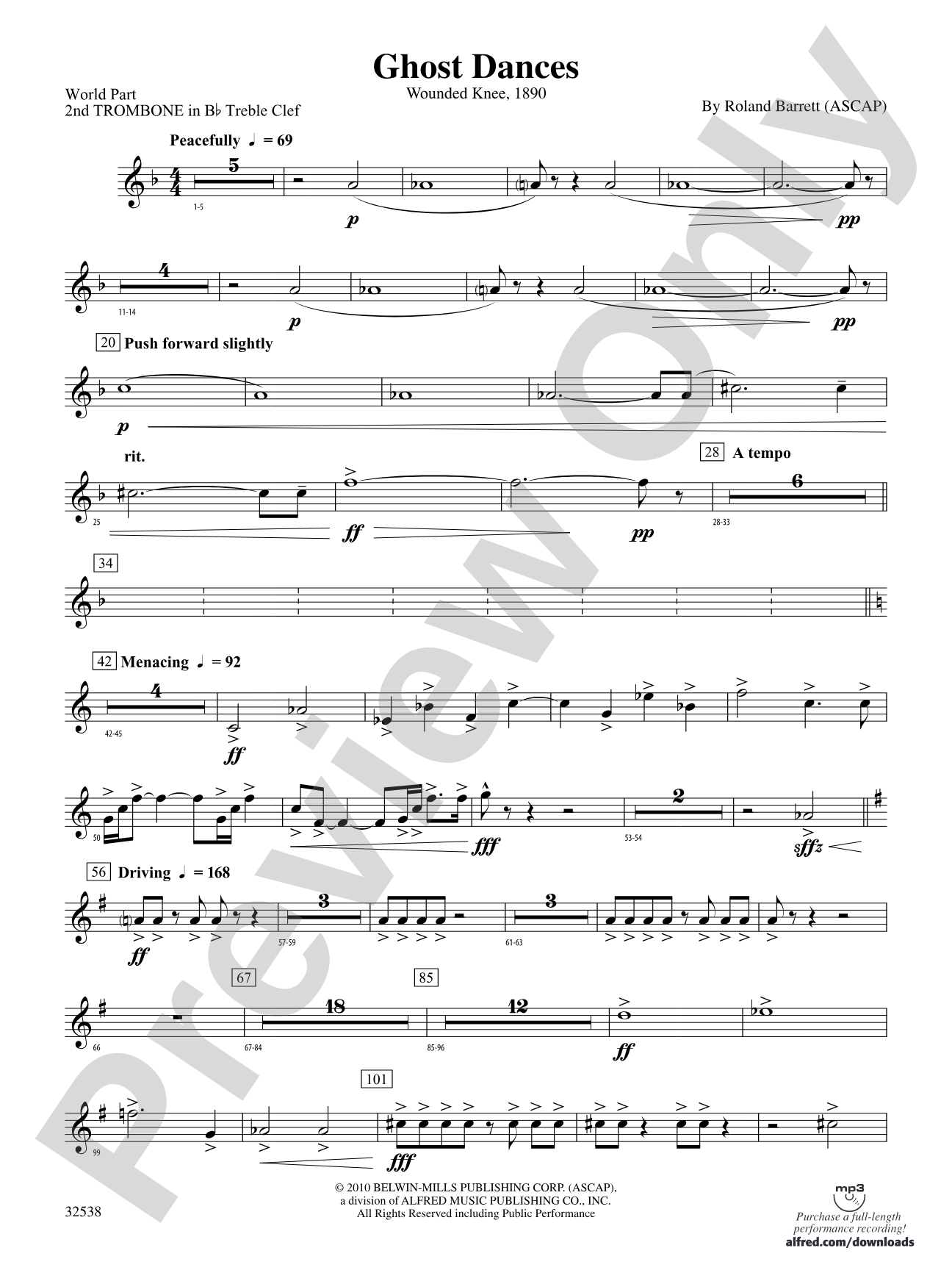
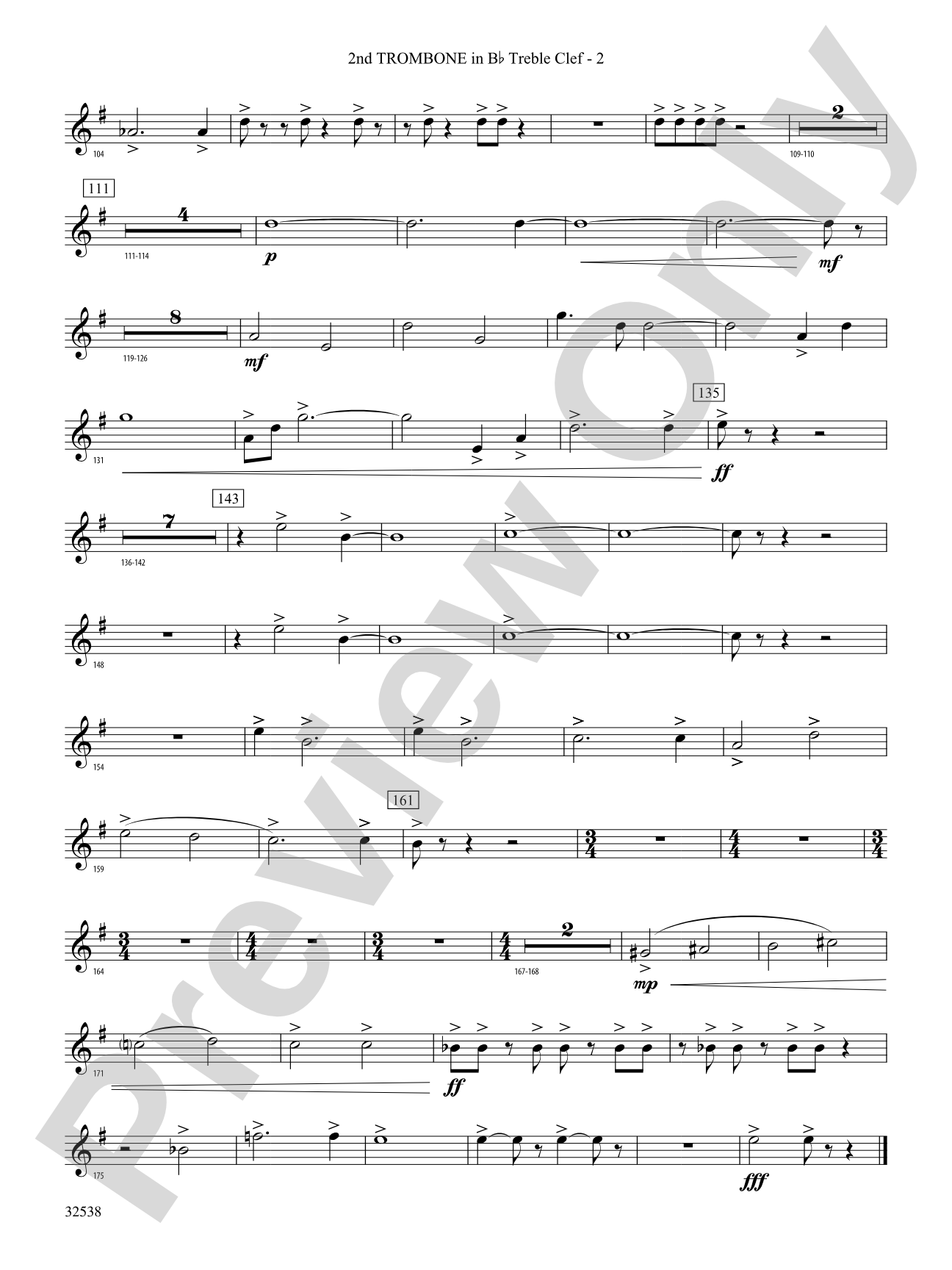

Ghost Dances: (wp) 2nd B-flat Trombone T.C.
Wounded Knee, 1890
By Roland Barrett
Grade: 4 (Medium)
Item: 00-PC-0014404_wpTN2TC
$5.99
Pickup currently not available
Description
Inspired by the tragic score of the Lakota Sioux massacre at Wounded Knee in 1890, this dynamic Roland Barrett original work is contemporary, featuring aleatoric musical fragments, and exceeds the bounds of an ultra-emotional musical presentation. Bravo! (6:45)


Don't just read it, hear it, play along with it, and watch your students grow with it. In MakeMusic Cloud, Ghost Dances: (wp) 2nd B-flat Trombone T.C. comes alive with professional accompaniment, adjustable tempo, and built-in practice tools that turn solo practice into real progress.
Open in the Player
Jump straight in and assign it today.
Start Your Free Trial
Open this title and explore the full library in minutes.
Sample Audio
1
Audio File
--:--
0:00
0:00
Sample Video
Additional Details
Series:
Belwin Symphonic Band
Publisher:
Alfred Music
Page Count:
288
SKU:
00-PC-0014404_wpTN2TC
More about this title
About the Composer: Roland Barrett

Roland Barrett has shaped multiple generations of musicians through his dual roles at the University of Oklahoma, where he joined the composition and music theory faculty in 2001. His fifteen years directing bands before that transition gave him deep insight into what ensemble musicians need to perform at their highest level, and that perspective infuses both his teaching and his published works.
With more than two hundred compositions and arrangements across symphonic band, chamber, and marching band contexts, Barrett has earned recognition at every significant venue in the field: his pieces appear on NPR broadcasts, in All-State and All-Region honor bands, and at major conventions including the Midwest Band & Orchestra Conference and the International Trumpet Guild. He arranges for the Pride of Oklahoma marching band and holds multiple ASCAP Plus awards, reflecting his standing as one of the most performed band composers working today.
Why we love this
Barrett uses aleatoric techniques and fragmented musical language to honor a tragic historical moment without resorting to sentimentality. The work demands that conductors and students engage seriously with both contemporary compositional practices and the cultural weight of the subject matter, making it substantial repertoire that respects both the music and the history it commemorates.
What to expect
The music moves between fragments and moments of surprising coherence, mirroring how memory and emotion fracture and reassemble when confronting loss. Passages emerge from silence with raw immediacy, while others dissolve into texture, creating an experience that is visceral without theatrical excess.
Who it's for
This Grade 4 work suits concert bands with players who can handle rhythmic independence and contemporary notation. It belongs in programs where directors prioritize meaningful historical and musical engagement alongside technical growth.
How to get the most out of it
- Study the aleatoric sections carefully in advance. These passages require you to establish clear cueing patterns so your ensemble knows when to enter and exit, even as individual parts have flexible rhythmic content.
- Balance the emotional intensity with structural clarity. The piece's power comes from how it's shaped across its 6:45 duration, not from relentless volume; use dynamic contrast to let the narrative emerge.
- Ensure all musicians understand the historical context before rehearsal begins. Their awareness of Wounded Knee and the Lakota Sioux story will deepen their interpretive choices and collective commitment to the work.
How to use it
Program this as a centerpiece for a concert exploring music's role in witnessing history, either pairing it with other contemporary works or positioning it as the emotional anchor of a diverse concert. Its 6:45 length makes it substantial enough to command a program's focus without requiring padding.
Skills your students will build
- Reading and executing aleatoric notation with ensemble precision
- Responding to conductor cues in rhythmically flexible passages
- Connecting musical expression to historical and cultural context
- Balancing dynamic control across sustained passages and fragmented phrases
- Ensemble cohesion when individual parts operate with independent rhythmic freedom