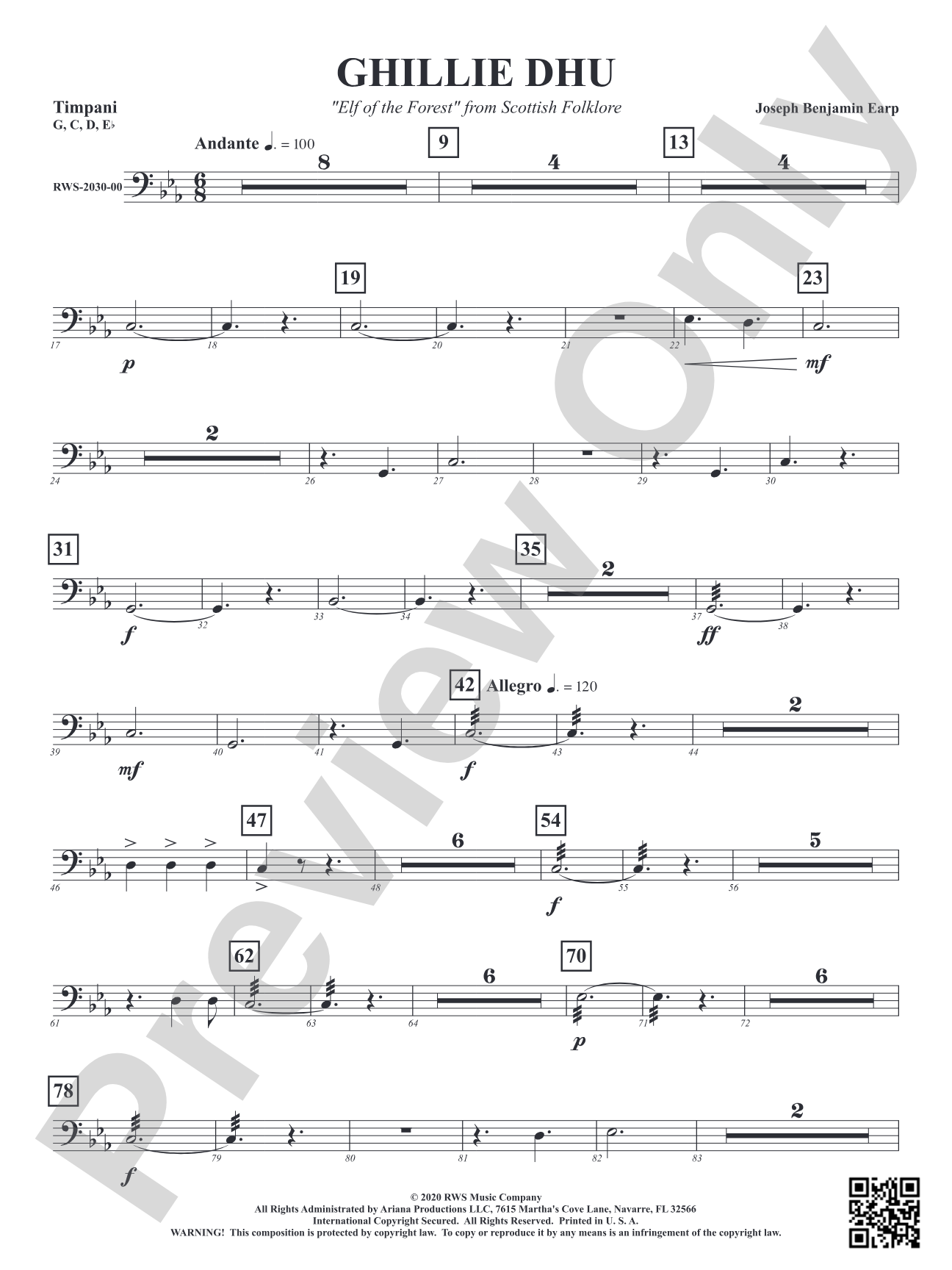
Ghillie Dhu - "Elf of the Forest" from Scottish Folklore: Timpani Sheet Music Preview

Ghillie Dhu - "Elf of the Forest" from Scottish Folklore: Timpani

"Elf of the Forest" from Scottish Folklore

By Joseph Benjamin Earp

Grade: 3.5

Item: 98-PC-RWS2030_TMP

Digital Download
$3.99
Description
Ghillie Dhu (Gill-e Dew) "Elf of the Forest" is inspired by a friendly but often wild creature from Scottish Folklore. This mythical being is given life through the captivating writing of Joseph Benjamin Earp. A wonderful teaching tool for instrumental ensembles focused on polyrhythms and compound time signatures. Appropriate for any concert or festival performance.

Original Item#: RWS-2030-00

Ghillie Dhu - "Elf of the Forest" from Scottish Folklore: Timpani isn't in MakeMusic Cloud just yet...but it could be. Let us know you'd like to see it, and you'll help shape what comes next. In the meantime, start a free trial and dive into thousands of interactive titles your students can play along with today.

Sample Audio
0:00
0:00
Sample Video
Additional Details
Series: RWS - Concert Band
Publisher: RWS Music Company
SKU: 98-PC-RWS2030_TMP

More about this title

About the Composer: Joseph Benjamin Earp

Joseph Benjamin Earp brings a keen ear for orchestration and a gift for crafting engaging concert band literature. His work draws inspiration from literary and folkloric sources, translating narrative and atmosphere into instrumental color and rhythmic vitality.

Why we love this

Earp crafts a piece that treats polyrhythms and compound meters as musical storytelling devices rather than technical hurdles. The Scottish folklore inspiration gives your ensemble a vivid character to shape, and the writing sits at a sweet spot where Grade 3.5 bands can sound genuinely sophisticated without drowning in notation.

What to expect

Mischievous and mercurial, like watching something half-wild dart through a forest clearing. The polyrhythmic textures create a sense of restless motion and unpredictability, anchored by the solidity of Scottish folklore tradition. There's magic in the layering, humor in the rhythmic surprises, and genuine beauty in how the parts converge.

Who it's for

Concert bands at the Grade 3.5 level ready to tackle compound meters and overlapping rhythmic patterns with confidence. This works equally well for school ensembles preparing for a concert or festival and for groups seeking a teaching piece that deepens rhythmic literacy without sacrificing musical payoff.

How to get the most out of it

  • Establish the polyrhythmic layers separately in sectionals before bringing them together. Have one group lock in while others add their patterns gradually.
  • Find the pulse beneath the compound time signatures by conducting in the larger beat unit rather than subdividing excessively.
  • Lean into the "wild creature" energy described in the program notes. This piece rewards rhythmic vitality and slightly unpredictable articulation choices that keep the mythology alive.
  • Balance clarity with blend. The polyrhythmic writing demands each line be heard distinctly, but the overall ensemble sound should feel woven together, not fragmented.

How to use it

Program this early in your concert to establish an energetic tone, or pair it with other folk-inspired works for a thematic set. The teaching value makes it especially useful mid-season when your ensemble is ready to strengthen rhythmic independence but before major performance pushes.

Skills your students will build

  • Reading and performing polyrhythmic textures (simultaneous patterns in different meters or subdivisions)
  • Navigating compound time signatures with secure pulse and clarity
  • Maintaining independence while listening to other sections performing contrasting rhythmic ideas
  • Shaping phrasing and articulation within complex rhythmic contexts to serve musical expression

You May Also Like