
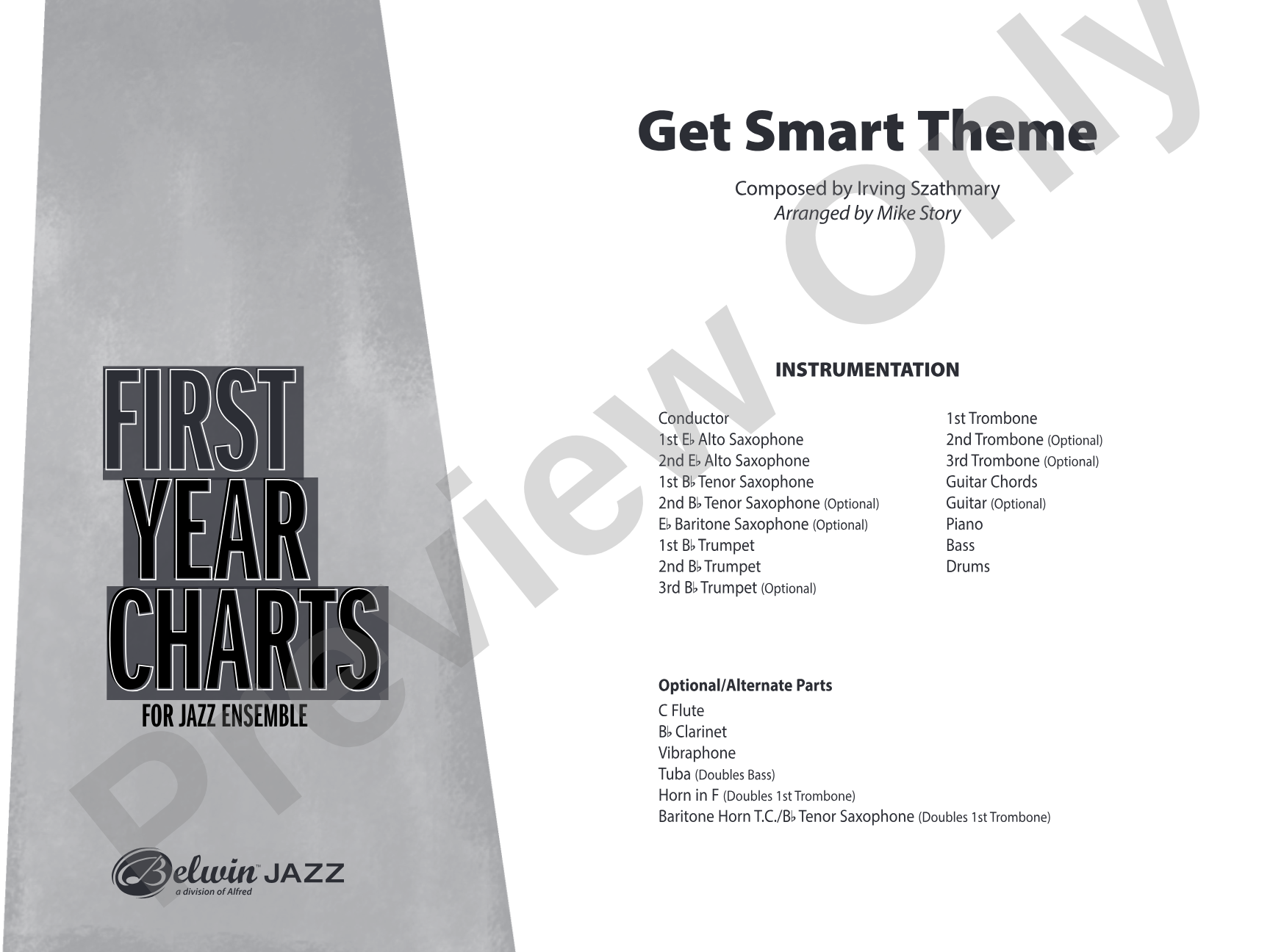
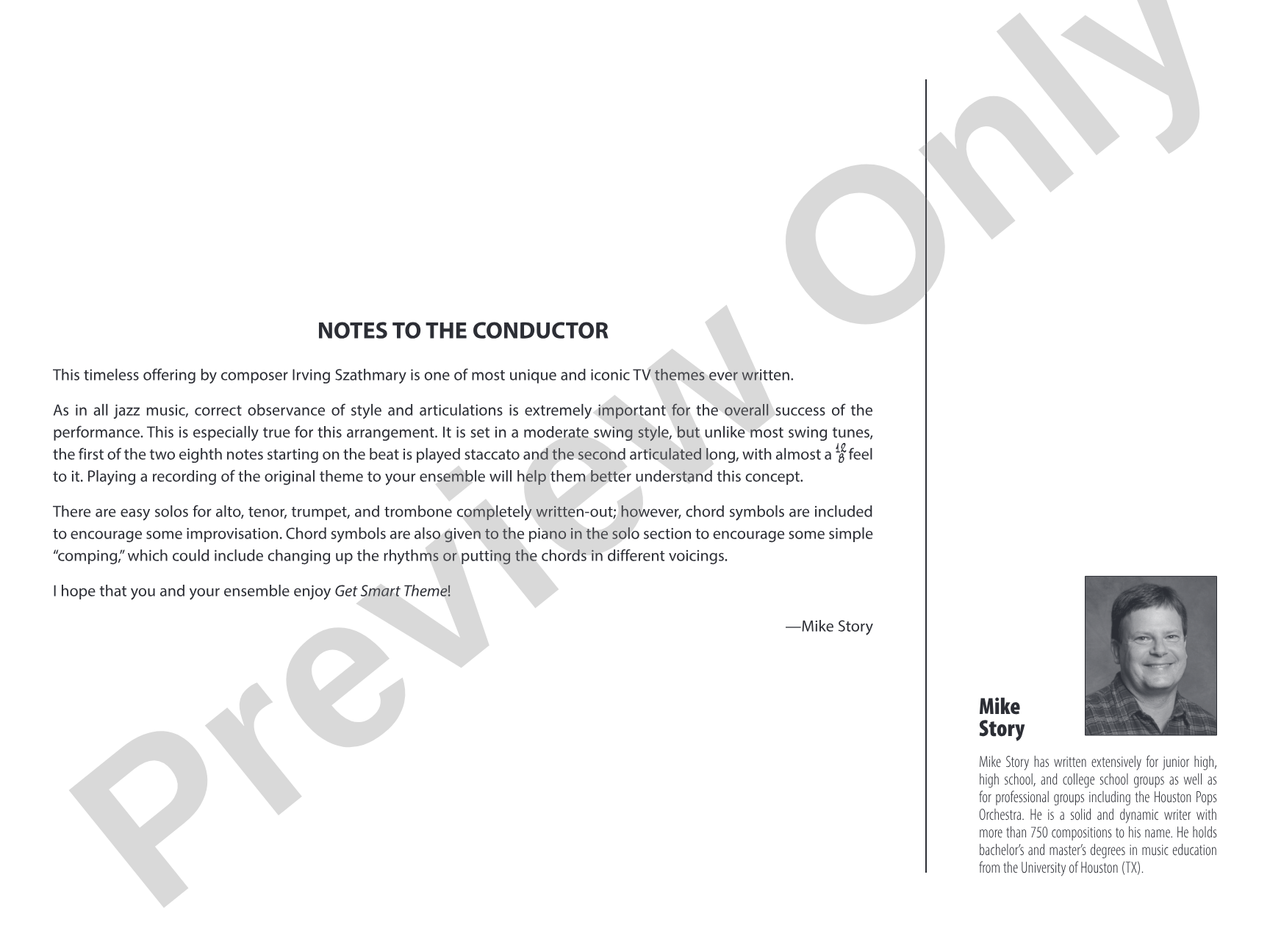
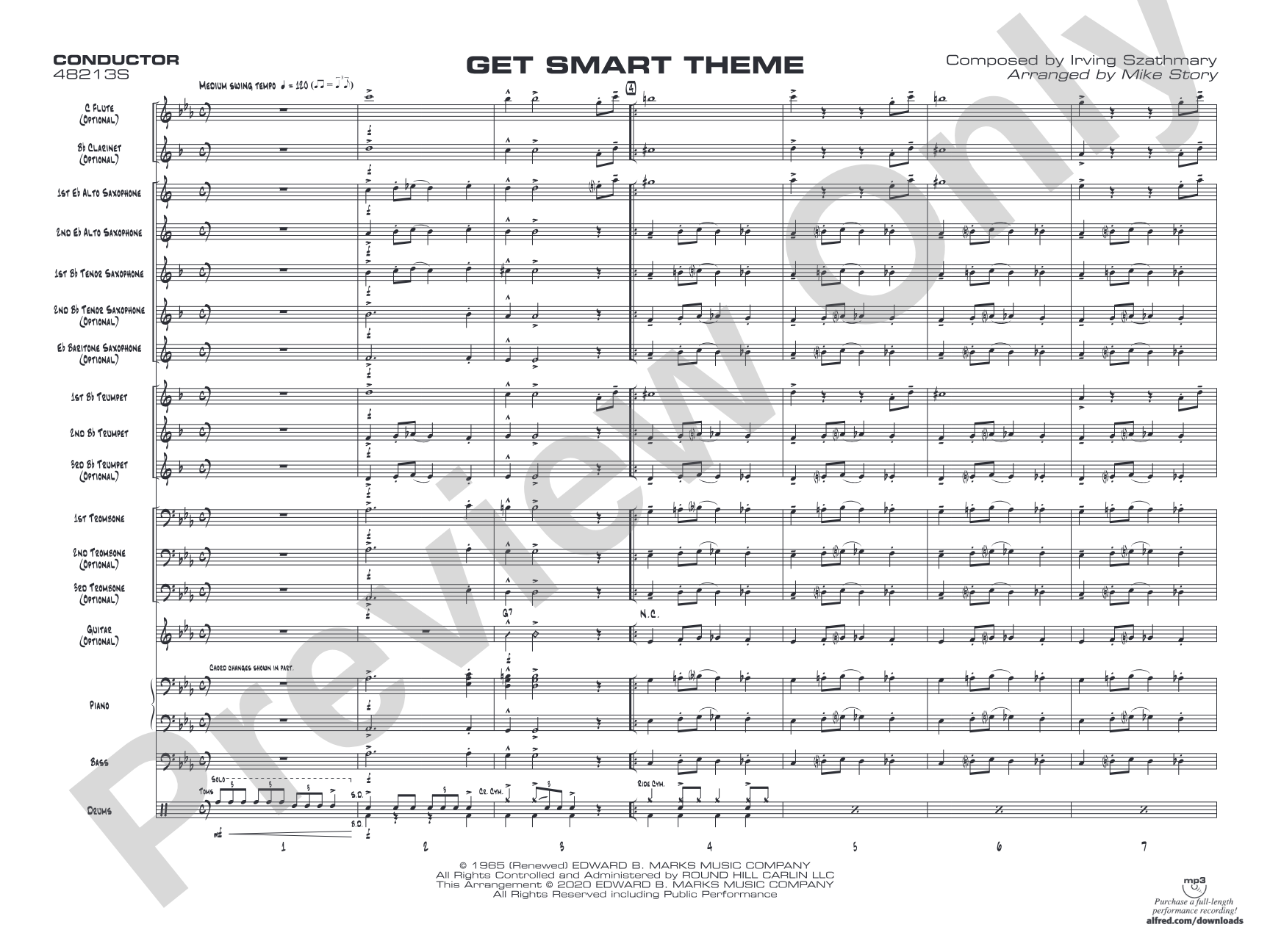
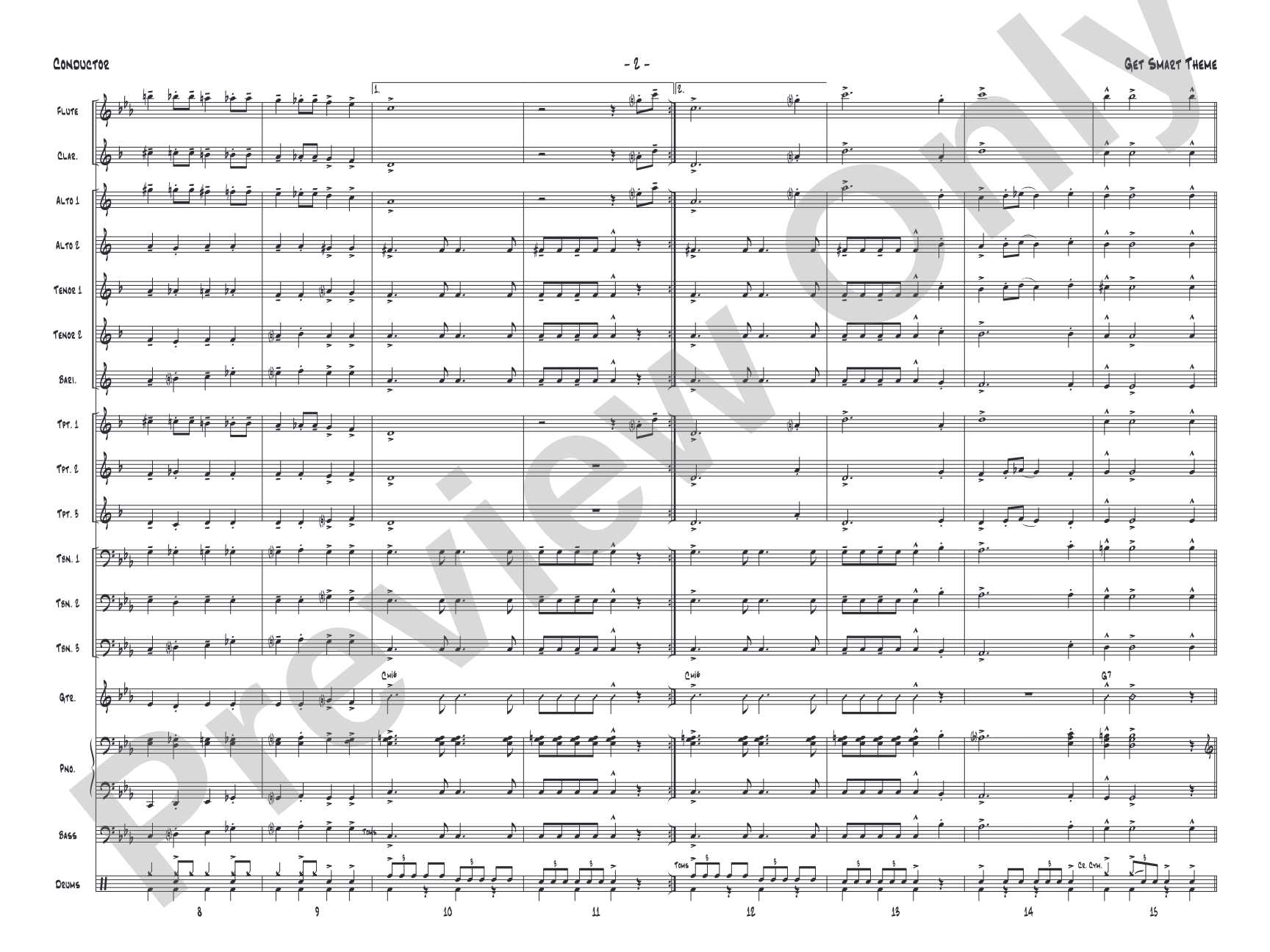
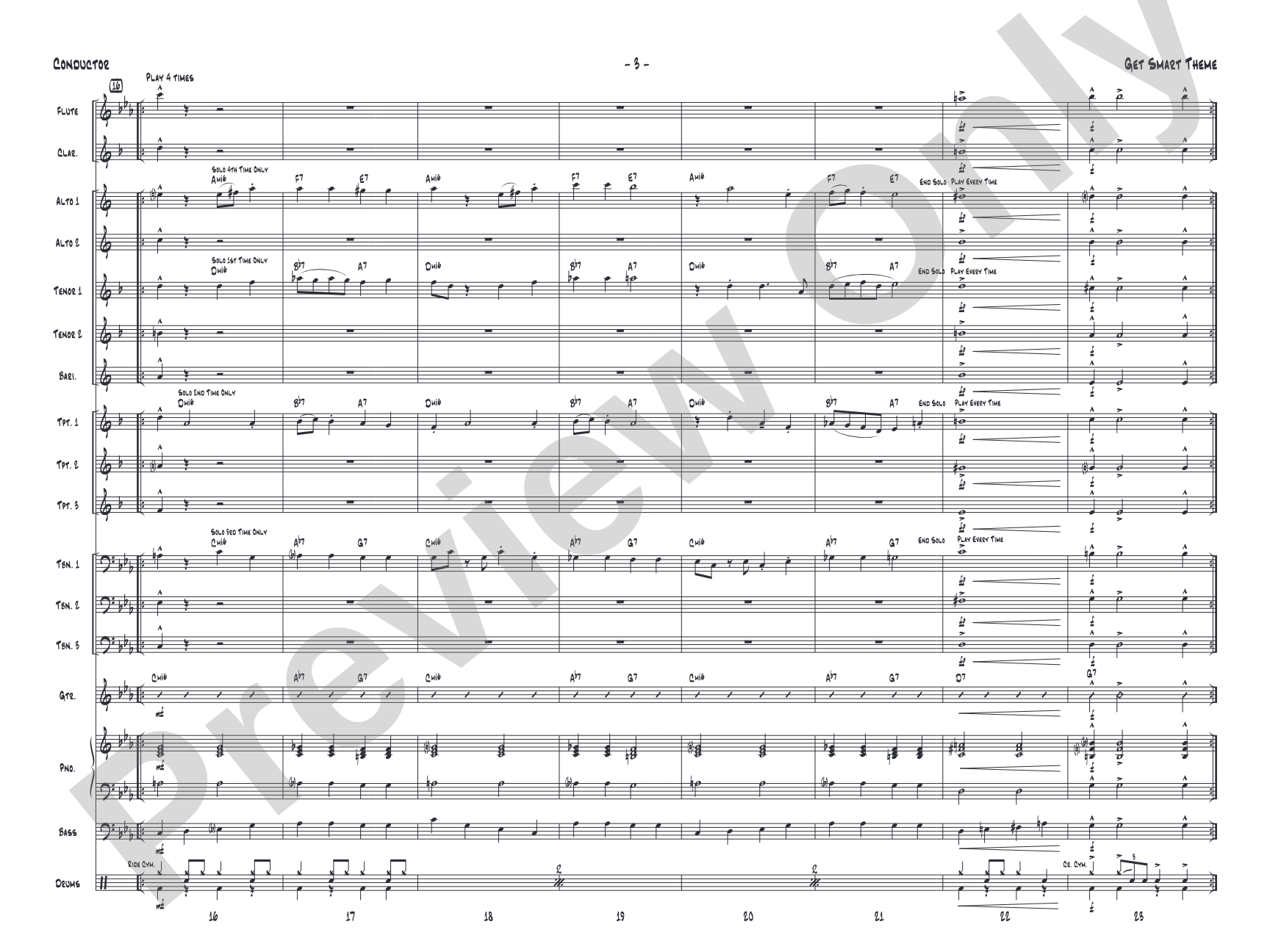
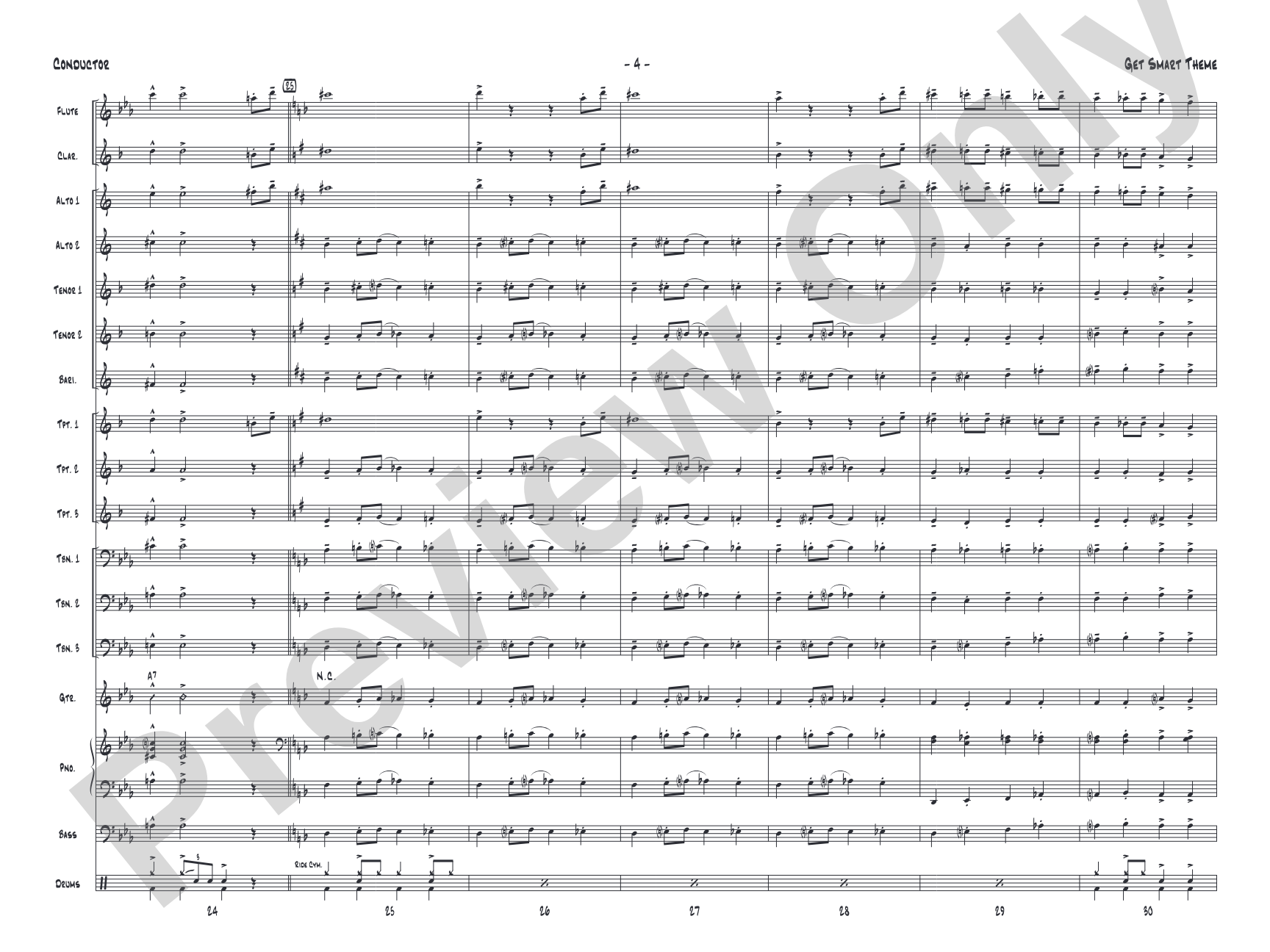
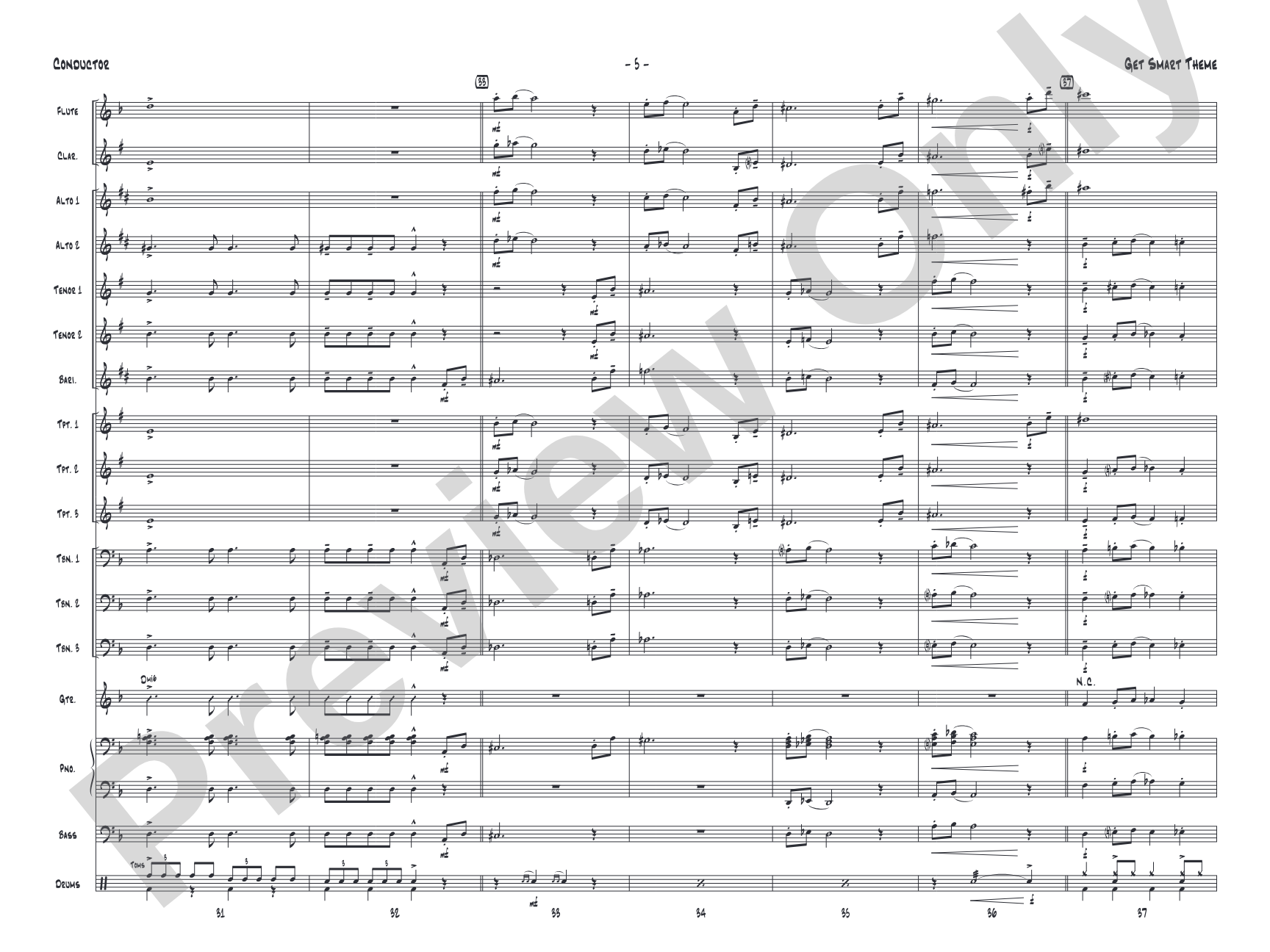
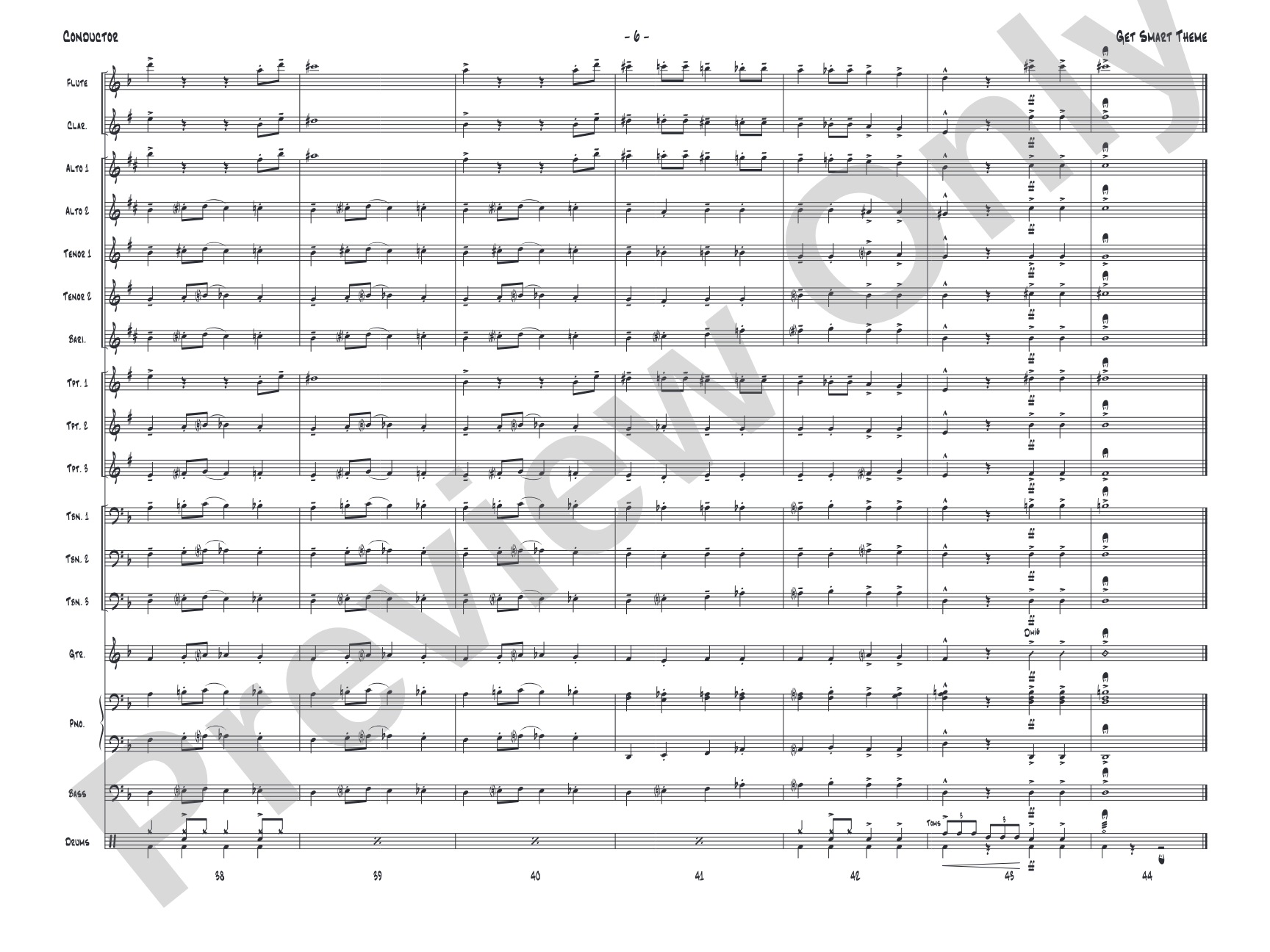

Get Smart Theme: Score
By Irving Szathmary / arr. Mike Story
Grade: 1 (Easy)
Item: 00-PR-0006788
$9.00
Pickup currently not available
Description
This catchy TV theme is a sure-fire winner at this easy level. Get Smart Theme arranged by Mike Story is a very accessible swing chart played at 120 BPM, no solos, and the trumpet 1 range is written E-flat top space. Simple, fun-to-play, effective, and perfect for any concert setting and with optional parts to include flute and vibes. (2:35).


Don't just read it, hear it, play along with it, and watch your students grow with it. In MakeMusic Cloud, Get Smart Theme: Score comes alive with professional accompaniment, adjustable tempo, and built-in practice tools that turn solo practice into real progress.
Open in the Player
Jump straight in and assign it today.
Start Your Free Trial
Open this title and explore the full library in minutes.
Sample Audio
1
Audio File
--:--
0:00
0:00
Sample Video
Additional Details
Series:
First Year Charts for Jazz Ensemble
Publisher:
Alfred Music
Page Count:
46
SKU:
00-PR-0006788
More about this title
About the Composer: Irving Szathmary
Irving Szathmary composed the original "Get Smart" theme, which became iconic television music in the 1960s. His work in TV and film scoring demonstrated a gift for memorable, accessible melodies that connect instantly with audiences.
Why we love this
Mike Story's arrangement captures everything that made the original theme infectious, then packages it for ensembles still building fundamental jazz ensemble skills. At 120 BPM with no solos and a trumpet 1 range that sits comfortably in the staff, this chart lets students focus on ensemble blend, swing feel, and rhythmic precision without technical overwhelm. It's genuinely fun to play and guaranteed to land with an audience.
What to expect
Playful and propulsive. The theme bounces with recognizable spy-comedy energy, bright and upbeat without demanding intensity. There's a wink in every measure, and the straightforward arrangement lets that personality shine through without distraction.
Who it's for
First-year jazz ensemble students and developing jazz programs looking for a repertoire piece that teaches swing style and ensemble fundamentals without requiring advanced soloists or technical virtuosity. Directors programming their first jazz concert will find this a crowd-pleasing anchor that builds student confidence.
How to get the most out of it
- Nail the rhythmic precision in the ensemble hits; this chart's clarity depends on tight unison and section synchronization, especially in the written parts where the melody passes between sections.
- Front the swing feel from the first rehearsal. Even at this accessible level, students should understand that eighth notes are swung, not straight, and that a relaxed, behind-the-beat approach gives the tune its groove.
- Balance the optional flute and vibes parts carefully if you include them. These colors add texture without overwhelming the core ensemble, but they need to sit in the pocket rather than float on top.
- Keep the tempo steady at 120 BPM; this is energetic but not rushed, and it gives the arrangement room to breathe while maintaining the infectious forward motion of the original.
How to use it
This works beautifully as an opener or closer on a mixed jazz concert, or as a palate-cleansing piece between ballads and more complex charts. The familiar melody and compact length (2:35) make it ideal for shorter concert slots, and the optional instrumentation lets you include more players regardless of your ensemble configuration.
Skills your students will build
- Swing eighth-note feel and articulation
- Ensemble precision and section balance
- Reading lead sheet style arrangements
- Maintaining steady tempo in a groove-based context
- Responding to written rhythmic figures without soloing responsibility