
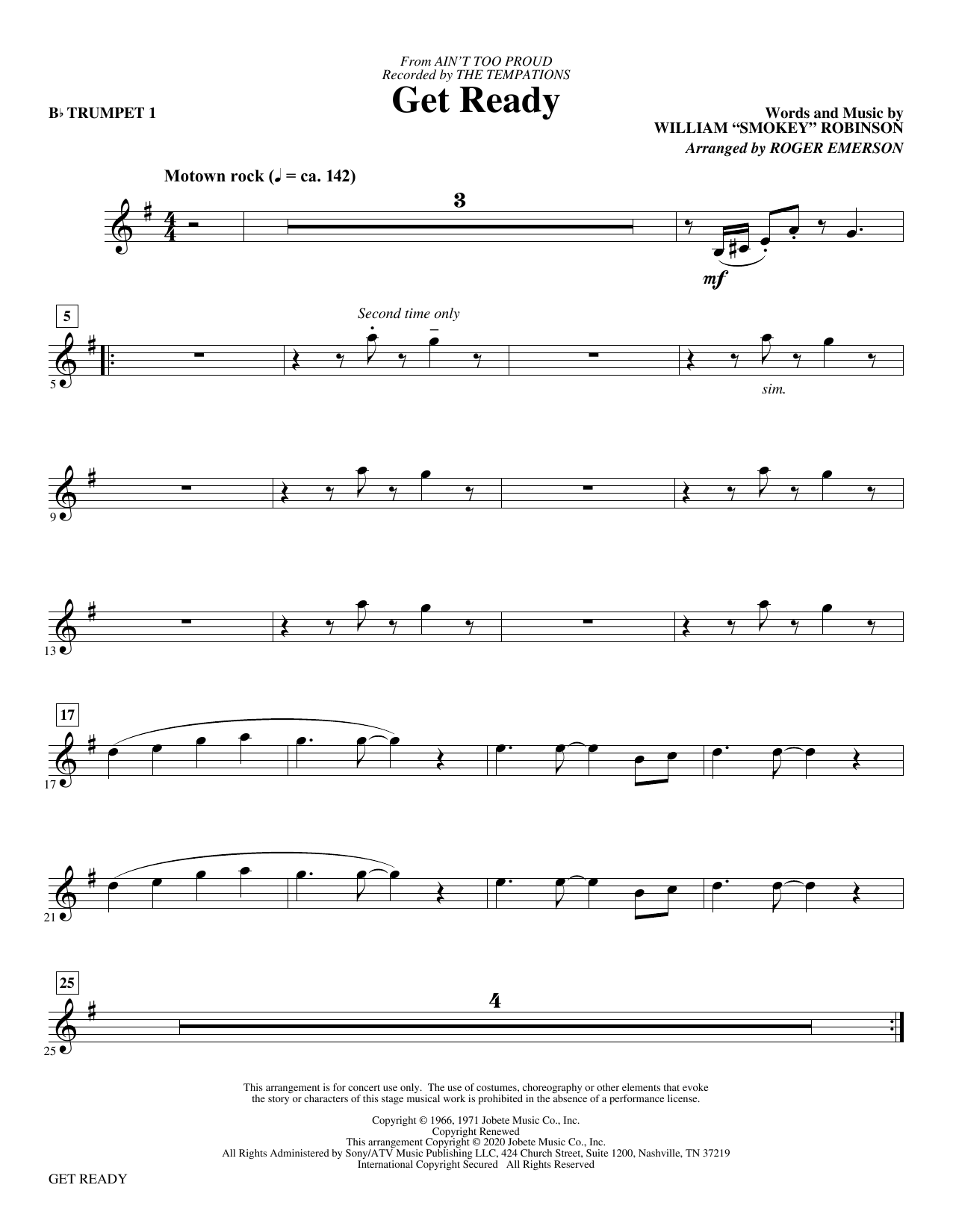

Get Ready (from Ain't Too Proud) (arr. Roger Emerson): Choral Instrumental Pak
As performed by The Temptations / Arranged by Roger Emerson
Item: 35-PK00463427
$30.00
Pickup currently not available
Buy Extra Parts (Digital PDF Download)
Parts Added to Cart!
Description
Significant for being the last Motown song written by Smokey Robinson for The Temptations, "Get Ready" is featured in the Broadway musical "Ain't Too Proud", which chronicles the life of the award-winning group. Featuring the unmistakable Motown sound, this is a surefire crowd-pleaser!


Get Ready (from Ain't Too Proud) (arr. Roger Emerson): Choral Instrumental Pak isn't in MakeMusic Cloud just yet...but it could be. Let us know you'd like to see it, and you'll help shape what comes next. In the meantime, start a free trial and dive into thousands of interactive titles your students can play along with today.
Request This Title
Tell us you want it.
Start Your Free Trial
Explore everything that's ready to play right now.
Sample Audio
No sample audio found.
Sample Video
No sample videos found.
Additional Details
Publisher:
Hal Leonard
SKU:
35-PK00463427
More about this title
About the Artist: The Temptations
The Temptations emerged from Detroit in the early 1960s to become one of Motown Records' most iconic groups. Their polished vocal harmonies, sharp choreography, and ability to blend soul, pop, and R&B made them essential architects of the Motown sound. The group's legacy spans decades of hit records, television performances, and cultural influence that fundamentally shaped American popular music.
For music educators, The Temptations represent a masterclass in ensemble singing and showmanship. Their recordings demonstrate how precision, blend, and rhythmic sophistication can elevate popular music to an art form. Teaching their arrangements gives students direct access to the vocal and performance standards that defined an era.
Why we love this
Roger Emerson captures the infectious groove and vocal swagger of this Motown classic in a way that energizes any ensemble. The arrangement respects the original's iconic elements while remaining accessible for high school and community choirs, making it both authentic and achievable. Your audience will recognize it immediately, and your singers will feel the satisfaction of nailing a piece of genuine popular music history.
What to expect
Smooth, confident, and irresistibly groovy. There's joy in the precision here; the kind of satisfaction that comes from nailing tight harmonies over a compelling rhythm. The Motown DNA runs through every measure, giving performers access to a sound that feels both timeless and alive.
Who it's for
High school and community choirs looking for a contemporary piece with genuine cultural weight. This works equally well for competitive show choirs or traditional concert programs where you want to reach audiences beyond the usual classical repertoire.
How to get the most out of it
- Lock the rhythm section into the pocket early in rehearsals. The Motown feel depends entirely on how tightly the drums and bass sit together, which gives the singers permission to relax into the groove.
- Emphasize crisp articulation on the background vocal lines. Those signature 'Temptations' interjections need clarity and precision to cut through the mix.
- Let the lead vocalist own the phrasing. Smokey Robinson's original performance has unmistakable stylistic choices, so encourage your soloist to listen closely and claim their own interpretation rather than singing it straight.
- Shape the dynamic arc across the whole number. This arrangement builds momentum, so resist the urge to sing it at full volume from the downbeat.
How to use it
Feature this as a concert highlight that bridges your classical and popular offerings, or use it to open a set and immediately establish an energetic tone. It pairs naturally with other Broadway material, especially if you're building a program around contemporary musical theater or exploring American popular music history.
Skills your students will build
- Singing with precision and blend in a groove-based idiom
- Interpreting stylistic phrasing from recorded models
- Balancing solo and ensemble roles
- Maintaining rhythmic independence while singing in a rhythm section context
- Understanding the foundational elements of Motown-era vocal production