
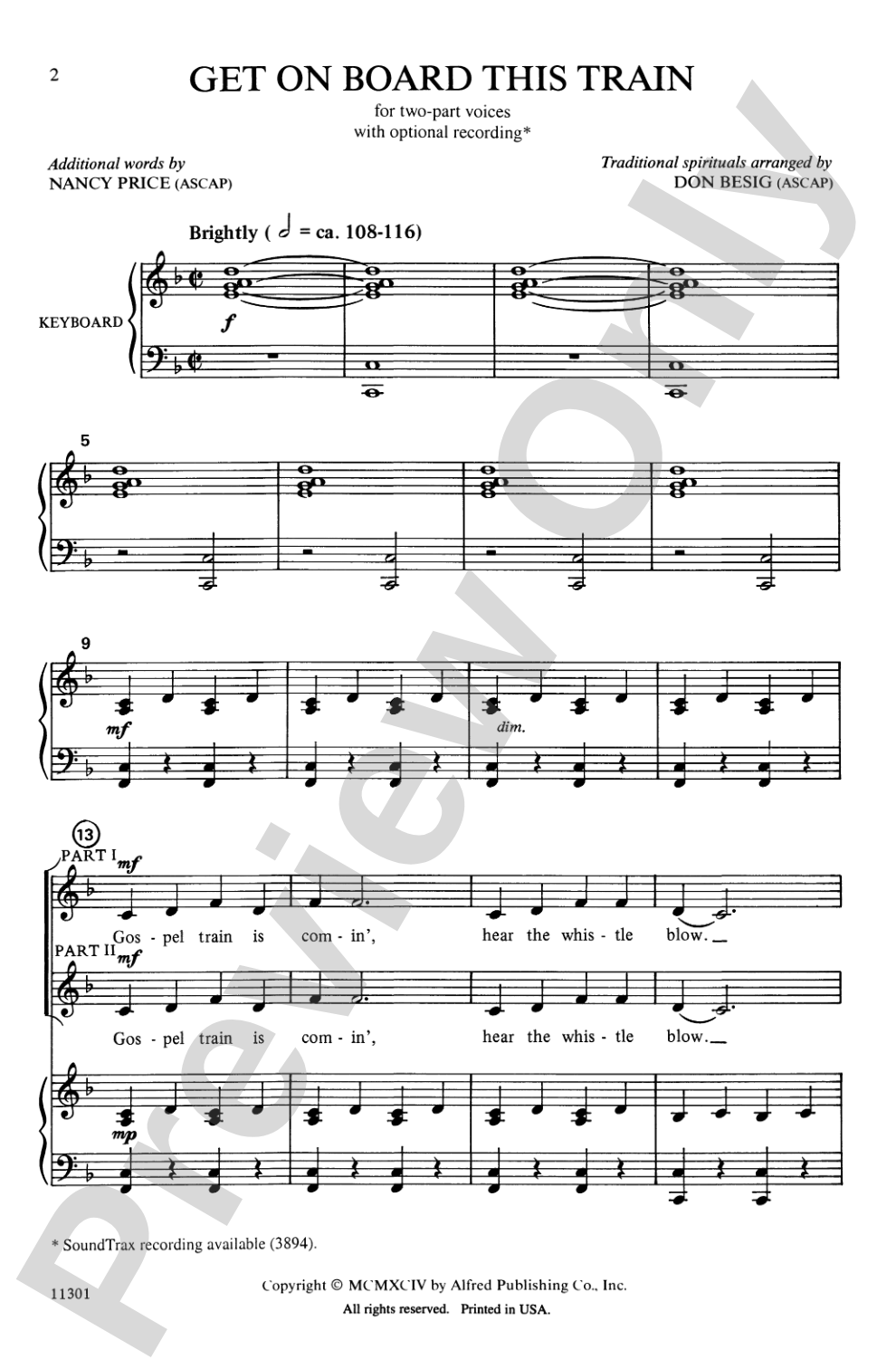

Get on Board This Train: 2-Part Choral Octavo
Music by Don Besig and Nancy Price
Item: 00-PO-0003114
$2.05
Minimum order quantity: 20 copies
Pickup currently not available
Description
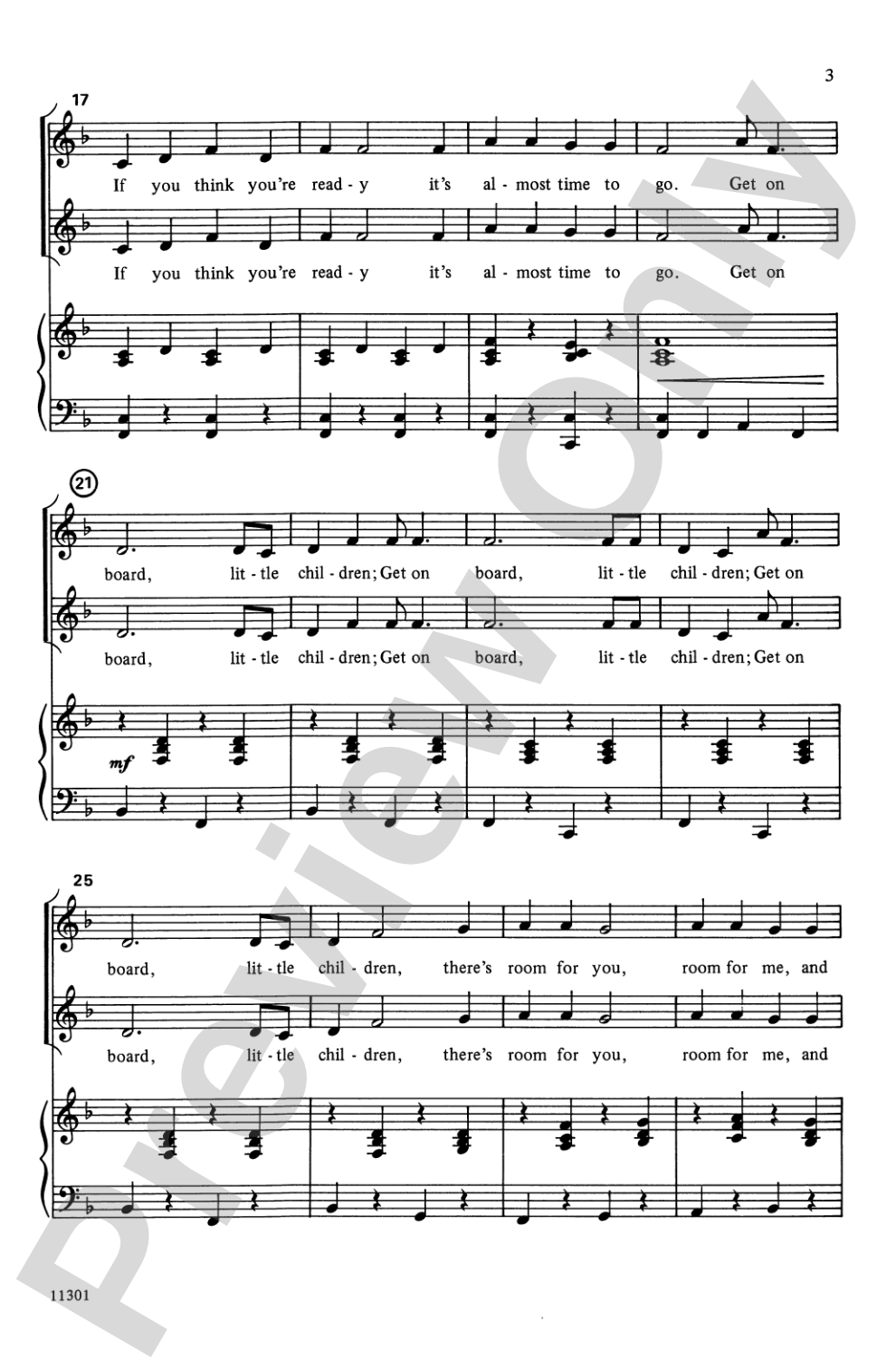
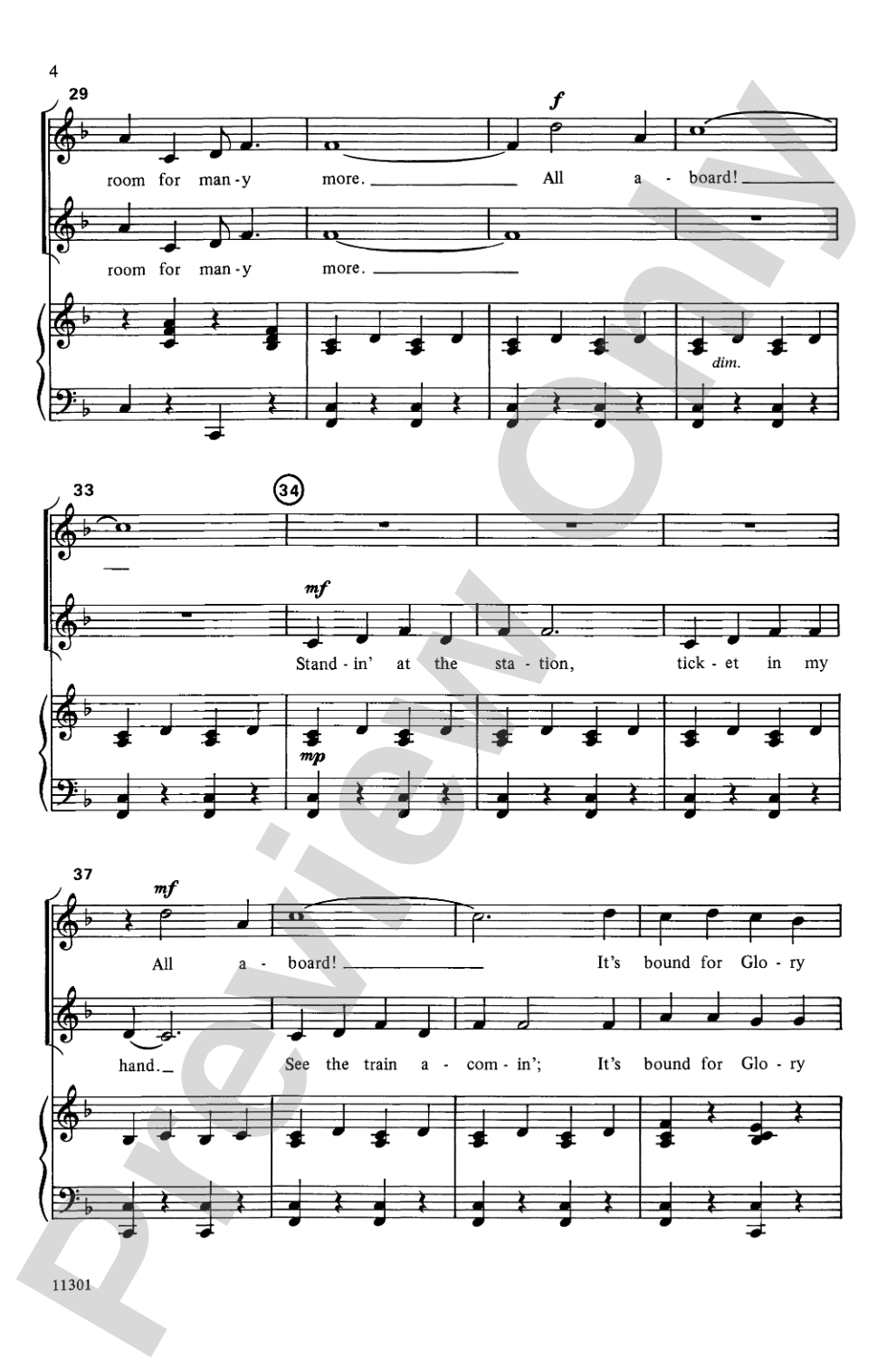
"Gospel train is comin'," so get on board for a delightful musical ride with this fun-to-sing number from Don Besig and Nancy Price. Two traditional spirituals, Get On Board, Little Children and This Train combine to create a great 2-part piece. Includes a speech choir section ("Clickety clack, clickety clack, hear that train comin' down the track."). P.S. The SoundTrax CD is a winner!


Get on Board This Train: 2-Part Choral Octavo isn't in MakeMusic Cloud just yet...but it could be. Let us know you'd like to see it, and you'll help shape what comes next. In the meantime, start a free trial and dive into thousands of interactive titles your students can play along with today.
Request This Title
Tell us you want it.
Start Your Free Trial
Explore everything that's ready to play right now.
Sample Audio
1
Audio File
--:--
0:00
0:00
Sample Video
No sample videos found.
Additional Details
Series:
Alfred Choral Designs
Publisher:
Alfred Music
Page Count:
12
SKU:
00-PO-0003114
More about this title
About the Composer: Don Besig
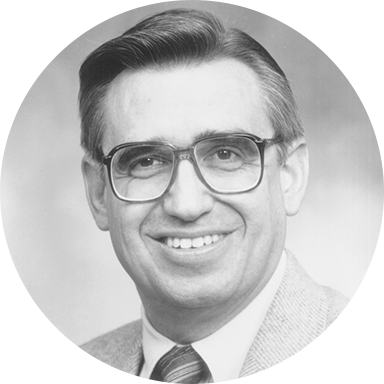
Don Besig spent 31 years directing music in western New York public schools, where his concert choirs and show choirs built reputations for strong performances at clinics, contests, and community events. His work across all grade levels revealed a consistent need: choral music written specifically for student singers and volunteer church choirs. That insight launched a prolific composing career that has produced over 350 original compositions and arrangements, with more than 15 million copies sold through leading school and church music publishers.
Besig has received multiple ASCAP Special Awards for standard music and maintains an active presence as guest conductor, clinician, and adjudicator at festivals and workshops across 40 states and Canada. He currently serves as director of music at Perinton Presbyterian Church in Fairport, NY, and holds degrees from Ithaca College and membership in Phi Mu Alpha, ACDA, MENC, NYSSMA, and ASCAP.
Why we love this
Besig and Price take two beloved spirituals and weave them together into something that feels both fresh and rooted in tradition. The speech choir section transforms what could be a straightforward arrangement into a theatrical moment your singers will actually enjoy rehearsing and performing. This is the kind of piece that reminds a young choir why they showed up in the first place.
What to expect
This piece captures the infectious energy and joy of a gospel train rolling down the tracks. You hear the locomotive rhythm, feel the momentum, and sense the spiritual invitation embedded in these traditional melodies. It's celebratory without being saccharine, playful without losing the deep roots of the spiritual tradition.
Who it's for
Middle school and high school choirs looking for repertoire that's genuinely fun to sing and doesn't require extensive vocal maturity. The two-part voicing makes it accessible to developing singers while the theatrical speech section and layered spirituals keep it interesting for more experienced groups.
How to get the most out of it
- Nail the rhythmic precision of the speech choir section by treating it as a rhythmic ensemble piece first. Lock in the "Clickety clack" pattern as a group before layering it with the sung portions.
- Lean into the gospel character with flexible phrasing in the melodic sections. These spirituals thrive on rhythmic lift and call-and-response energy, not metronomic precision.
- Use the recorded accompaniment to establish the groove and help singers hear how their parts sit against the harmonic foundation, especially valuable for younger or less experienced ensembles.
How to use it
Program this as a set piece at pops or gospel-themed concerts, or use it as a bridge between spiritual traditions and contemporary choral writing. It works equally well as a crowd-pleasing opener or as a high-energy moment in the middle of a program where the audience needs to wake up and smile.
Skills your students will build
- Two-part harmony singing and part independence
- Gospel and spiritual style conventions (rhythmic lift, flexible phrasing)
- Rhythmic ensemble work in the speech choir section
- Connecting text and character to musical delivery
- Blending two separate melodic traditions into a unified arrangement