
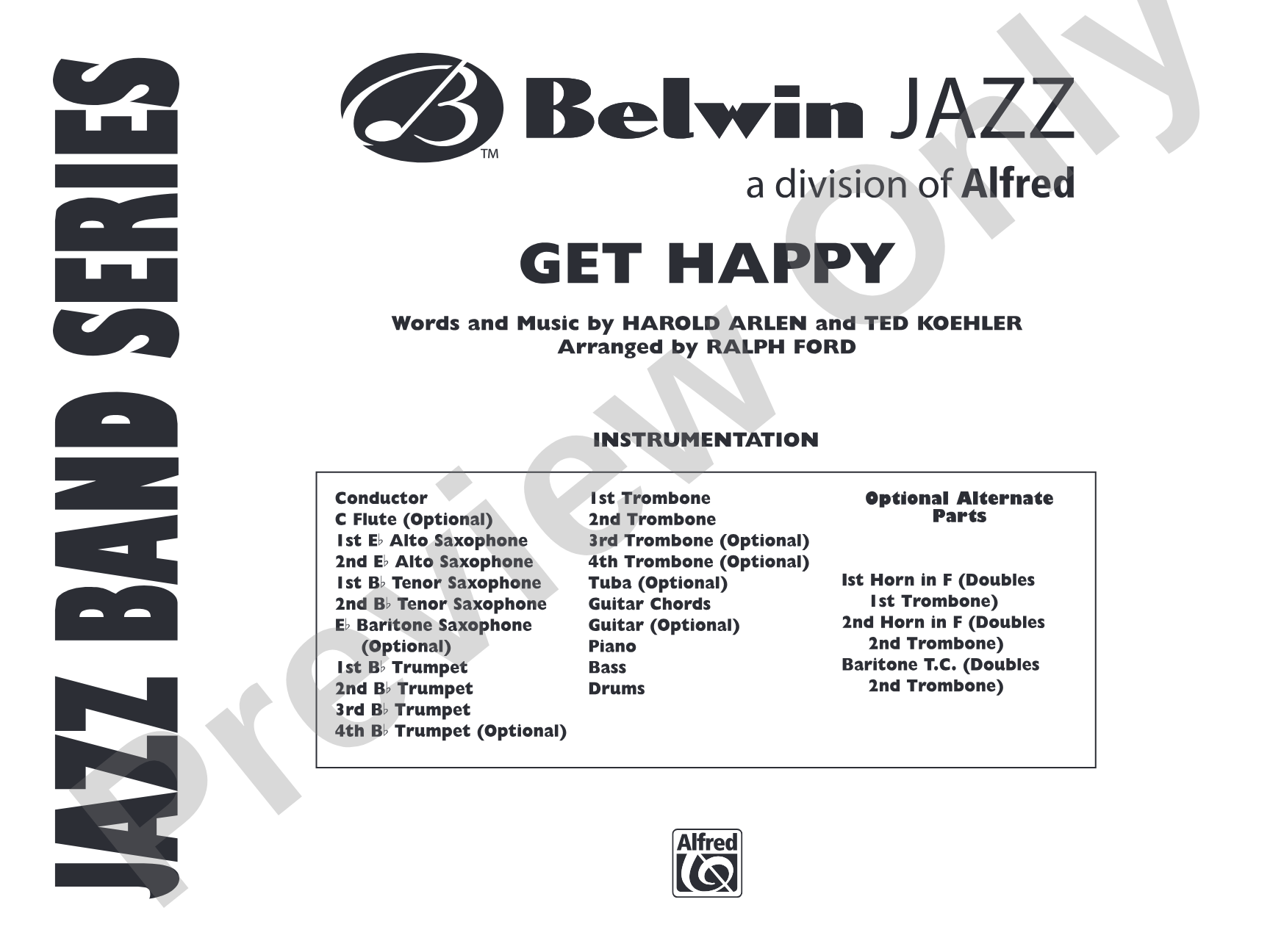

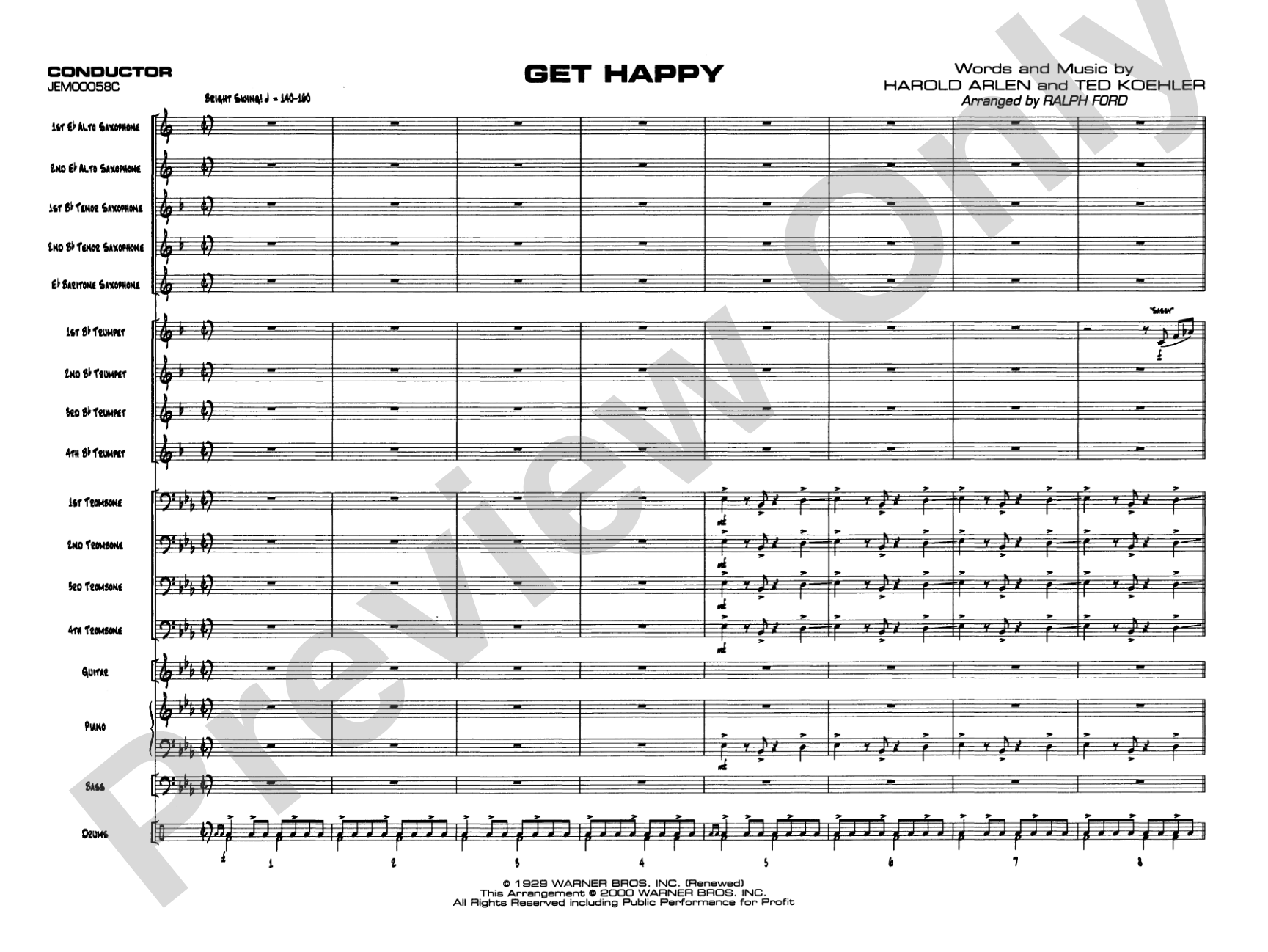
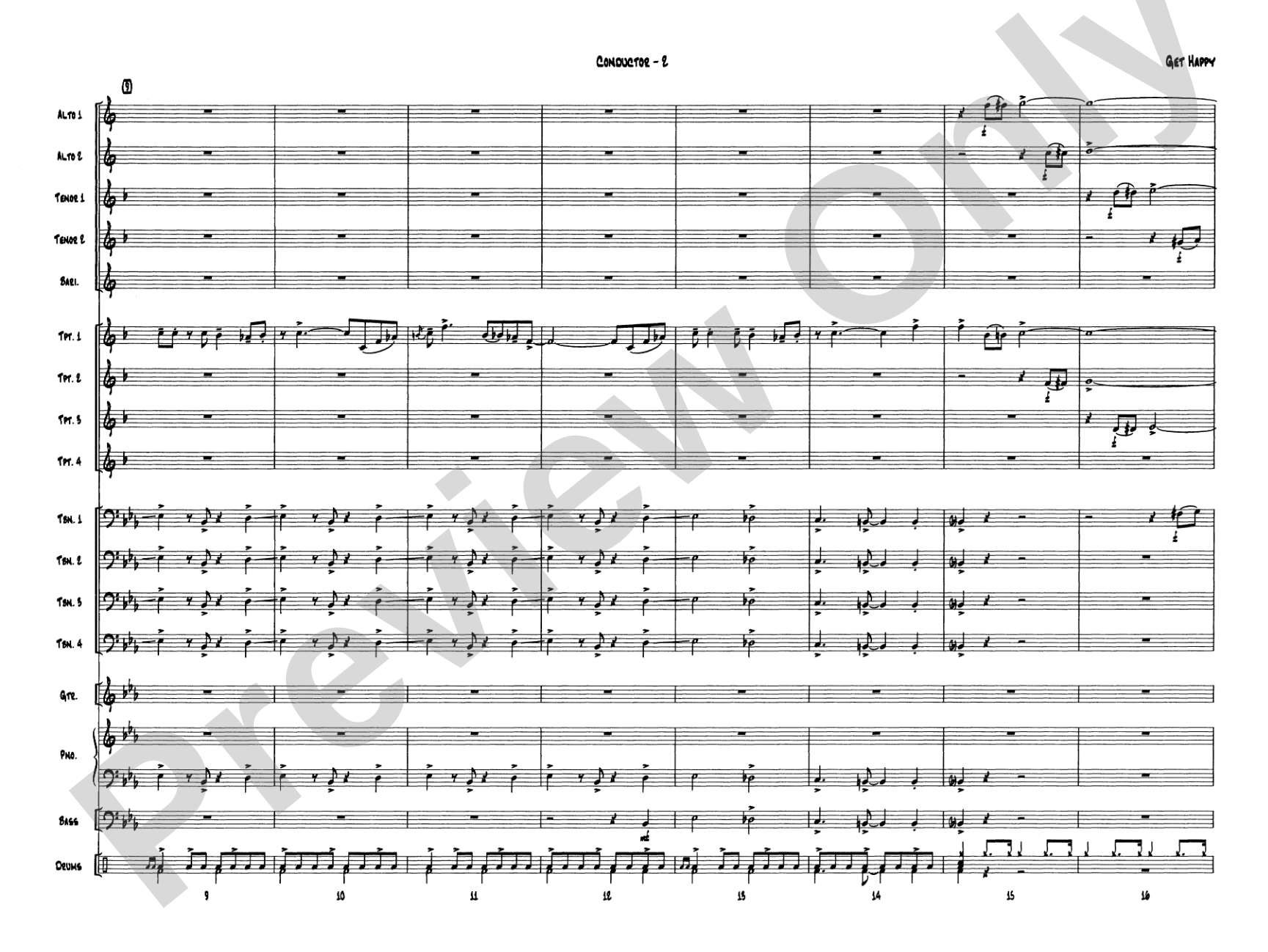
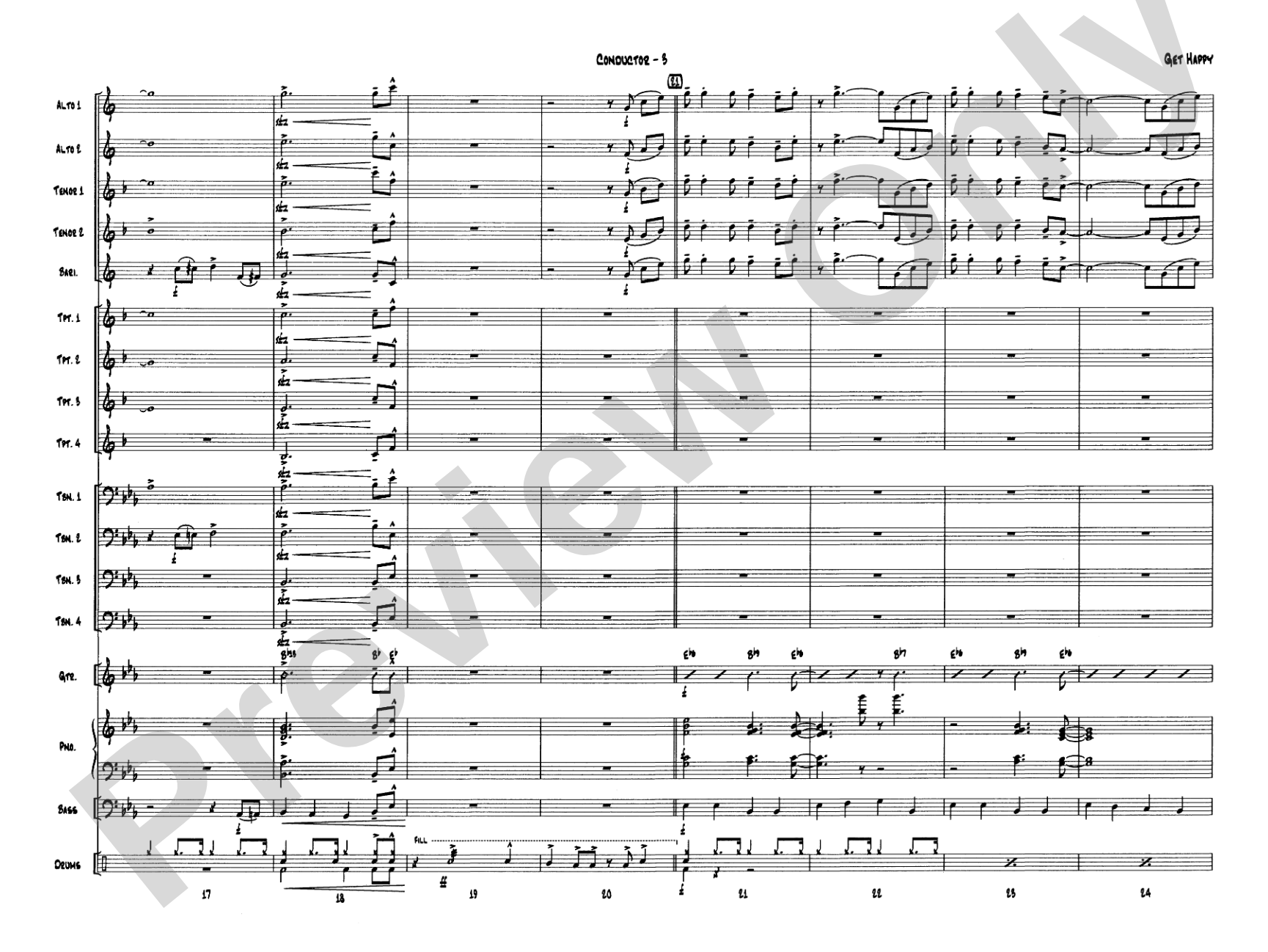
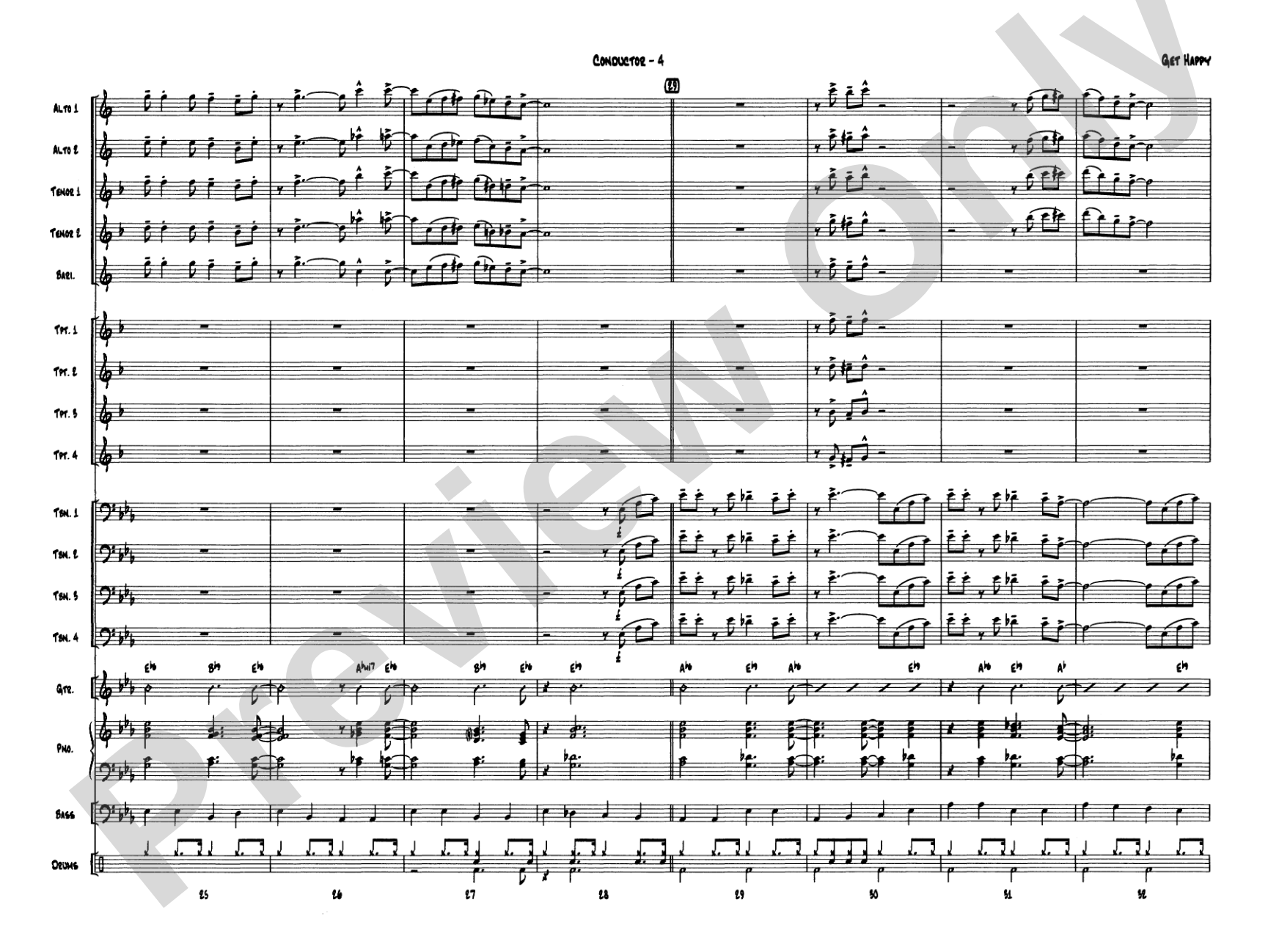
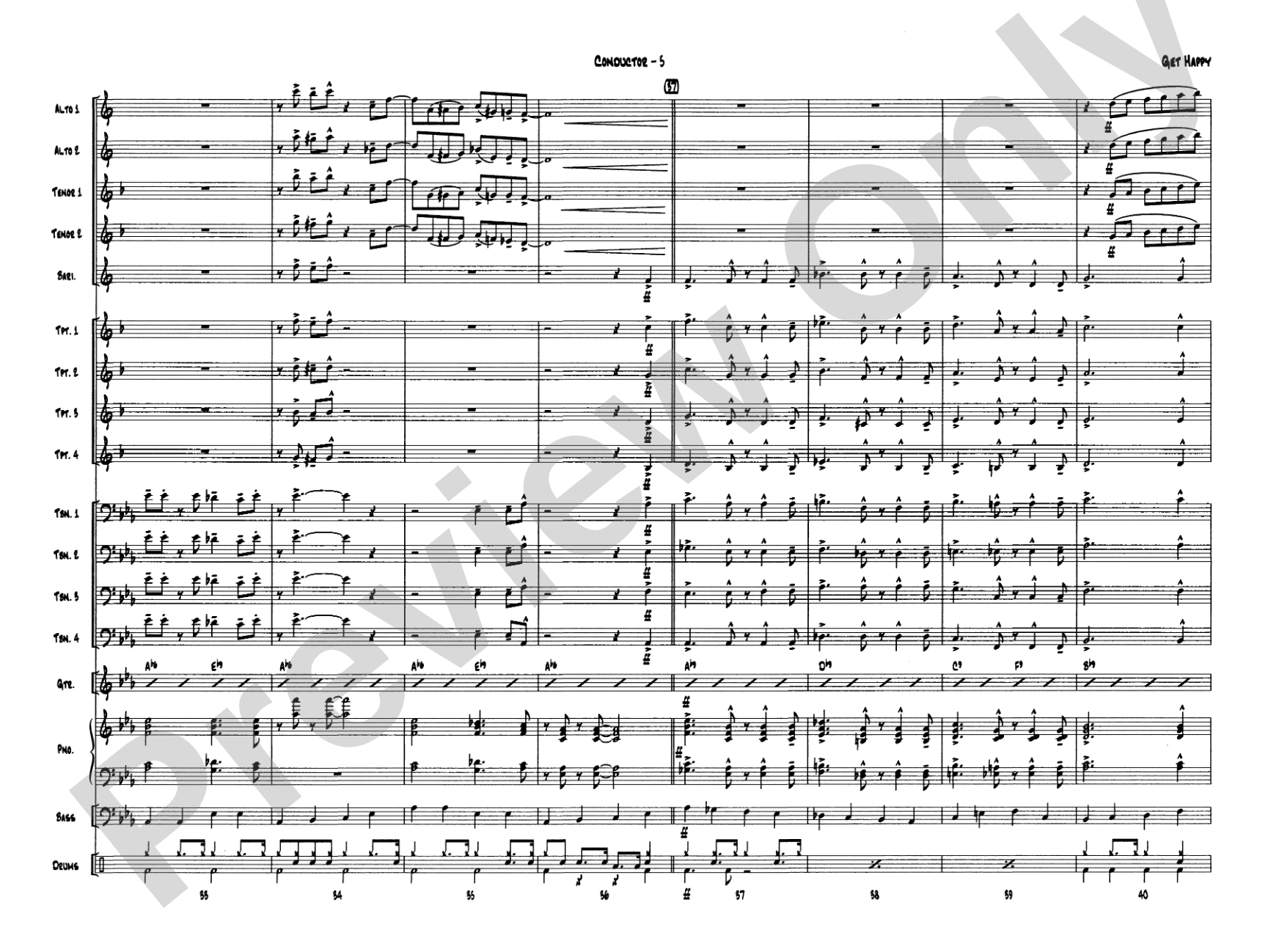
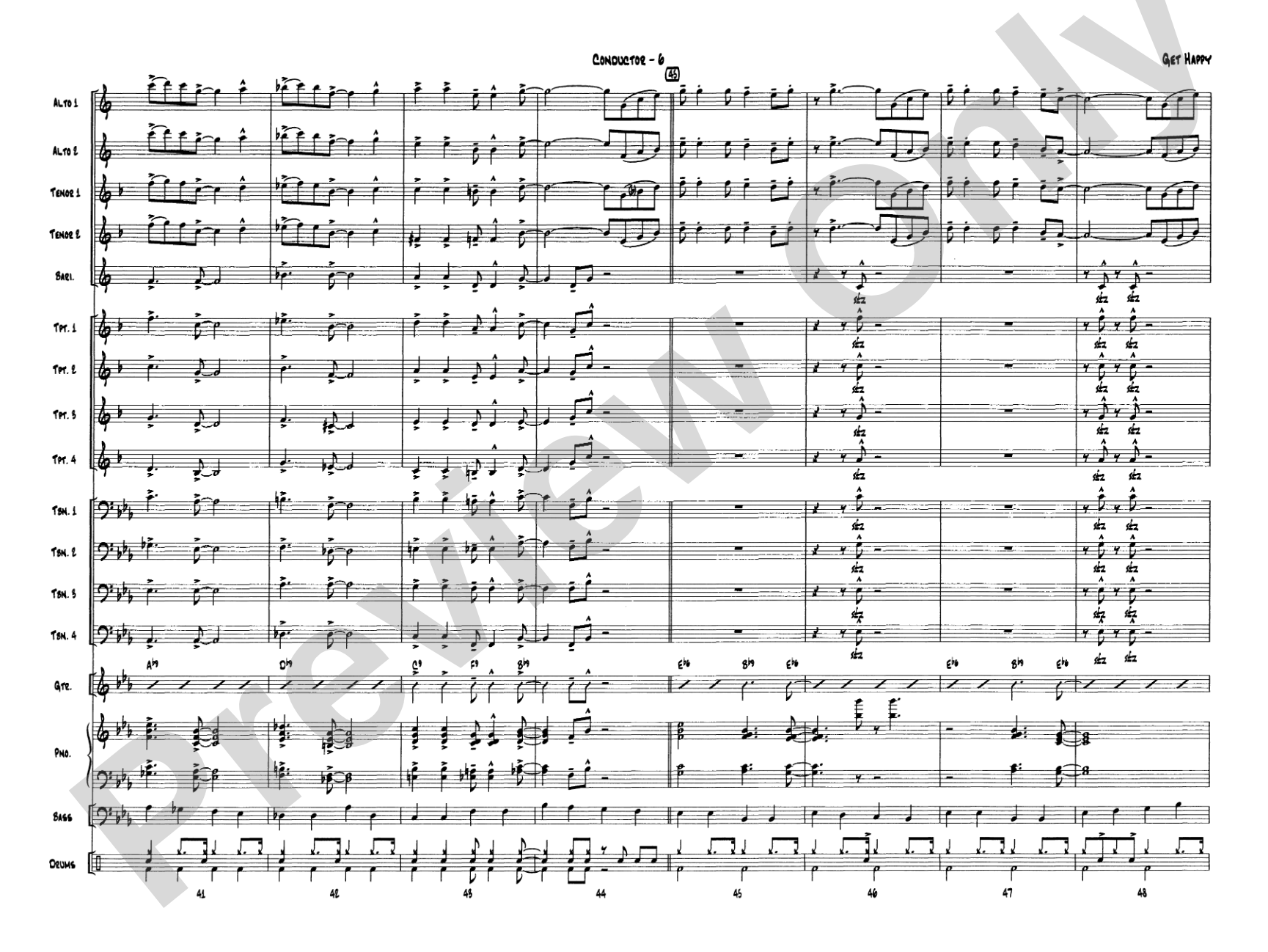
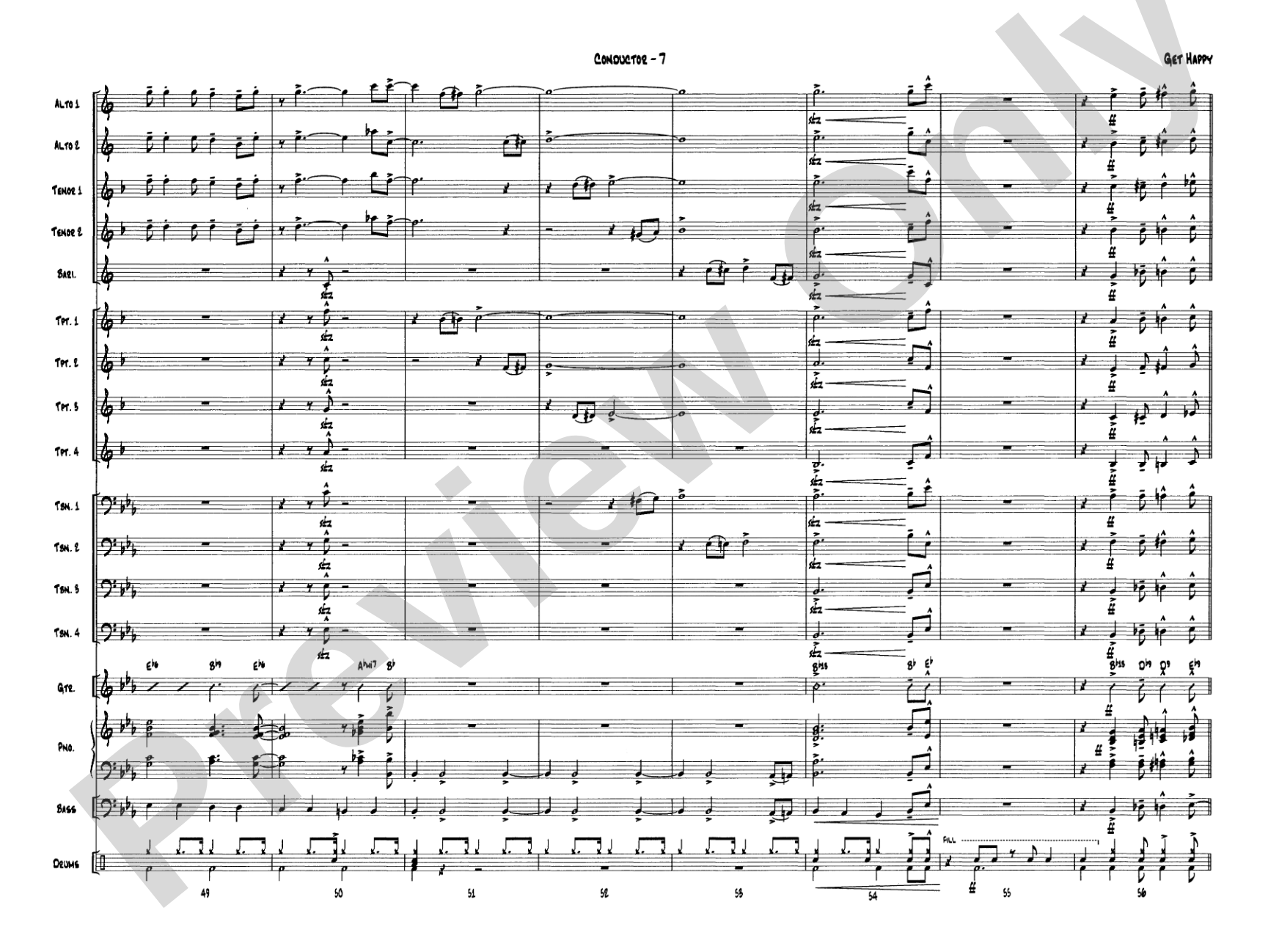
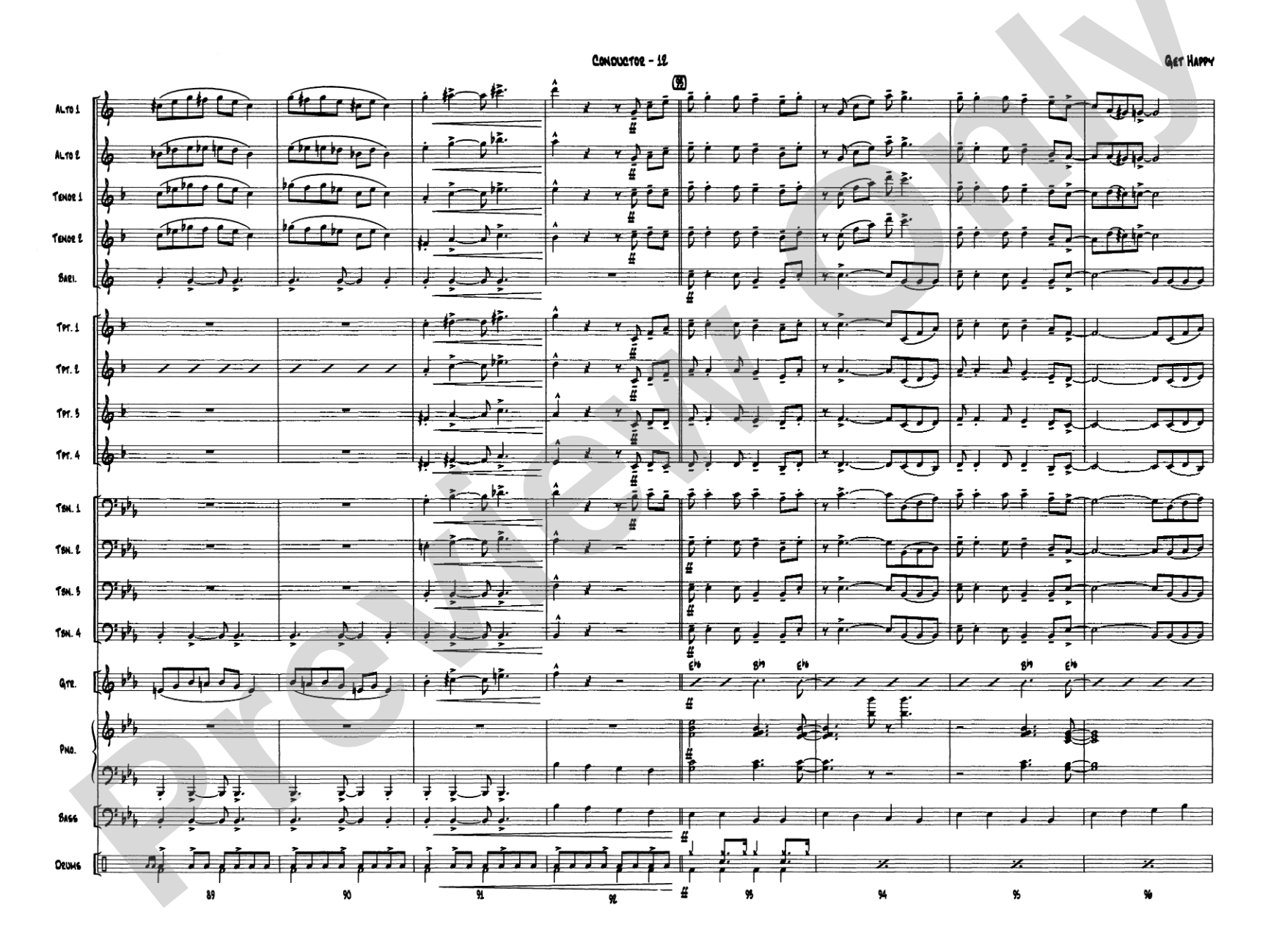
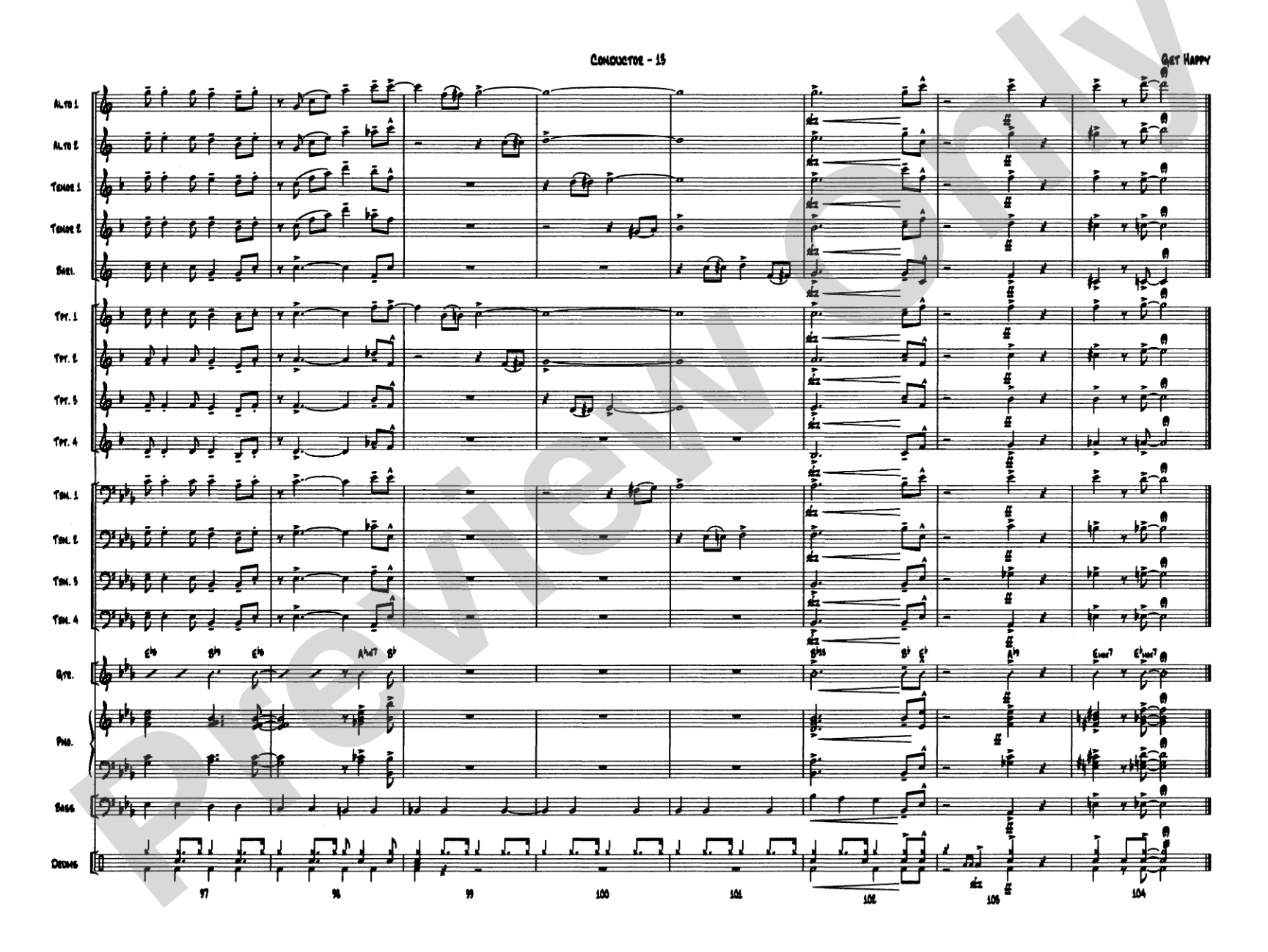


Get Happy: Jazz Ensemble Conductor Score & Parts
Arr. Ralph Ford
Grade: 2 (Medium Easy)
Item: 00-PK-0002477

$48.00
One moment…
Description
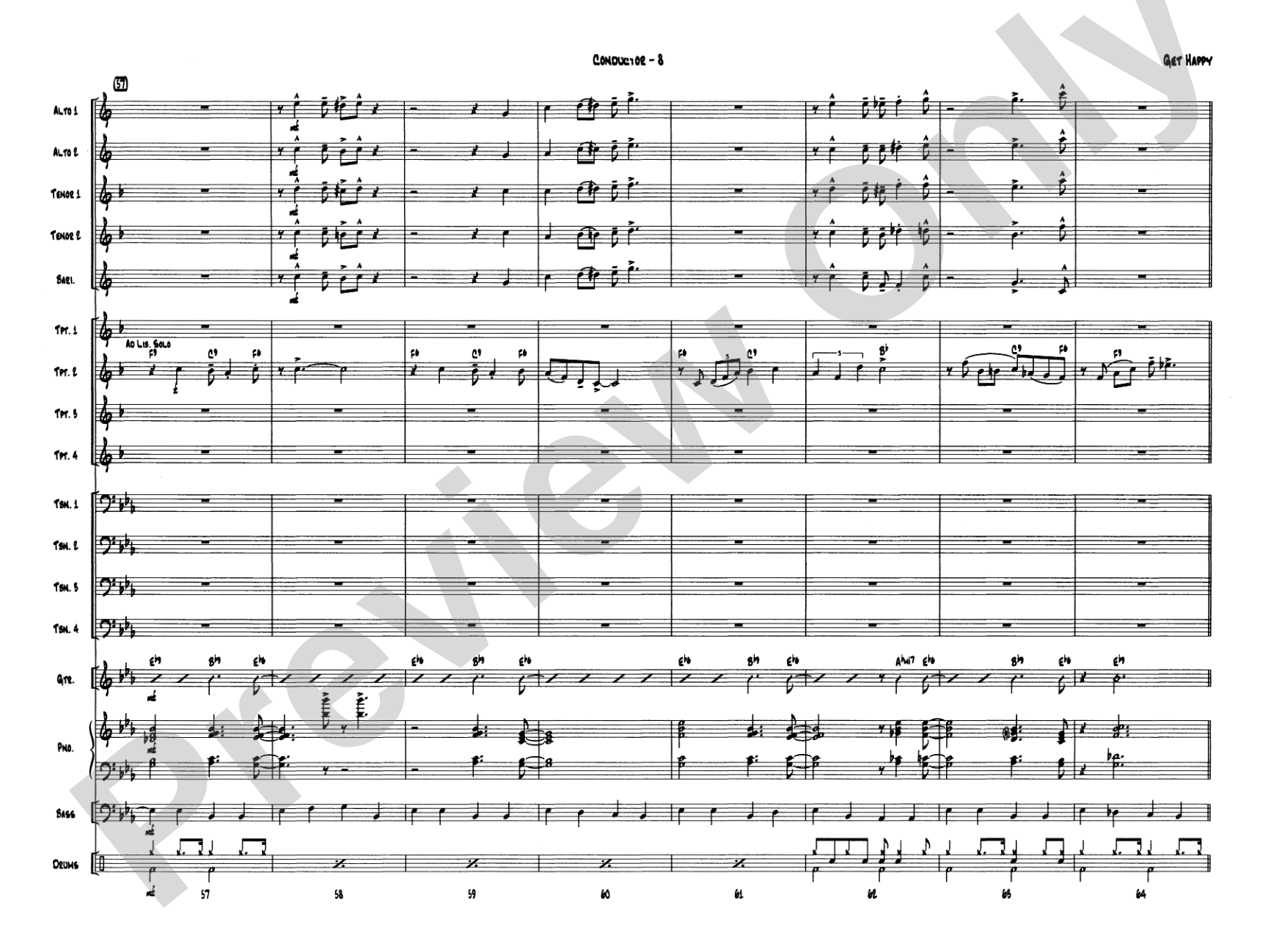
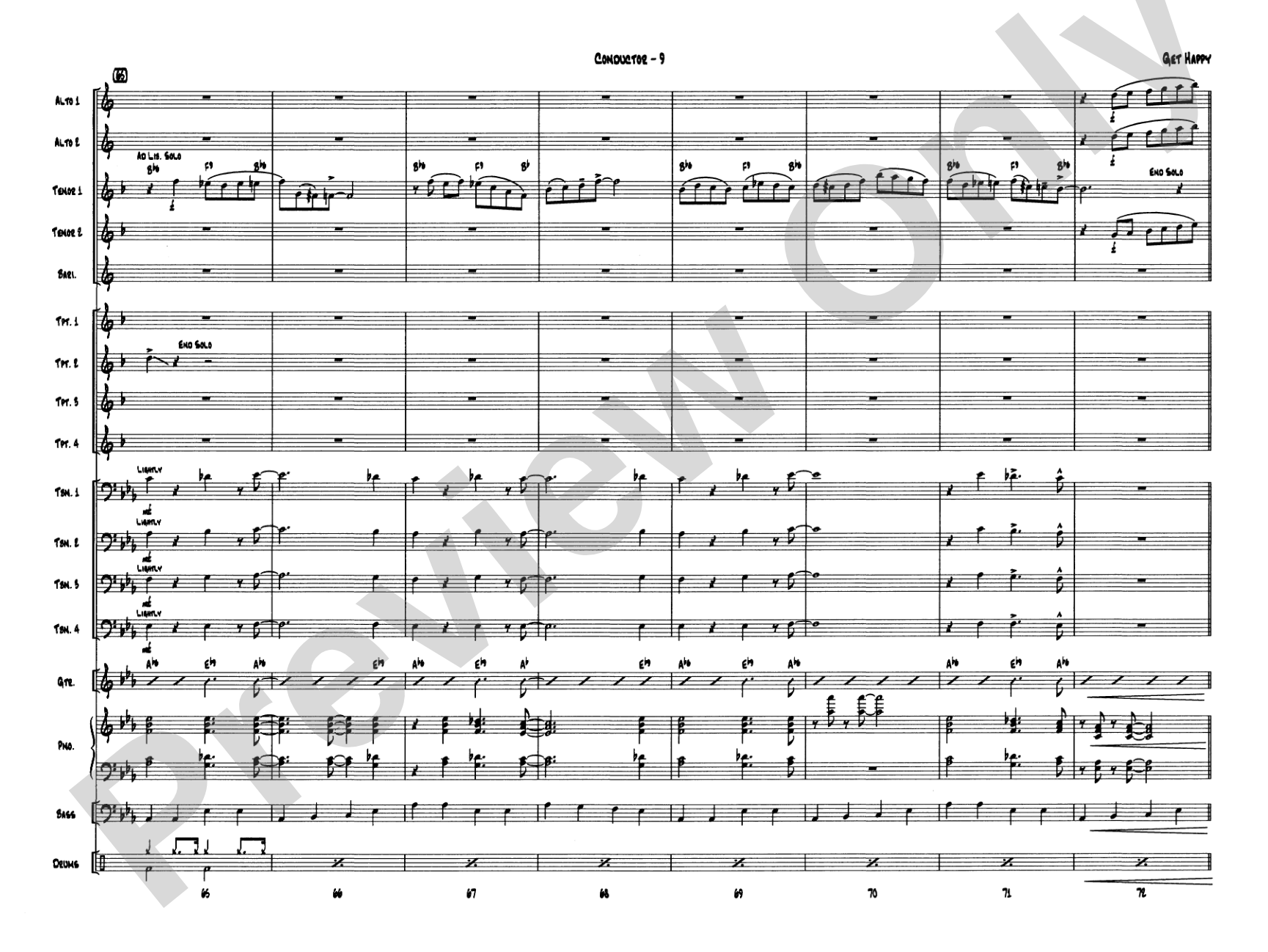
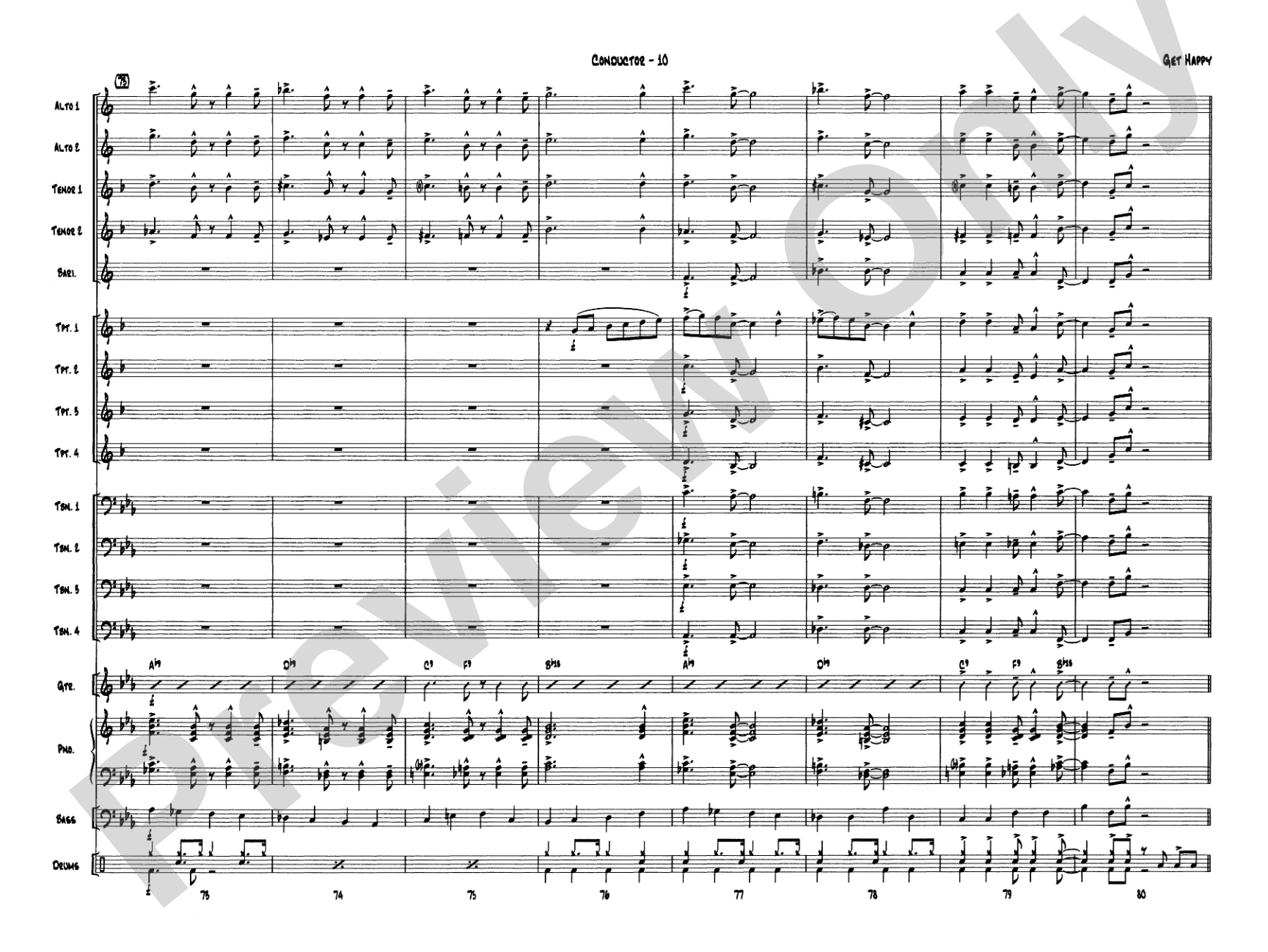
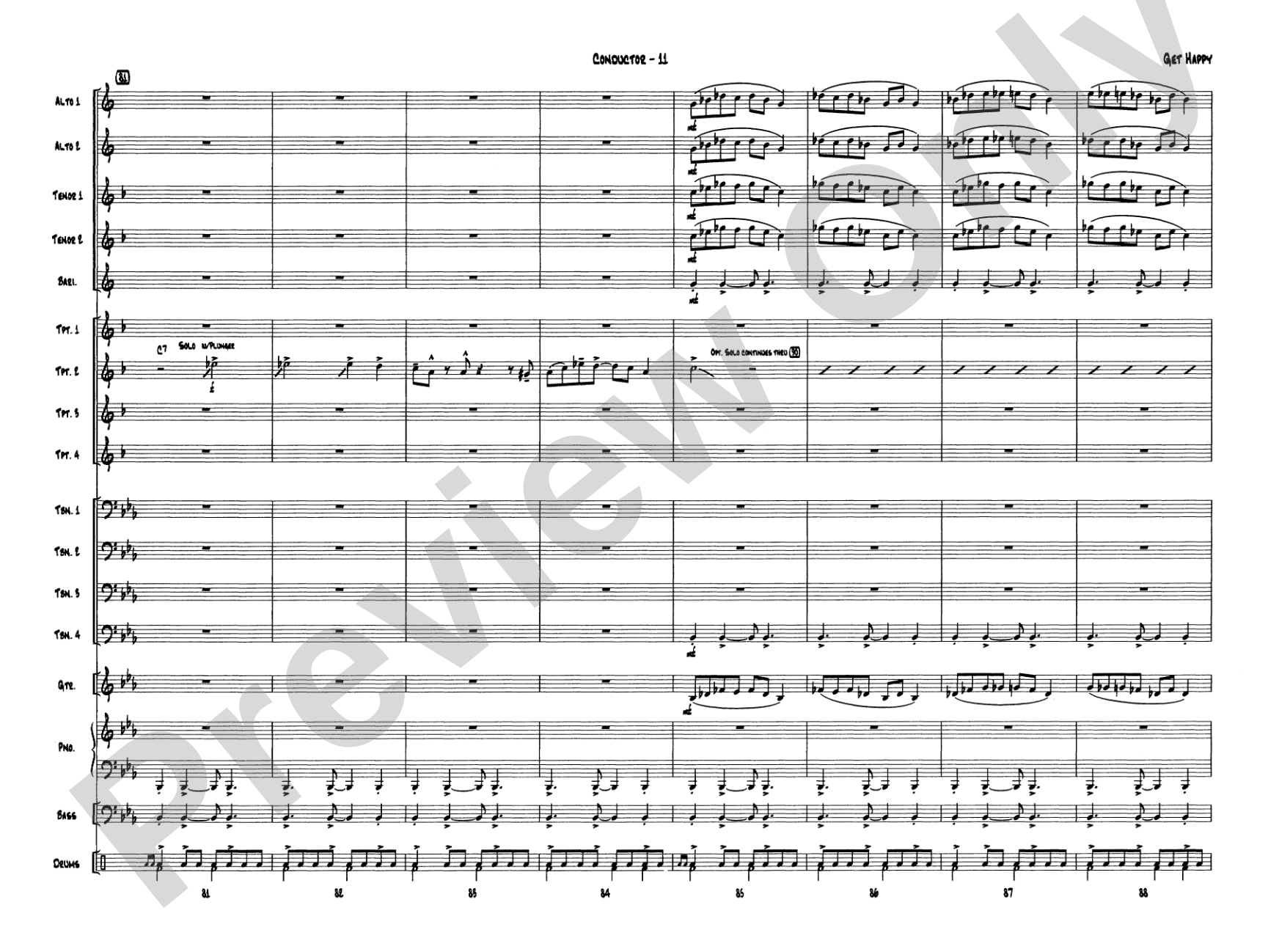
Here's a swinger with a New Orleans twist. GET HAPPY will help your band and audience do just that with arranger Ralph Ford's super chart. A clever use of a street beat contrasting with a swing feel makes this chart really take off. Add some solo space for trumpet and tenor (solos provided), keep the ranges easy, mix in the Ralph Ford touch, and you have everything you need for a successful performance. Great chart for the young band!


Don't just read it, hear it, play along with it, and watch your students grow with it. In MakeMusic Cloud, Get Happy: Jazz Ensemble Conductor Score & Parts comes alive with professional accompaniment, adjustable tempo, and built-in practice tools that turn solo practice into real progress.
Open in the Player
Jump straight in and assign it today.
Start Your Free Trial
Open this title and explore the full library in minutes.
Sample Audio
1
Audio File
--:--
0:00
0:00
Sample Video
No sample videos found.
Additional Details
Series:
Young Jazz Ensemble
Publisher:
Alfred Music
Page Count:
110
SKU:
00-PK-0002477
More about this title
About the Arranger: Ralph Ford

Ralph Ford has spent nearly three decades on university faculties while building a prolific career as a composer and arranger for major publishers. His work spans orchestral, concert band, jazz ensemble, and marching band repertoire, with over 250 titles in circulation worldwide. Ford's professional experience extends beyond the concert hall into media production, broadcast, and commercial work, bringing a versatile sensibility to his arrangements.
Ford's foundation in jazz arranging began as a teenager in Florida and deepened during his undergraduate years at Troy State University, where he simultaneously directed the jazz ensemble and served as staff arranger for the band program. His dual expertise in both pedagogical writing and professional studio work informs his approach to charts that work equally well in student ensembles and performance settings.
Why we love this
Ford understands what young ensembles need: accessible ranges, built-in solo features that don't require hiring professional soloists, and arrangements with enough musical substance to engage both players and audiences. The interplay between street beat and swing feel gives this chart genuine character without overcomplicating the ensemble's job, making it genuinely fun to rehearse and perform.
What to expect
The street beat ground creates a rhythmic swagger that immediately signals fun and forward motion, while the swing sections invite your ensemble into jazz phrasing and articulation. Together they create momentum and personality that transcends typical Grade 2 material, giving audiences something genuinely entertaining beyond a student performance.
Who it's for
Young jazz ensembles at the intermediate level will find ranges and part writing that sit comfortably while still demanding attention to jazz language and ensemble balance. This is equally valuable for directors building a jazz program and needing reliable repertoire that students find rewarding to play.
How to get the most out of it
- Establish the street beat section in your opening rehearsals as a rhythmic anchor. Once your ensemble locks that pulse, the swing sections will feel more conversational by contrast.
- The trumpet and tenor solos arrive pre-written, so give those players time to claim the material as their own. Encourage phrasing that sits between jazz tradition and their individual voice.
- Shape the transitions between beat styles deliberately. Clarity here prevents the chart from feeling disjointed and showcases Ford's arranging architecture.
How to use it
Program this as a concert opener or closer when you want to establish energy and lift the room. It works beautifully alongside more traditional jazz standards in a mixed set, or as the cornerstone of a dedicated jazz concert that celebrates contemporary ensemble writing.
Skills your students will build
- Distinguishing and executing swing articulation and phrasing
- Transitioning between rhythmic feels (straight beat versus swing)
- Listening for ensemble balance in a jazz texture
- Supporting and comping around featured soloists
- Reading jazz chord symbols and understanding harmonic function