
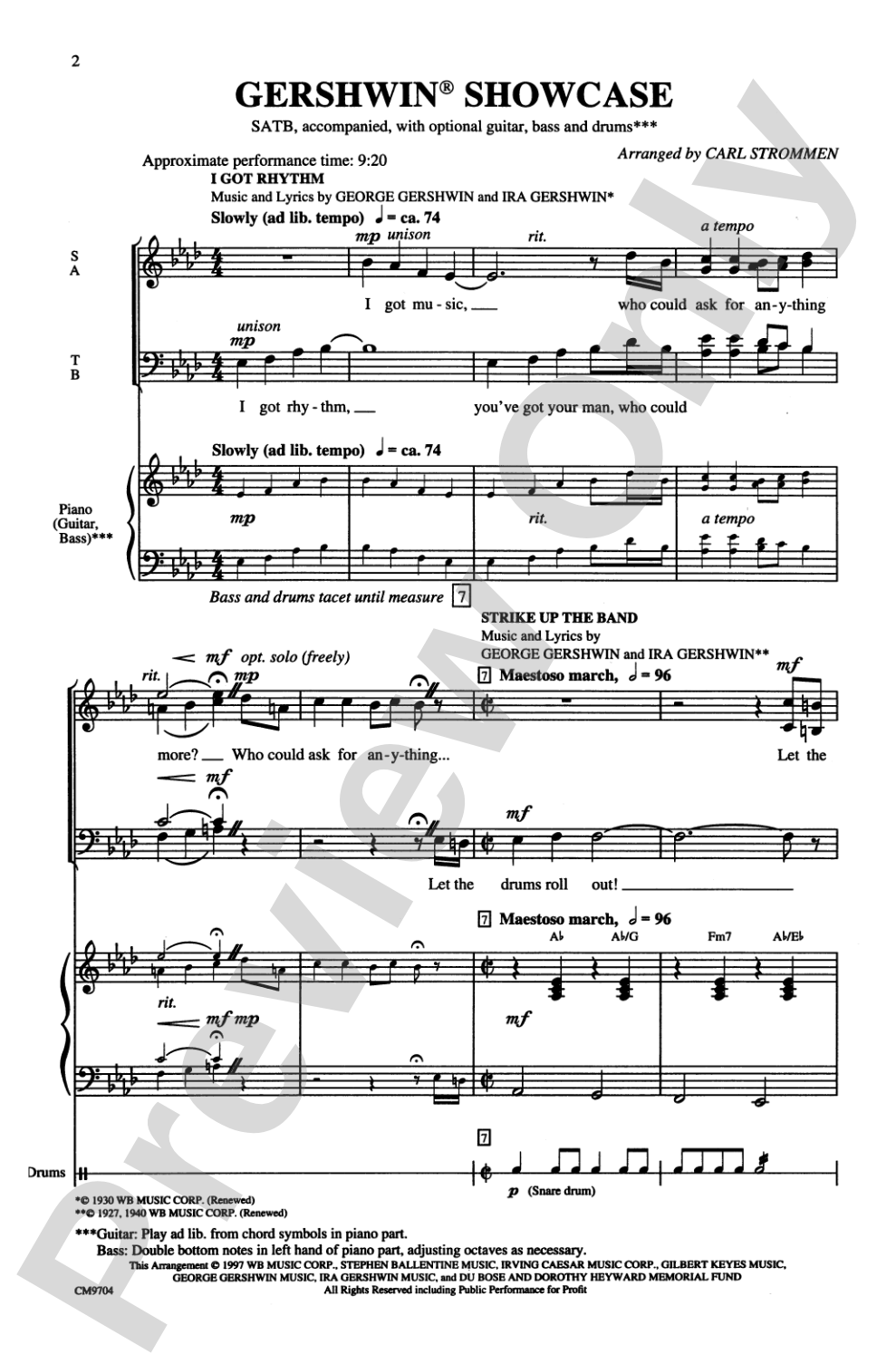
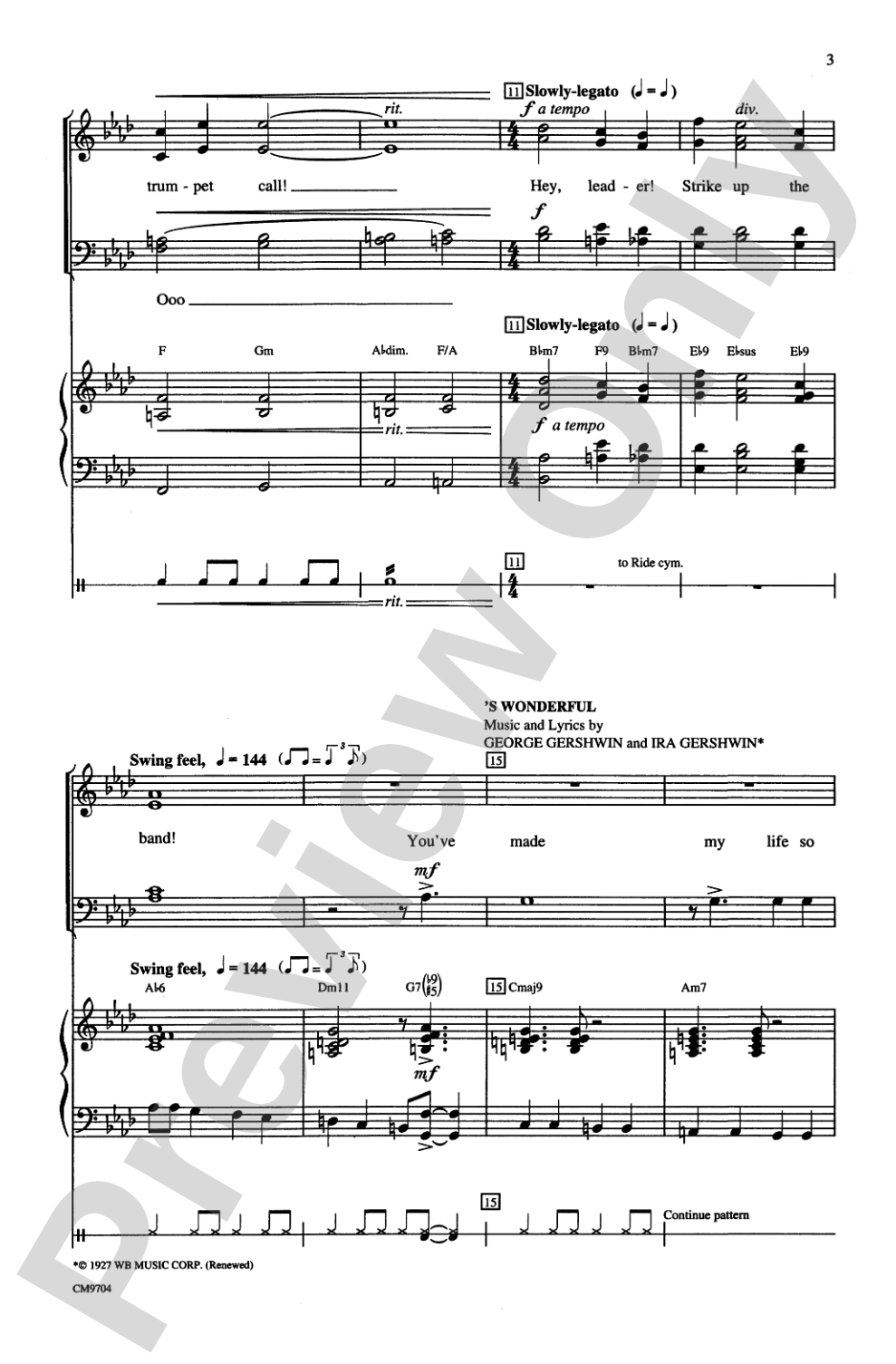
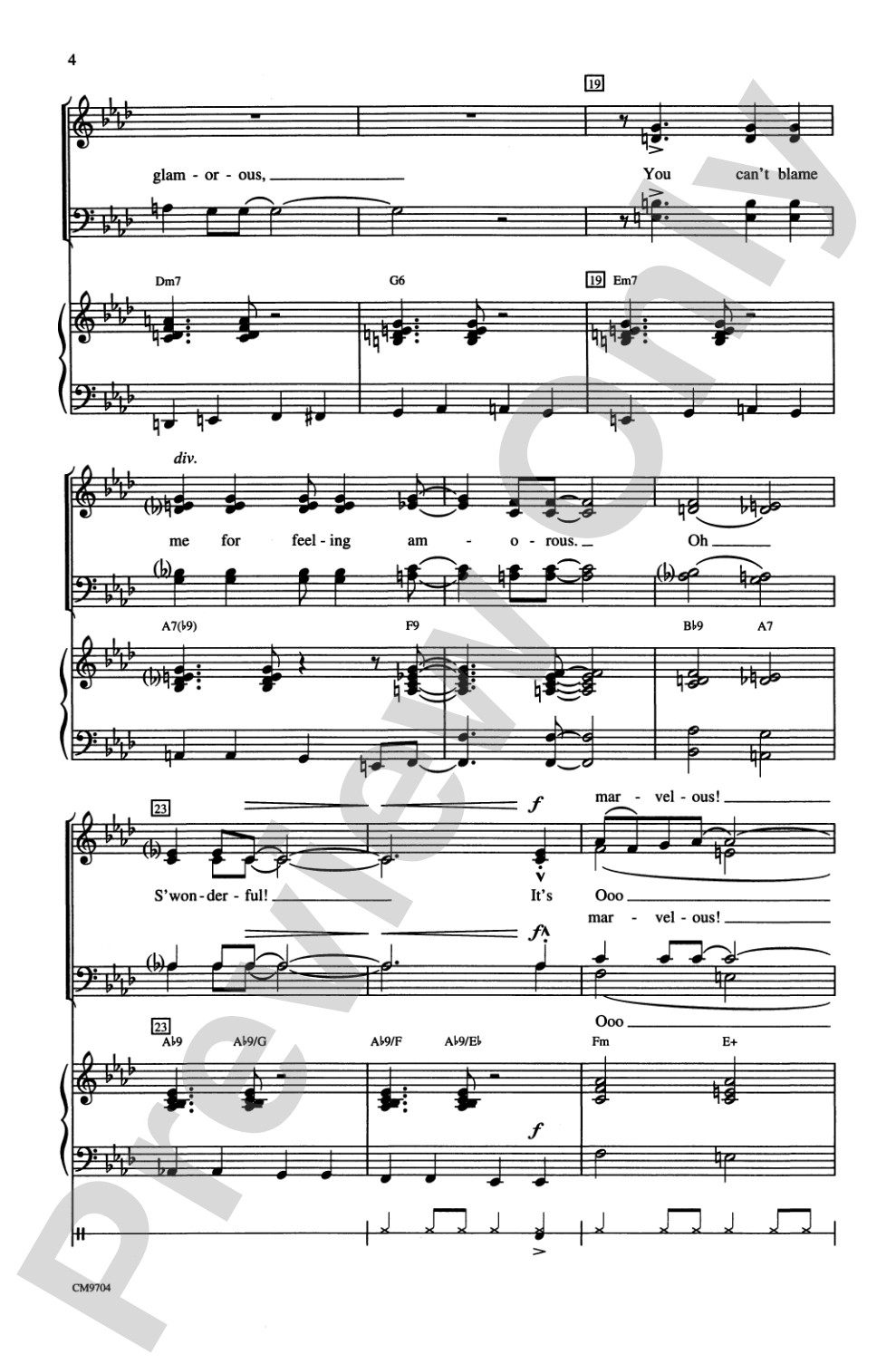
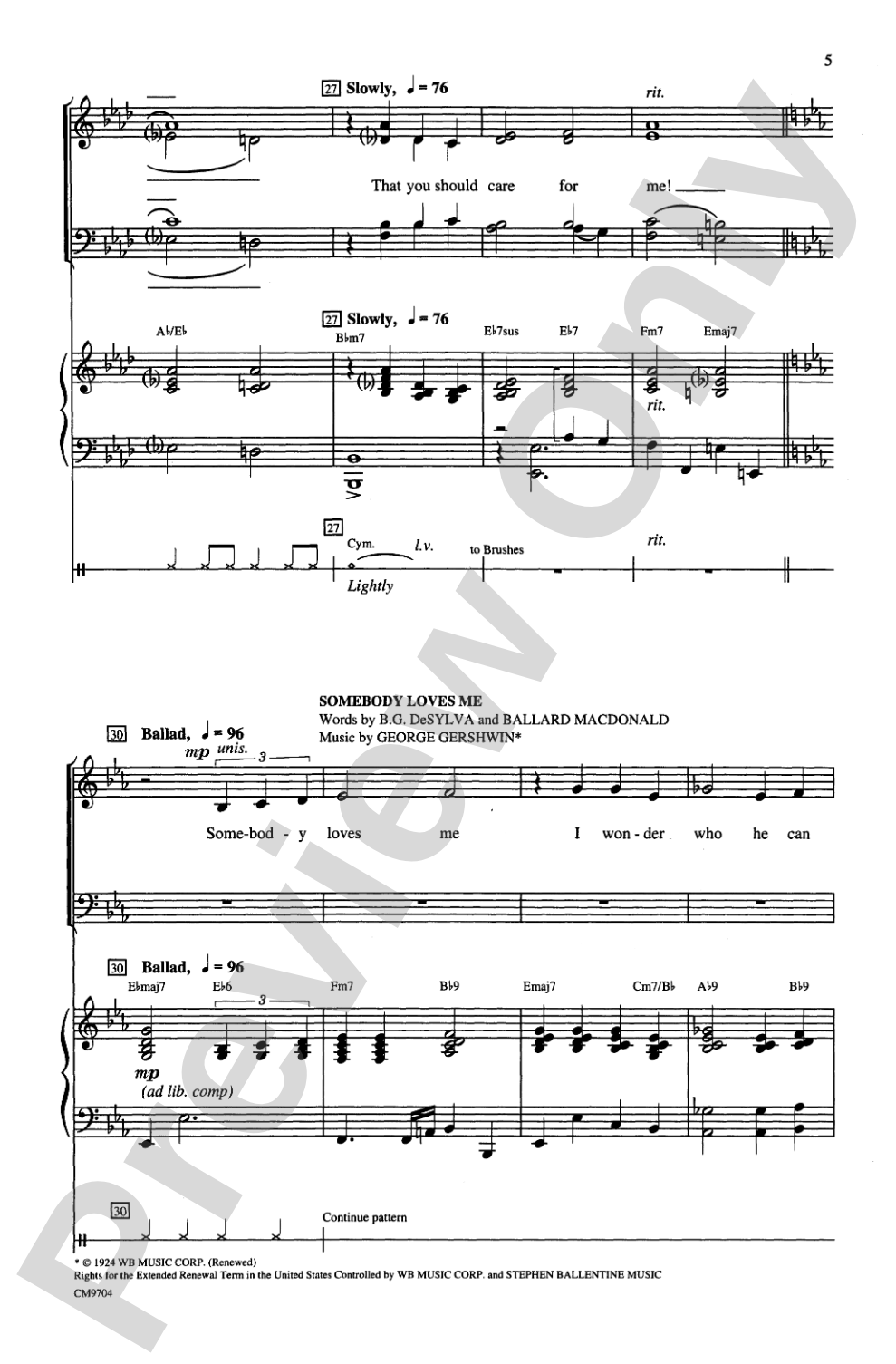

Gershwin Showcase: SATB Choral Octavo
The music of George Gershwin / arr. Carl Strommen
Item: 00-PO-0002584
$4.25
Minimum order quantity: 20 copies
One moment…
Related Items
Gershwin Showcase: TTB Choral Octavo |
$4.25
|
View | |
Gershwin Showcase: 3-Part Mixed Choral Octavo |
$4.25
|
View | |
Gershwin Showcase: 2-Part Choral Octavo |
$4.25
|
View | |
Gershwin Showcase: SATB Choral Octavo |
$4.25
|
View | |
Gershwin Showcase: TTB Choral Octavo |
$4.25
|
View | |
Gershwin Showcase: 3-Part Mixed Choral Octavo |
$4.25
|
View | |
Gershwin Showcase: Choral Octavo SoundTrax CD |
$29.95
|
View |
Description
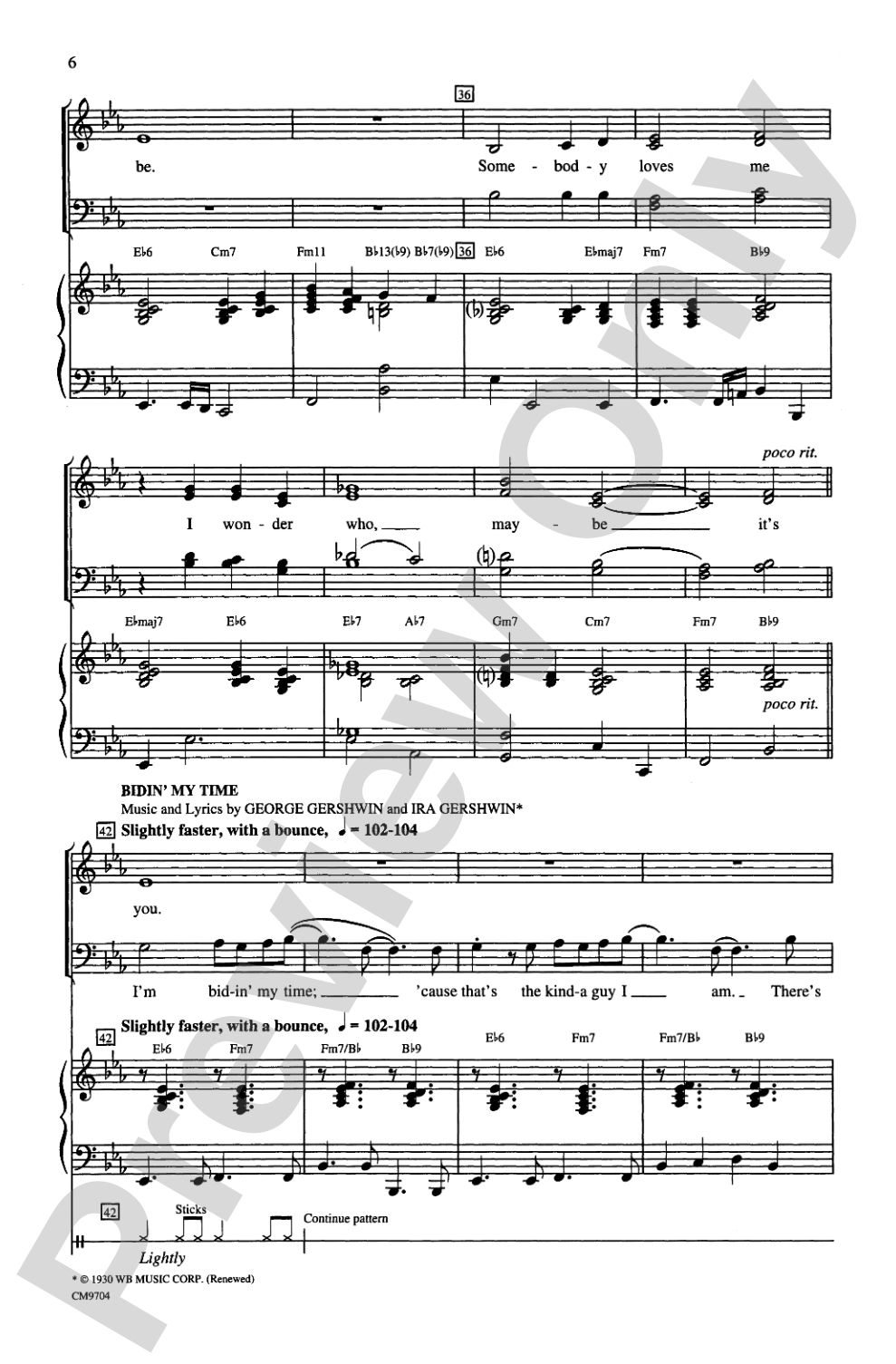
Musical programs the world over will be marking the anniversaries of the Gershwins' births throughout 1997 and 1998. This wonderful choral showcase of Gershwin hits arranged by Carl Strommen can be the focal point for any program throughout both years. As always from Carl, highly singable and exceptionally entertaining!


Gershwin Showcase: SATB Choral Octavo isn't in MakeMusic Cloud just yet...but it could be. Let us know you'd like to see it, and you'll help shape what comes next. In the meantime, start a free trial and dive into thousands of interactive titles your students can play along with today.
Request This Title
Tell us you want it.
Start Your Free Trial
Explore everything that's ready to play right now.
Sample Audio
No sample audio found.
Sample Video
No sample videos found.
Additional Details
Series:
Alfred Archive Edition: Alfred Pop Choral Series
Publisher:
Alfred Music
Page Count:
24
SKU:
00-PO-0002584
More about this title
About the Composer: George Gershwin
George Gershwin (1898-1937) bridged concert music and popular song with a fluency no American composer before him had achieved. His melodies became standards because they balanced immediate appeal with genuine harmonic sophistication. For choral directors, Gershwin's output offers repertoire that audiences recognize instantly while providing arrangers genuine musical substance to work with.
Gershwin's gift for orchestration and his deep understanding of jazz idioms made his work adaptable across ensembles and contexts. He composed for stage, orchestra, and piano, but his songs have endured longest in the repertoire because they capture a particular moment in American cultural confidence. Singers at any level respond to the tunefulness and rhythmic buoyancy in his writing.
Why we love this
Carl Strommen's arrangements stay true to Gershwin's essential melodic gift while giving singers genuinely rewarding parts to sing. The collection moves through a range of moods and tempos, so you can program it as a cohesive suite or draw individual selections for different concert contexts. Each arrangement sounds effortless but lands with impact, which is exactly what makes Gershwin endure.
What to expect
Buoyant and urbane. These arrangements capture the optimism and wit of American popular song at its peak, with enough harmonic sophistication to keep musicians engaged. The textures shift between intimate and expansive, keeping energy alive across the full suite.
Who it's for
Choirs with intermediate to strong musicianship who want to program American standards with genuine musical substance. The SATB voicing and 24-page format make this accessible for community choirs and school groups preparing concert repertoire. Singers appreciate arrangements that sit well and let them feel successful.
How to get the most out of it
- Center your interpretation on clarity of line. Gershwin's melodies shine brightest when each voice can be heard; resist the urge to swell dynamically when the harmony gets rich.
- Pay attention to the rhythmic precision in syncopated passages. These moments define the Gershwin sound, and ensemble attack matters more than volume.
- Use the recorded accompaniment strategically during early rehearsals to establish tempo and style, then pull it back as singers gain independence.
- Shape phrases within the natural speech rhythm of the lyrics rather than by bar line. This idiom sits somewhere between art song and popular music.
How to use it
Gershwin selections work beautifully as a freestanding act in a longer concert or as the anchor for a twentieth-century American music program. Consider programming individual arrangements across the season to vary concert style, or perform several consecutive pieces as a medley-style showcase that demonstrates range and control. The collection's accessibility makes it ideal for spring pops concerts or anniversary celebrations.
Skills your students will build
- Singing jazz-influenced harmonies and syncopated rhythms
- Maintaining independence of line in four-part texture
- Interpretation of American popular song idiom
- Stylistic contrast between legit singing and rhythmic precision
- Ensemble balance in music with prominent alto and tenor lines