
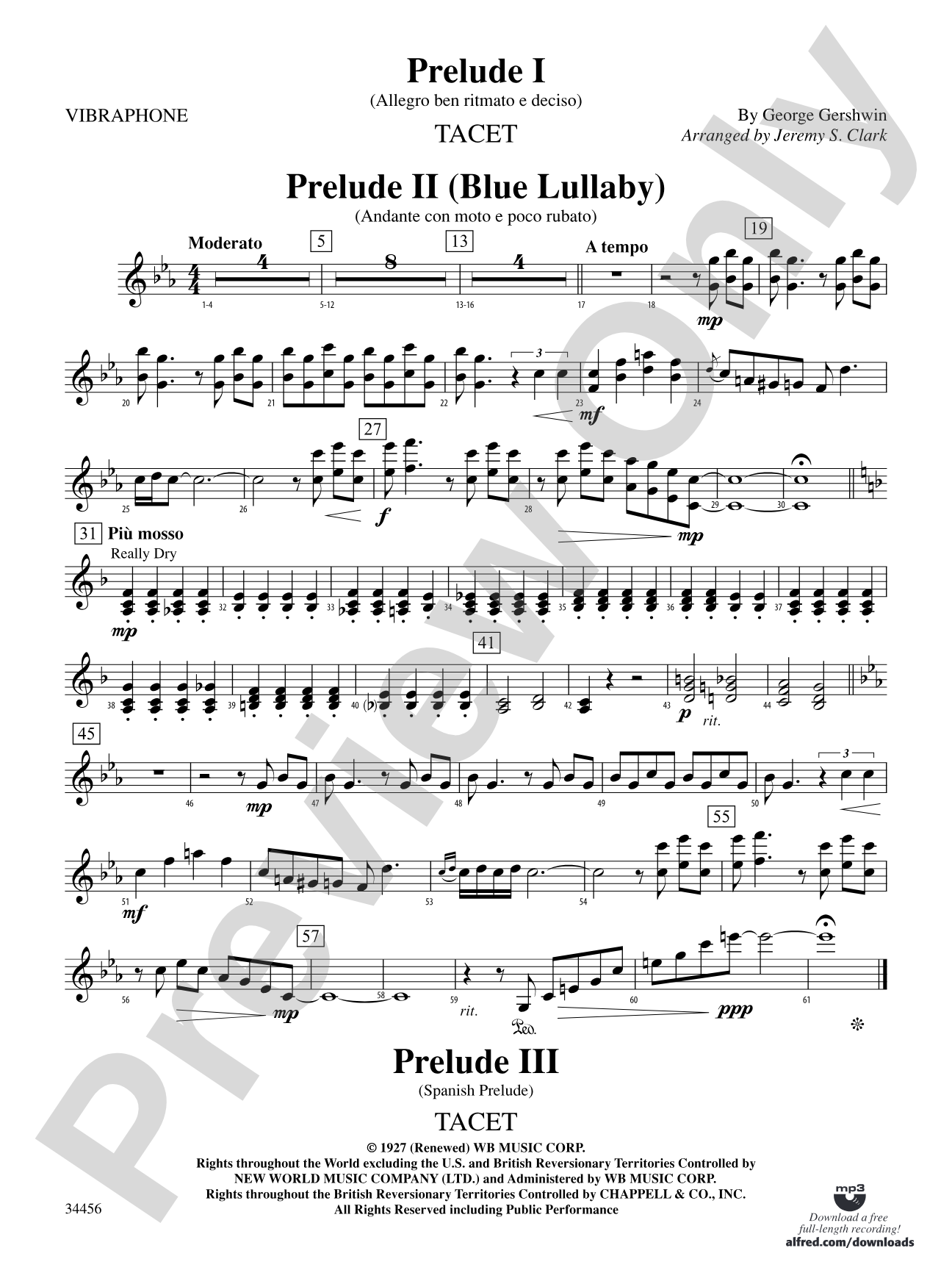

Gershwin Preludes (I-III) for Mallet Ensemble: Vibraphone
(For 4 Players)
By George Gershwin / arr. Jeremy Clark
Item: 00-PC-0015764_V
$3.00
Pickup currently not available
Description
George Gershwin's Three Preludes for piano merge early twentieth century American classical music with jazz elements and exemplify the essence of Gershwin's signature sound. Jeremy Clark's arrangement of the preludes caters to the unique demands of a mallet quartet while staying true to the spirit of Gershwin's original composition. Preludes I and III are exuberant with syncopation while Prelude II is a lyric blues. Clark infuses rhythmic elements that enhance the pieces and makes them more accessible to a mallet quartet. This is an entertaining yet challenging collection that is sure to earn any audience's keen appreciation.


Don't just read it, hear it, play along with it, and watch your students grow with it. In MakeMusic Cloud, Gershwin Preludes (I-III) for Mallet Ensemble: Vibraphone comes alive with professional accompaniment, adjustable tempo, and built-in practice tools that turn solo practice into real progress.
Open in the Player
Jump straight in and assign it today.
Start Your Free Trial
Open this title and explore the full library in minutes.
Sample Audio
1
Gershwin Prelude I
--:--
2
Gershwin Prelude II
--:--
3
Gershwin Prelude III
--:--
Gershwin Prelude I
0:00
0:00
Sample Video
No sample videos found.
Additional Details
Series:
Alfred's Percussion Ensemble Series
Publisher:
Alfred Music
Page Count:
20
SKU:
00-PC-0015764_V
More about this title
About the Composer: George Gershwin
George Gershwin (1898-1937) bridged classical composition and jazz idiom in ways few American composers have matched. His early training at the piano informed everything he wrote, from concert works to Broadway scores, and his willingness to embrace syncopation and blues harmony as legitimate classical tools fundamentally shaped twentieth century American music.
Why we love this
Jeremy Clark's mallet arrangement unlocks these masterworks for percussion ensembles without sacrificing the harmonic sophistication or rhythmic swagger that makes Gershwin's preludes essential listening. The combination of vibraphone, marimba, and pitched percussion allows the syncopation and blues character to speak clearly, making this a sophisticated yet accessible choice for intermediate to advanced groups seeking repertoire that commands attention without requiring a keyboard.
What to expect
These preludes pulse with the swagger of 1920s New York, where classical form meets jazz vernacular. Prelude II offers respite as a languid blues, complete with the warm harmonies Gershwin loved, while Preludes I and III crackle with syncopation that keeps listeners leaning forward.
Who it's for
Intermediate to advanced percussion ensembles with access to vibraphone, marimba, and timpani. Directors programming concert repertoire that showcases Gershwin's American idiom while building their mallet section's ability to balance melody, harmony, and rhythm across multiple instruments.
How to get the most out of it
- Balance the melodic lines between vibraphone and marimba; the piano originals often distribute themes across both hands, so clarity of the top voice requires careful dynamic listening from your mallet players.
- In Preludes I and III, lock the rhythmic precision of the syncopation with your timpani and bass notes on the low marimba; Gershwin's jazzy feel relies on crisp articulation rather than looseness.
- Shape Prelude II as a lyric blues by allowing slight breathing space at phrase endings and letting the marimba's lower register sing in the sustained passages.
- Use the full dynamic range available on vibraphone, including the intensity of playing with four mallets; the original piano writing demands both delicate lyricism and bold, percussive attacks.
How to use it
Program this as a centerpiece in a concert celebrating American classical music, or pair it with Bernstein, Copland, or other twentieth century works that claim jazz and blues ancestry. The set's mix of energy and introspection makes it ideal for a program that opens bold and allows for repose in the middle.
Skills your students will build
- Reading and executing syncopated rhythmic figures across multiple staves
- Balancing melody and harmony when distributed across vibraphone and marimba
- Dynamic control and articulation on mallet instruments to distinguish classical from jazz phrasing
- Ensemble precision in pieces that demand both locked rhythms and interpretive flexibility