Gershwin Prelude Suite: Oboe Sheet Music Preview

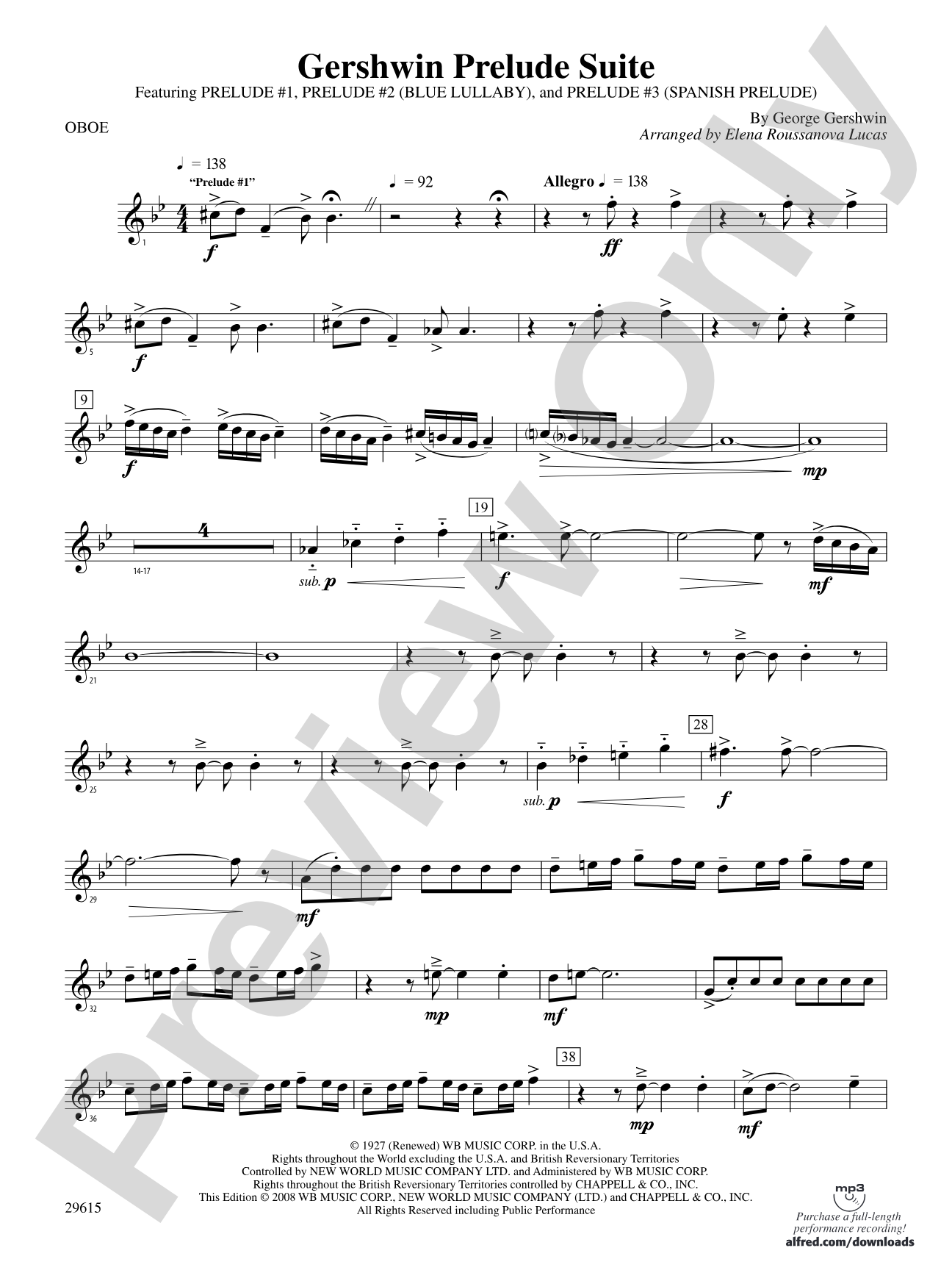
Gershwin Prelude Suite: Oboe

Featuring: Prelude #1 / Prelude #2 (Blue Lullaby) / Prelude #3 (Spanish Prelude)

By George Gershwin / arr. Elena Roussanova Lucas

Grade: 3 (Medium Easy)

Item: 00-PC-0015699_O1

Digital Download
$3.00
Description
This through-composed setting brings to life George Gershwin's beloved "Three Piano Preludes" in a contemporary setting for concert band that can be effective within the context of any of your concert programs. This music will inspire students and audiences alike. Just Gershwin! (5:21) This title is available in MakeMusic Cloud.

Don't just read it, hear it, play along with it, and watch your students grow with it. In MakeMusic Cloud, Gershwin Prelude Suite: Oboe comes alive with professional accompaniment, adjustable tempo, and built-in practice tools that turn solo practice into real progress.

Sample Audio
0:00
0:00
Sample Video
Additional Details
Series: Pop Concert Band
Publisher: Alfred Music
Page Count: 246
SKU: 00-PC-0015699_O1

More about this title

About the Composer: George Gershwin

George Gershwin (1898-1937) bridged the concert hall and Broadway stage with unmatched fluency, composing works that captured the energy and sophistication of 20th-century American music. His "Three Piano Preludes" stand as essential keyboard literature, blending jazz idioms with classical form in ways that continue to captivate musicians and audiences. Gershwin's harmonic language and rhythmic vitality have influenced generations of composers and remain central to any serious study of American musical modernism.

Why we love this

Elena Roussanova Lucas's orchestration honors Gershwin's original voice while giving band directors a genuine concert band setting of three beloved and widely recognized works. The Grade 3 accessibility means your students engage with authentic masterwork material without sacrificing musical substance or the sophistication that keeps audiences engaged. This is the rare arrangement that works as both a teaching tool and a genuine concert piece.

What to expect

Gershwin's harmonic sophistication and jazz-influenced melodies create music that feels both intimate and broadly appealing. These three preludes move through contrasting moods, from lyrical introspection to rhythmic drive, offering the band a rich emotional landscape to inhabit across just over five minutes.

Who it's for

This score and parts set serves any concert band director programming a season that calls for recognizable, high-quality American music that resonates with audiences and students alike. It works especially well for programs featuring 20th-century repertoire or when you want to include masterworks that students may already know in their original piano form.

How to get the most out of it

  • Bring attention to how the original piano idioms translate across the band voices; help students hear which sections carry the primary melodic material and how accompanying figures support the harmonic language.
  • Pay particular care to the jazz inflections and syncopations embedded in Gershwin's writing; these need clarity and precision to land effectively rather than sound muddy.
  • Balance the lyrical passages with rhythmic vitality; Gershwin's music breathes between introspection and forward momentum, and that contrast should shape your pacing and dynamic shapes.

How to use it

Program this as a centerpiece of a concert celebrating American composers, or use it to open a program with something immediately accessible and engaging that sets a positive tone for the entire event. Its moderate length and Grade 3 difficulty make it flexible within a mixed-difficulty concert that might include both developing and advanced ensembles.

Skills your students will build

  • Interpreting jazz influences and syncopated rhythms in a concert band context
  • Balancing melodic clarity with harmonic complexity
  • Understanding how piano idioms translate to band voicing and orchestration
  • Shaping lyrical phrases and maintaining forward motion through rhythmically active sections
  • Reading across multiple parts to understand Gershwin's orchestration choices

You May Also Like