Gershwin by George!: 2nd F Horn Sheet Music Preview

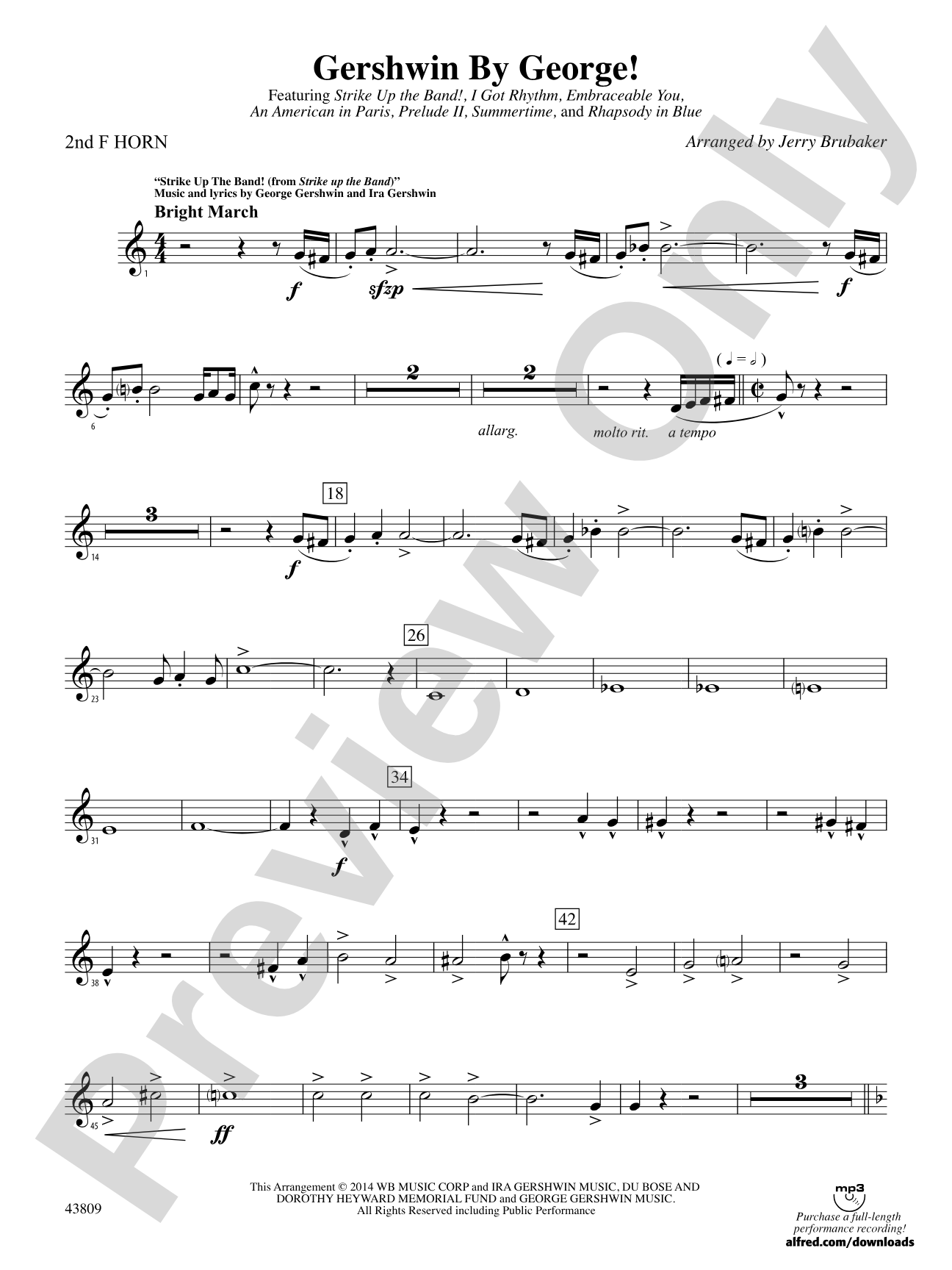
Gershwin by George!: 2nd F Horn

Featuring: Strike Up the Band! / I Got Rhythm / Embraceable You / An American in Paris / Prelude II / Summertime / Rhapsody in Blue

[George Gershwin] / arr. Jerry Brubaker

Grade: 4

Item: 00-PC-0016909_H2

Digital Download
$3.00
Description
Gershwin's legendary and well-known compositions span both popular and classical genres. Featured works in this beautiful medley include: "Strike Up the Band!," "I Got Rhythm," "Embraceable You," " An American in Paris," "Prelude II," "Summertime," and "Rhapsody in Blue." (5:45)

Don't just read it, hear it, play along with it, and watch your students grow with it. In MakeMusic Cloud, Gershwin by George!: 2nd F Horn comes alive with professional accompaniment, adjustable tempo, and built-in practice tools that turn solo practice into real progress.

Sample Audio
0:00
0:00
Sample Video
Additional Details
Series: Pop Symphonic Full Orchestra
Publisher: Alfred Music
Page Count: 244
SKU: 00-PC-0016909_H2

More about this title

About the Composer: George Gershwin

George Gershwin (1898-1937) bridged the worlds of Broadway, jazz, and concert music with a fluency few composers have achieved. His melodic gift was immediate and infectious; his harmonic language, informed by jazz idioms and modernist techniques, gave popular song a sophistication that elevated the entire genre. Gershwin's work demonstrated that entertainment and artistic ambition were not mutually exclusive, a conviction that shaped American music for generations.

Why we love this

Jerry Brubaker's medley captures the full spectrum of Gershwin's genius in a single, expertly paced work that feels fresh rather than like a collection of hits. The orchestration crackles with energy, and the arrangement respects the integrity of each piece while creating seamless transitions that justify the selections as a unified statement about Gershwin's legacy.

What to expect

The energy is infectious and urbane, moving from the brassy confidence of "Strike Up the Band" through the bluesy, intimate warmth of "Summertime," then building toward the exuberant virtuosity of "Rhapsody in Blue." There's a sense of arrival with each new melody, and the orchestration sparkles with jazz-age sophistication throughout.

Who it's for

This work serves conductors leading advanced high school or early college orchestras who want to program something engaging, recognizable, and musically substantial without requiring a full concert's worth of rehearsal time. It also works well for community orchestras seeking repertoire that appeals to audiences while maintaining genuine musical interest.

How to get the most out of it

  • Treat the rhythm section as the heartbeat of this work. The jazz inflections throughout require the percussion and lower strings to lock together with precision; light, bouncy articulation will keep the energy from becoming sluggy.
  • Balance the famous melodies against the supporting voices. These tunes will carry themselves; your rehearsal time is better spent clarifying inner lines so the full richness of Gershwin's harmonies emerges.
  • Let the transitions breathe. Brubaker has crafted these carefully, and rushing from one section to the next will flatten the emotional arc. Give the ensemble a beat to absorb each shift in mood and tempo.
  • The blues and jazz inflections demand flexibility from wind players, particularly in "Summertime" and "I Got Rhythm." Encourage slightly laid-back phrasing and gentle scoops rather than rigid articulation.

How to use it

This works exceptionally well as a centerpiece for a pops concert or as the anchor of a program that celebrates American composers. It can also stand alone as an engaging closer to a classical concert, providing a transition to encores or simply leaving the audience on a note of joy and accessibility.

Skills your students will build

  • Playing with jazz articulation and swing feel
  • Balancing melody and accompaniment in densely voiced orchestral writing
  • Navigating frequent tempo and meter changes across a medley structure
  • Executing stylistically appropriate rhythmic flexibility in blues-inflected passages
  • Reading complex conductor scores with multiple simultaneous musical ideas

You May Also Like