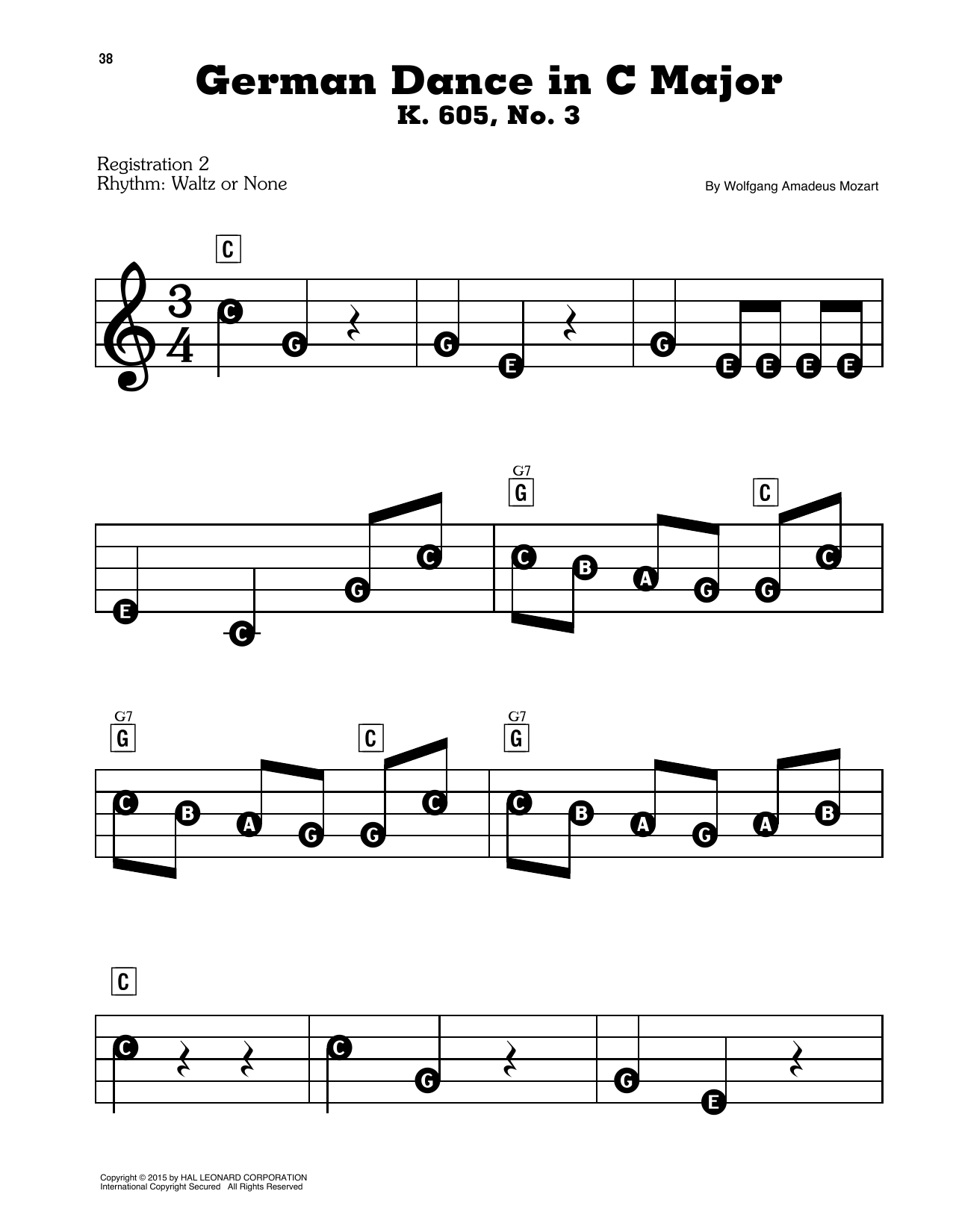
German Dance In C Major, K. 605, No. 3 Sheet Music Preview

German Dance In C Major, K. 605, No. 3: E-Z Play Today

Item: 35-DS00960566

Digital Download
$4.99
Description

German Dance In C Major, K. 605, No. 3: E-Z Play Today isn't in MakeMusic Cloud just yet...but it could be. Let us know you'd like to see it, and you'll help shape what comes next. In the meantime, start a free trial and dive into thousands of interactive titles your students can play along with today.

Sample Audio
No sample audio found.
Sample Video
Additional Details
Publisher: Hal Leonard
Page Count: 2
SKU: 35-DS00960566

More about this title

About the Creator: Wolfgang Amadeus Mozart

Wolfgang Amadeus Mozart composed this German Dance during his final years in Vienna, when the form was experiencing a renaissance in the city's ballrooms and concert halls. His gift for melody shines through in these short dance movements, which capture both the sophistication of the Viennese court and the infectious rhythms of popular Austrian folk traditions.

Why we love this

The E-Z Play Today arrangement strips away unnecessary complexity while preserving Mozart's elegant voice leading and harmonic clarity. It's the rare simplified edition that doesn't sacrifice musicality, making it genuinely rewarding for pianists still building technical facility.

What to expect

Bright and dance-like, with a lightness that suggests movement across a ballroom floor. The melody unfolds with understated grace while the harmonic support stays transparent and warm.

Who it's for

Early intermediate pianists who want to explore Mozart's catalog without confronting unnecessary technical barriers. It works for students working through a progression of classical composers or preparing a holiday recital with period pieces.

How to get the most out of it

  • Keep the articulation crisp in the opening phrase; these short note values need clarity to sound like an actual dance rather than flowing legato music.
  • Shape the melody with gentle dynamic contours rather than playing at a flat dynamic level throughout.
  • Maintain a steady pulse without rushing, even when the figure repeats; let the repetition feel inevitable rather than impatient.

How to use it

Pair this with other Mozart miniatures for a cohesive classical set, or include it in a holiday concert that leans toward traditional European traditions rather than contemporary seasonal material. It's also an excellent vehicle for a student showcase performance where elegance matters more than virtuosity.

Skills your students will build

  • Phrasing in period style without excessive rubato
  • Maintaining rhythmic precision in simple duple meter
  • Balancing melody against accompaniment textures
  • Interpreting articulation markings as compositional intent rather than decoration

You May Also Like