
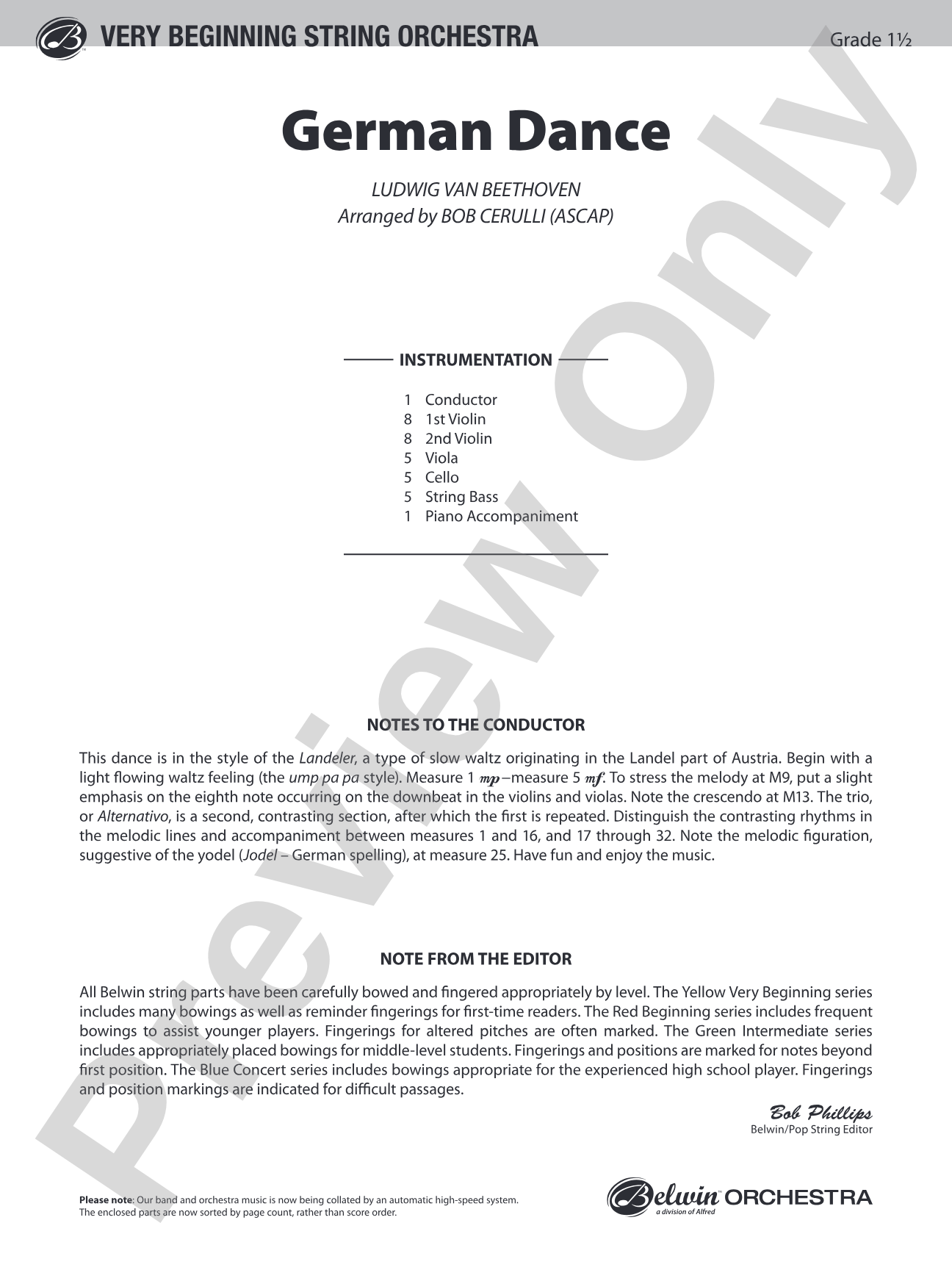
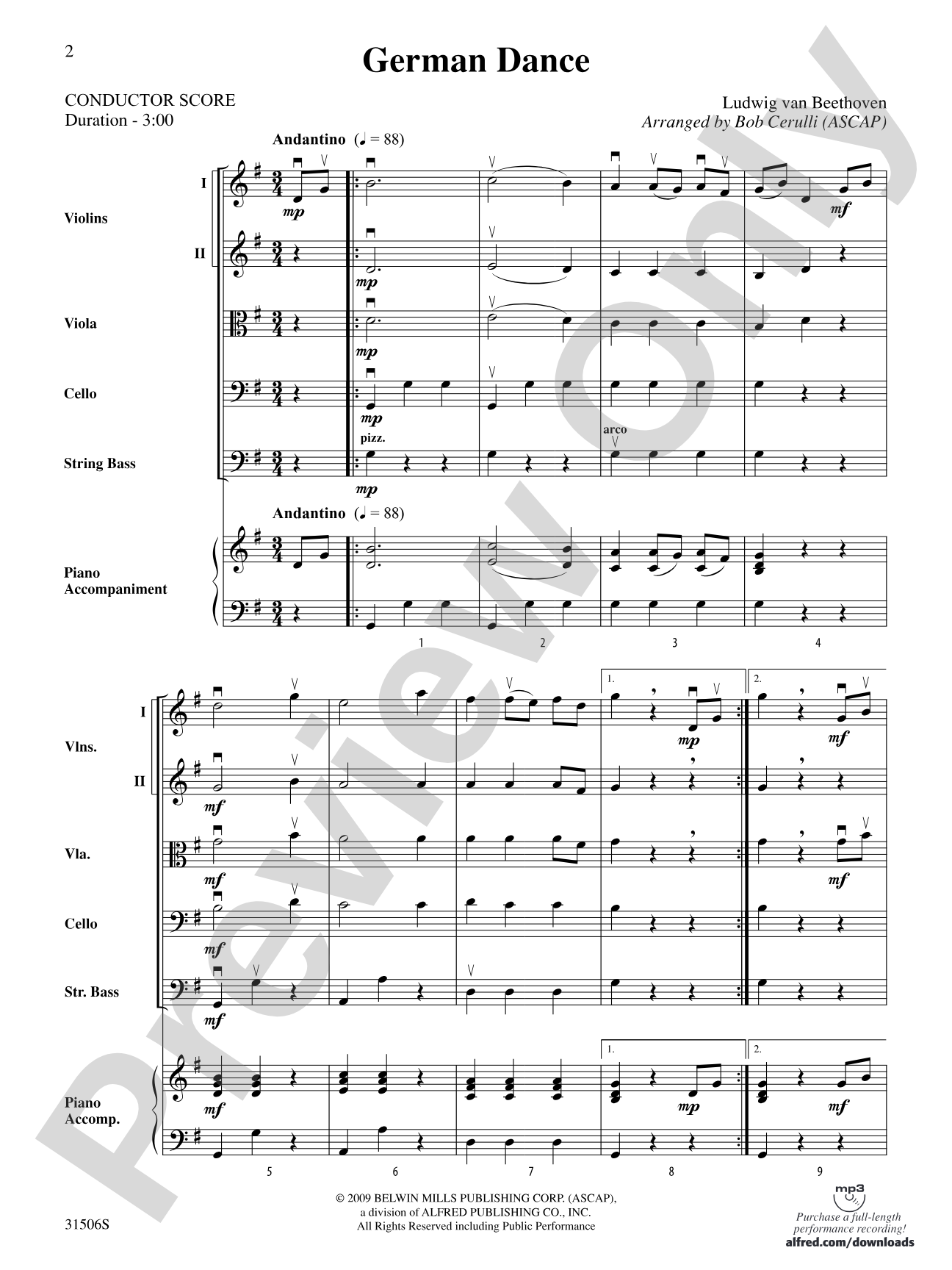
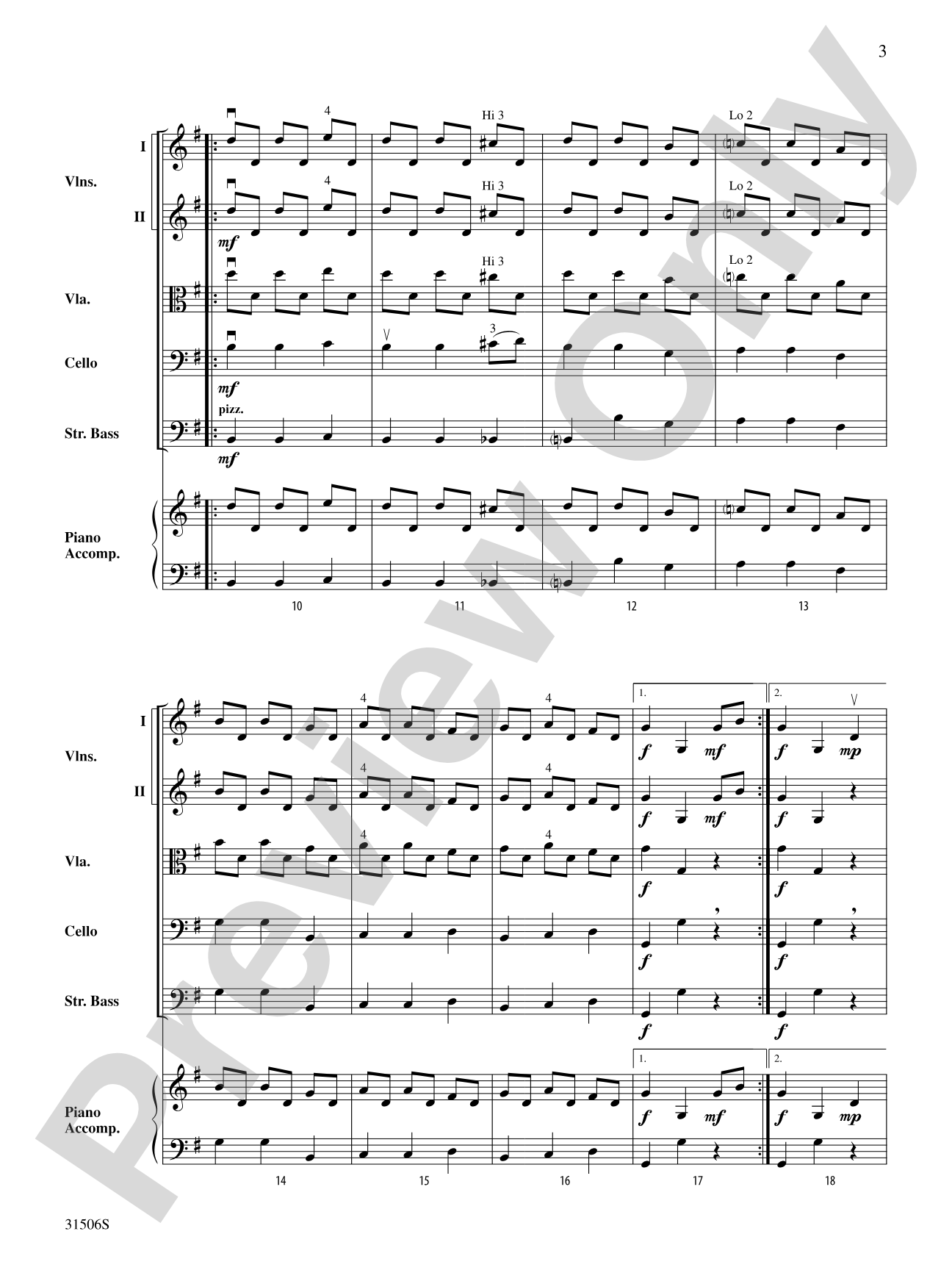
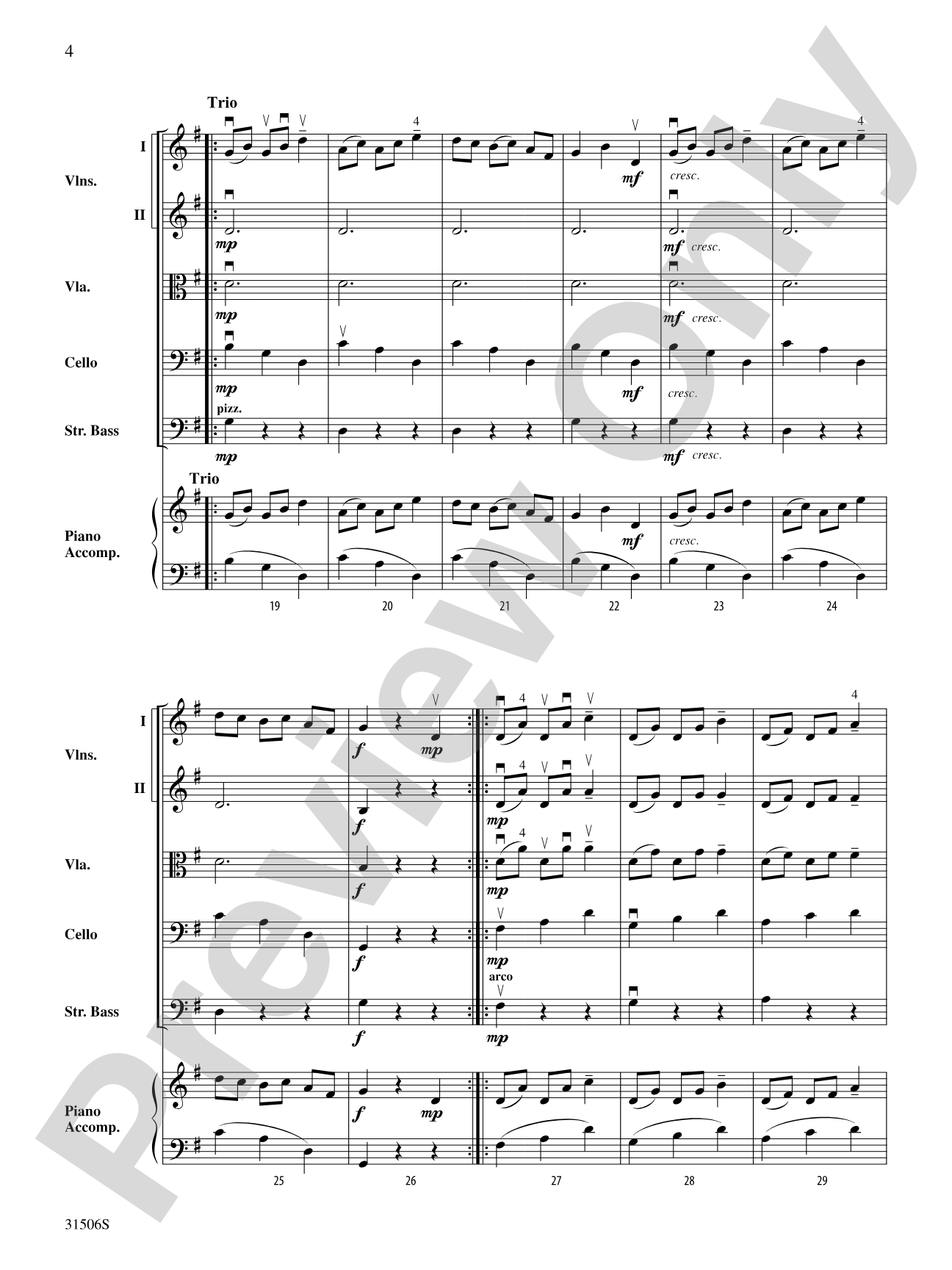
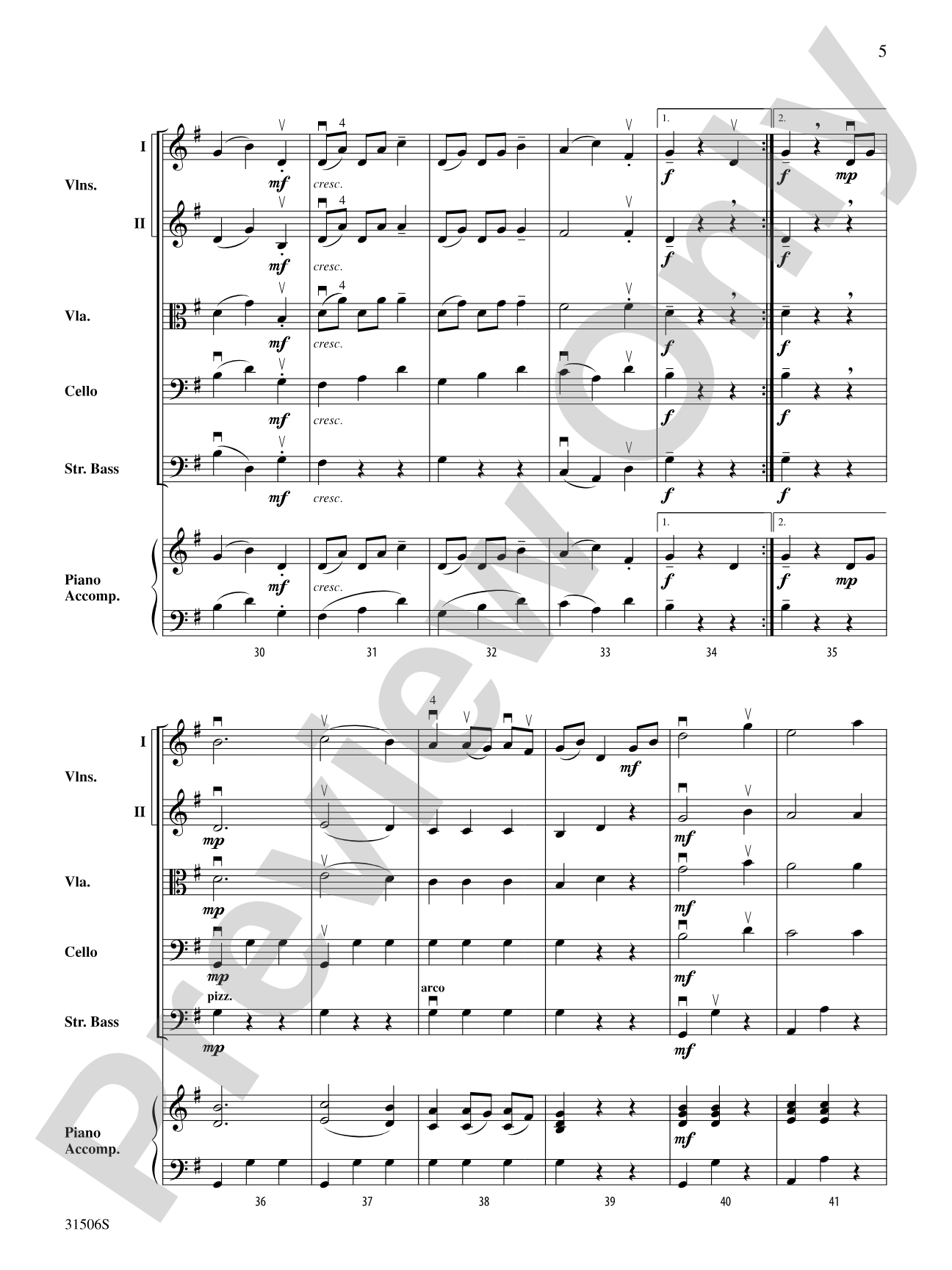
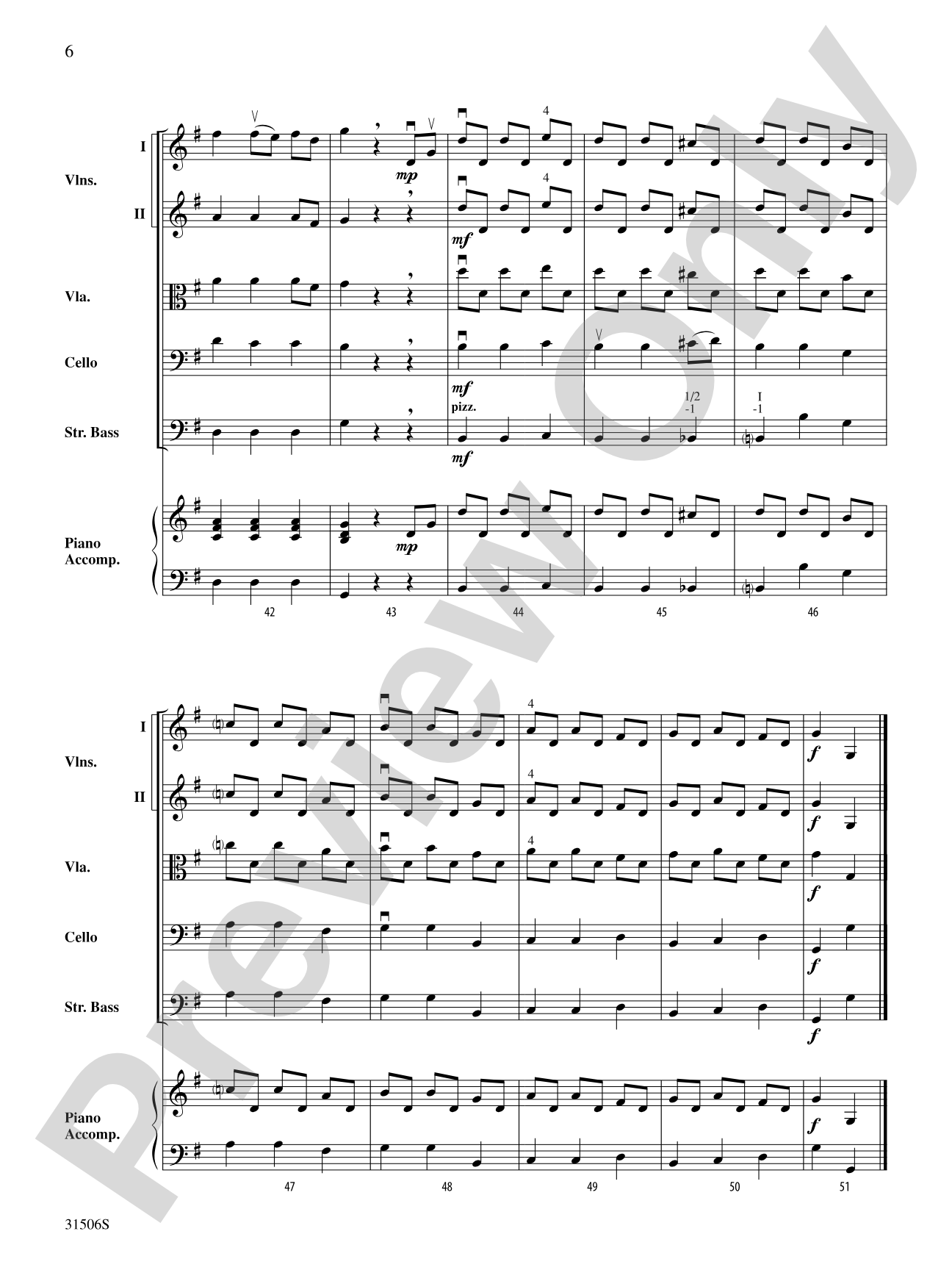



German Dance: String Orchestra Conductor Score & Parts
By Ludwig van Beethoven / arr. Bob Cerulli
Grade: 1.5
Item: 00-PK-0001710

$42.00
Pickup currently not available
Buy Extra Parts (Digital PDF Download)
| Product | Price | Quantity |
|---|---|---|
| German Dance: Score | $8.00 | |
| German Dance: 1st Violin | $5.99 | |
| German Dance: 2nd Violin | $5.99 | |
| German Dance: Viola | $5.99 | |
| German Dance: Cello | $5.99 | |
| German Dance: String Bass | $5.99 | |
| German Dance: Piano Accompaniment | $5.99 |
Parts Added to Cart!
Description
Beethoven that is perfect for your beginning orchestra! This lovely and fun-to-play waltz will reinforce 3/4 time and provide work with dynamics and contrasting rhythms. A highly playable arrangement sure to be successful. This title is available in MakeMusic Cloud.


Don't just read it, hear it, play along with it, and watch your students grow with it. In MakeMusic Cloud, German Dance: String Orchestra Conductor Score & Parts comes alive with professional accompaniment, adjustable tempo, and built-in practice tools that turn solo practice into real progress.
Open in the Player
Jump straight in and assign it today.
Start Your Free Trial
Open this title and explore the full library in minutes.
Sample Audio
1
Audio File
--:--
0:00
0:00
Sample Video
No sample videos found.
Additional Details
Series:
Belwin Very Beginning String Orchestra
Publisher:
Alfred Music
Page Count:
66
SKU:
00-PK-0001710
More about this title
About the Composer: Ludwig van Beethoven
Ludwig van Beethoven (1770-1827) stands as one of history's most transformative composers, bridging the Classical and Romantic eras through sheer force of musical invention. His output spans nearly every genre, from intimate piano sonatas to monumental symphonies, and his influence on how we understand harmony, form, and emotional expression in music remains unmatched. For young musicians, his melodies and structural clarity make his work an ideal entry point into the classical canon.
Why we love this
Beethoven's German dances are unpretentious gems that let young orchestras experience genuine Classical mastery without the technical demands of his larger works. Bob Cerulli's arrangement captures the elegance and playfulness of the original while keeping every line accessible, making this a piece that sounds polished from the first rehearsal. It's the kind of work that builds student confidence while sitting comfortably on a mixed-ability program.
What to expect
A graceful, dance-like waltz with clear phrases and a gently buoyant rhythm. The piece has an understated elegance that feels both festive and intimate, inviting players to discover beauty in straightforward melodic writing.
Who it's for
Beginning string orchestras (Grade 1.5) looking for a confidence-building concert or festival piece with legitimate Classical repertoire. Conductors seeking something that sounds more sophisticated than its technical demands suggest will find this especially useful for mixed-ability ensembles.
How to get the most out of it
- Shape the melodic line with consistent vibrato in the violins; even at this level, a warm, singing tone transforms the waltz's character.
- Observe the marked dynamics carefully—they're essential to the piece's formal structure and should drive the phrasing in each section.
- Lock the rhythm section (cellos and basses) into a steady, lilting 3/4 pulse; the rest of the orchestra will follow naturally.
How to use it
This works beautifully as an opener or closer on a mixed repertoire concert, offering audiences a moment of classical lightness. It also pairs well on festival programs where young orchestras benefit from performing genuine masterworks rather than pastiche arrangements.
Skills your students will build
- Reading and maintaining 3/4 meter with consistent pulse
- Responding to dynamic markings and using them to shape phrases
- Playing sustained tones with appropriate weight and vibrato (strings)
- Balancing melodic and accompaniment voices across the ensemble
- Ensemble listening and blend within the string family