George Washington Bicentennial March: WP 3rd B-flat Trombone T.C. Sheet Music Preview

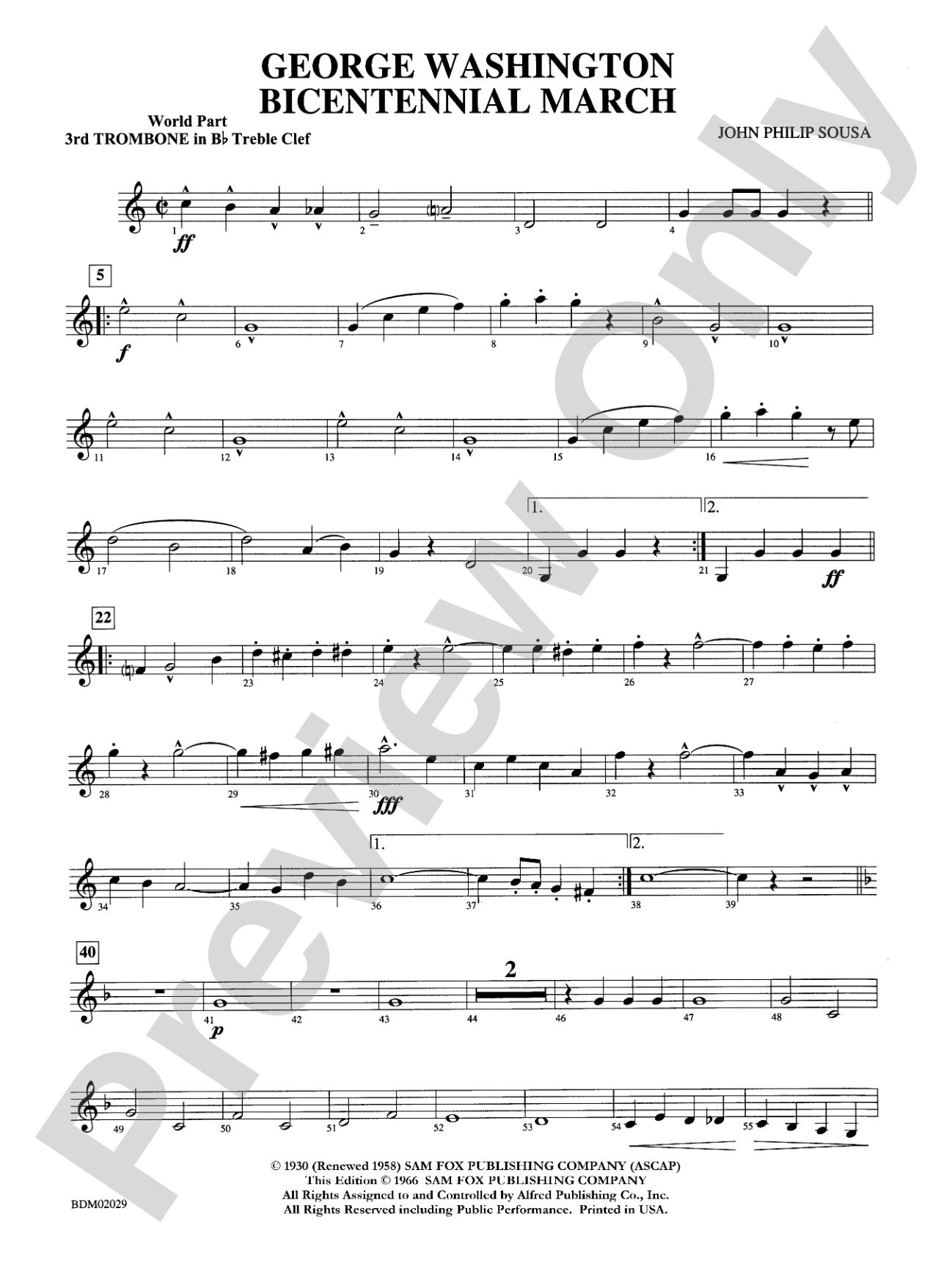
George Washington Bicentennial March: WP 3rd B-flat Trombone T.C.

By John Philip Sousa / ed. Frederick Fennell

Grade: 3 (Medium Easy)

Item: 00-PC-0002163_TN3TC

Digital Download
$3.00
Description
Commissioned for the occasion of George Washington's bicentennial celebration in 1932, this march was premiered by the combined military bands in Washington, D.C., conducted by Sousa himself. Now with freshly engraved parts and a brand new full score! (3:51)

Don't just read it, hear it, play along with it, and watch your students grow with it. In MakeMusic Cloud, George Washington Bicentennial March: WP 3rd B-flat Trombone T.C. comes alive with professional accompaniment, adjustable tempo, and built-in practice tools that turn solo practice into real progress.

Sample Audio
0:00
0:00
Sample Video
Additional Details
Series: Fennell Edition Marches for Band
Publisher: Alfred Music
Page Count: 336
SKU: 00-PC-0002163_TN3TC

More about this title

About the Composer: John Philip Sousa

John Philip Sousa (1854-1932) stands as America's foremost march composer and a pivotal figure in concert band history. His prolific output shaped the march genre into a sophisticated concert form, and his compositions remain central to band repertoire today. Sousa's ability to craft memorable melodies, energetic rhythms, and effective scoring for wind instruments established a standard that continues to influence composers and band directors more than a century later.

Why we love this

This march captures Sousa at a moment of national significance, written specifically to honor Washington's bicentennial and premiered under his own baton. The Fennell Edition provides freshly engraved parts and a complete new score that brings clarity to Sousa's orchestration, making it far more accessible for modern conductors and ensembles than earlier editions. At Grade 3, it offers conductors a genuinely substantive march that doesn't require advanced technical demands, yet delivers the patriotic weight and audience appeal that make Sousa's work enduringly popular.

What to expect

Stately yet energetic, with the ceremonial dignity befitting its historical occasion. The melody is direct and memorable, supported by buoyant harmonic movement that propels the ensemble forward with optimism and pride.

Who it's for

Band directors seeking a patriotic concert selection that works equally well for contest, festival, or summer pops programming. Players at the Grade 3 level gain experience with idiomatic march writing without navigating the technical complexity of Sousa's more demanding works.

How to get the most out of it

  • Establish a steady, confident march tempo that lets the melody sing without rushing; Sousa's phrases often span multiple measures and need space to breathe.
  • Balance the solo cornet or trumpet line carefully so it projects over the harmonic foundation without overwhelming the ensemble's blend.
  • Shape the dynamic contours clearly, especially in contrasting sections; the architecture of a march depends on listeners recognizing structural points through musical gesture.
  • Pay attention to articulation consistency across all parts, particularly in the ensemble passages where rhythmic precision sells the march's forward momentum.

How to use it

Program this in the closing section of a concert to capitalize on audience recognition and send listeners out on a patriotic high note. It pairs naturally with other American band repertoire and sits comfortably in summer concert series, Fourth of July celebrations, or patriotic-themed festivals.

Skills your students will build

  • Executing the march rhythmic vocabulary with precision and style
  • Balancing solo and tutti passages in concert band texture
  • Sustaining phrase shape over multi-measure melodic lines
  • Coordinating ensemble articulation and attack to project a unified musical gesture

You May Also Like