
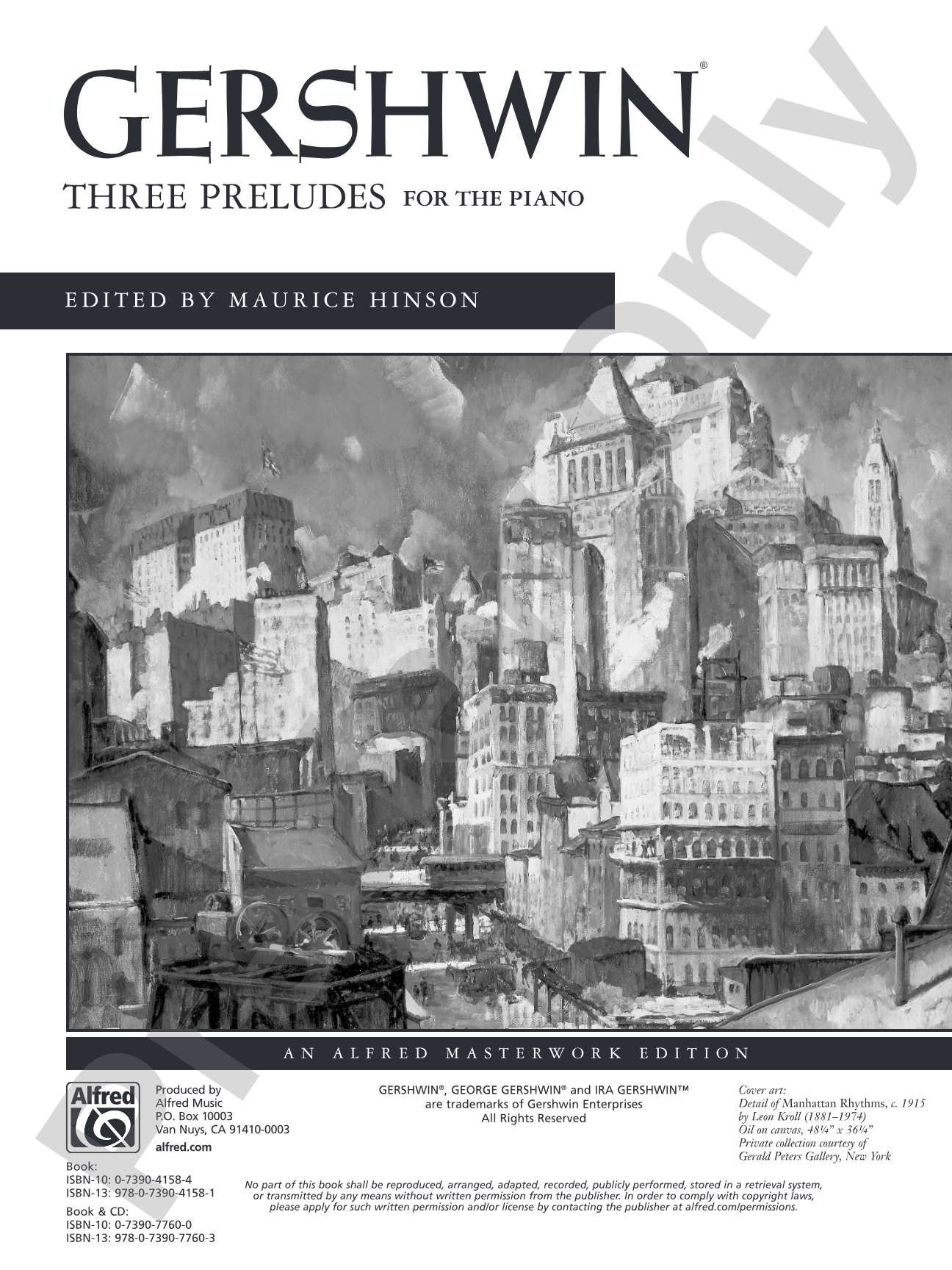

George Gershwin: Three Preludes - Intermediate / Advanced Piano Collection: Piano
By George Gershwin / ed. Maurice Hinson
Level: Advanced
Item: 00-PB-0000714
$6.95
Pickup currently not available
Description
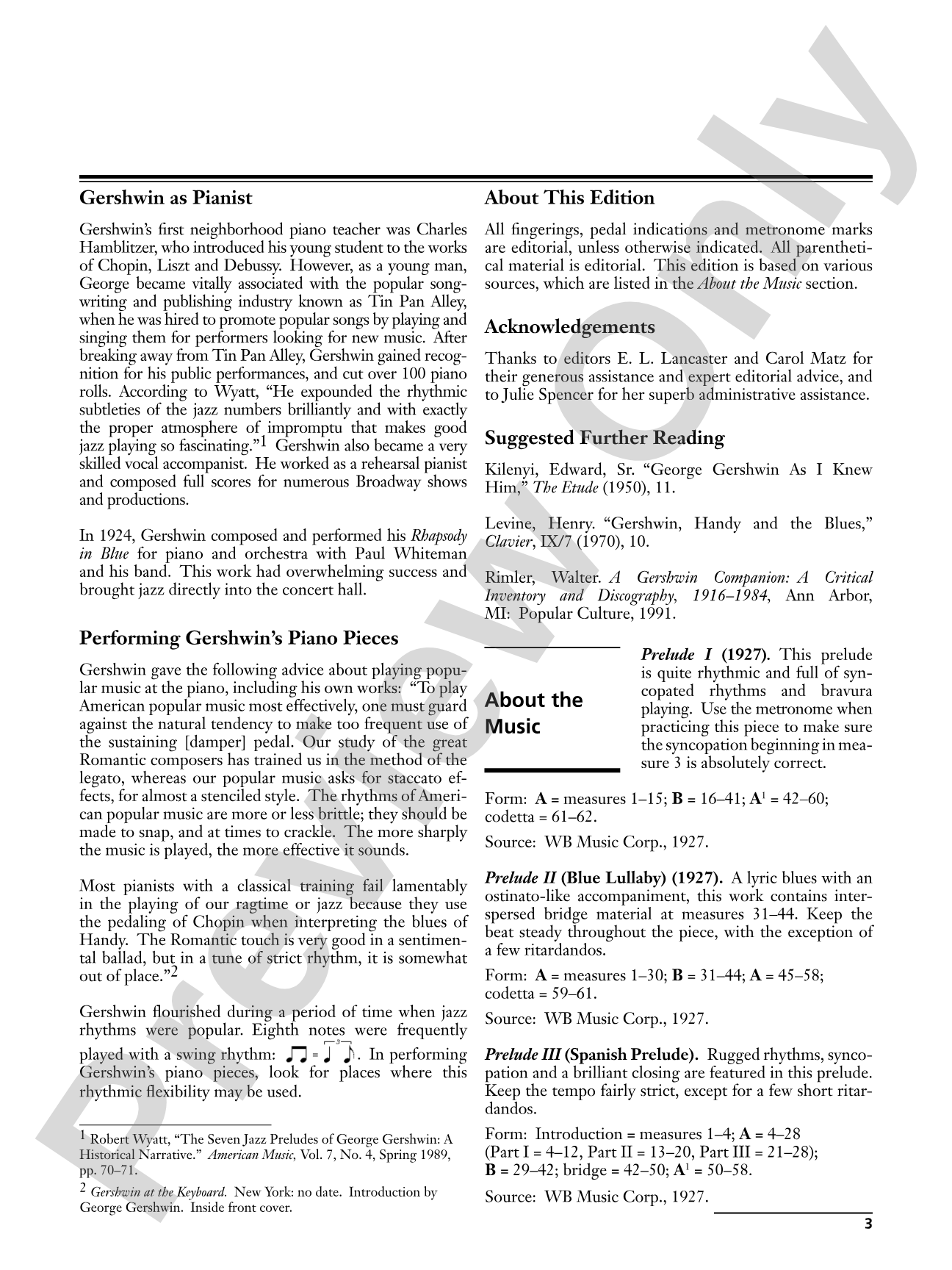
George Gershwin's three most famous preludes demonstrate his genius for piano writing, and portray a variety of styles. Prelude I exudes energetic syncopation, Prelude II is a lyric blues with an ostinato-like accompaniment, and Prelude III closes this set brilliantly with rugged rhythms and exciting syncopations. All three preludes are Federation Festivals 2016-2020 selections. A Federation Festivals 2020-2024 selection.


Discover MakeMusic Cloud: thousands of interactive titles your students can play along with today.
Sample Audio
1
Prelude No
--:--
Prelude No
0:00
0:00
Sample Video
No sample videos found.
Additional Details
Series:
Alfred Masterwork Edition
Publisher:
Hal Leonard Publications
Page Count:
16
SKU:
00-PB-0000714
More about this title
About the Composer: George Gershwin
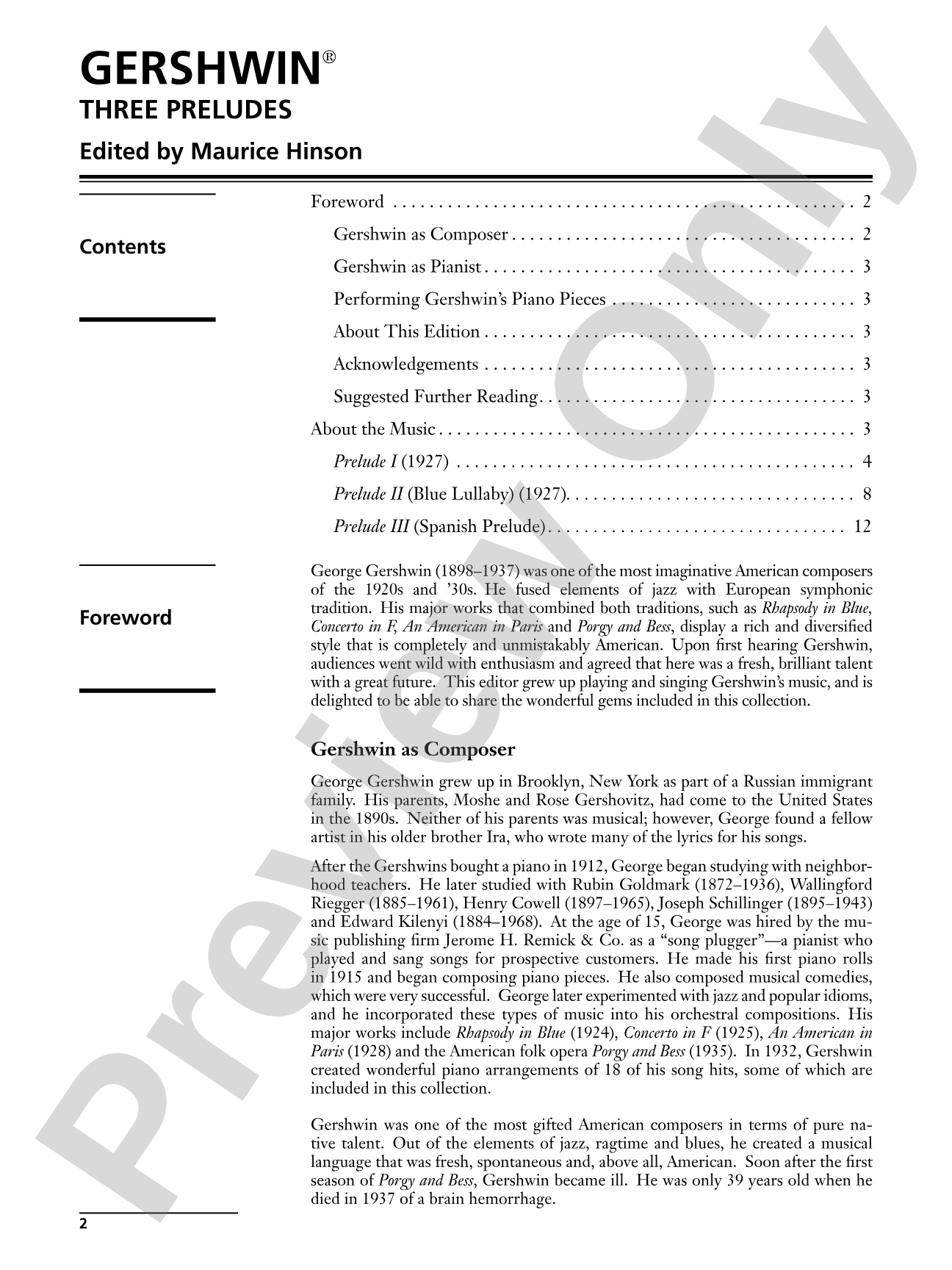
George Gershwin (1898-1937) bridged classical composition and jazz idiom at a time when most concert composers dismissed popular music as beneath serious consideration. His piano works, including the Rhapsody in Blue and these three Preludes, remain central to the piano repertoire because they demand both technical virtuosity and stylistic authenticity. Gershwin's gift for melody, harmonic sophistication, and rhythmic vitality transformed what it means to write for the instrument in the twentieth century.
These Preludes showcase Gershwin's ability to work within compact forms while maintaining dramatic impact. Written in the late 1920s, they demonstrate his mastery of blues harmony, syncopation, and orchestral thinking adapted for solo piano. For student pianists, they represent a direct pathway into understanding how jazz language and classical form can coexist as equals.
Why we love this
Gershwin's Preludes arrive at a critical moment in student development: advanced players need repertoire that demands sophistication without requiring the enormous span and stamina of larger works. These three pieces offer distinct musical personalities within a single collection, allowing pianists to demonstrate range in a recital or festival setting. The rhythmic and harmonic language opens doors to jazz-influenced literature while maintaining the prestige of a canonical masterwork.
What to expect
Prelude I pulses with infectious energy and blue-note attitude, driven by syncopated figures that feel both modern and joyful. Prelude II settles into a smoky, contemplative space where a sung melody floats above gently rocking harmonies. Prelude III ignites the collection's closing with angular rhythms, percussive chords, and a sense of confident exhilaration that leaves listeners exhilarated.
Who it's for
Advanced pianists preparing for recitals, competitions, or festival performances who are ready to engage with twentieth-century idiom and jazz-inflected harmony. Students working toward university auditions or those exploring the intersection of popular song styles and classical forms will find these pieces essential. This collection suits pianists who want to develop interpretive sophistication without abandoning accessibility.
How to get the most out of it
- Feel the syncopation in Prelude I as a conversation between the hands rather than mechanical layering; the energetic surface depends on flexibility and independence, not rigidity.
- In Prelude II, anchor the ostinato-like accompaniment so the lyric blues melody can breathe and flex without losing its harmonic home.
- Let the rugged rhythms and excitements of Prelude III stay grounded in a steady pulse; these pieces demand precision before they allow expressivity.
- Study how each prelude uses the full keyboard differently: I covers the middle and upper ranges, II anchors lower, and III spans dramatically. Adjust your body position and arm weight to match the textural landscape.
How to use it
Program all three as a set to showcase a pianist's command of contrasting styles and moods within a single work cycle. Alternatively, pair Prelude II with slower Romantic repertoire to highlight its lyrical sophistication, or use Prelude III to anchor a contemporary or jazz-adjacent recital section. Their Federation Festival selection status makes them ideal for young artist showcases and competition programs.
Skills your students will build
- Syncopation and rhythmic displacement across both hands simultaneously
- Blues harmony and voice leading with chromatic alterations
- Voicing jazz chords and understanding upper extensions
- Dynamic control and textural clarity in complex chord progressions
- Pedal technique for both sustaining harmony and maintaining articulation
- Stylistic awareness of 1920s-1930s jazz aesthetic in a concert setting