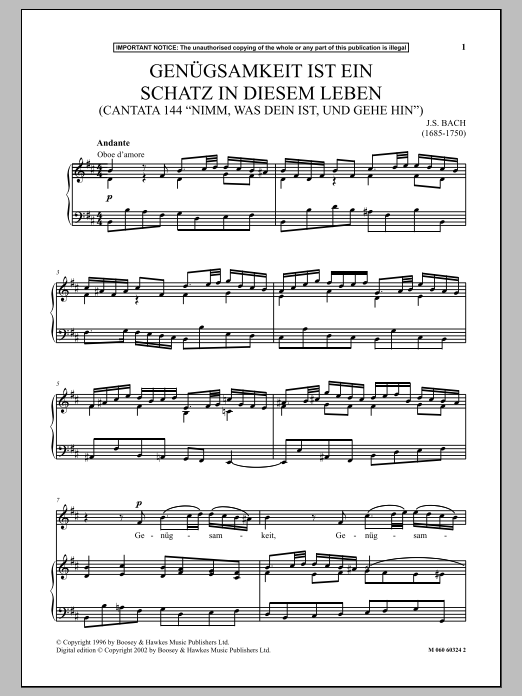
Genugsamkeit Ist Ein Schatz In Diesem Leben (Cantata 144 Nimm, Was Dein Ist, Und Gehe Hin) Sheet Music Preview

Genugsamkeit Ist Ein Schatz In Diesem Leben (Cantata 144 Nimm, Was Dein Ist, Und Gehe Hin): Piano Vocal

As performed by Johann Sebastian Bach

Item: 35-DS00238120

Digital Download
$5.99
Description

Genugsamkeit Ist Ein Schatz In Diesem Leben (Cantata 144 Nimm, Was Dein Ist, Und Gehe Hin): Piano Vocal isn't in MakeMusic Cloud just yet...but it could be. Let us know you'd like to see it, and you'll help shape what comes next. In the meantime, start a free trial and dive into thousands of interactive titles your students can play along with today.

Sample Audio
No sample audio found.
Sample Video
Additional Details
Publisher: Hal Leonard
Page Count: 5
SKU: 35-DS00238120

More about this title

About the Artist: Johann Sebastian Bach

Johann Sebastian Bach (1685-1750) was a German composer and organist whose technical mastery and harmonic invention fundamentally shaped Western music. Working across sacred and secular genres, he produced over 1,000 compositions including cantatas, concertos, keyboard works, and orchestral suites that remain central to the conservatory curriculum.

Bach's cantatas stand as some of the most sophisticated examples of Baroque vocal writing. His ability to marry profound theological text with inventive musical architecture made him invaluable to the Leipzig church musicians he led, and his work continues to reward both performers and listeners with structural clarity and emotional depth.

Why we love this

Bach's chorale-based cantatas offer singers access to some of his most expressive writing without requiring the forces of a full orchestra or chorus. This particular movement showcases his gift for setting German text with rhythmic vitality and harmonic color, making it an excellent choice for vocalists who want to develop Baroque interpretation skills while engaging material of genuine artistic weight.

What to expect

The text speaks of contentment and spiritual treasure, and Bach's setting radiates a kind of luminous steadiness. The harmonic language moves with purpose while remaining intimate; this is devotional music that invites reflection rather than spectacle, offering the performer a chance to inhabit a moment of genuine spiritual conviction.

Who it's for

This movement suits advanced vocalists and serious voice students who are ready for the textural sophistication of the Baroque and want to deepen their connection to Bach's sacred music. It works equally well for singers preparing art song repertoire or building a foundation in the German Lied tradition.

How to get the most out of it

  • Attend closely to Bach's figured bass notation; the harmonic progression often suggests subtle weight shifts that inform phrasing even in the vocal line itself.
  • Shape the text naturally within the harmonic rhythm rather than fighting against it; Bach's phrase lengths typically align with both the theological content and the musical structure.
  • Allow the piano part to breathe independently rather than simply doubling the voice; the accompaniment carries independent musical ideas that deserve attention from both performer and listener.

How to use it

Pair this with other Bach cantata movements or German Baroque songs to create a thematic program exploring faith and acceptance. Its modest page count and single-voice format also make it an excellent addition to a recital that includes larger ensemble works, offering audience members a moment of intimate connection before shifting gears.

Skills your students will build

  • Baroque ornamentation and expressive approach to figured bass harmony
  • German text declamation and understanding of Lutheran chorale traditions
  • Navigating Bach's distinctive phrase structures and harmonic rhythm
  • Interpreting piano accompaniment as independent musical voice rather than mere support

You May Also Like