
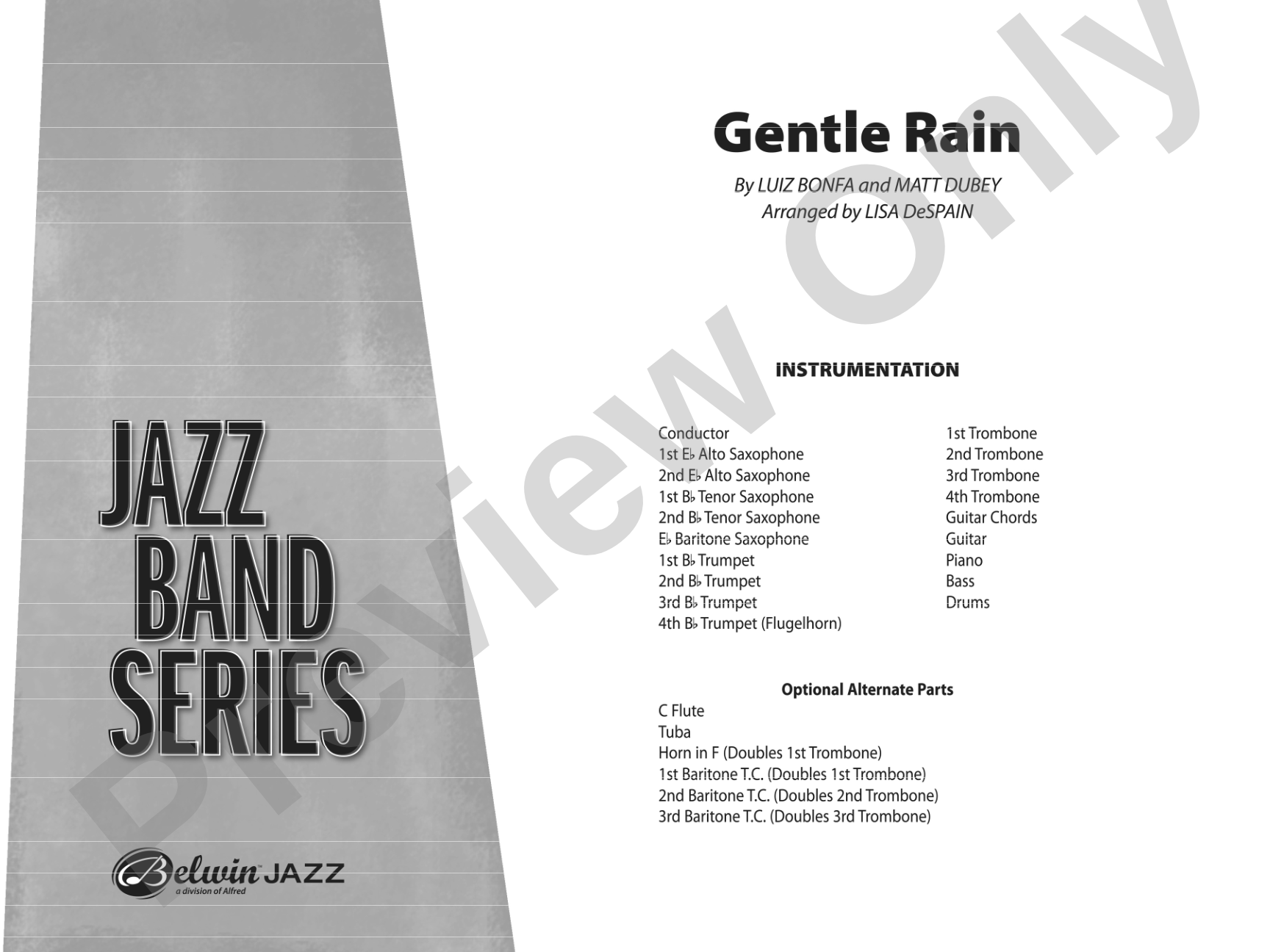
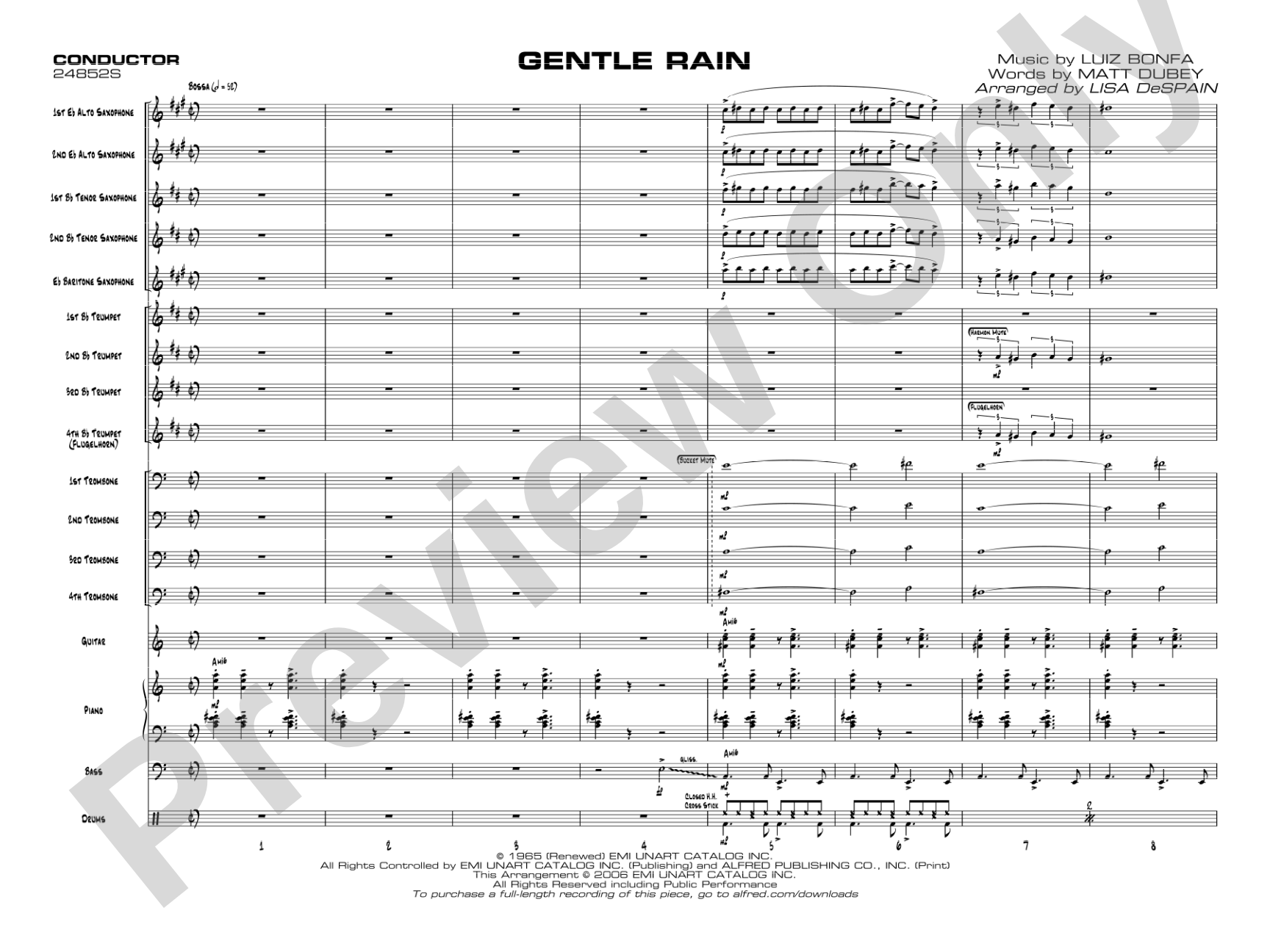
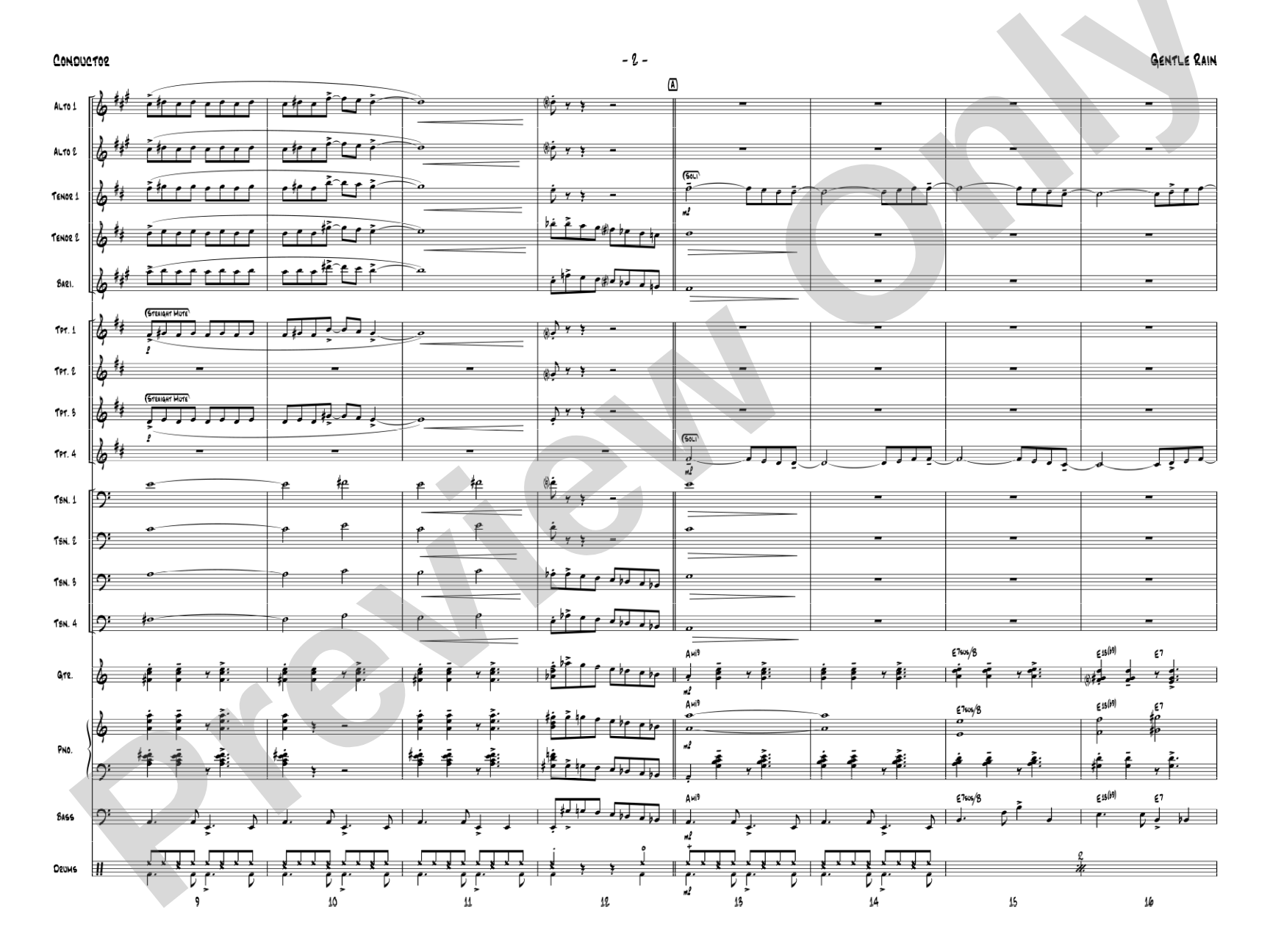
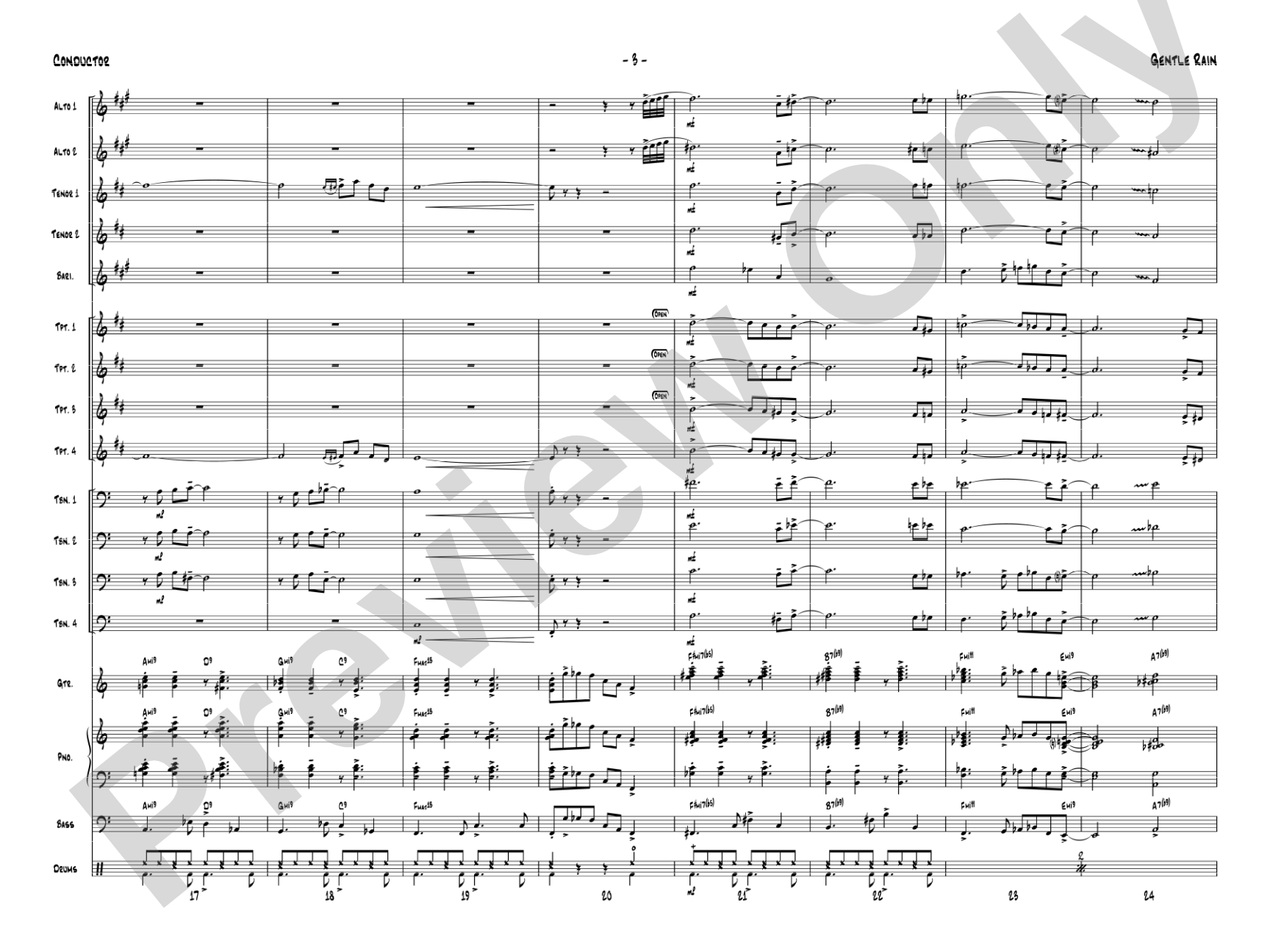
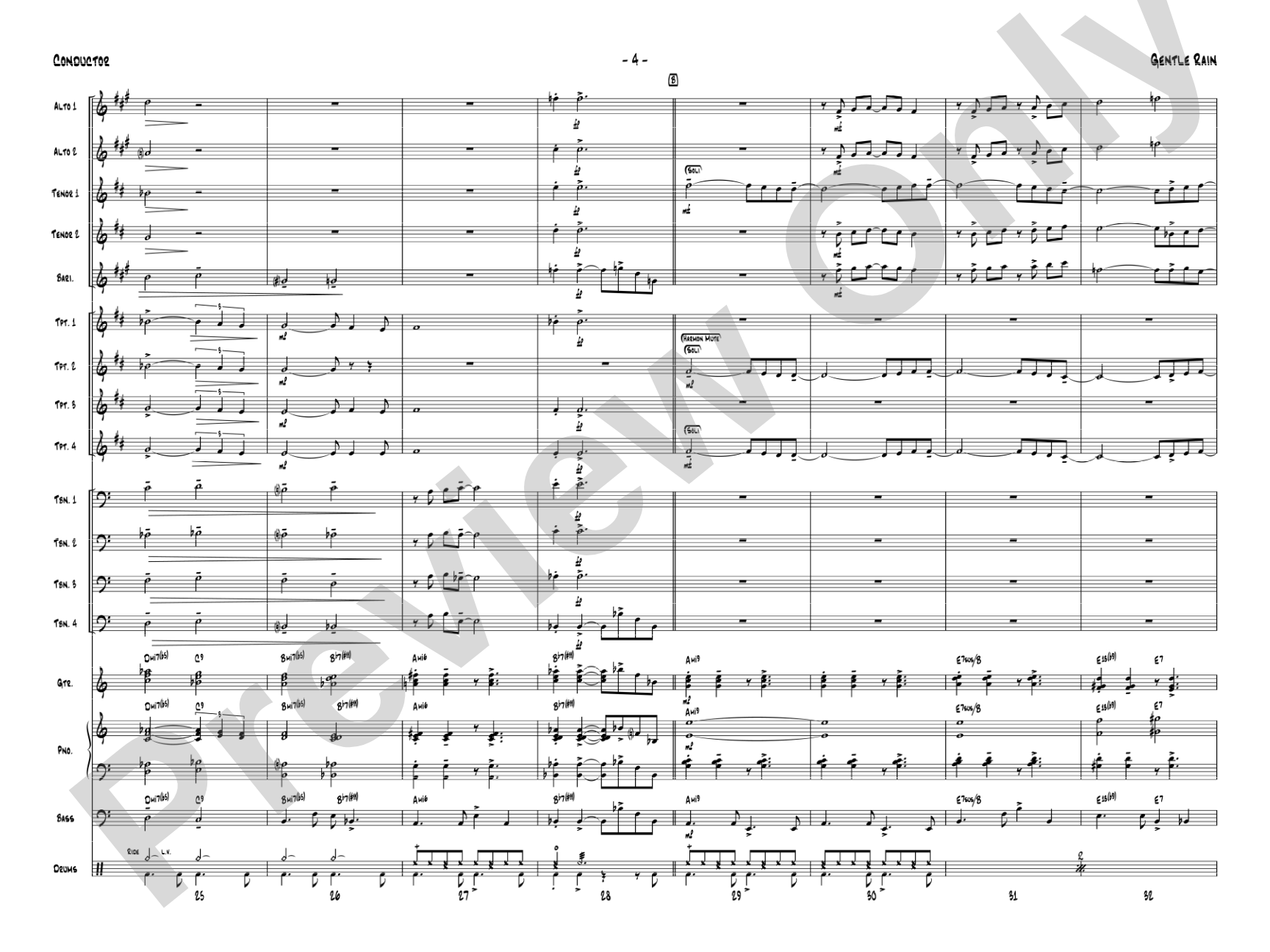
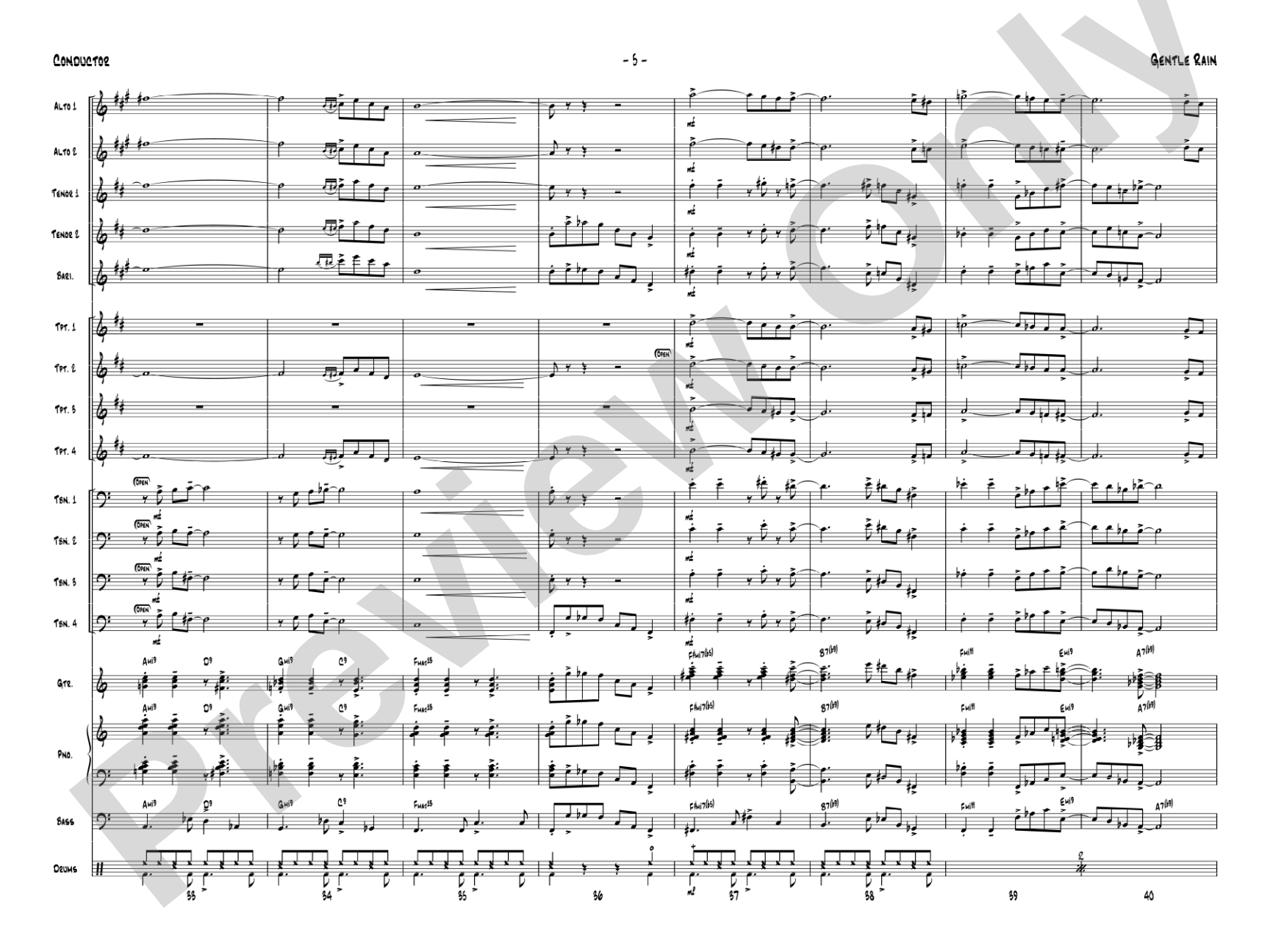
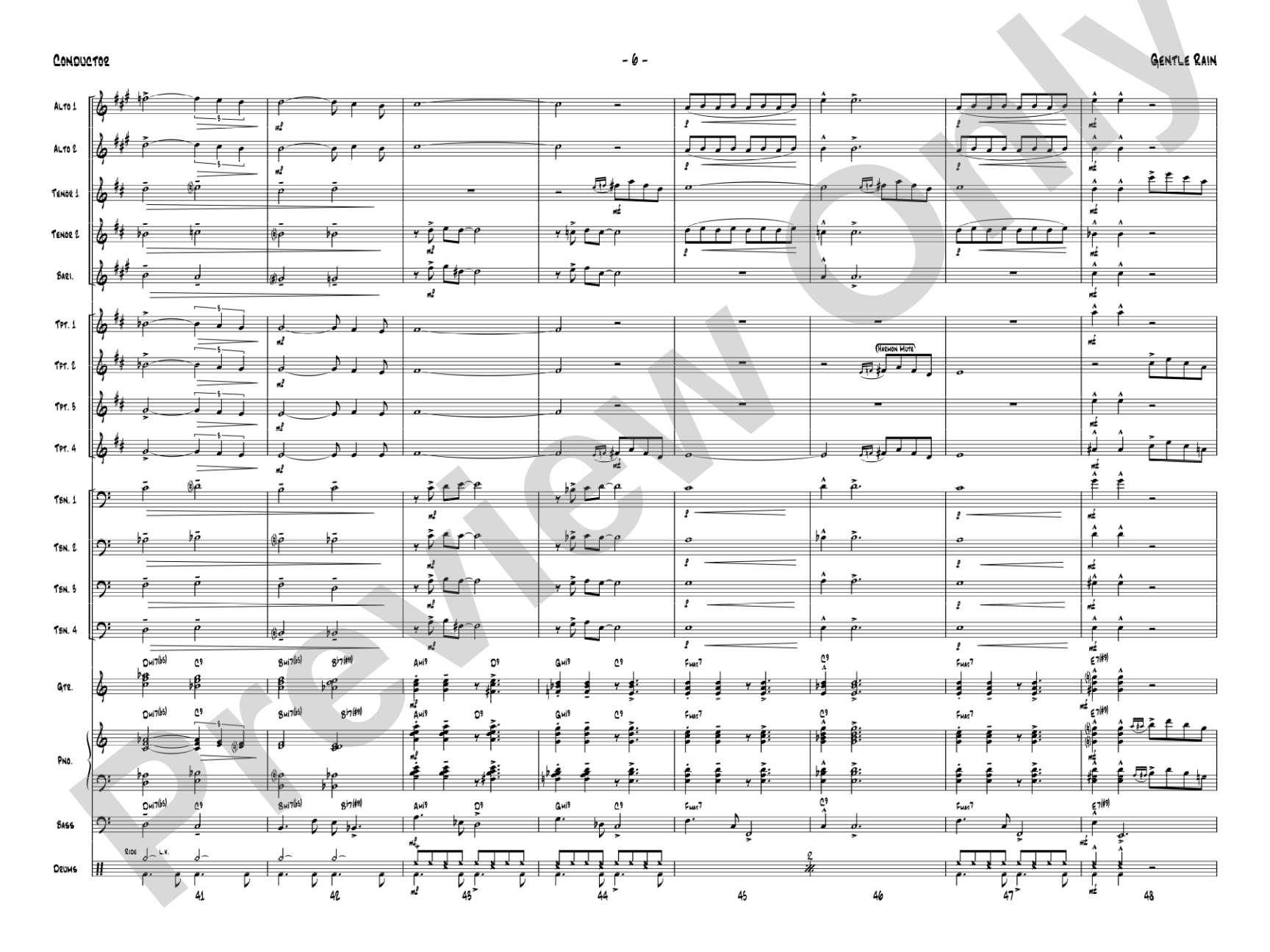
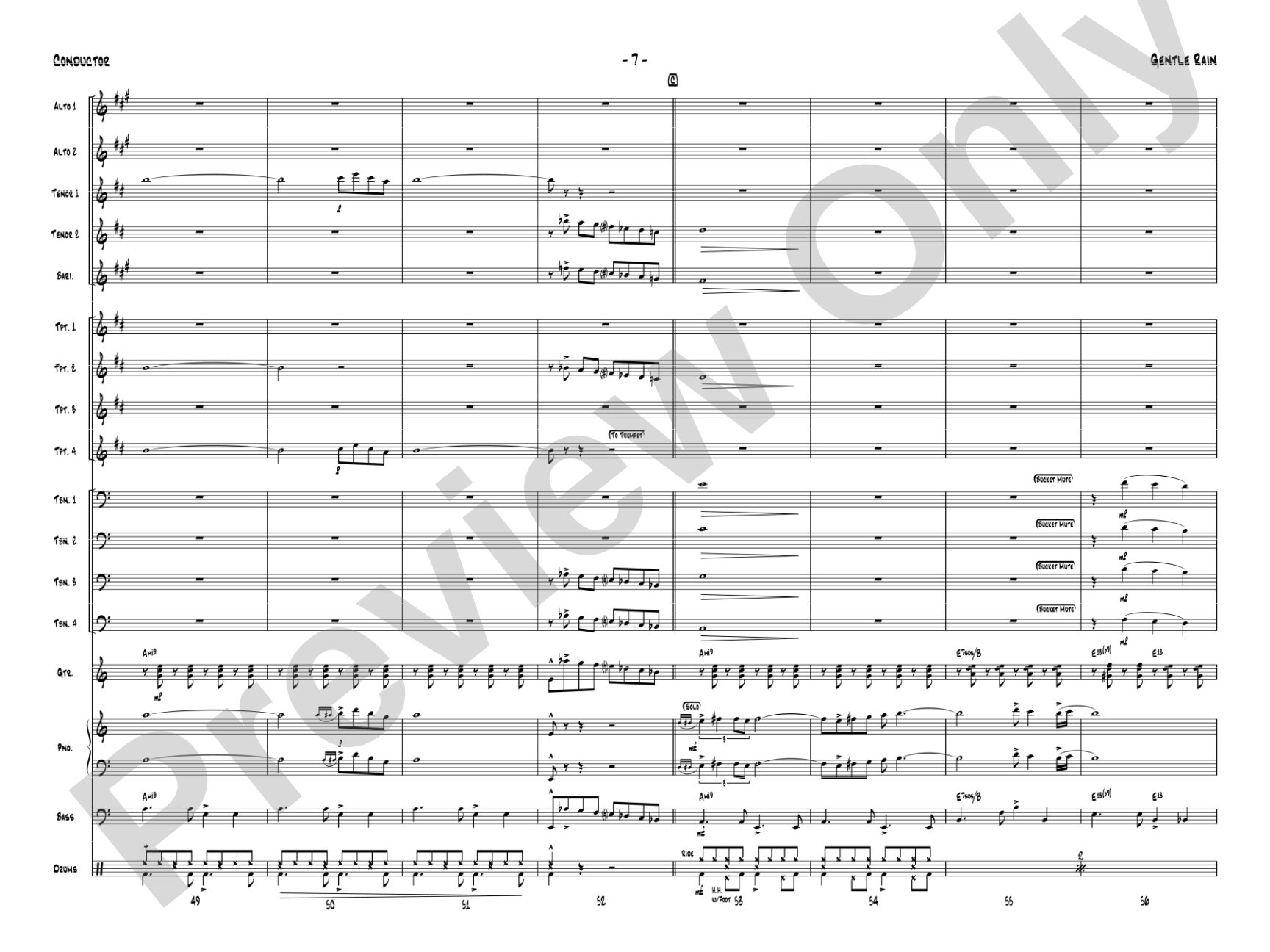
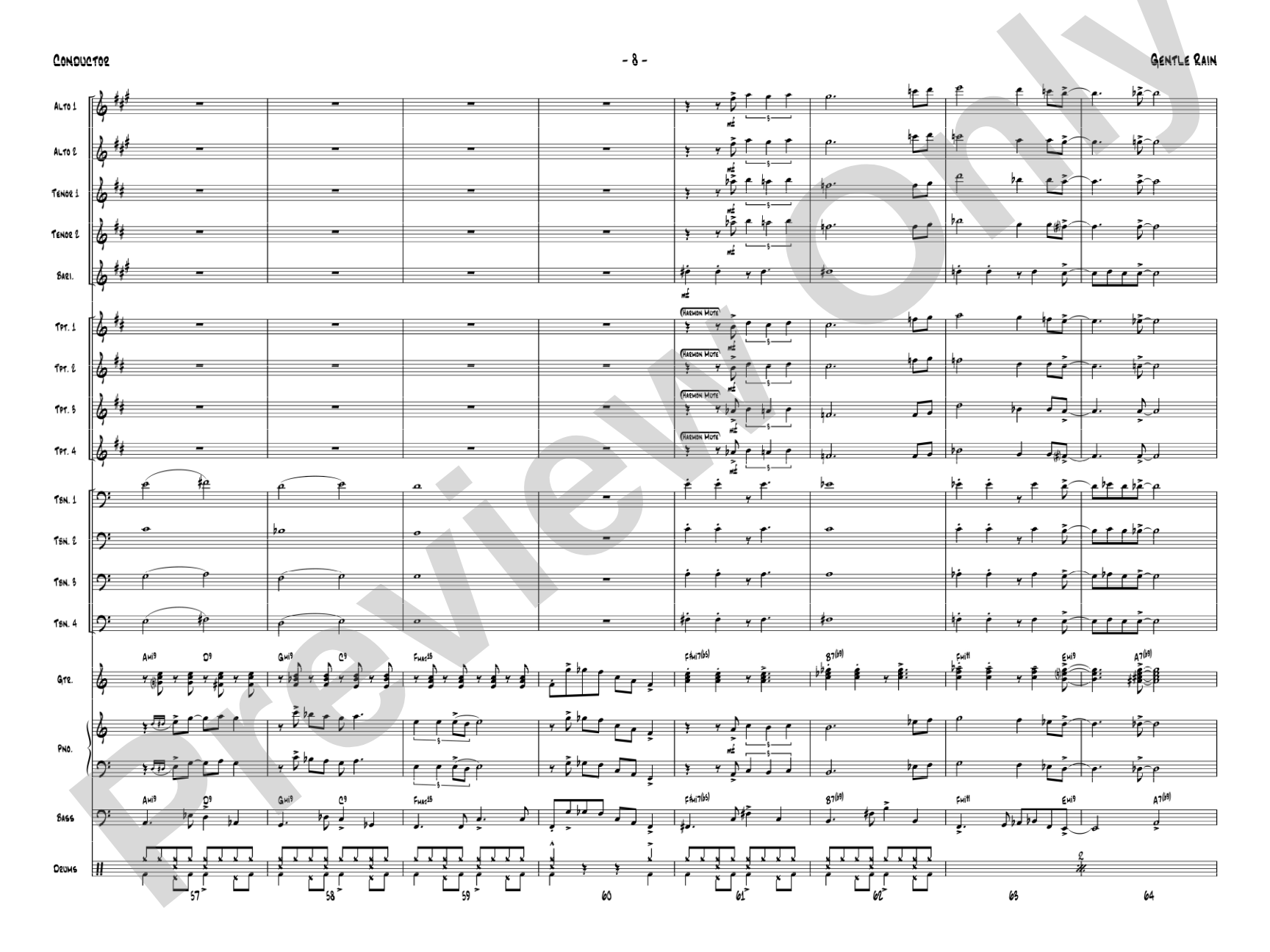
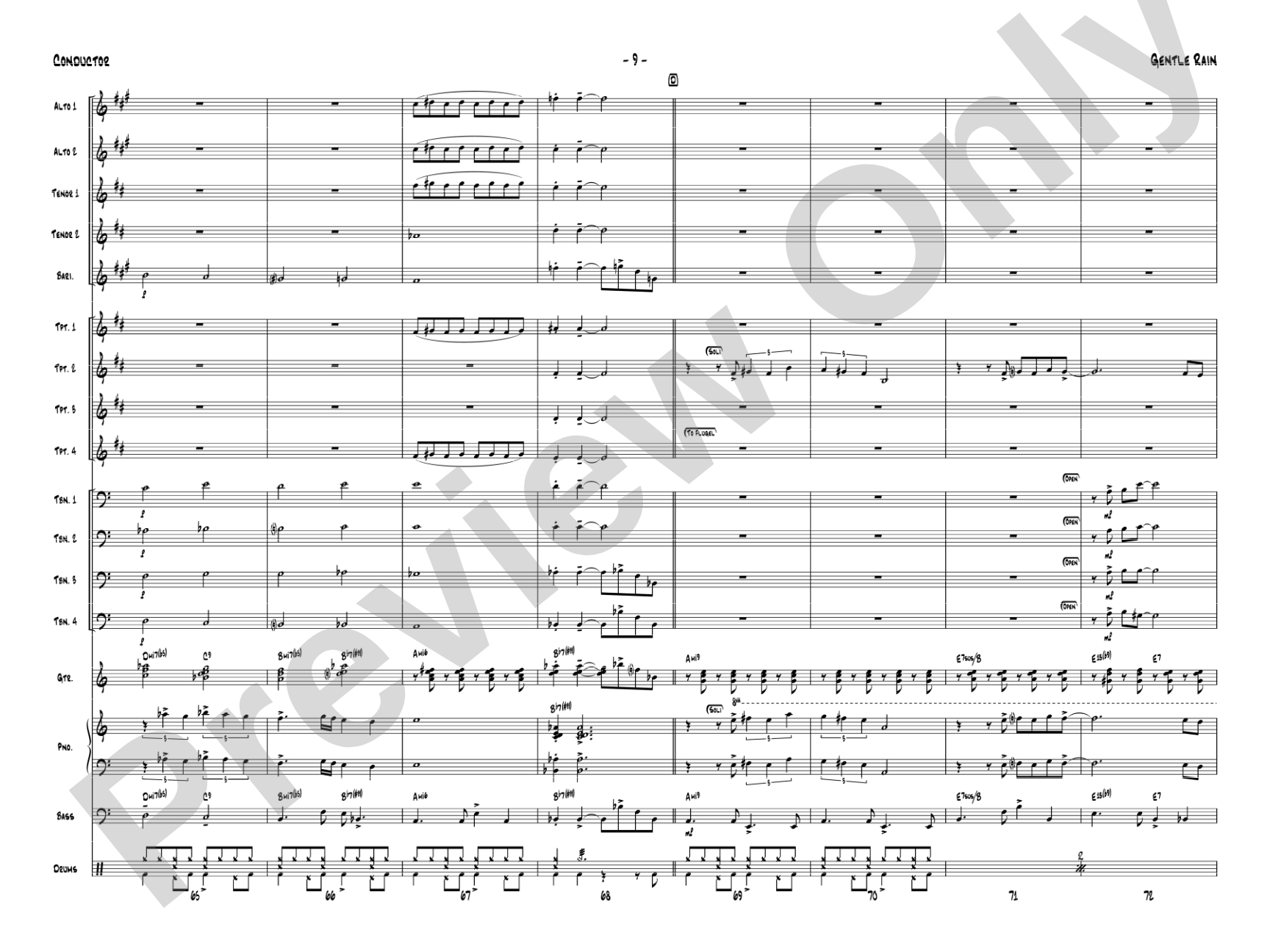
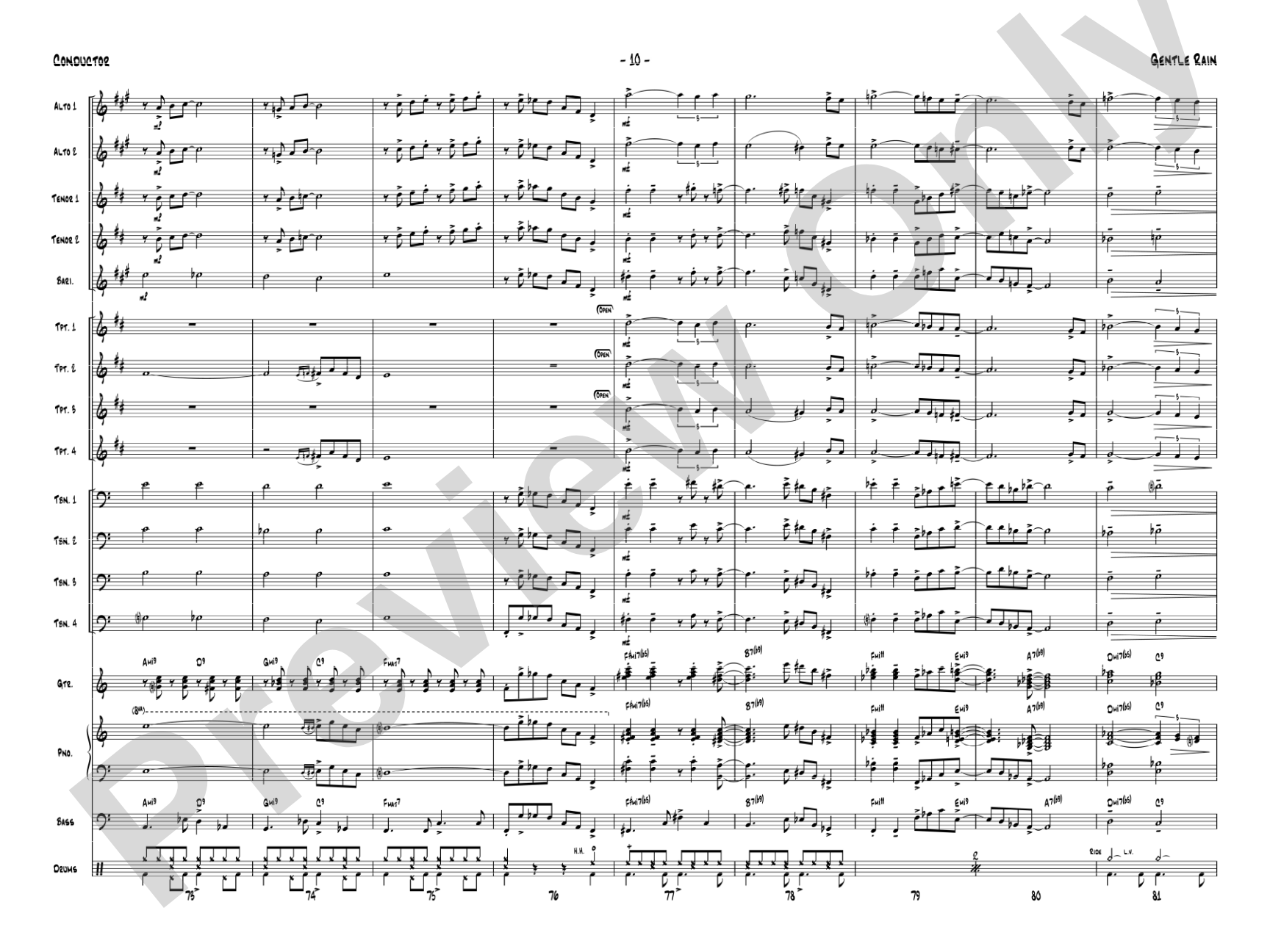
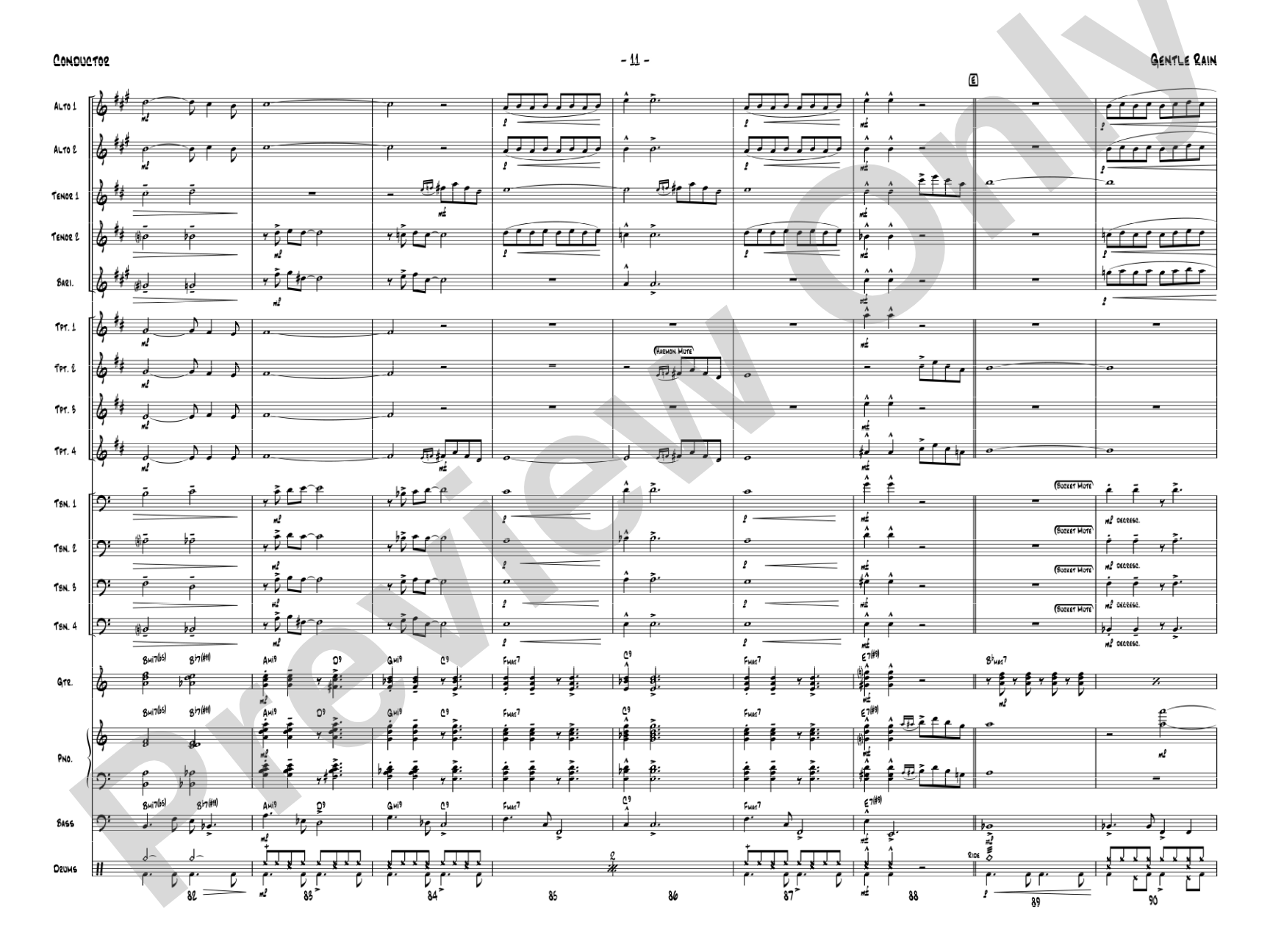
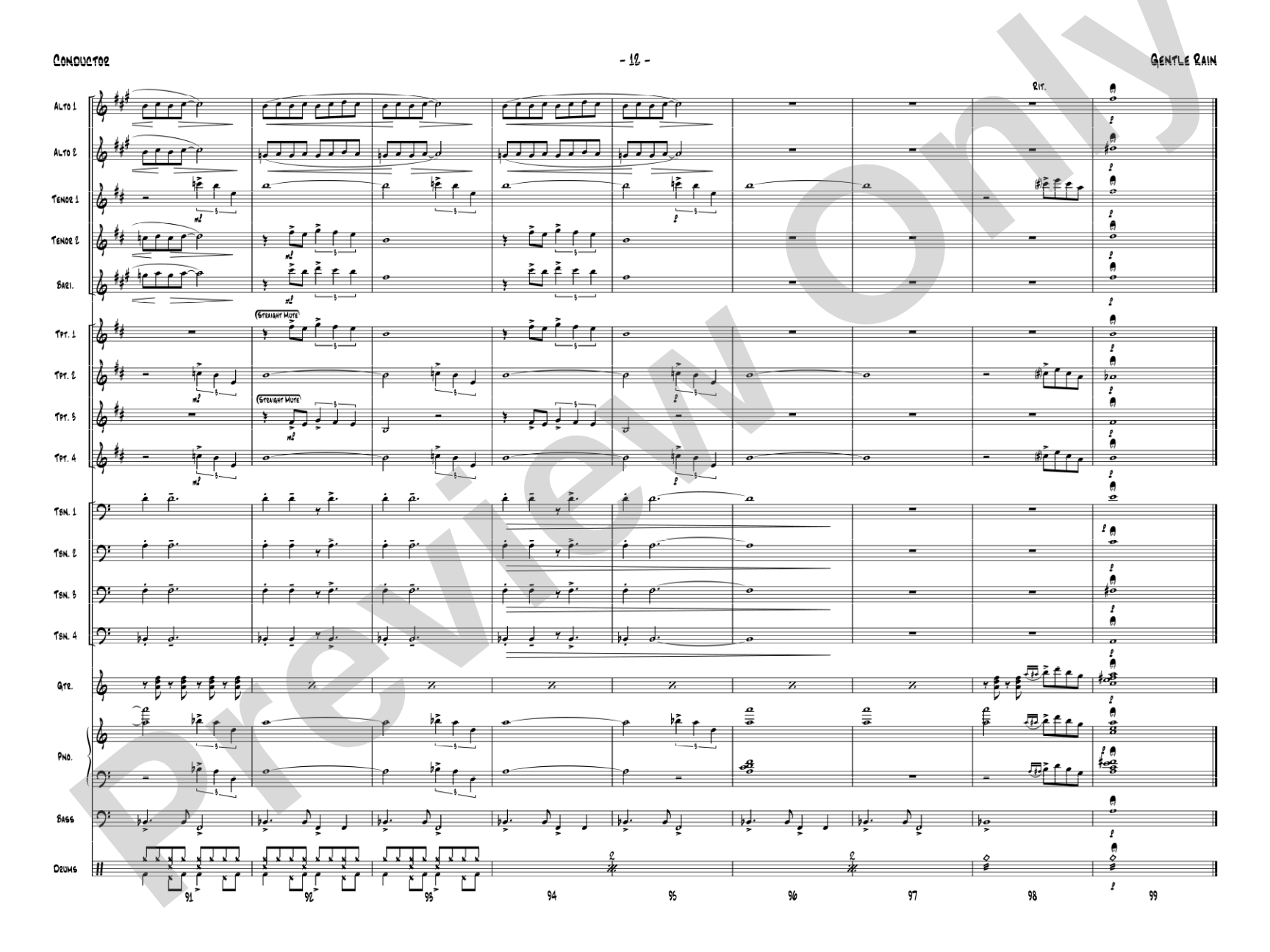



Gentle Rain: Jazz Ensemble Conductor Score & Parts
By Luiz Bonfá / arr. Lisa DeSpain
Grade: 3 (Medium)
Item: 00-PK-0003975

$52.00
One moment…
Description
Color, texture, phrasing, boss nova, and simplicity make for a world-class chart by Lisa DeSpain. Luiz Bonfa's beautiful melody arranged to feature 4th trumpet and piano in this superbly written arrangement. Superior! This title is available in MakeMusic Cloud.


Don't just read it, hear it, play along with it, and watch your students grow with it. In MakeMusic Cloud, Gentle Rain: Jazz Ensemble Conductor Score & Parts comes alive with professional accompaniment, adjustable tempo, and built-in practice tools that turn solo practice into real progress.
Open in the Player
Jump straight in and assign it today.
Start Your Free Trial
Open this title and explore the full library in minutes.
Sample Audio
1
Audio File
--:--
0:00
0:00
Sample Video
No sample videos found.
Additional Details
Series:
Jazz Band Series
Publisher:
Alfred Music
Page Count:
94
SKU:
00-PK-0003975
More about this title
About the Composer: Luiz Bonfá
Luiz Bonfá (1922-2001) was a Brazilian guitarist and composer whose work bridged classical technique and popular Brazilian music. He became central to the bossa nova movement of the late 1950s and early 1960s, composing memorable melodies that defined the genre's lyrical, sophisticated sound.
Bonfá's compositions remain teaching staples in jazz and contemporary music programs. His gift for writing singable, elegant lines that work across instrumental voices makes his music accessible to student ensembles while maintaining genuine artistic integrity.
Why we love this
DeSpain's arrangement captures the essence of Bonfá's melody while giving your ensemble room to develop genuine interpretive choices around phrasing and texture. The featured roles for 4th trumpet and piano create natural small-group mentoring opportunities within your full ensemble sound, and the Grade 3 level means strong musicianship students can lead without outpacing your section players.
What to expect
The piece unfolds with the warmth and spaciousness of a gentle tropical breeze. Colors emerge gradually through the arrangement; the bossa nova rhythm creates a natural swing and ease rather than driving intensity, and the featured soloists add moments of intimate conversation within the fuller ensemble texture.
Who it's for
This is ideal for developing jazz ensembles that want to play a substantial, concert-ready arrangement without getting bogged down in advanced harmonic complexity or high-register demands. Directors looking for Grade 3 contest or festival material will find a piece that balances appeal with genuine musicianship expectations.
How to get the most out of it
- Balance the solo voices (4th trumpet and piano) so they speak clearly over the ensemble texture without forcing volume; let phrasing and articulation distinction do the work.
- Approach the bossa nova rhythm with relaxation rather than rigidity; the groove lives in subtle swing within the written figures, not in mechanical precision.
- Shape the ensemble backgrounds with attention to harmonic color; the 'texture' DeSpain builds supports the melody's lyricism when played with dynamic sensitivity and clean voice-leading.
- Rehearse the featured soloists separately to ensure they understand their role as partners in the arrangement rather than performers separate from the ensemble.
How to use it
Feature this on a jazz concert or pops program where it provides both a musical centerpiece and a vehicle for spotlight soloists. It also works well as a contest or festival selection for groups ready to demonstrate control of texture and ballad playing at a respectable level.
Skills your students will build
- Phrasing and dynamic shaping in a ballad context
- Bossa nova rhythm and swing feel
- Ensemble balance and blend when supporting featured soloists
- Harmonic awareness through texture and voice-leading
- Reading jazz ensemble parts with proper articulation and style