
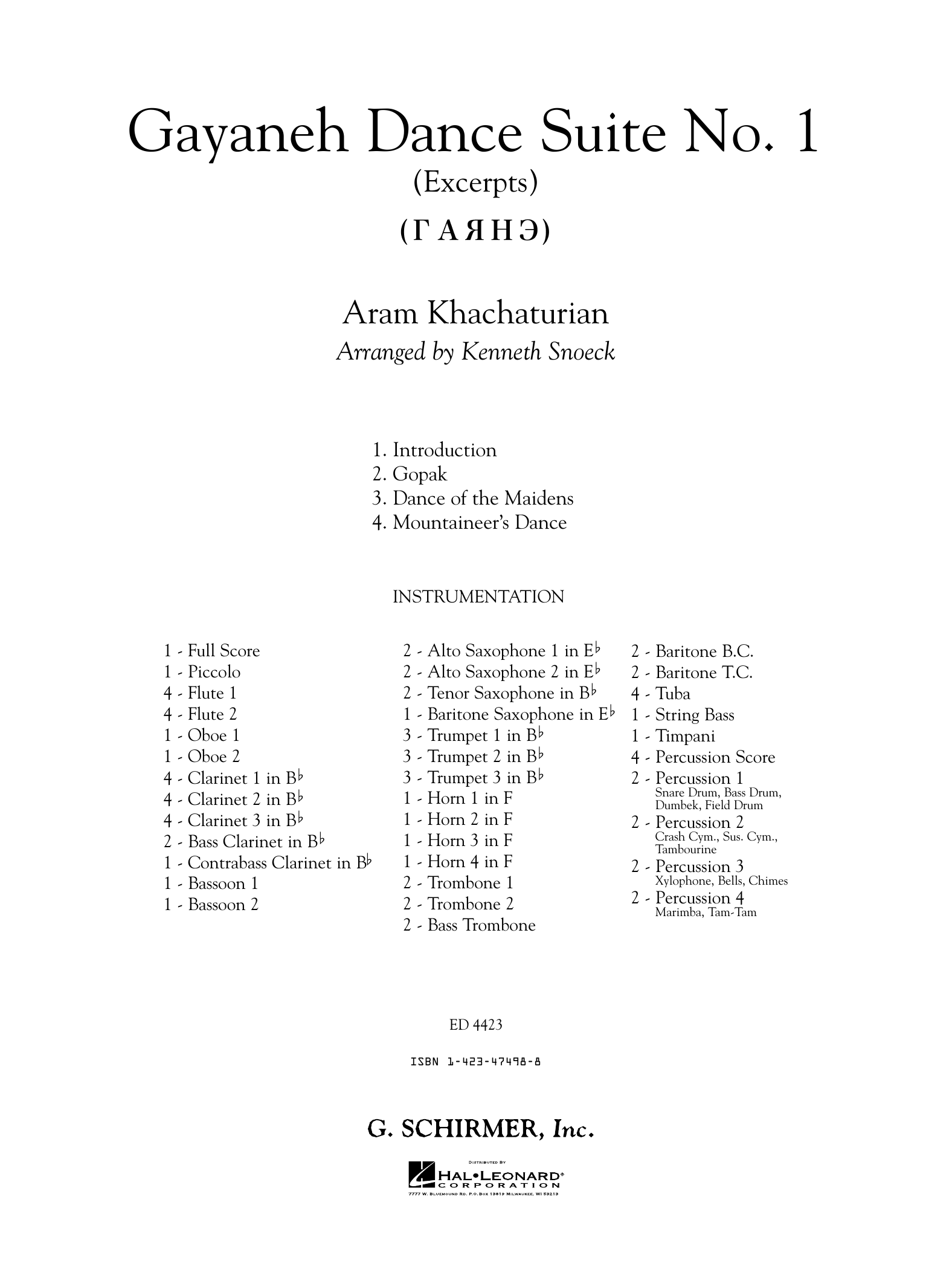

Gayenah Dance Suite No. 1 (Excerpts) (arr. Kenneth Snoeck): Concert Band Conductor Score & Parts
By Aram Khachaturian / Arranged by Kenneth Snoeck
Grade: 5
Item: 35-PK01204704
$95.00
Pickup currently not available
Buy Extra Parts (Digital PDF Download)
Parts Added to Cart!
Description
Selected from the ballet "Gayaneh", these three colorful examples of Aram Khachaturian's writing for ballet are based on rhythms and melodic motives from different ethnic groups, ranging from the very Slavic Ukranian "Gopak" (Hopak) to the Armenian "Dance of the Maidens" and the Kurdish "Mountaineers' Dance." They vary in instrumental color and tension from festive and party-like, through sultry and romantic, to tense and almost angry. These may be performed in any combination -- a single stand-alone dance movement, a contrasting pair, or all three in a complete set. A culturally rich and unique experience for players and audience alike. Dur: 7:45 (Grade 5)


Gayenah Dance Suite No. 1 (Excerpts) (arr. Kenneth Snoeck): Concert Band Conductor Score & Parts isn't in MakeMusic Cloud just yet...but it could be. Let us know you'd like to see it, and you'll help shape what comes next. In the meantime, start a free trial and dive into thousands of interactive titles your students can play along with today.
Request This Title
Tell us you want it.
Start Your Free Trial
Explore everything that's ready to play right now.
Sample Audio
No sample audio found.
Sample Video
No sample videos found.
Additional Details
Publisher:
Hal Leonard
SKU:
35-PK01204704
More about this title
About the Composer: Aram Khachaturian
Aram Khachaturian (1903-1978) was an Armenian composer whose music became synonymous with Soviet ballet in the mid-twentieth century. His three ballets, especially Gayaneh and Spartacus, showcase his gift for writing instantly memorable melodies that sit comfortably for orchestral instruments while maintaining dramatic force and emotional clarity.
Khachaturian drew deeply from the folk traditions of the Caucasus and Armenia, threading ethnic rhythms and modal inflections through his scores with sophistication and respect. For music educators, his work offers students direct access to how a major composer integrated cultural material into concert music without resorting to pastiche.
Why we love this
These three dances give your band immediate access to one of the twentieth century's most distinctive voices without requiring mastery of dense modernist writing. The emotional palette shifts dramatically between movements, meaning your ensemble gets to inhabit completely different musical territories within a single rehearsal sequence. Khachaturian's orchestration is transparent enough for Grade 5 players to feel the architecture of each phrase while sounding genuinely sophisticated.
What to expect
You move from the stomping, infectious energy of a Ukrainian celebration into the languid, almost sensual grace of young women dancing, then shift again into something tense and propulsive. Khachaturian's orchestration keeps the colors warm and the textures clear throughout, so even when the mood turns aggressive, the music never feels cold or cerebral. The three movements create a complete emotional arc without requiring extended performance time.
Who it's for
Concert bands at the Grade 5 level who want repertoire that feels substantial and culturally grounded without overwhelming their current technical capacity. Directors seeking to program non-European traditions and composers who made those traditions central to their artistic voice will find these dances invaluable.
How to get the most out of it
- Match the character shifts precisely: the Gopak thrives on driving rhythmic energy and articulate articulation, while the Dance of the Maidens asks for sustained singing tone and dynamic restraint.
- Balance the melodic voices across your sections. These dances rely on clear phrase contours, so identify which instruments carry the line at any given moment and bring them forward consciously.
- Let the ethnic character inform your vibrato and tone quality. The fiercer sections benefit from a drier, more direct sound; the romantic material opens up for warmer, rounder playing.
- Separate the three movements with silence, never rushing into the next one. Each dance needs breathing room to land its distinct mood.
How to use it
These excerpts work beautifully as the centerpiece of a concert exploring non-Western musical traditions alongside Western art music, or as a contrasting set to balance heavier classical or contemporary works. You can also program them separately across different concerts as standalone concert openers, since the Gopak especially commands immediate attention and energy.
Skills your students will build
- Playing with rhythmic precision in non-standard folk meters
- Sustaining lyrical phrasing across longer melodic lines
- Shifting articulation and tone quality to match contrasting musical characters
- Balancing transparent orchestration where multiple voices share equal importance
- Responding to harmonic language that uses modal and ethnic inflections outside common practice tonality