
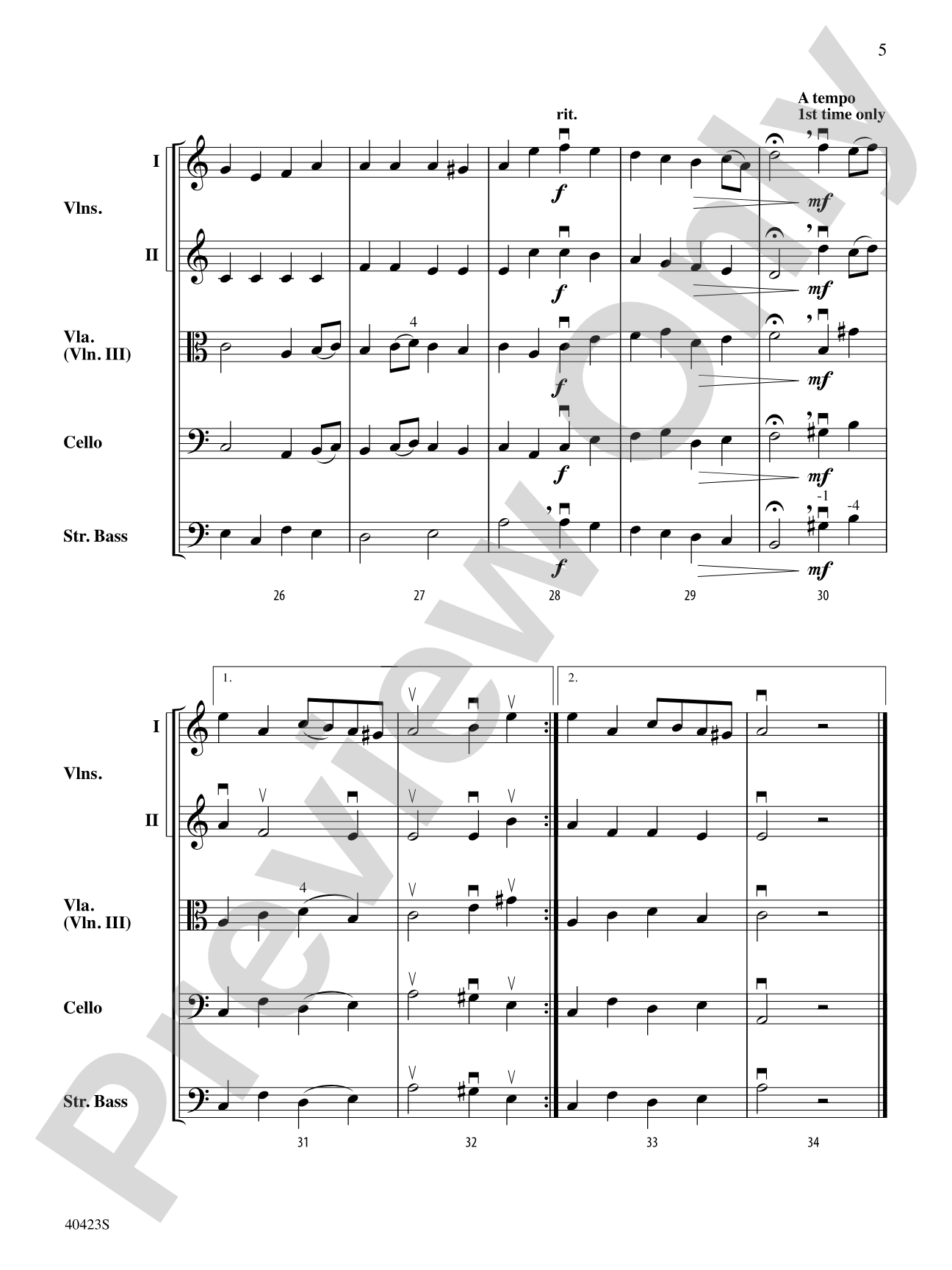
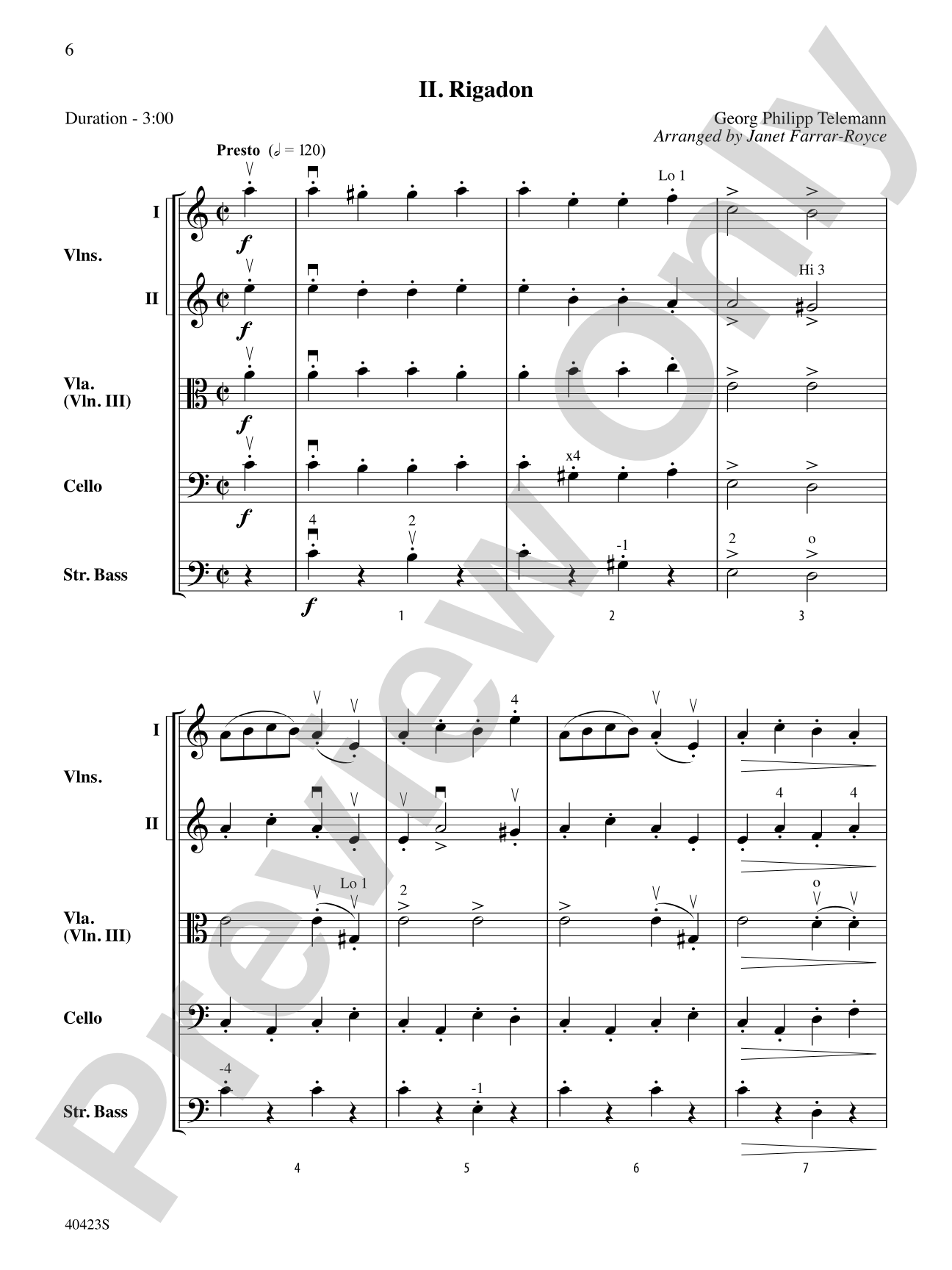
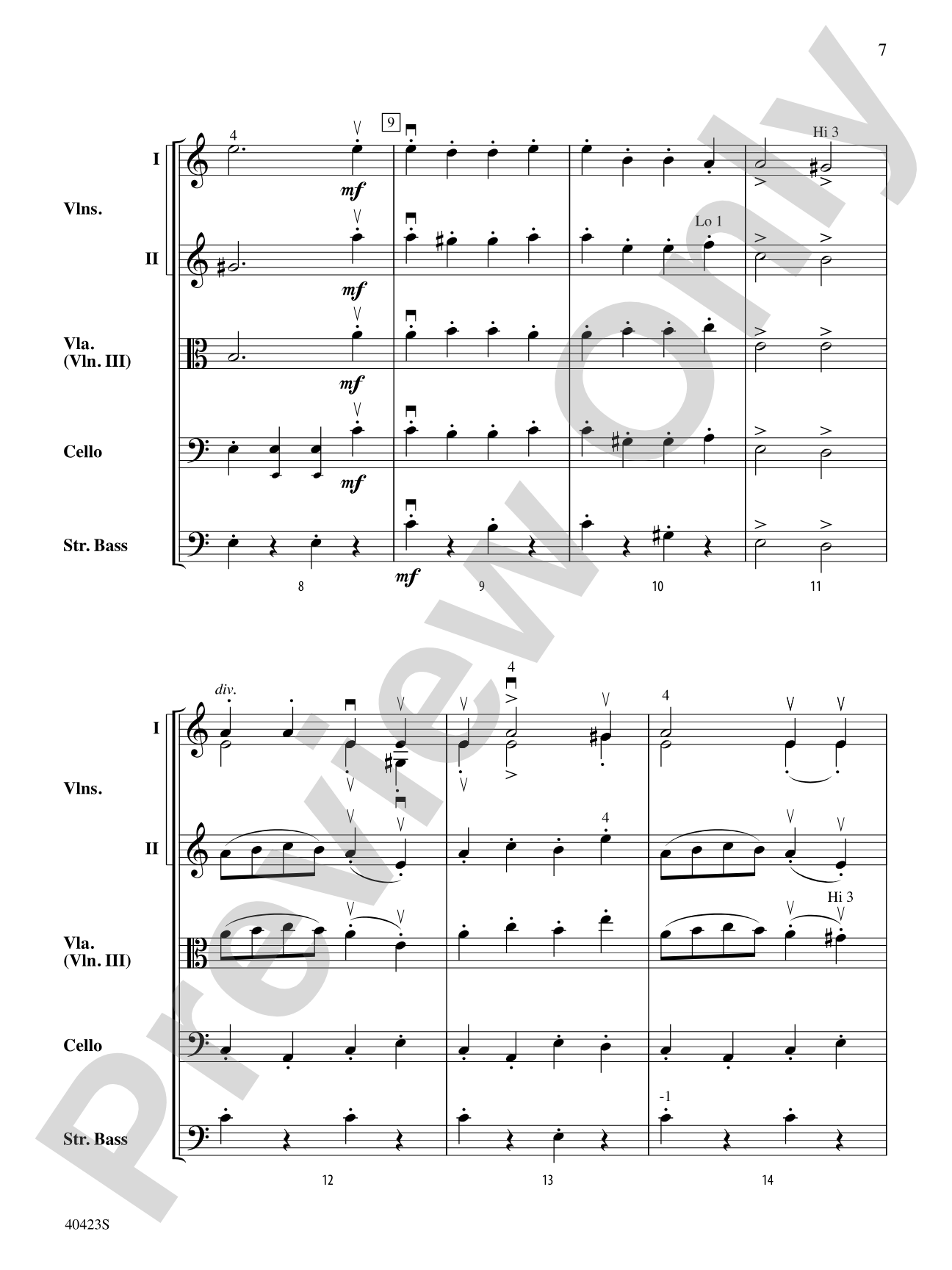
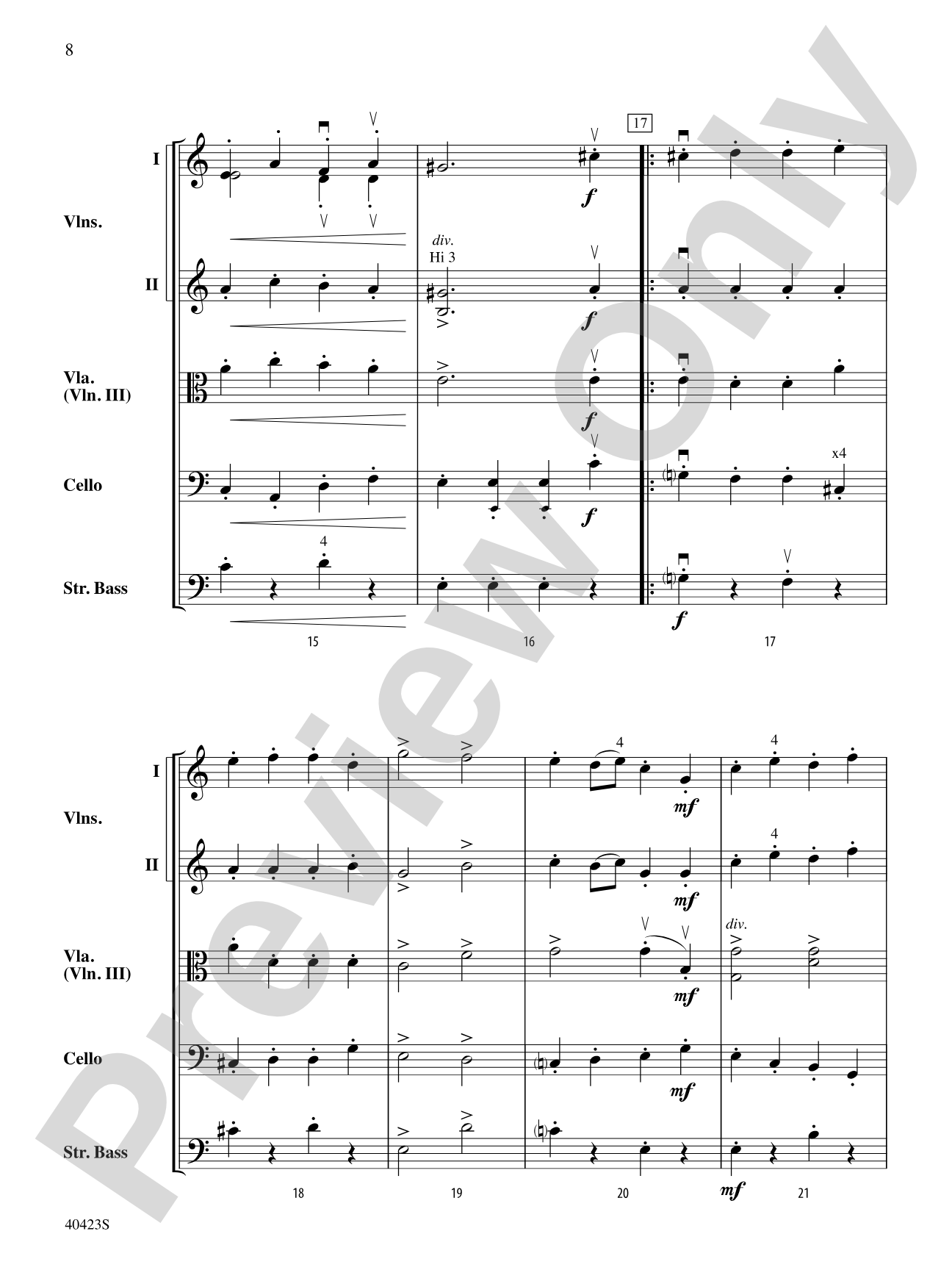
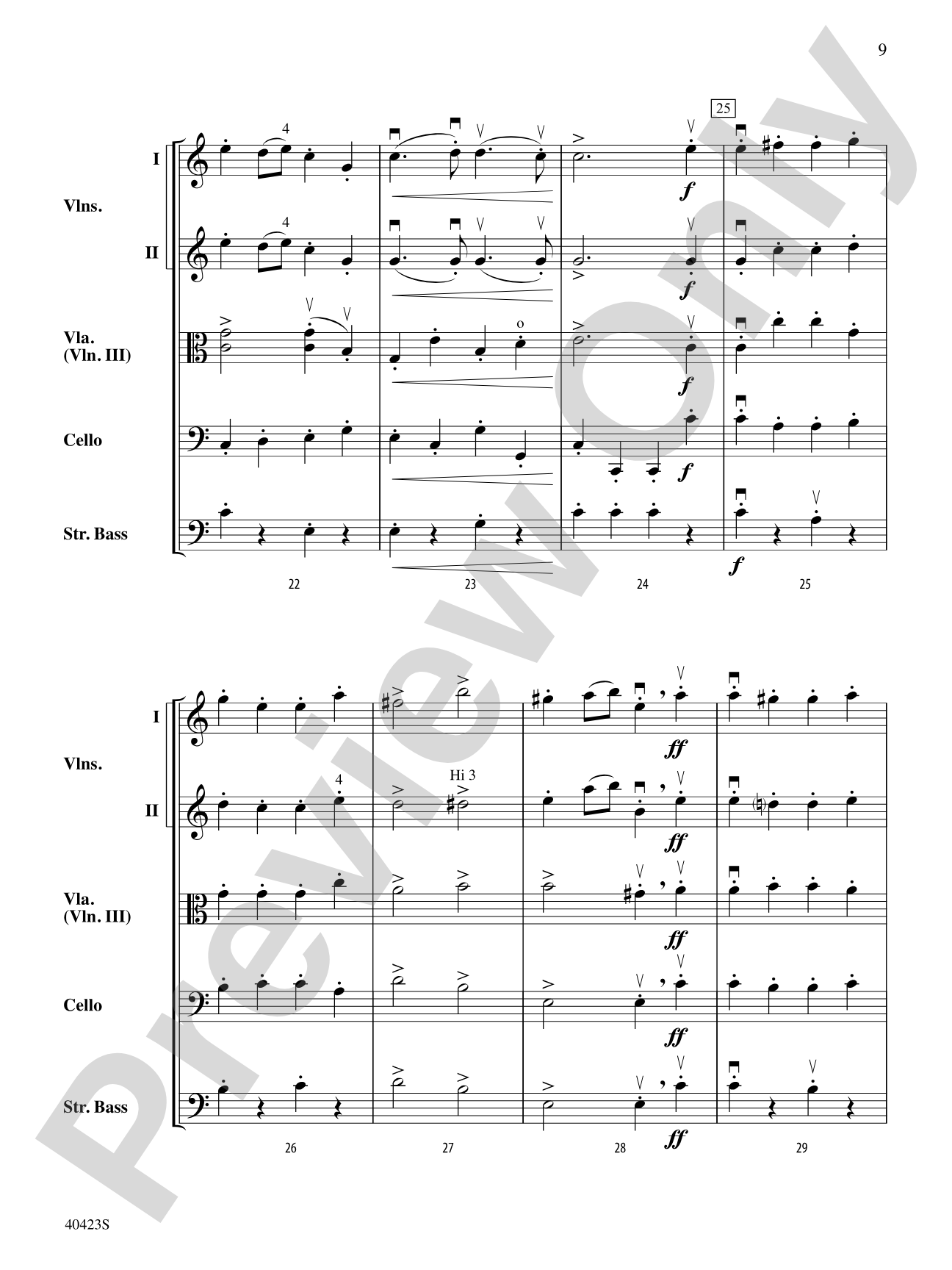
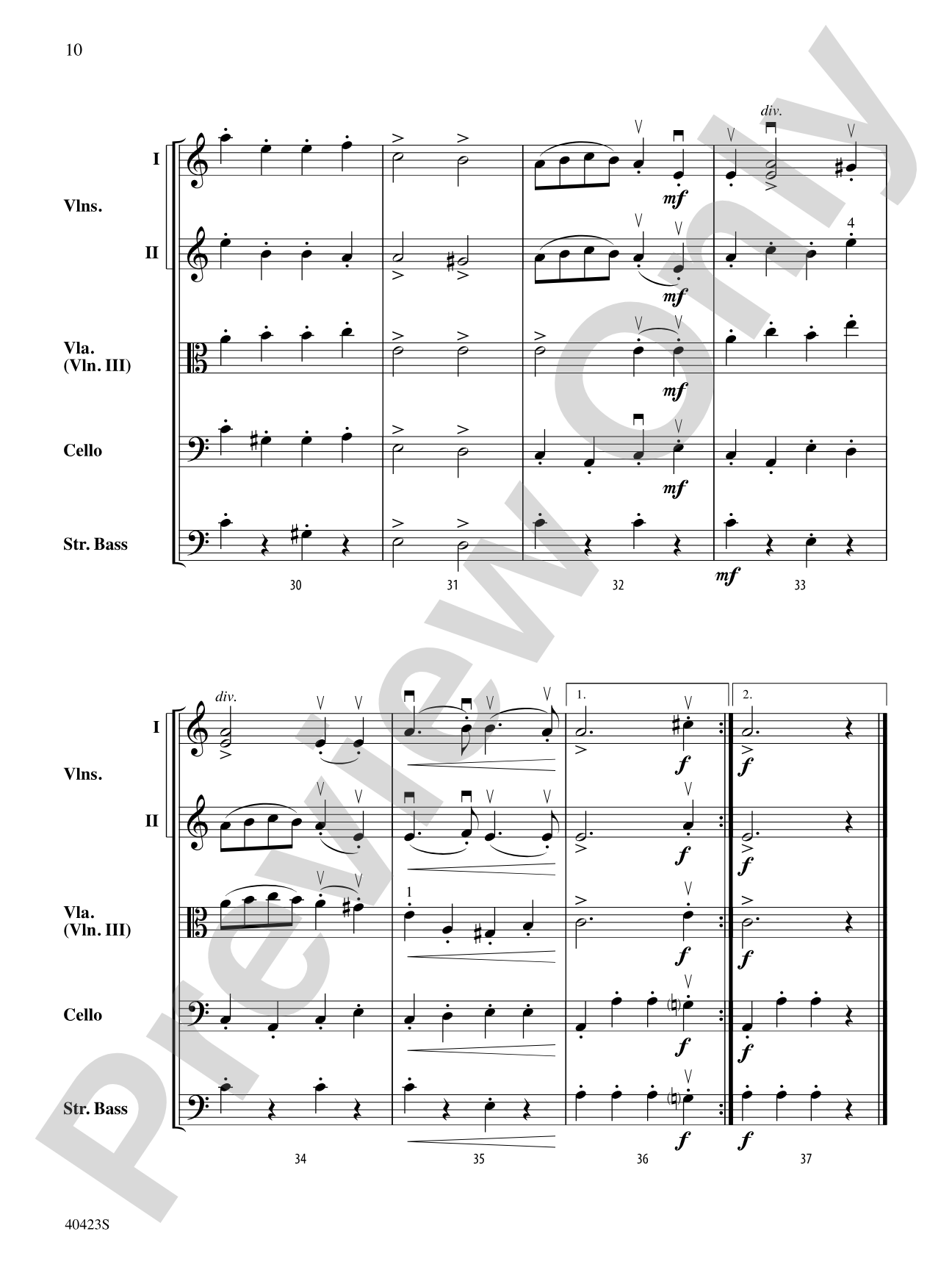



"Gavotte" and "Rigadon" from Suite in A Minor: Score
By Georg Philipp Telemann / arr. Janet Farrar-Royce
Grade: 2.5
Item: 00-PR-0004267
$9.00
Pickup currently not available
Description
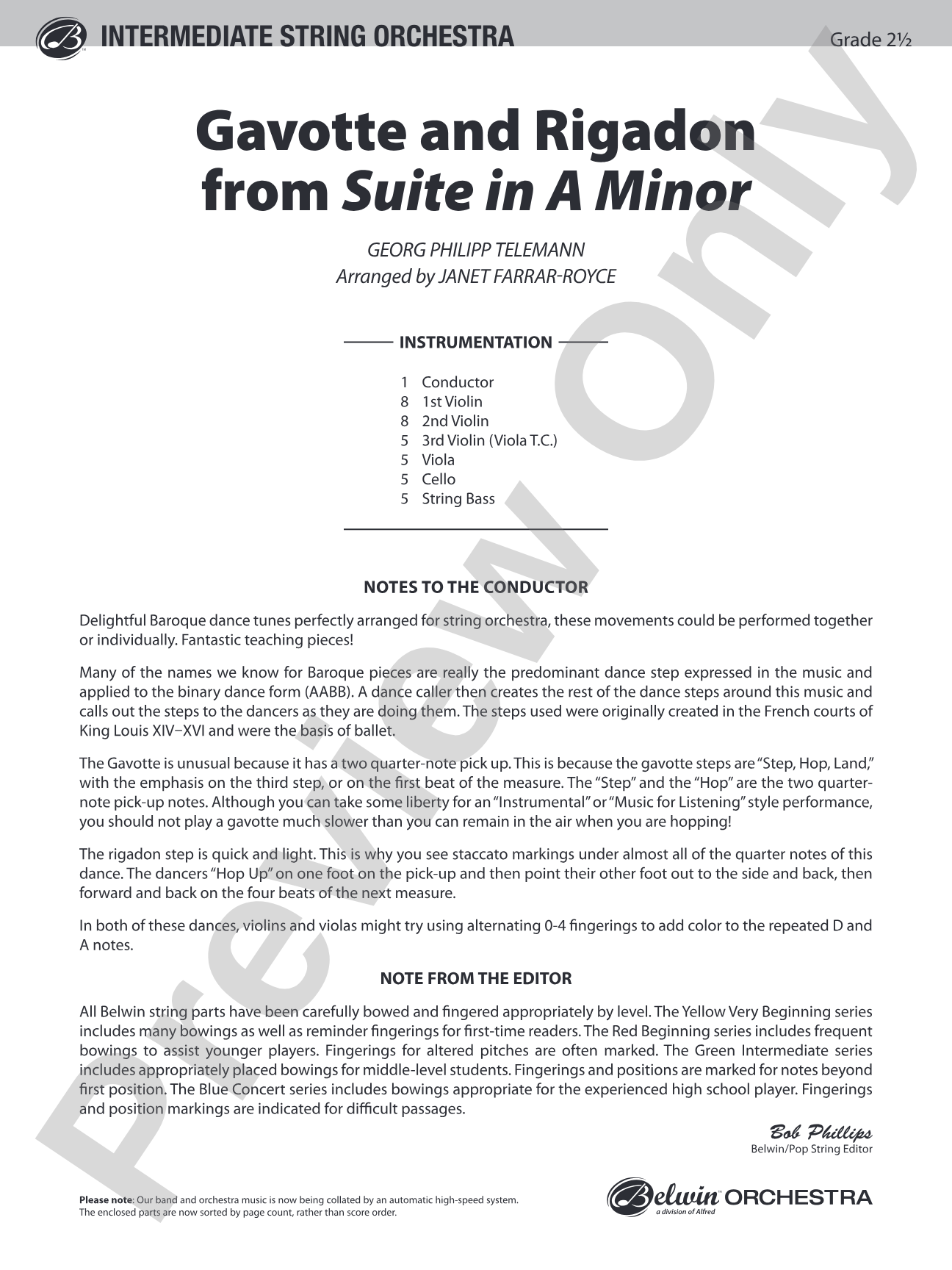
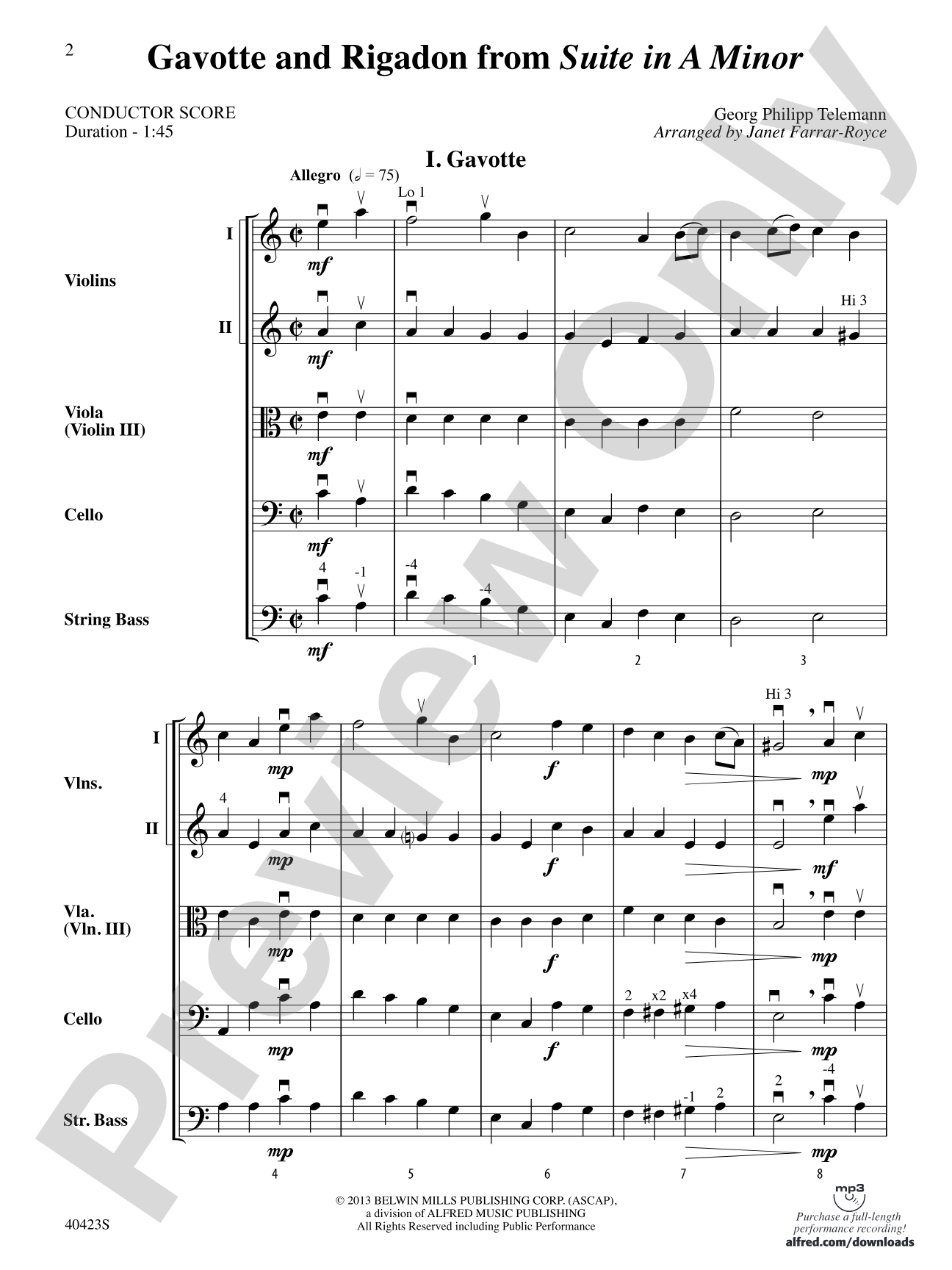
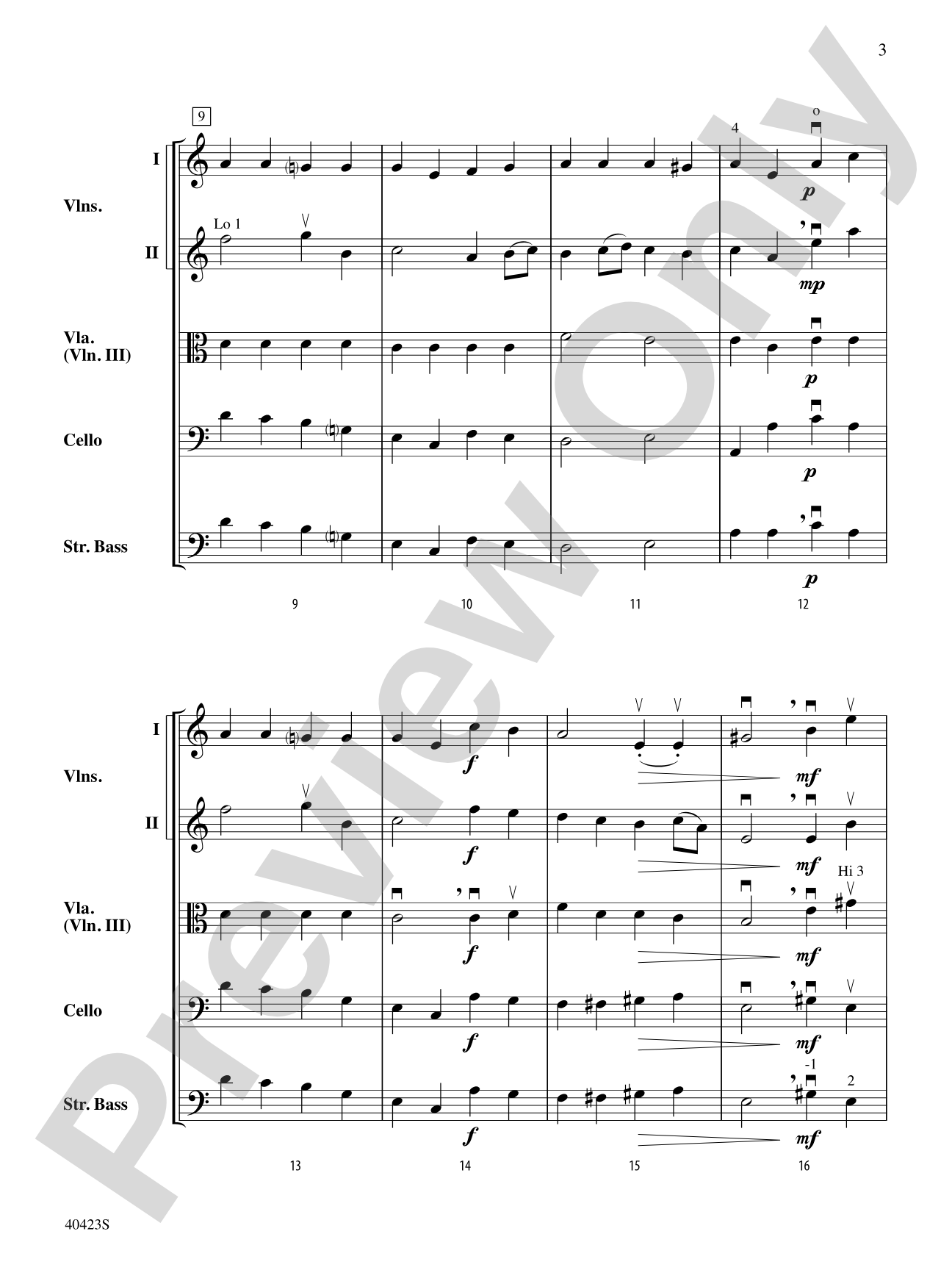
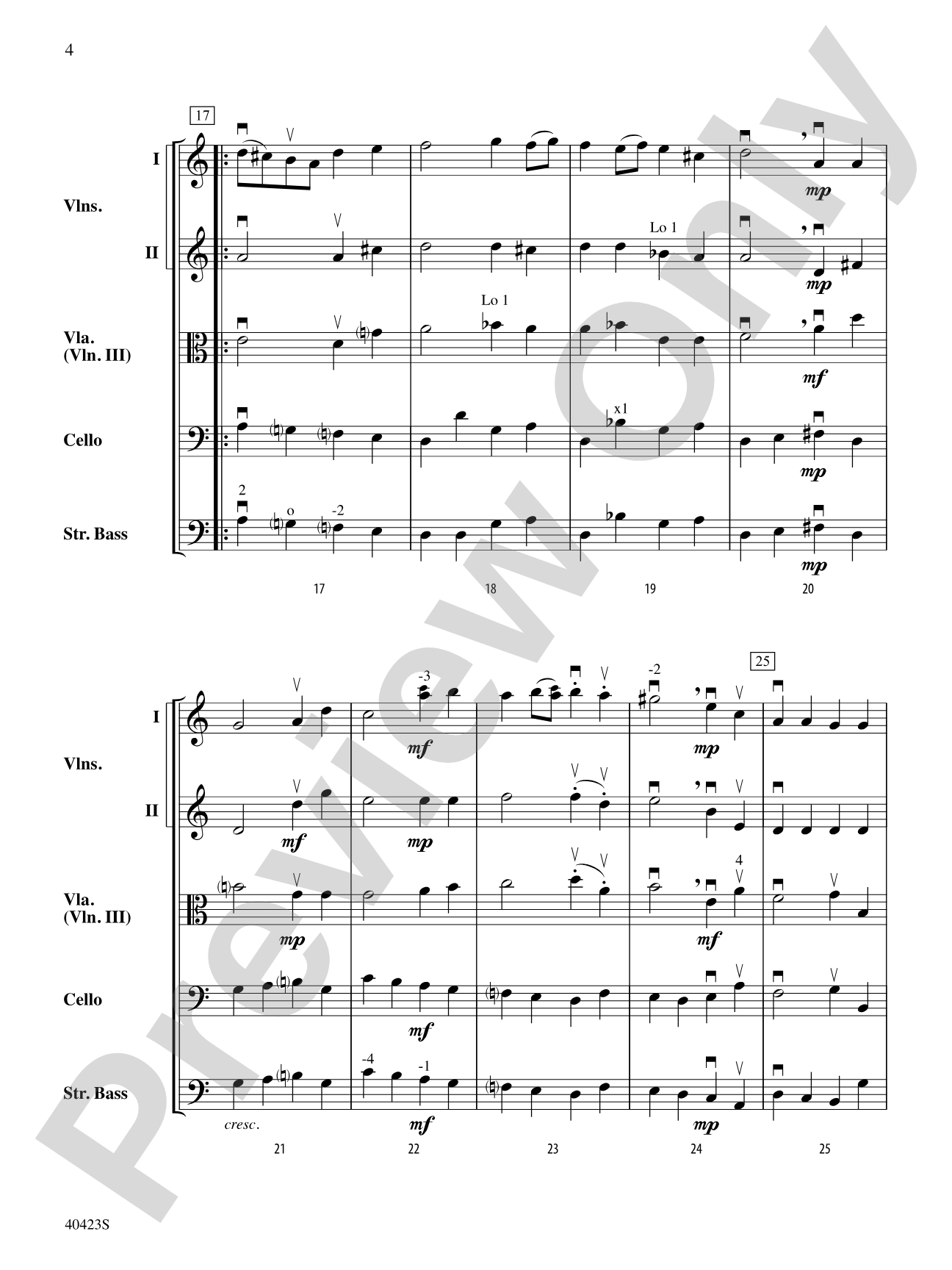
Delightful Baroque dance tunes perfectly arranged for string orchestra, these movements could be performed together or individually. Fantastic teaching pieces! This title is available in MakeMusic Cloud.


Don't just read it, hear it, play along with it, and watch your students grow with it. In MakeMusic Cloud, "Gavotte" and "Rigadon" from Suite in A Minor: Score comes alive with professional accompaniment, adjustable tempo, and built-in practice tools that turn solo practice into real progress.
Open in the Player
Jump straight in and assign it today.
Start Your Free Trial
Open this title and explore the full library in minutes.
Sample Audio
1
Audio File
--:--
0:00
0:00
Sample Video
No sample videos found.
Additional Details
Series:
Belwin Intermediate String Orchestra
Publisher:
Alfred Music
Page Count:
144
SKU:
00-PR-0004267
More about this title
About the Composer: Georg Philipp Telemann
Georg Philipp Telemann (1681-1767) was one of the most prolific composers of the Baroque era, creating over 3,000 works across nearly every genre. A master of instrumental music, he held prestigious positions in Frankfurt, Paris, and Hamburg, where he directed the city's five main churches and composed prolifically for both professional musicians and amateurs.
Telemann's gift for melody and structural clarity made his music ideal for teaching and performance at all levels. His instrumental suites, written for diverse ensembles, remain central to string orchestra repertoire because they balance musical substance with accessibility. Music educators have long valued Telemann for his elegant phrasing, logical harmonic progressions, and gift for writing gratifying parts for young players.
Why we love this
These paired dances sit at an ideal sweet spot for developing string orchestras: they're short enough to feel achievable, melodically engaging enough to hold students' attention, and Baroque enough to introduce articulation and style concepts without overwhelming younger players. The fact that they work as standalone pieces or as a paired suite gives you programming flexibility, and the arrangement honors Telemann's original writing while making parts genuinely playable for Grade 2.5 ensembles.
What to expect
The Gavotte unfolds with courtly restraint, its measured steps suggesting the dignity of Baroque dance form, while the Rigadon quickens the pulse with bright rhythmic clarity. Together, they sketch a complete world of Baroque style in miniature, inviting young string players to experience the refinement and forward drive that defined the era.
Who it's for
String orchestras at the Grade 2.5 level will find these movements genuinely rewarding to play and teach. Directors looking for Baroque repertoire that doesn't require virtuosic technique but does demand musical maturity will appreciate how well Telemann's writing serves both goals.
How to get the most out of it
- Shape each phrase with a gentle lift at the cadence rather than stopping abruptly; Baroque dance movements rely on forward momentum even when marking the end of a section.
- Keep the bow strokes light and articulate, particularly in the rhythmic figures typical of these dances. Avoid heavy weight on the string, which clouds the dance character.
- Balance the inner voices so that the harmonic motion remains clear. Young players often collapse everything toward the melody; ask second violins and violas to sing their lines with intention.
- Work the two pieces in tandem so students hear how the Rigadon's quicker character contrasts with the Gavotte's more measured elegance. This comparison strengthens their understanding of Baroque dance form.
How to use it
These pieces work beautifully on a concert devoted to Baroque instrumental music, or you might program them back-to-back as a suite showcasing contrasting dance characters. They're also ideal repertoire for a festival or competition where string orchestras need solid, musically substantive selections at the intermediate level.
Skills your students will build
- Baroque articulation and phrasing conventions
- Balance and blend in homophonic textures
- Stylistic contrast between related dance forms
- Light, controlled bow work at dynamic levels suitable for dance music
- Reading ensemble parts within a structured harmonic framework