
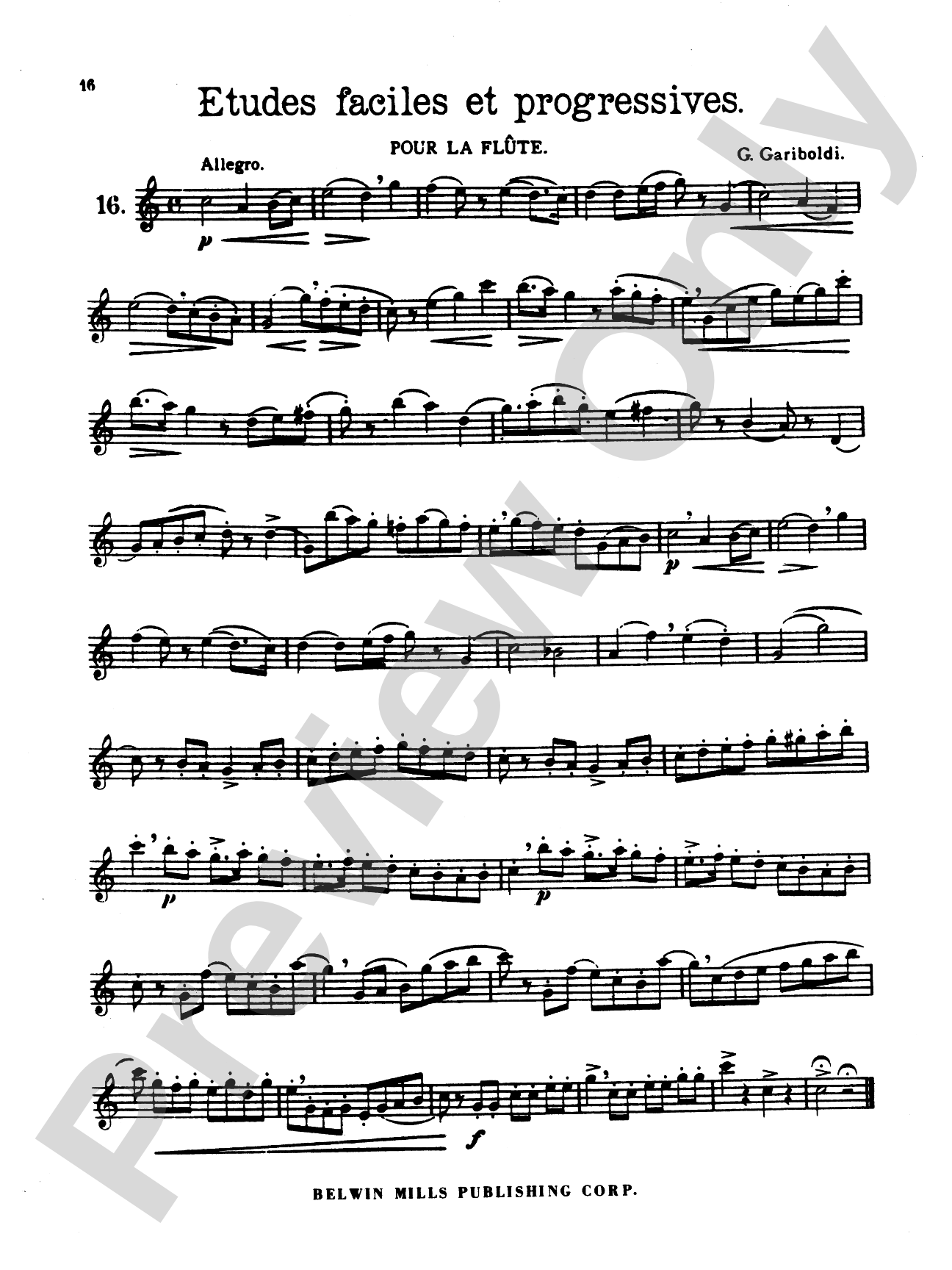

Gariboldi: Thirty Easy and Progressive Studies, Volume II (Nos. 16-30): Flute Book
By Giuseppe Gariboldi
Item: 00-PK-0003083

$9.99
Pickup currently not available
Buy Extra Parts (Digital PDF Download)
Parts Added to Cart!
Related Items
Thirty Easy and Progressive Studies, Volume II (Nos. 16-30): Flute Book |
$9.95
|
View |
Description
A collection of exercises for flute, composed by Giuseppe Gariboldi.


Don't just read it, hear it, play along with it, and watch your students grow with it. In MakeMusic Cloud, Gariboldi: Thirty Easy and Progressive Studies, Volume II (Nos. 16-30): Flute Book comes alive with professional accompaniment, adjustable tempo, and built-in practice tools that turn solo practice into real progress.
Open in the Player
Jump straight in and assign it today.
Start Your Free Trial
Open this title and explore the full library in minutes.
Sample Audio
No sample audio found.
Sample Video
No sample videos found.
Additional Details
Series:
Kalmus Edition
Publisher:
Alfred Music
Page Count:
16
SKU:
00-PK-0003083
More about this title
About the Composer: Giuseppe Gariboldi
Giuseppe Gariboldi (1833, 1905) was an Italian flutist and composer whose pedagogical works became foundational texts for flute instruction across Europe and America. His systematic approach to technical development earned him respect among conservatory teachers, and his studies remain in active use more than a century after publication.
Why we love this
These studies strike an uncommon balance between serious technical work and genuine musical value. Students don't feel they're grinding through exercises; they're playing real music that happens to teach them exactly what they need at this stage. The progressive design means each study builds naturally on the last, giving your students clarity about what they're working toward.
What to expect
Straightforward and approachable, yet purposeful. Each study targets a specific technical challenge, scale patterns, intervallic jumps, rhythmic clarity, without excess ornamentation or unnecessary difficulty. The writing feels direct and efficient, allowing students to focus on the mechanics of clean playing.
Who it's for
This collection serves intermediate flute students who have completed foundational method work and are ready for structured etude study with real musical context. It works equally well for self-directed learners, private studio students, and ensemble players looking to strengthen their technical foundation between repertoire pieces.
How to get the most out of it
- Shape each study as a complete musical statement, not a technical puzzle. Look for a logical phrase arc and give it direction, even in the simplest passages.
- Pay attention to Gariboldi's articulation markings. They often define the character of each study and guide how you approach tonguing patterns.
- Use these studies to establish consistent tone production across the range. Most of these pieces sit in accessible registers, making them ideal for focusing on quality rather than difficulty.
- Practice slowly enough to nail intonation and note clarity before pushing tempo. Gariboldi's writing rewards precision, and shortcuts will undermine the pedagogical value.
How to use it
Assign these individually as part of private lesson progression, using them to build specific technique before tackling larger repertoire works. They also work well as standalone recital pieces for less-advanced students, offering polished musical moments that build confidence without excessive performance anxiety.
Skills your students will build
- Articulation clarity and independence across different tonguing patterns
- Intervallic accuracy and reading beyond five-line staff notation
- Phrasing and musical shaping within shorter, focused structures
- Tone consistency and register transitions in accessible ranges
- Rhythmic precision and note-by-note accuracy without rushing