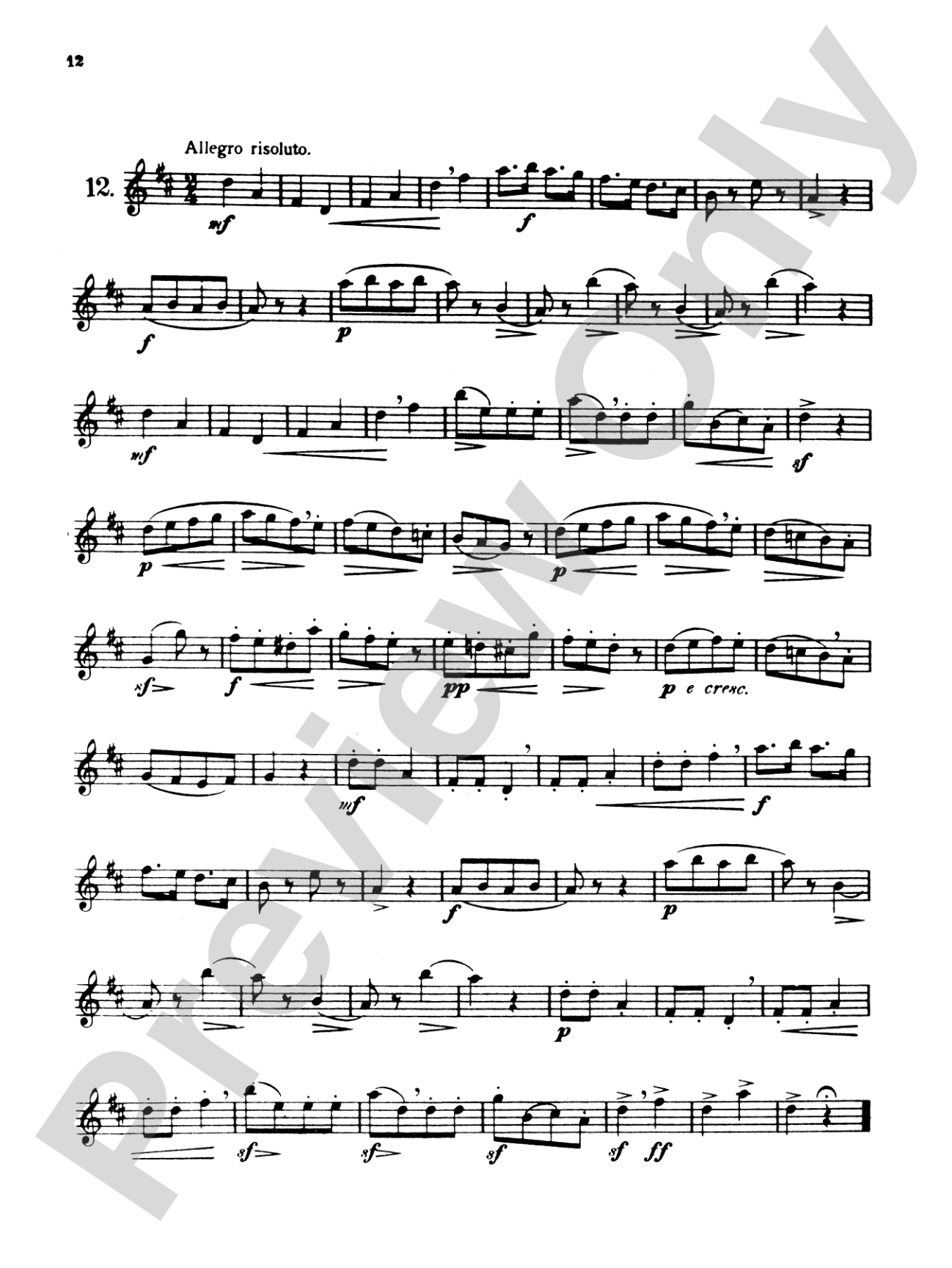
Gariboldi: Thirty Easy and Progressive Studies, Volume I (Nos. 1-15) Sheet Music Preview

Gariboldi: Thirty Easy and Progressive Studies, Volume I (Nos. 1-15)

By Giuseppe Gariboldi

Item: 00-PC-0007089

Digital Download
$0.99
Description
Expertly arranged Flute Collection by Giuseppe Gariboldi from the Kalmus Edition series. This is from the Romantic era.

Don't just read it, hear it, play along with it, and watch your students grow with it. In MakeMusic Cloud, Gariboldi: Thirty Easy and Progressive Studies, Volume I (Nos. 1-15) comes alive with professional accompaniment, adjustable tempo, and built-in practice tools that turn solo practice into real progress.

Sample Audio
No sample audio found.
Sample Video
Additional Details
Series: Kalmus Edition
Publisher: Alfred Music
Page Count: 16
SKU: 00-PC-0007089

More about this title

About the Composer: Giuseppe Gariboldi

Giuseppe Gariboldi (1833-1905) was an Italian flute virtuoso and composer whose prolific output shaped flute pedagogy throughout the nineteenth century. His studies and concert pieces remain foundational to flute training because they balance technical challenge with genuine musicality, never sacrificing one for the other.

Why we love this

These studies survive for good reason: they introduce essential technique without abandoning musical shape. Each piece moves flutists forward in register, articulation, and control while remaining rewarding to play, which keeps students engaged rather than grinding through abstractions.

What to expect

Lyrical and accessible, with the gentle character of mid-nineteenth century salon music. These pieces breathe with a natural phrasing that makes practice feel less clinical and more like exploring a small, well-crafted repertoire.

Who it's for

Beginning and intermediate flutists who need systematic technique building grounded in actual music. Students working through grades 2-4 repertoire will find these studies reinforce coordination and tone production without sounding like exercises.

How to get the most out of it

  • Focus on evenness between registers in studies that cross into the second and third octaves; tonal consistency matters as much as accuracy.
  • Shape phrases with a clear sense of direction rather than treating each line as isolated technical work.
  • Keep the tempo steady and unrushed; resist the urge to accelerate through technically easier passages.
  • Use the dynamic markings to build interpretive choices; early Romantic idiom expects nuance even in didactic material.

How to use it

Assign these progressively alongside ensemble or solo recital work; they function equally well as daily study material and as concert openers or intermission pieces when students reach the later studies in the set.

Skills your students will build

  • Legato and articulation control across registers
  • Tone shaping and dynamic flexibility
  • Melodic phrasing and line direction
  • Second and third octave facility
  • Breath management in longer phrases
  • Sight-reading in mixed time signatures

You May Also Like