
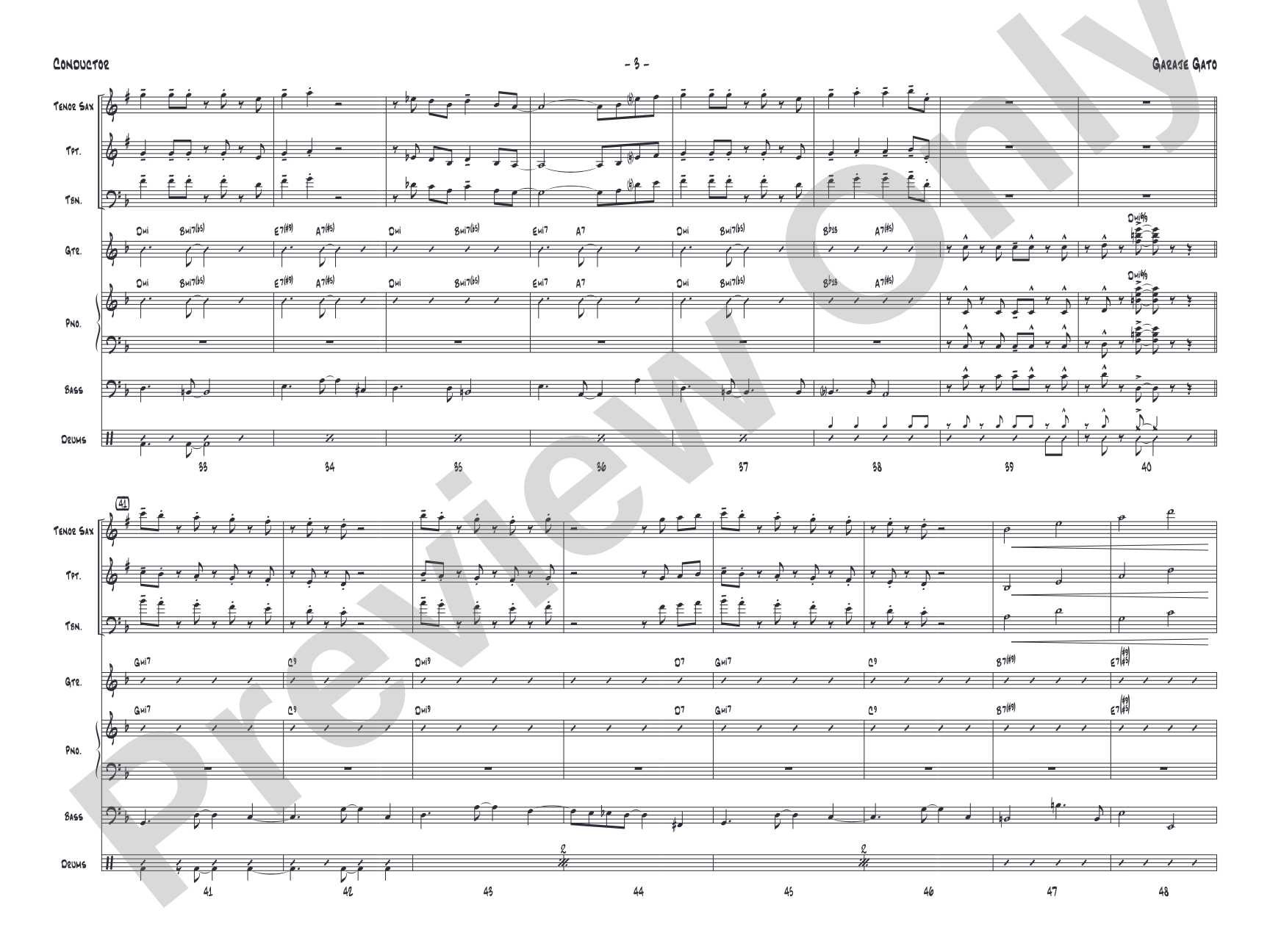
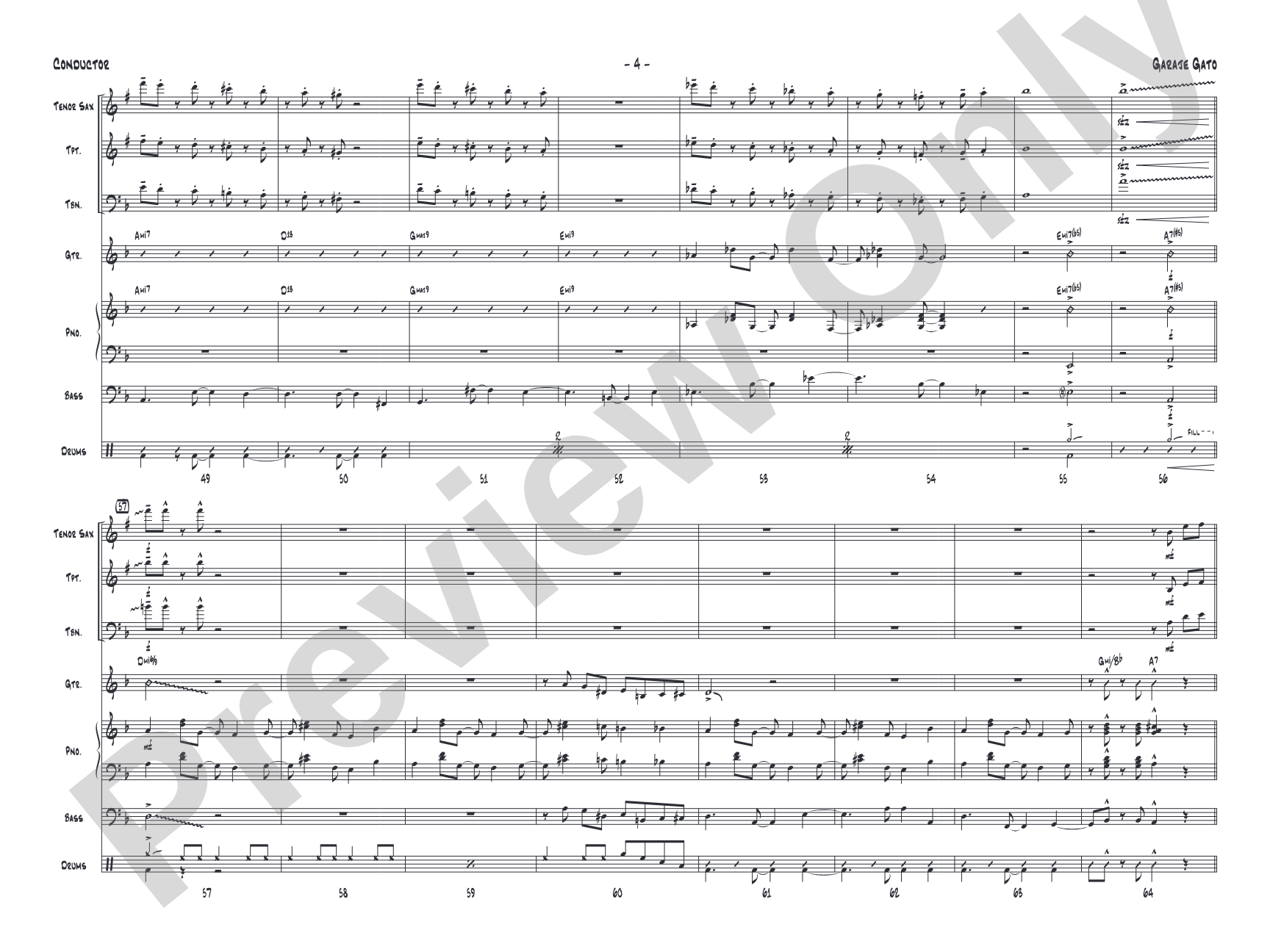
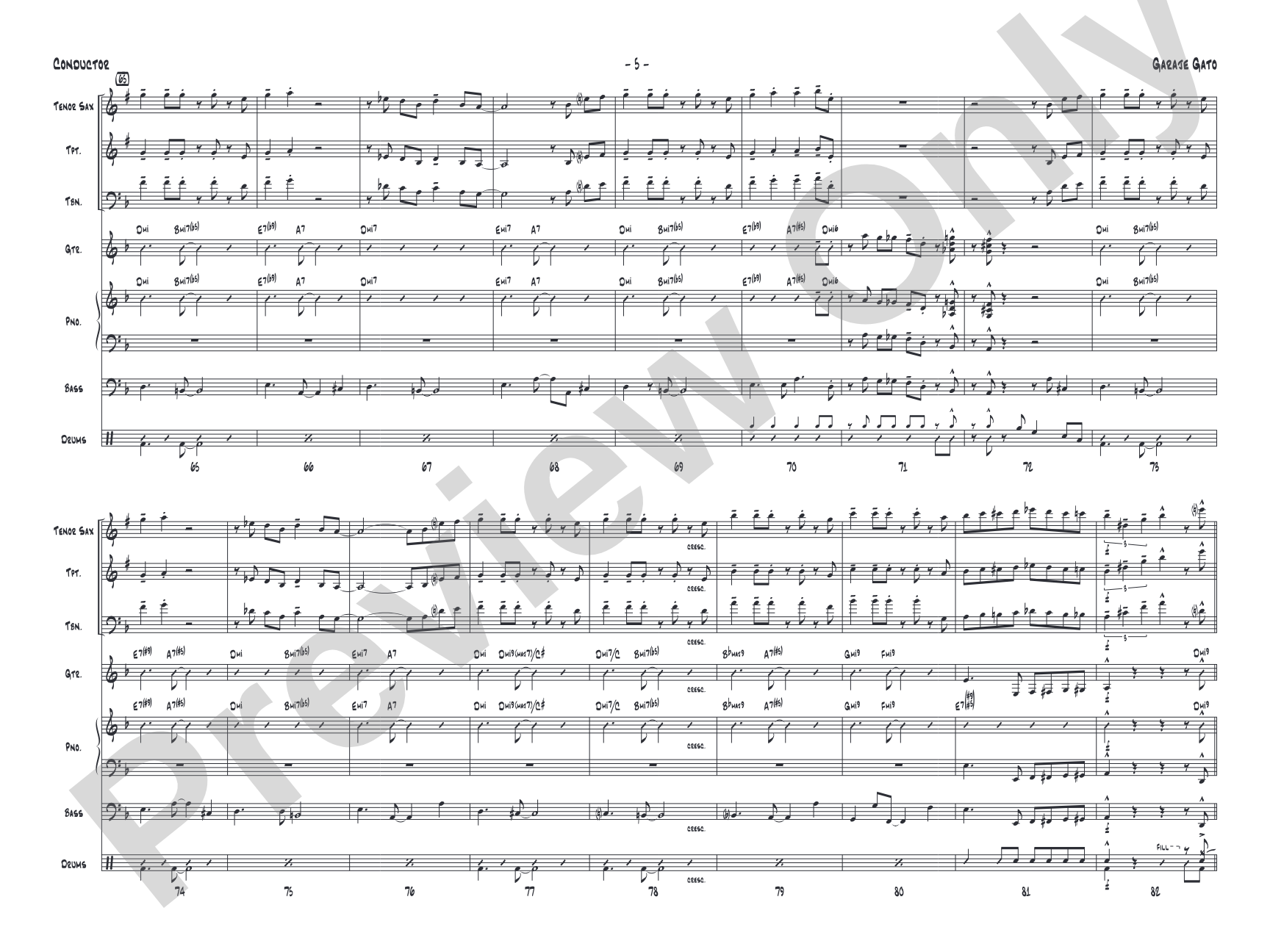
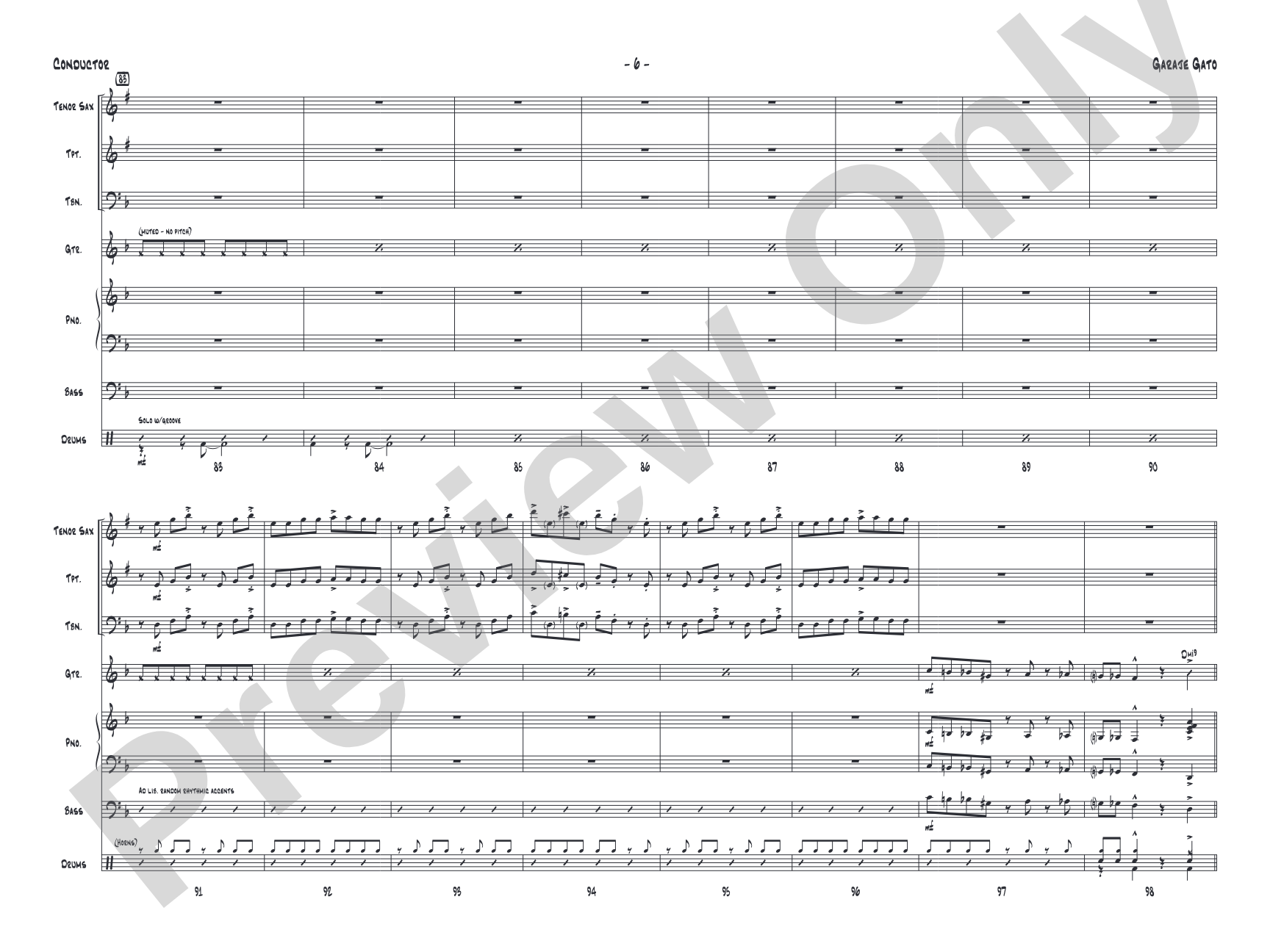
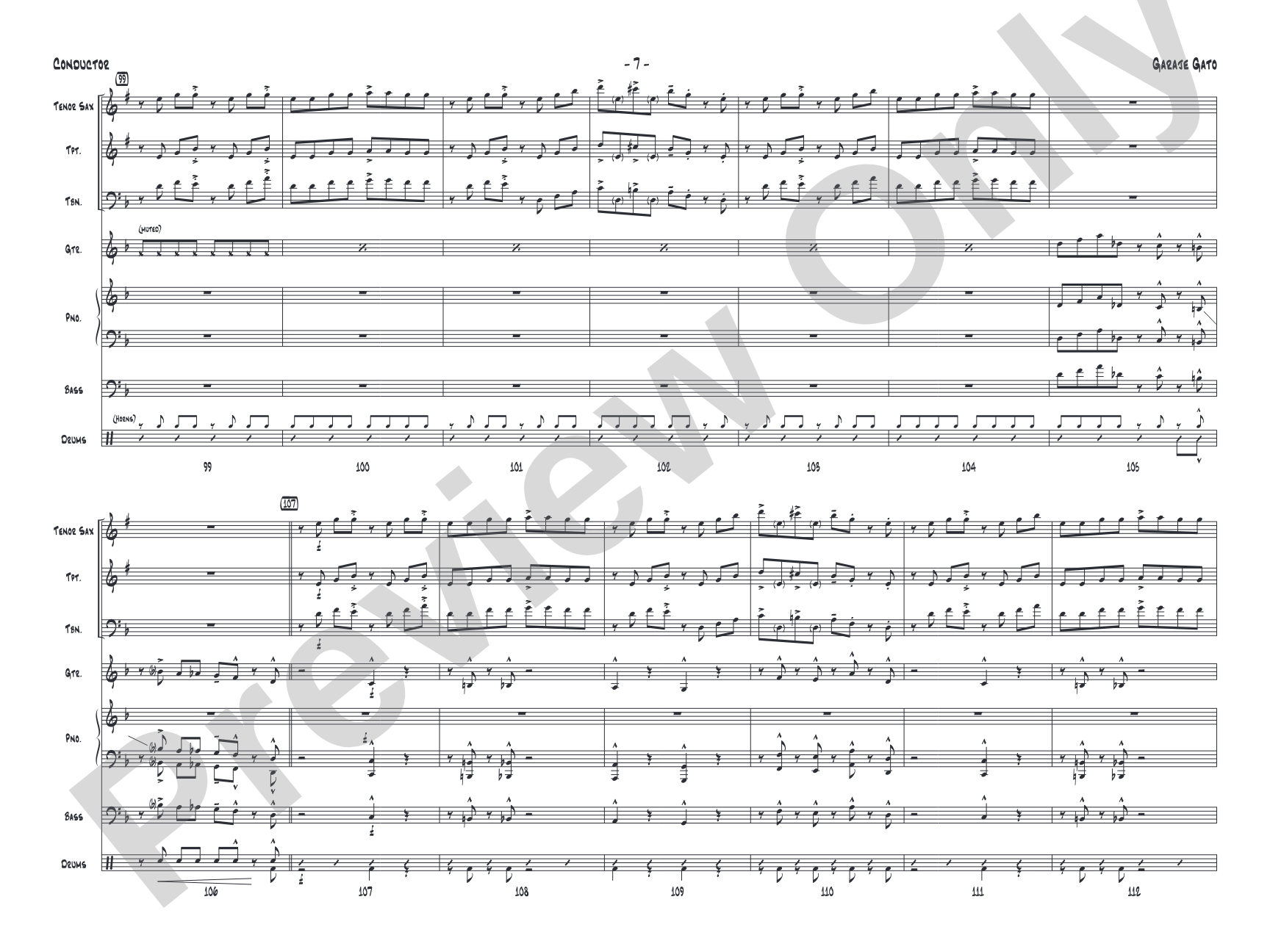
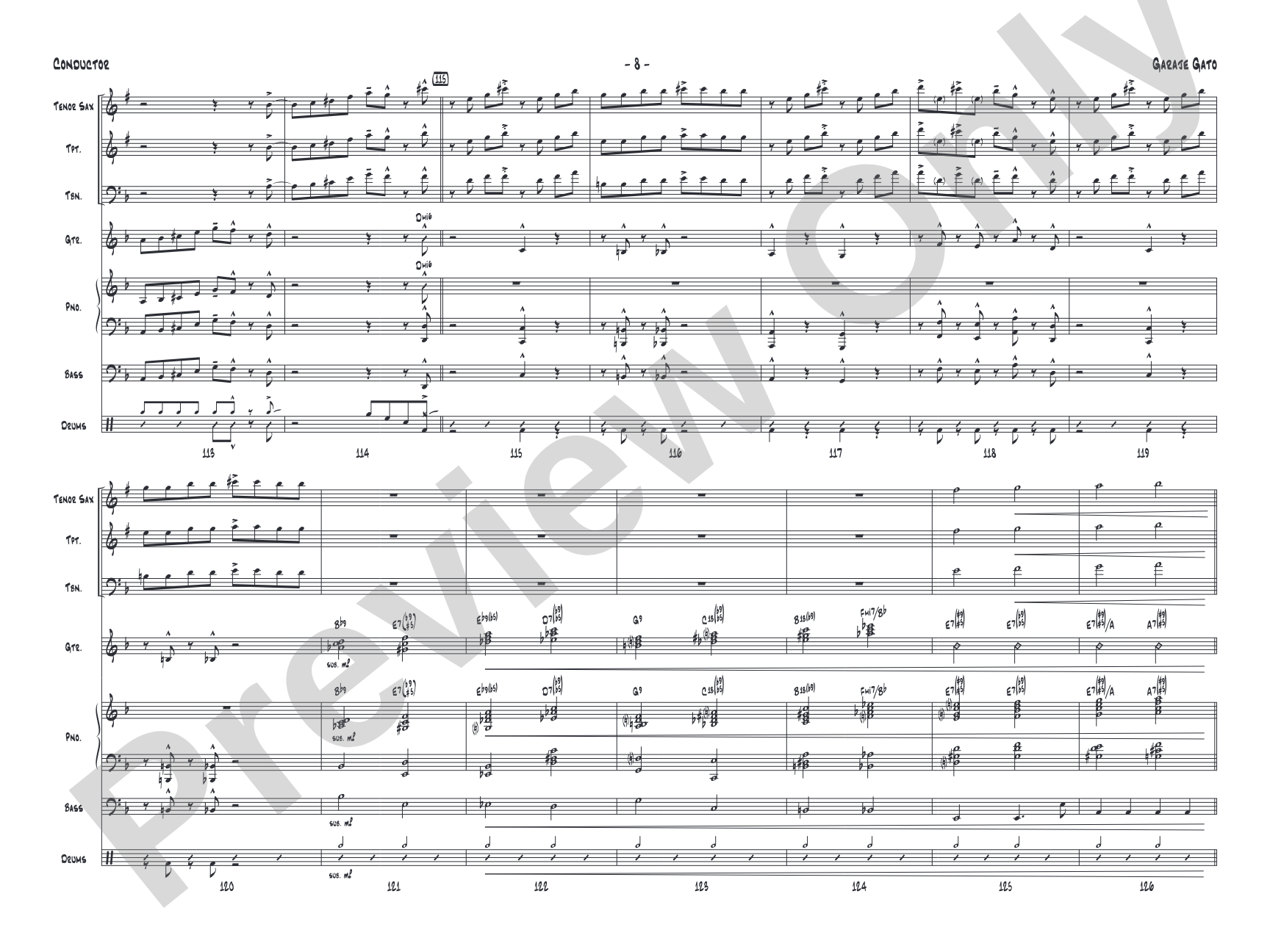
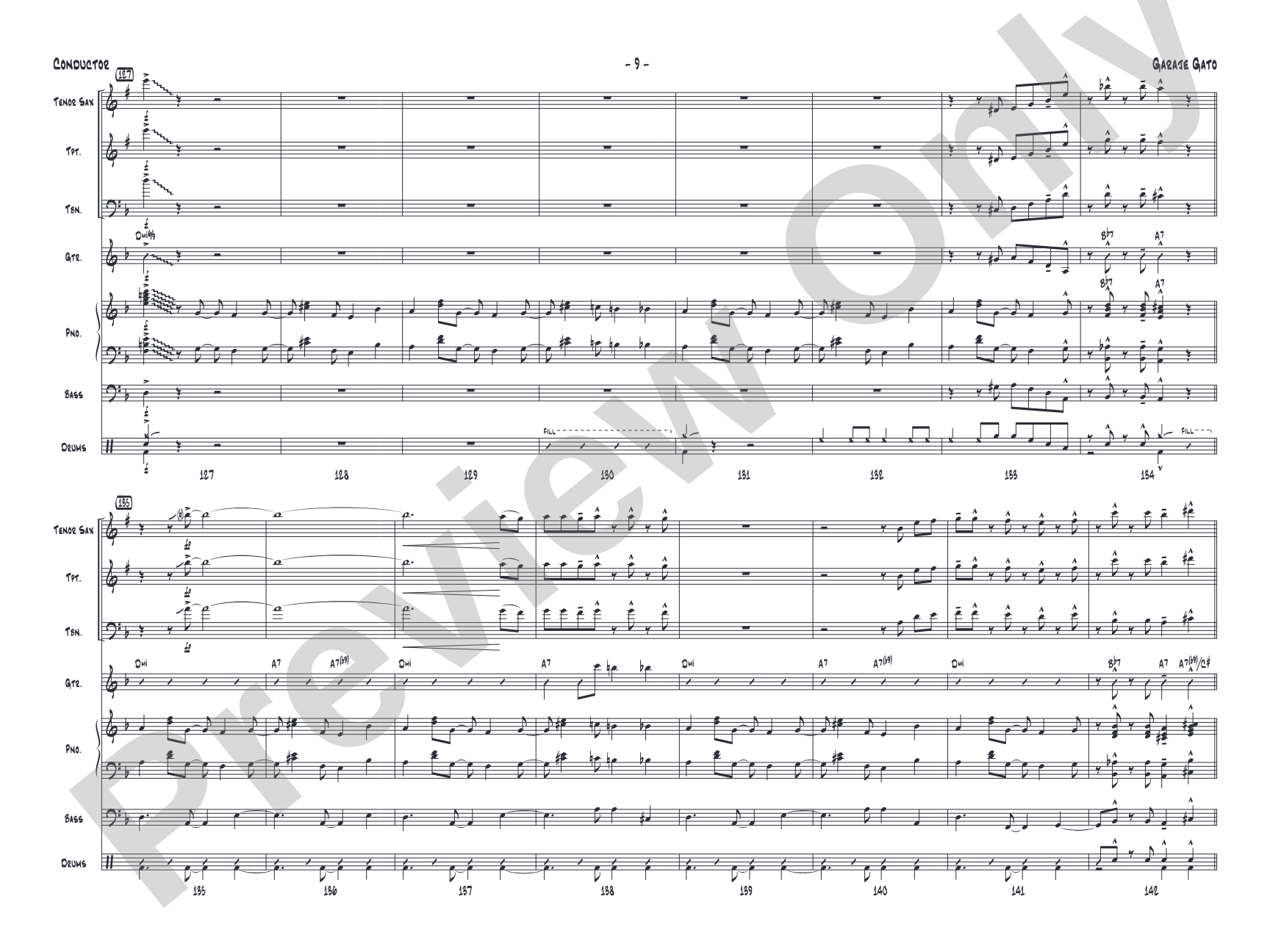
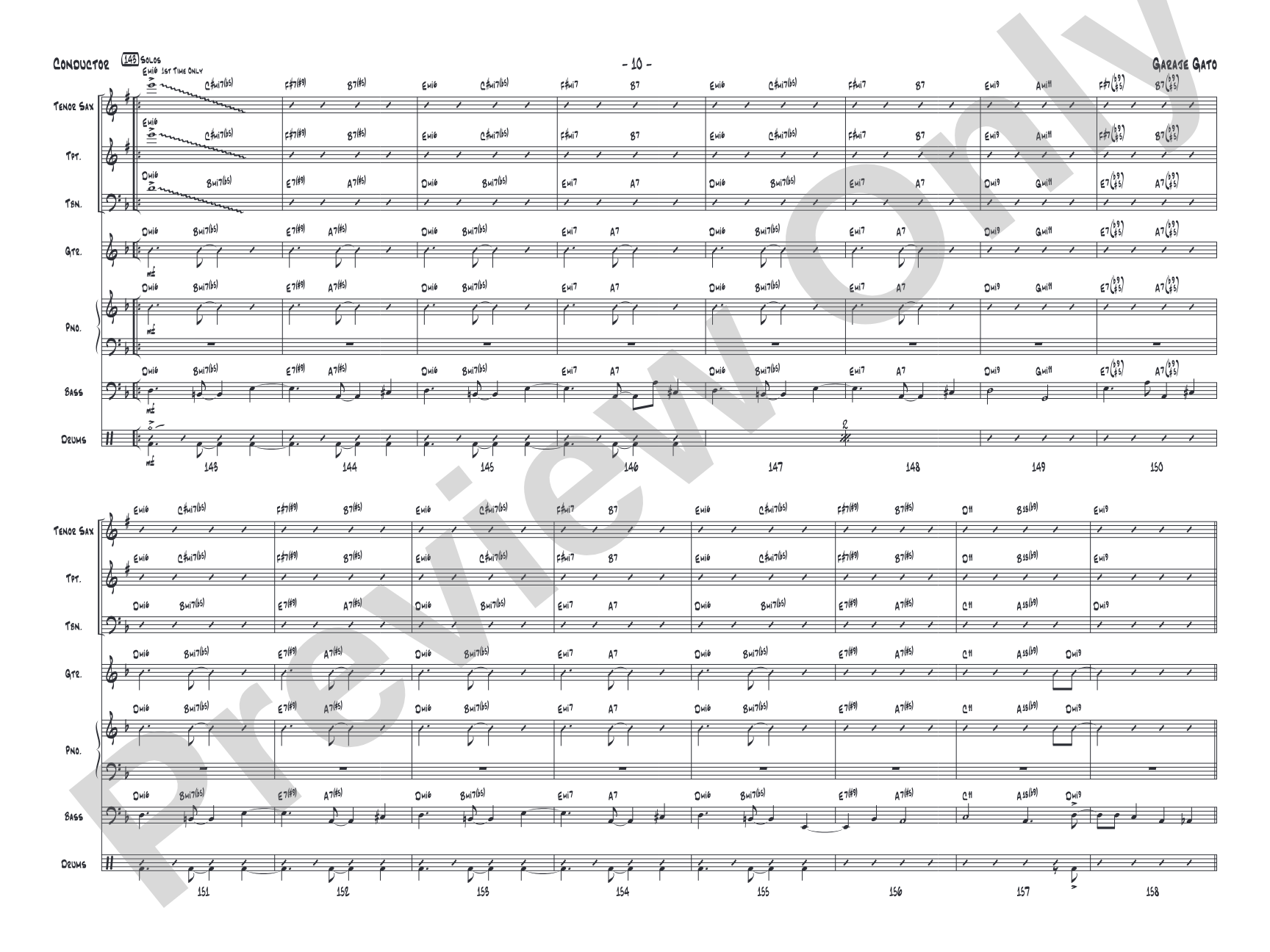
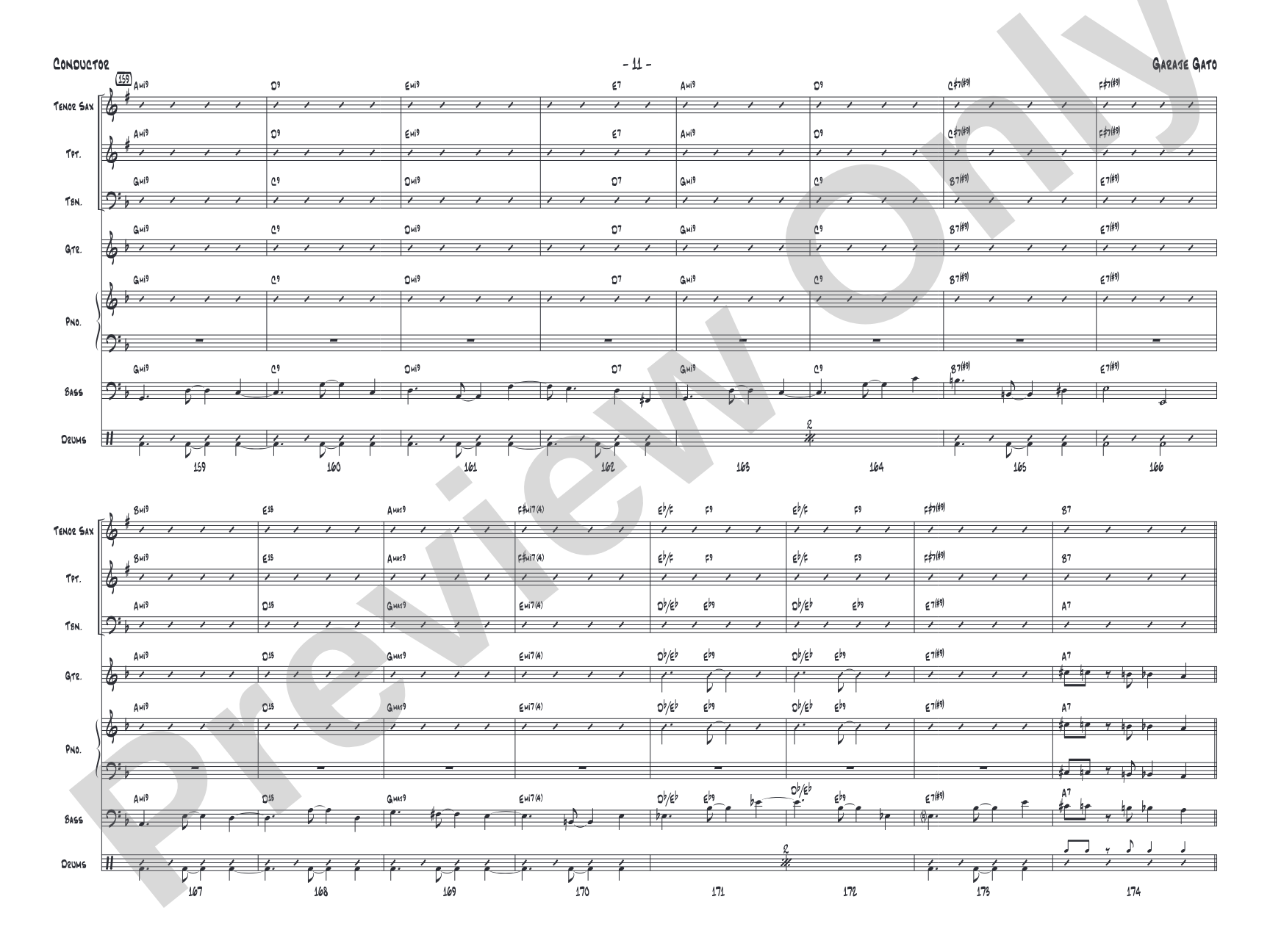
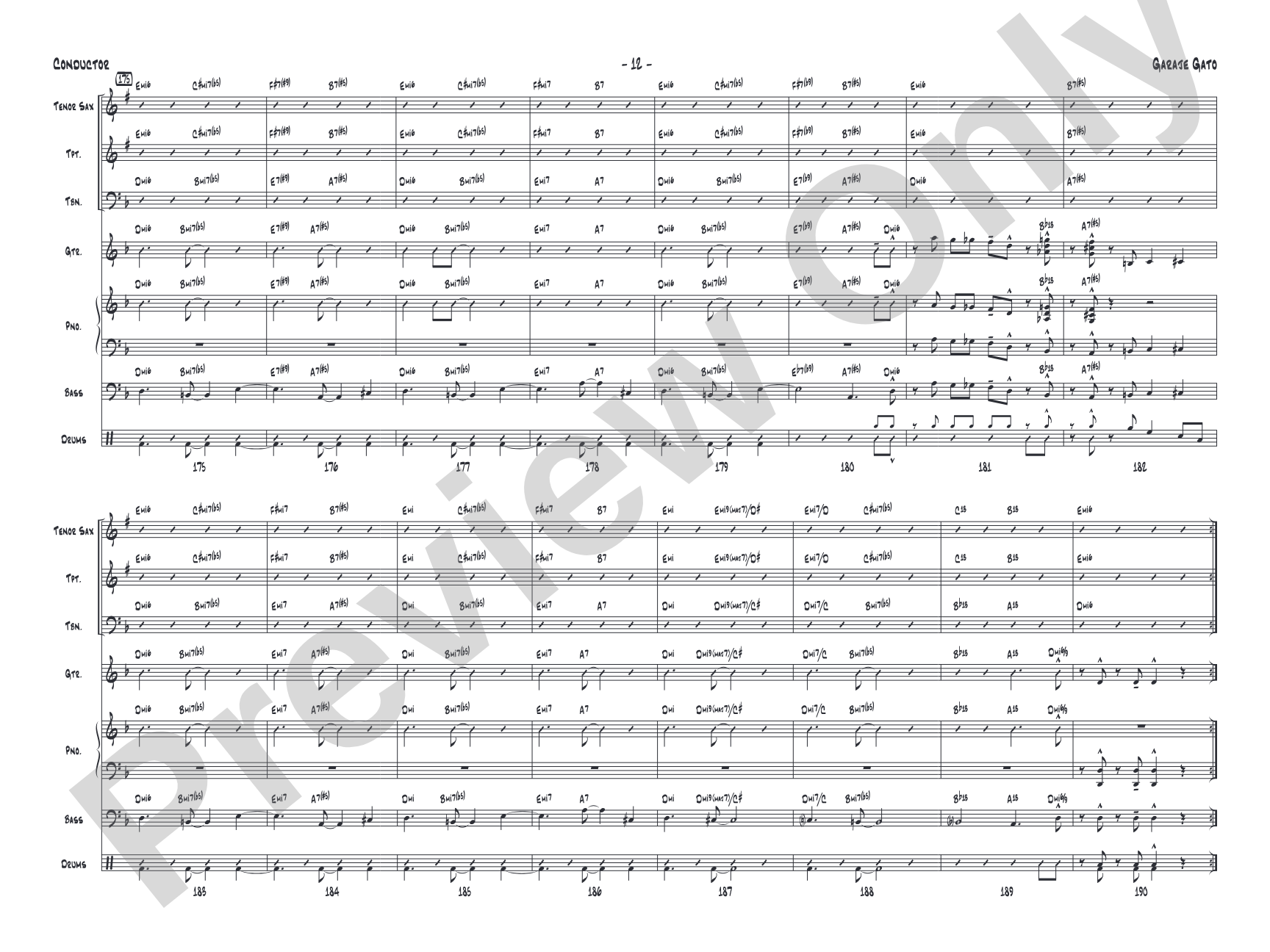
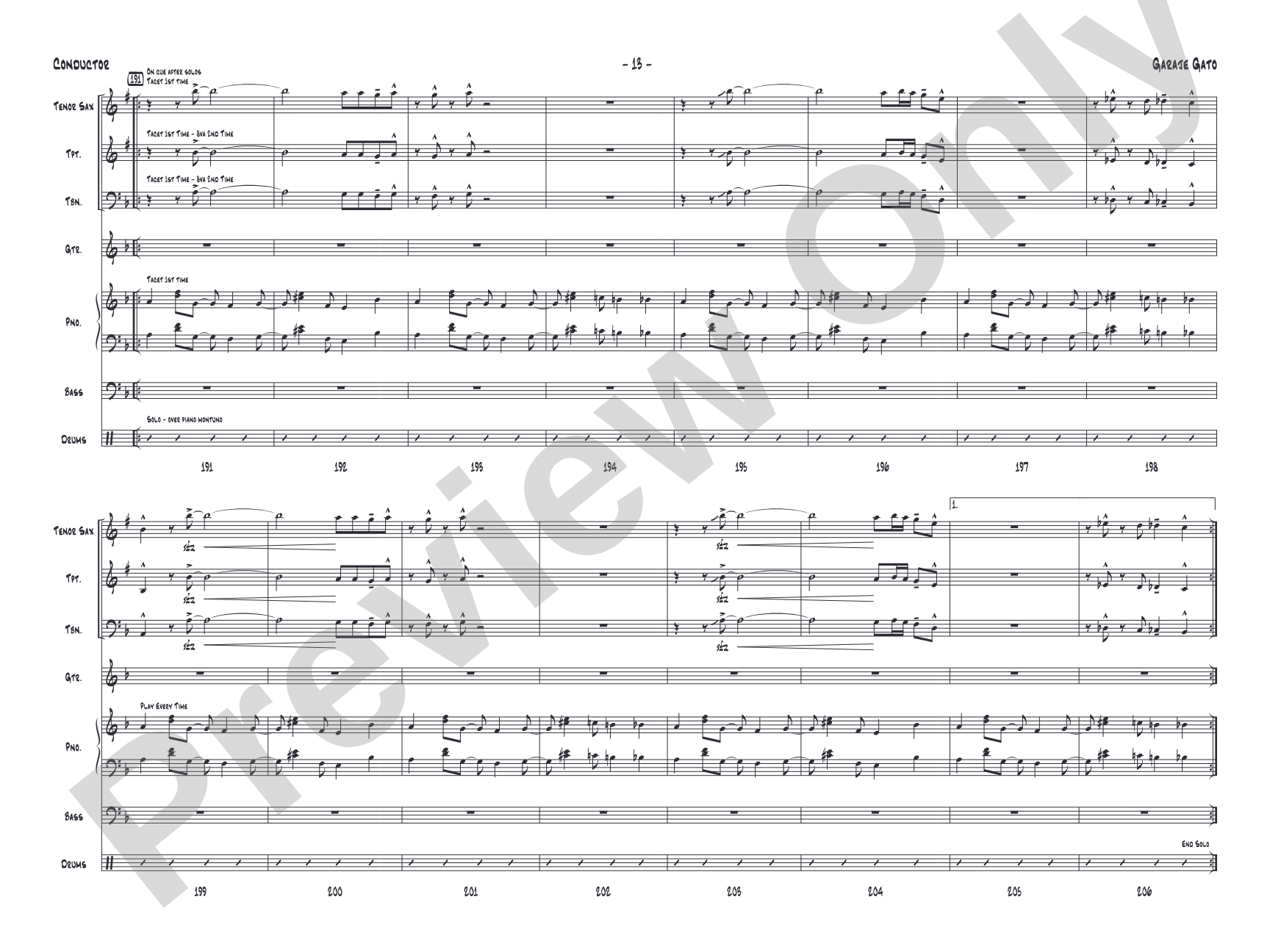
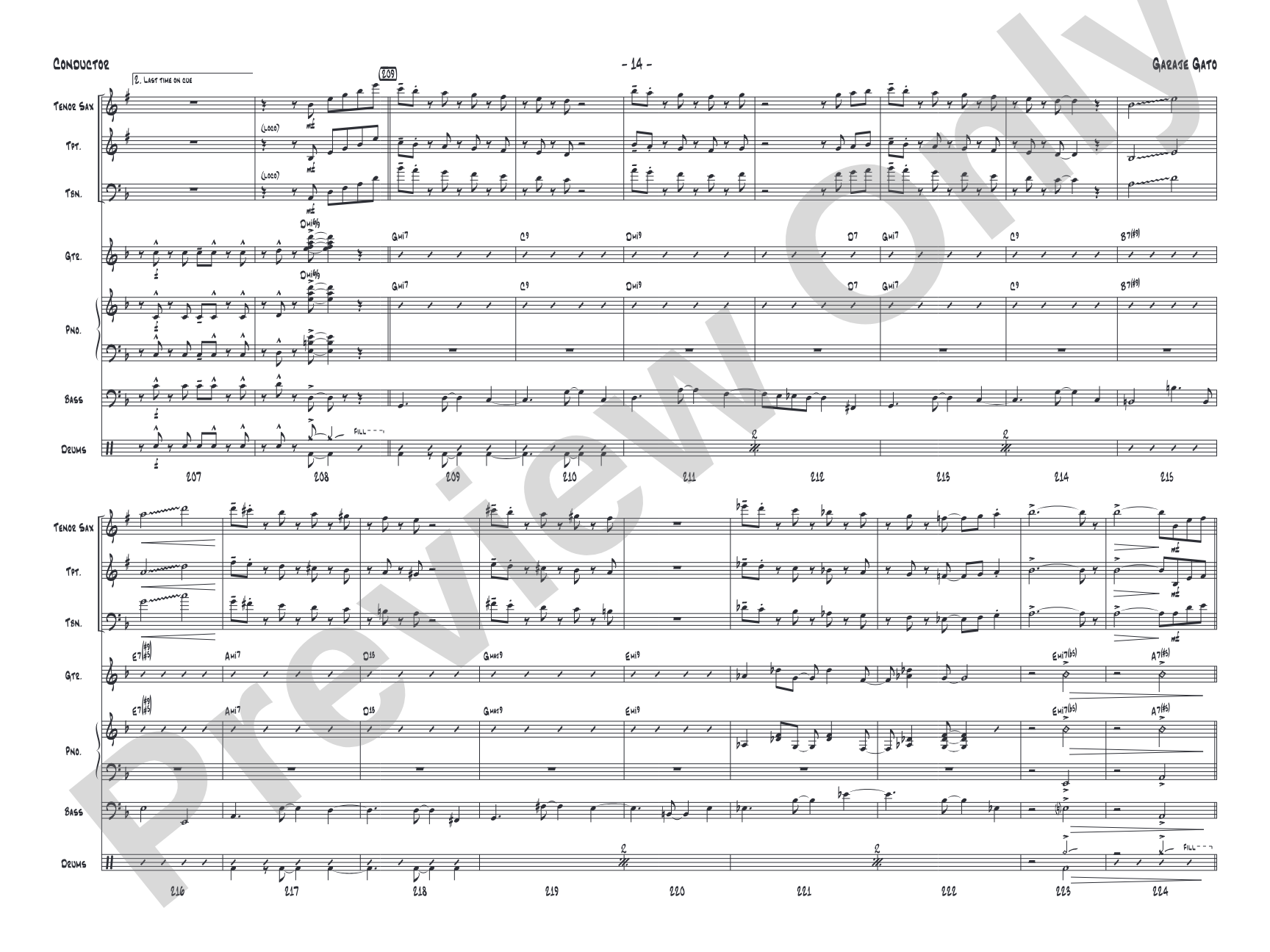
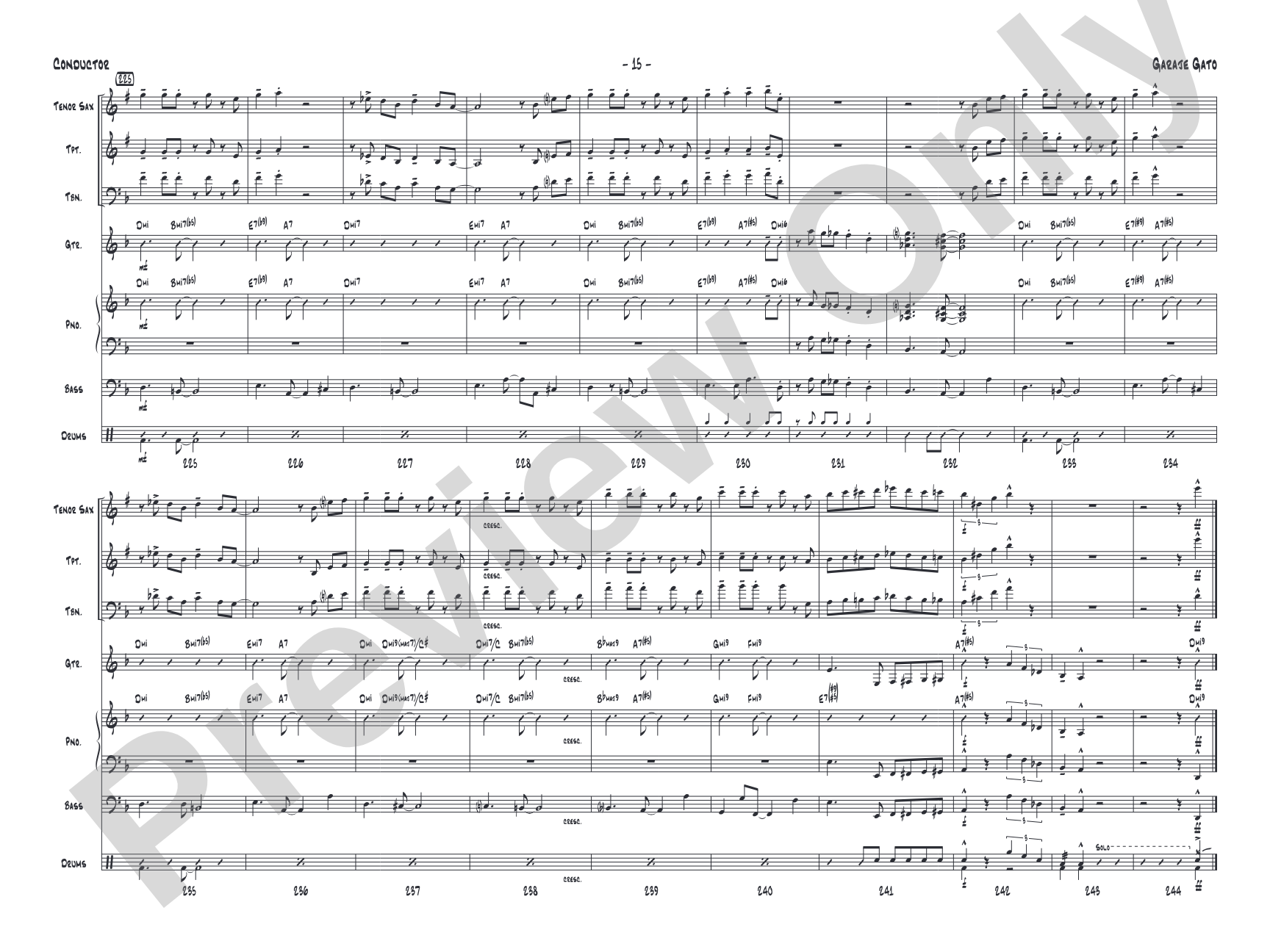

Garaje Gato: Score
As Performed by Gordon Goodwin's Little Phat Band
By Gordon Goodwin
Grade: 4.5 (Medium Advanced / Difficult)
Item: 00-PR-0005549
$8.00
Pickup currently not available
Description
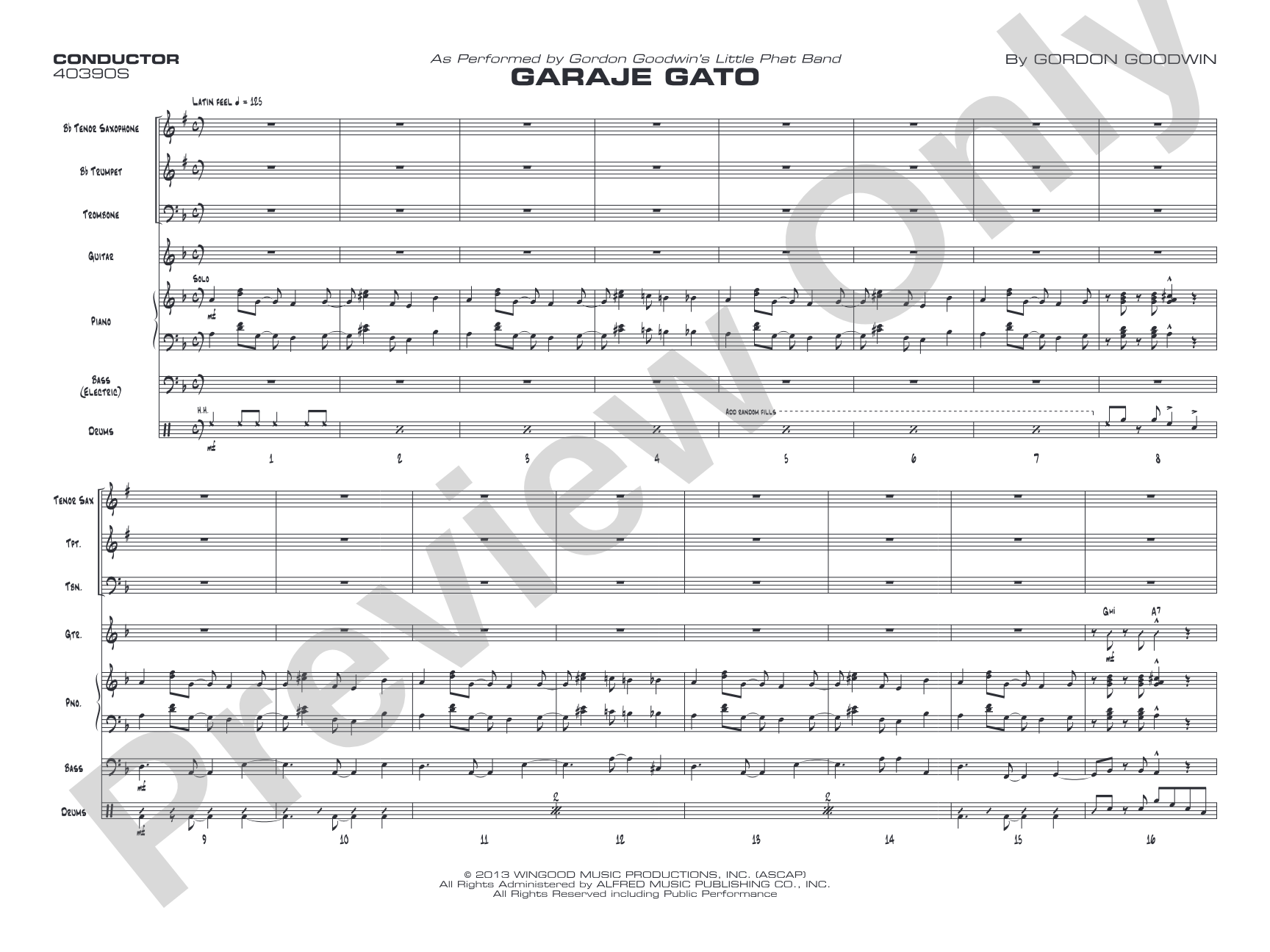
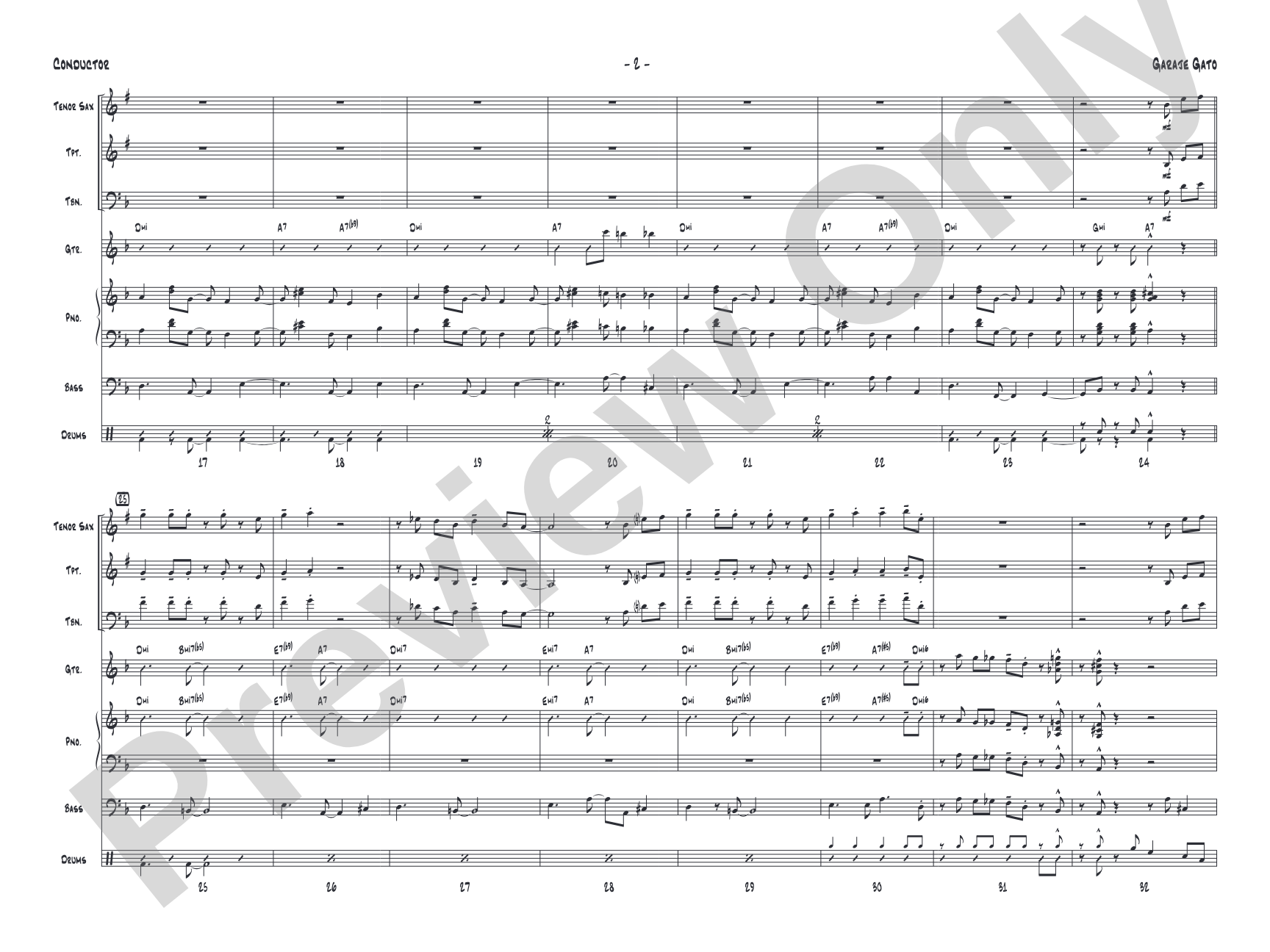
As performed by Gordon Goodwin's Little Phat Band, the instrumentation is tenor sax, trumpet, trombone, piano, guitar, bass (electric), and drums. A Latin groove with montuno patterns by the rhythm section, this chart really comes alive and stays focused with energy. The tempo is 125 BPM and the brass parts are demanding. All parts have solo space. Hot Latin. (1:32) This title is available in MakeMusic Cloud.


Don't just read it, hear it, play along with it, and watch your students grow with it. In MakeMusic Cloud, Garaje Gato: Score comes alive with professional accompaniment, adjustable tempo, and built-in practice tools that turn solo practice into real progress.
Open in the Player
Jump straight in and assign it today.
Start Your Free Trial
Open this title and explore the full library in minutes.
Sample Audio
1
Audio File
--:--
0:00
0:00
Sample Video
No sample videos found.
Additional Details
Series:
Gordon Goodwin Little Phat Band Series
Publisher:
Alfred Music
Page Count:
48
SKU:
00-PR-0005549
More about this title
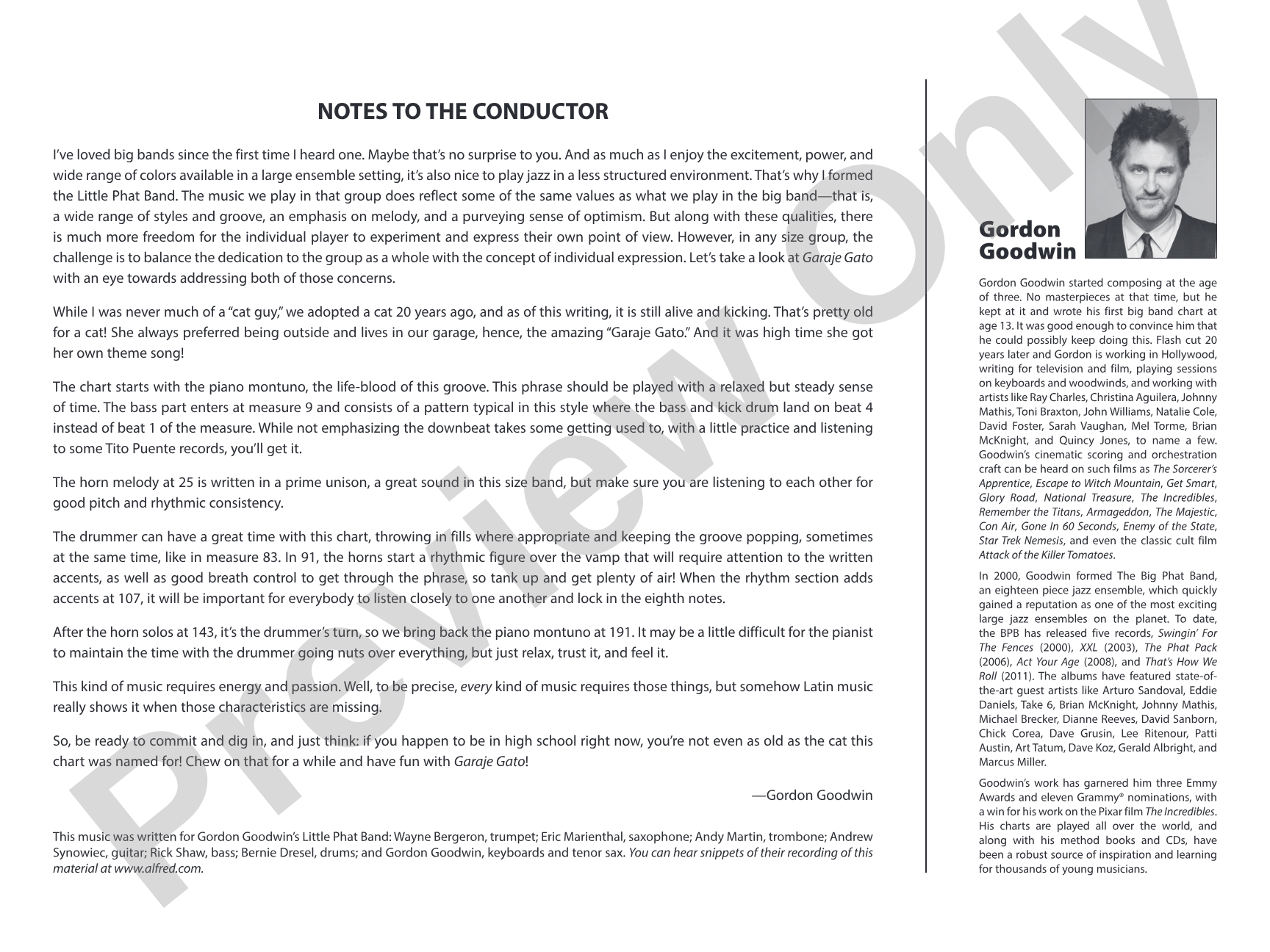
About the Composer: Gordon Goodwin

Gordon Goodwin has been composing since childhood, writing complete works rather than fragments by the time he was five years old. His first big band arrangement, Hang Loose, emerged when he was just thirteen, signaling a gift that would eventually bring him recognition across film, television, and concert music. His work has earned three Emmy Awards and multiple Grammy nominations, with his orchestrations featured in films including Bad Boys II, Con Air, Remember the Titans, and Star Trek: Nemesis.
Beyond the screen, Goodwin has collaborated with some of jazz and popular music's most celebrated artists, from Quincy Jones and Ray Charles to Christina Aguilera and David Foster. He has guest-conducted major symphony orchestras in cities across North America and Europe. Since 2000, he has led Gordon Goodwin's Big Phat Band, a Los Angeles-based big band ensemble that has redefined contemporary jazz performance and won critical acclaim for both its recordings and live shows.
Why we love this
Goodwin writes for working jazz ensembles with unflinching demands and genuine fun in equal measure. The Latin groove engine and montuno patterns anchor the piece while the brass parts command serious chops, making this a chart that challenges your section without overwhelming less experienced rhythm players. The solos throughout give every voice a moment to shine, and at Grade 4.5, it sits in that perfect zone for festival programming where your ensemble can compete cleanly and still deliver genuine style.
What to expect
Propulsive and hot, powered by a relentless Latin beat that keeps everyone moving forward. The bright, open sound of the horn section cuts through the montuno churn of the rhythm section, and when soloists step out, the music opens up into a conversation between leader and ensemble. It's the sound of a working jazz band having serious fun at full throttle.
Who it's for
Jazz ensemble directors with players who read fluently and have developed solid foundational jazz articulation and phrasing. This chart demands brass players with upper register facility and rhythm section musicians comfortable with Latin feels and comping vocabulary. It's ideal for high school or college ensembles aiming at festival or concert performance at a competitive level.
How to get the most out of it
- Lock the rhythm section's montuno patterns first; once piano, guitar, bass, and drums lock into the groove, the brass and reeds will sit more comfortably over the Latin pocket.
- Give the brass soloists space to breathe during rehearsal. These parts demand technical facility, so isolate the passages that ask for speed or complex rhythms and let them build confidence before running full tempo.
- Maintain steady energy through the form. At 125 BPM with Latin syncopation, the chart can drift if the ensemble loses focus. Conduct clearly and remind players that precision serves the groove, not the other way around.
- Balance the solo sections carefully. Each part gets its moment, so make sure supporting voices understand their role as either comping or laying back to frame the featured voice.
How to use it
This works beautifully in a jazz concert as a concert-opening number that sets a high-energy tone and demonstrates both technical chops and stylistic sophistication. It also serves well in a festival set where you want to show range by programming it alongside swing or ballad material. The recorded performance by Gordon Goodwin's Little Phat Band gives students a reference for style and interpretation.
Skills your students will build
- Latin jazz comping patterns and rhythm section coordination
- Stylistically authentic jazz articulation and phrasing in an uptempo context
- Brass soloism within a composed structure
- Reading syncopated rhythms across multiple simultaneous feels
- Maintaining rhythmic precision and groove under tempo pressure
- Balancing foreground solos with background ensemble support