

Gao Shan Qing: SATB Choral Octavo
(High Mountain Green)
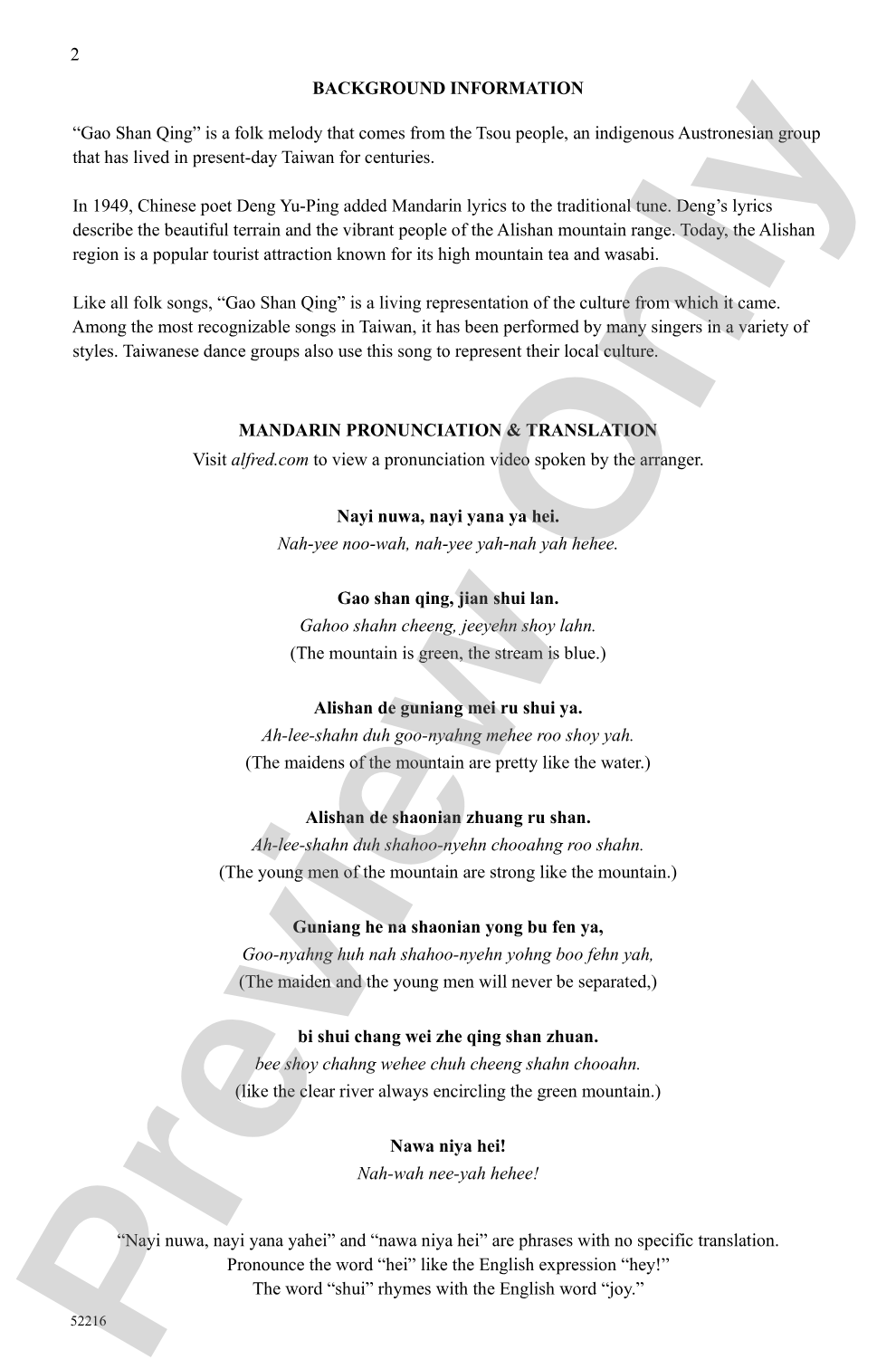
Traditional Tsou Melody, Mandarin words by Deng Yu-Ping / arr., with English words, by Jerry Lim
Item: 00-PO-0007834
$2.60
Minimum order quantity: 20 copies
Pickup currently not available
Related Items
Gao Shan Qing: SATB Choral Octavo |
$2.60
|
View |
Description
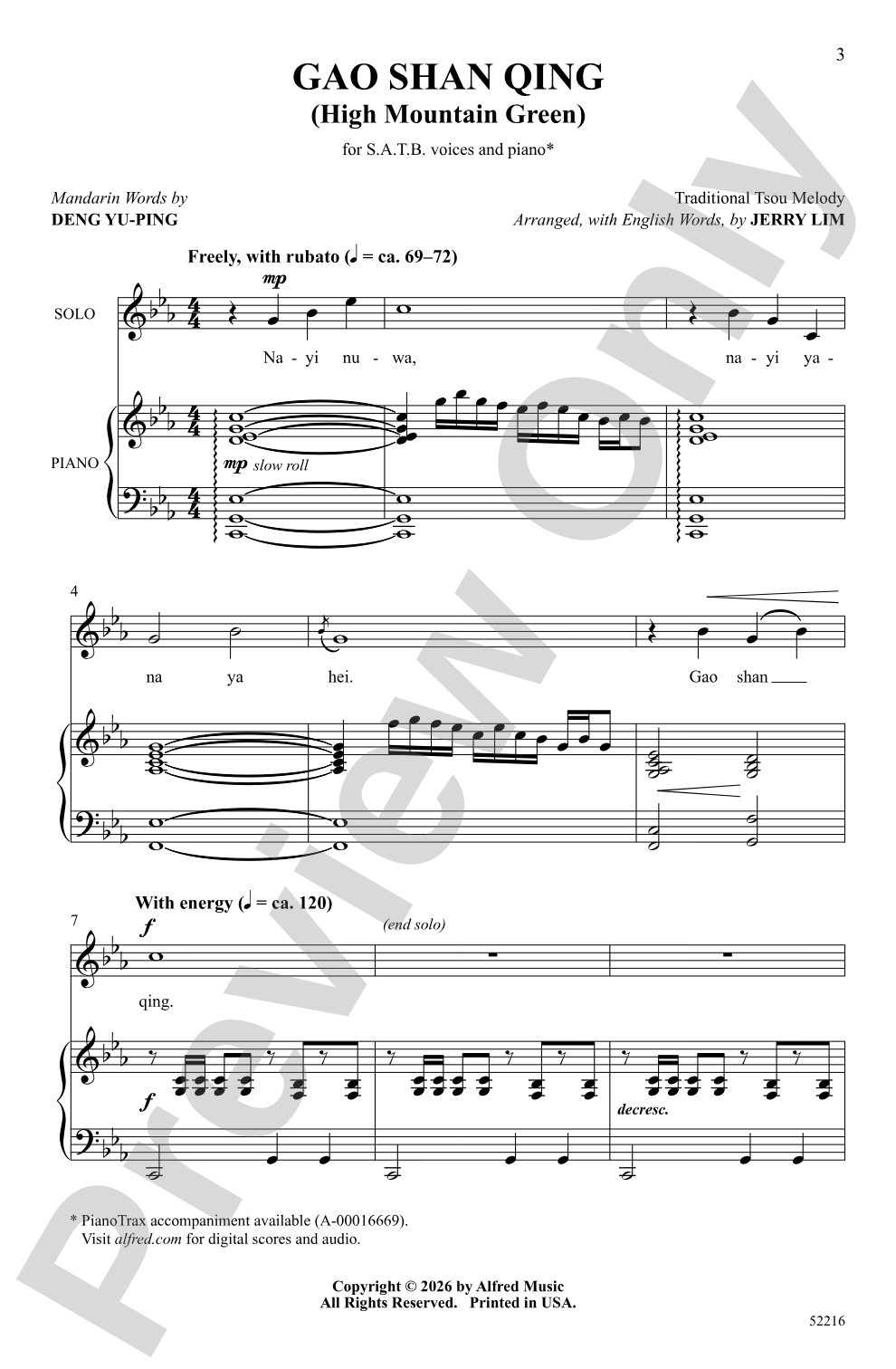
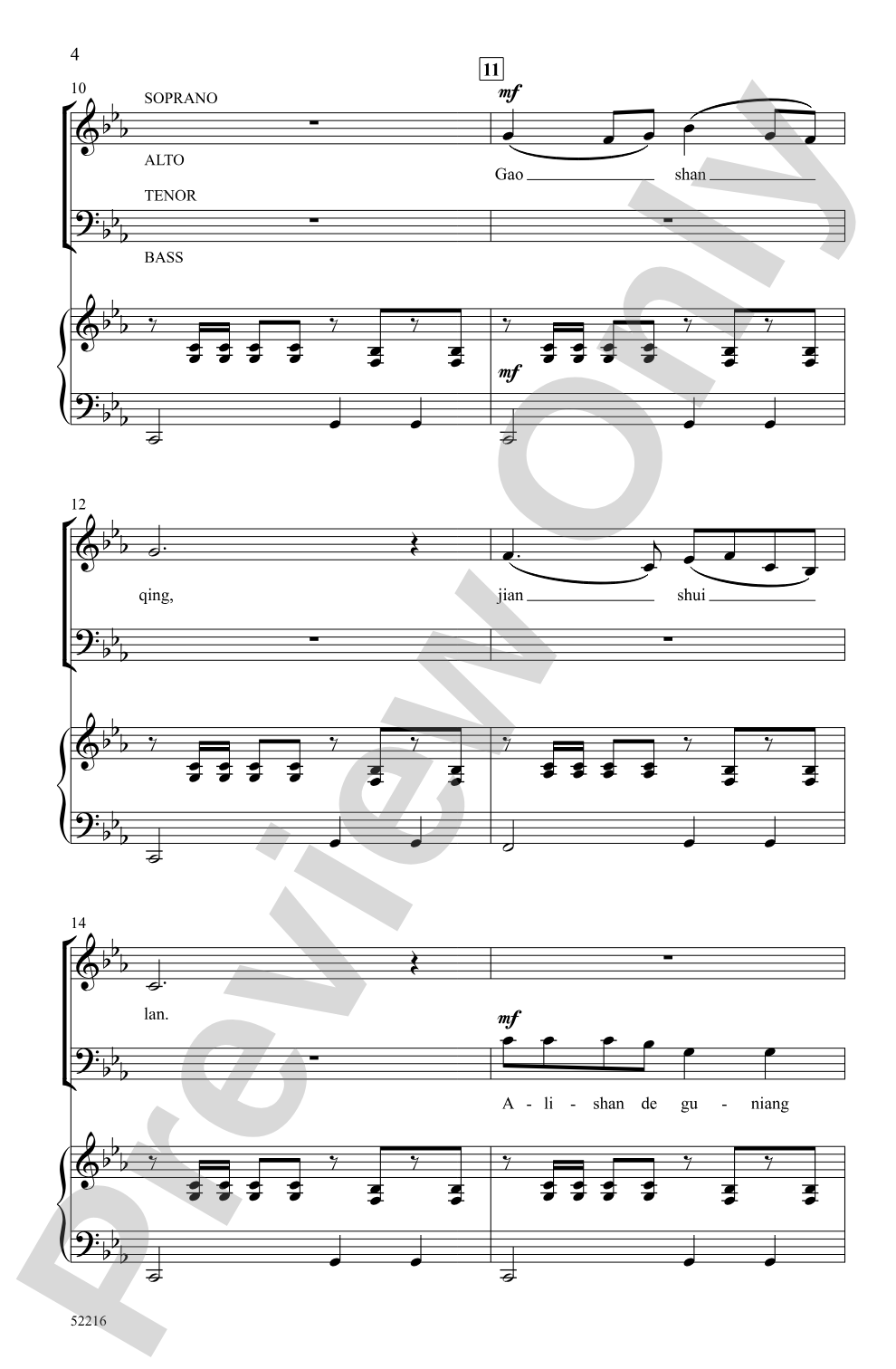
Explore the breathtaking terrain and vibrant culture of Taiwan with this folk song about the Alishan mountain range. Jerry Lim's authentic arrangement includes both Mandarin and English lyrics. The work opens with an atmospheric solo before flowing into an energetic choral celebration characterized by a driving rhythmic pulse and percussive "hei" interjections. Just as the river encircles the mountain, voices weave together in a variety of textures. A phonetic guide and translation appear in the publication, or view the pronunciation video to hear a demonstration by the arranger, a native speaker.


Gao Shan Qing: SATB Choral Octavo isn't in MakeMusic Cloud just yet...but it could be. Let us know you'd like to see it, and you'll help shape what comes next. In the meantime, start a free trial and dive into thousands of interactive titles your students can play along with today.
Request This Title
Tell us you want it.
Start Your Free Trial
Explore everything that's ready to play right now.
Sample Audio
1
Audio File
--:--
0:00
0:00
Sample Video
Additional Details
Series:
Alfred Choral Designs
Publisher:
Alfred Music
Page Count:
16
SKU:
00-PO-0007834
More about this title
About the Arranger: Jerry Lim

Jerry Lim brings three decades of K–12 music teaching experience to his work as a composer and arranger. A high school choir director in Washington state, he holds both BA and MA degrees in Music Education from the University of Washington. His musical foundation spans continents: raised in multiracial Malaysia, he trained in piano performance while absorbing European, American, and Asian musical traditions simultaneously. This bicultural upbringing shaped his distinctive approach to blending Western and Eastern melodic languages.
Beyond the classroom, Lim has contributed original compositions to interactive media, including a 2001 Game Boy soundtrack for Magi Nation that earned recognition for musical innovation. He serves as an active member of NAfME and ACDA, participating in festival and conference management. His ongoing work arranging for his own ensembles reflects a commitment to sharing cross-cultural musical perspectives with educators and students.
Why we love this
Jerry Lim's arrangement honors the Taiwanese folk tradition while building genuine accessibility for North American choirs. The writing balances cultural authenticity with singability, moving from an arresting solo opening into a rhythmically propulsive group statement that energizes both singers and audiences. Phonetic guides and the arranger's own pronunciation video remove barriers to confident performance of Mandarin text.
What to expect
The piece unfolds like a landscape emerging from mist. An intimate solo voice introduces the listener to the Alishan mountains with atmospheric restraint before the full choir surges forward in energetic celebration, percussion and rhythmic momentum driving the energy. Voices interweave in varying textures, their motion echoing the river that winds through the terrain, creating a sense of natural flow and interconnection.
Who it's for
This arrangement serves SATB choirs at the high school and college levels seeking substantive multicultural repertoire for concert and festival performance. Directors looking to program folk music that carries genuine cultural weight while remaining accessible to intermediate singers will find a thoughtful match here.
How to get the most out of it
- Establish the driving rhythmic pulse early in rehearsal by isolating the percussive "hei" interjections; have singers speak these cues before adding pitch so the ensemble locks the forward momentum.
- Work with your soloist on the atmospheric opening passage to create intimate dynamic control and clear diction before the choir enters; this contrast sharpens the transition into full voicing.
- Use the pronunciation video as a rehearsal resource rather than a substitute for direct teaching; have students listen, then sing passages back in small groups to build confidence with Mandarin phonetics.
- Layer the voice parts gradually to highlight how textural variety mirrors the geographical imagery; begin with unison sections, then introduce parallel motion before reaching full SATB density.
How to use it
Program this as a concert centerpiece that honors world music traditions while providing meaningful variety in a mixed-repertoire set. The piece works equally well in a multicultural showcase or as a compelling standalone selection at festival competitions; its 16-page length and moderate complexity make it practical for groups preparing multiple works.
Skills your students will build
- Singing Mandarin Chinese with accurate phonetics and tonal clarity
- Navigating shifting rhythmic textures and percussive interjections
- Balancing solo and ensemble roles, moving from intimate to full-voiced sound
- Reading and performing music informed by non-Western musical traditions
- Layering independent vocal lines that create texture and harmonic depth