
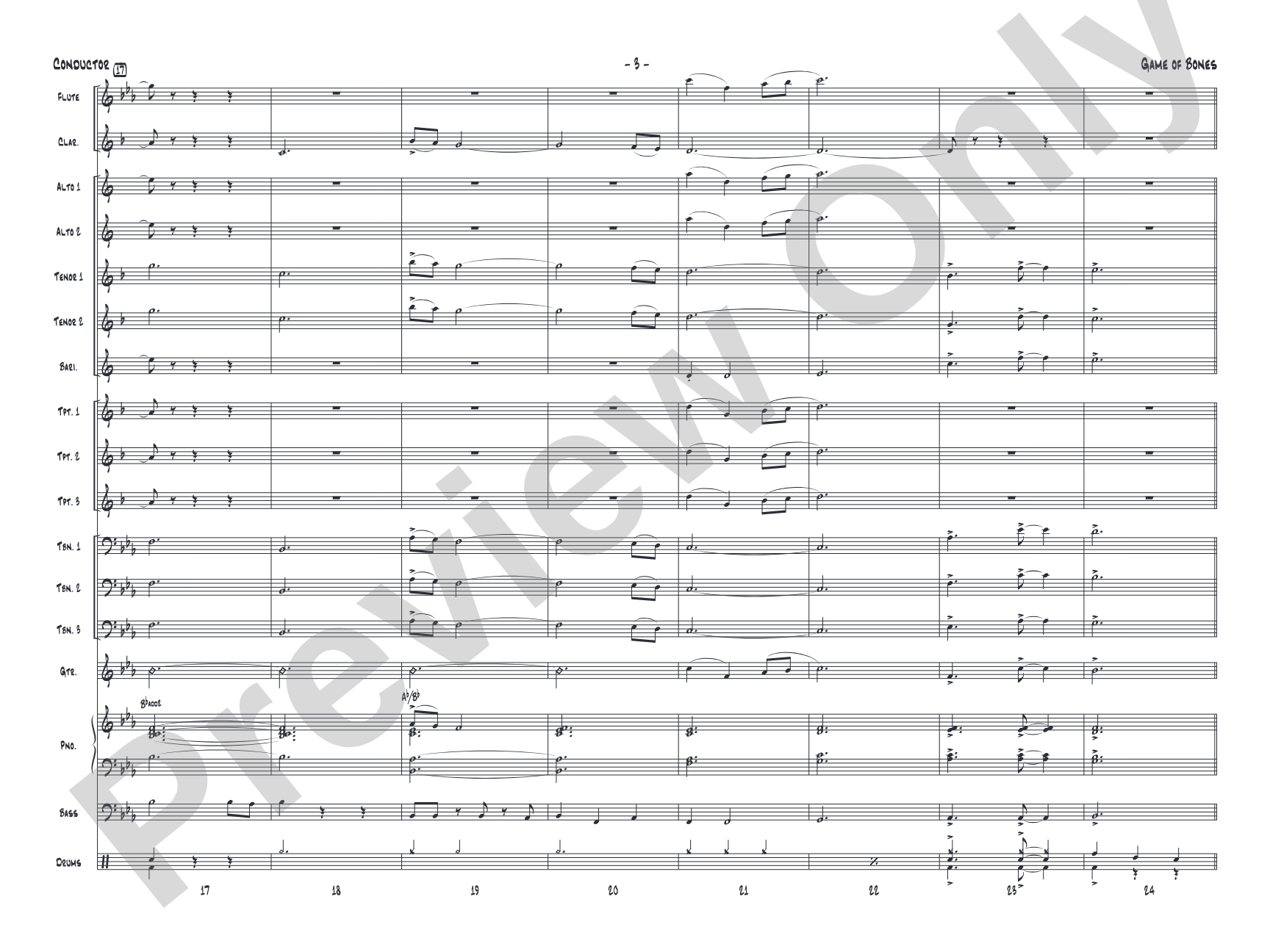
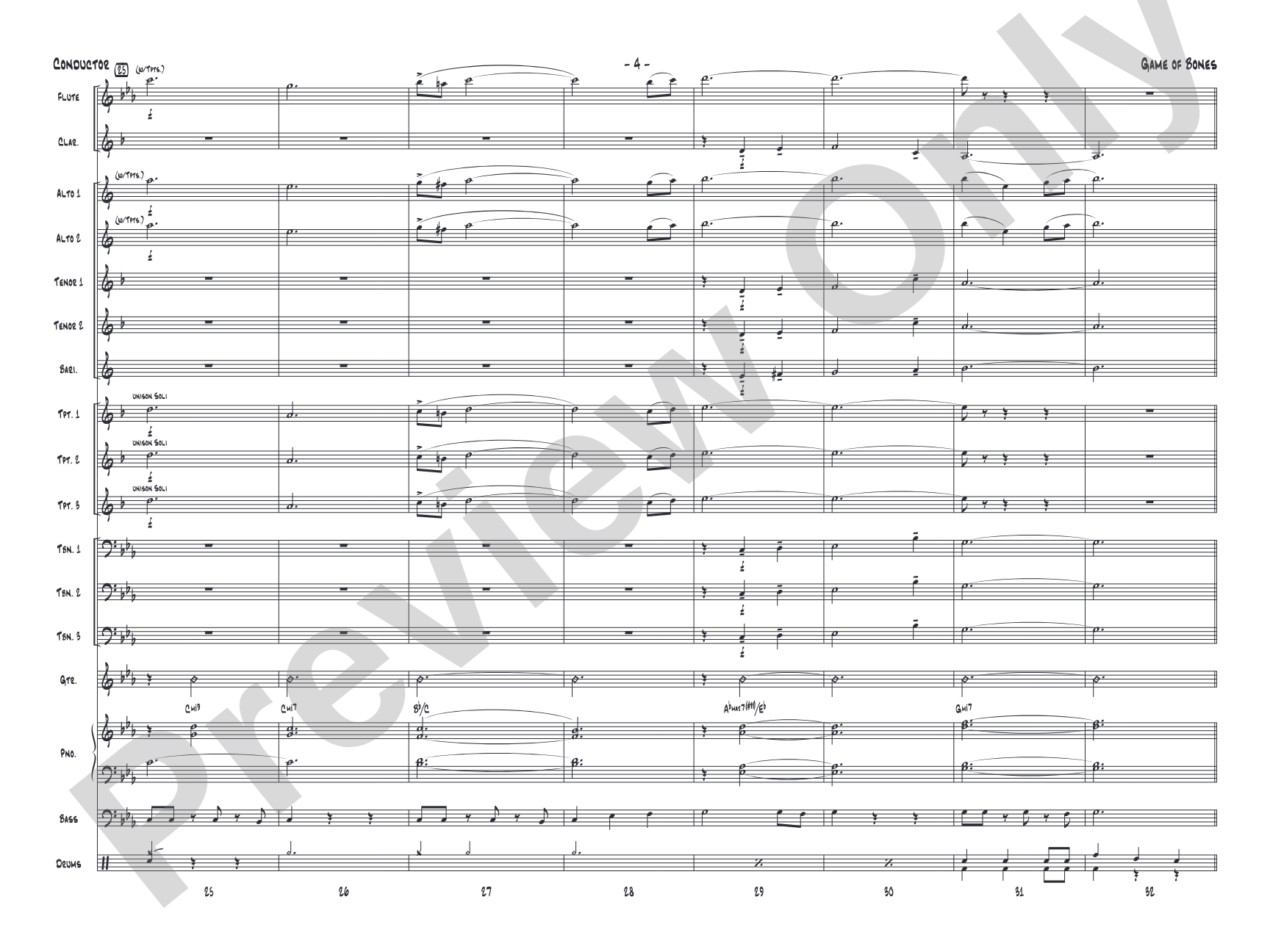
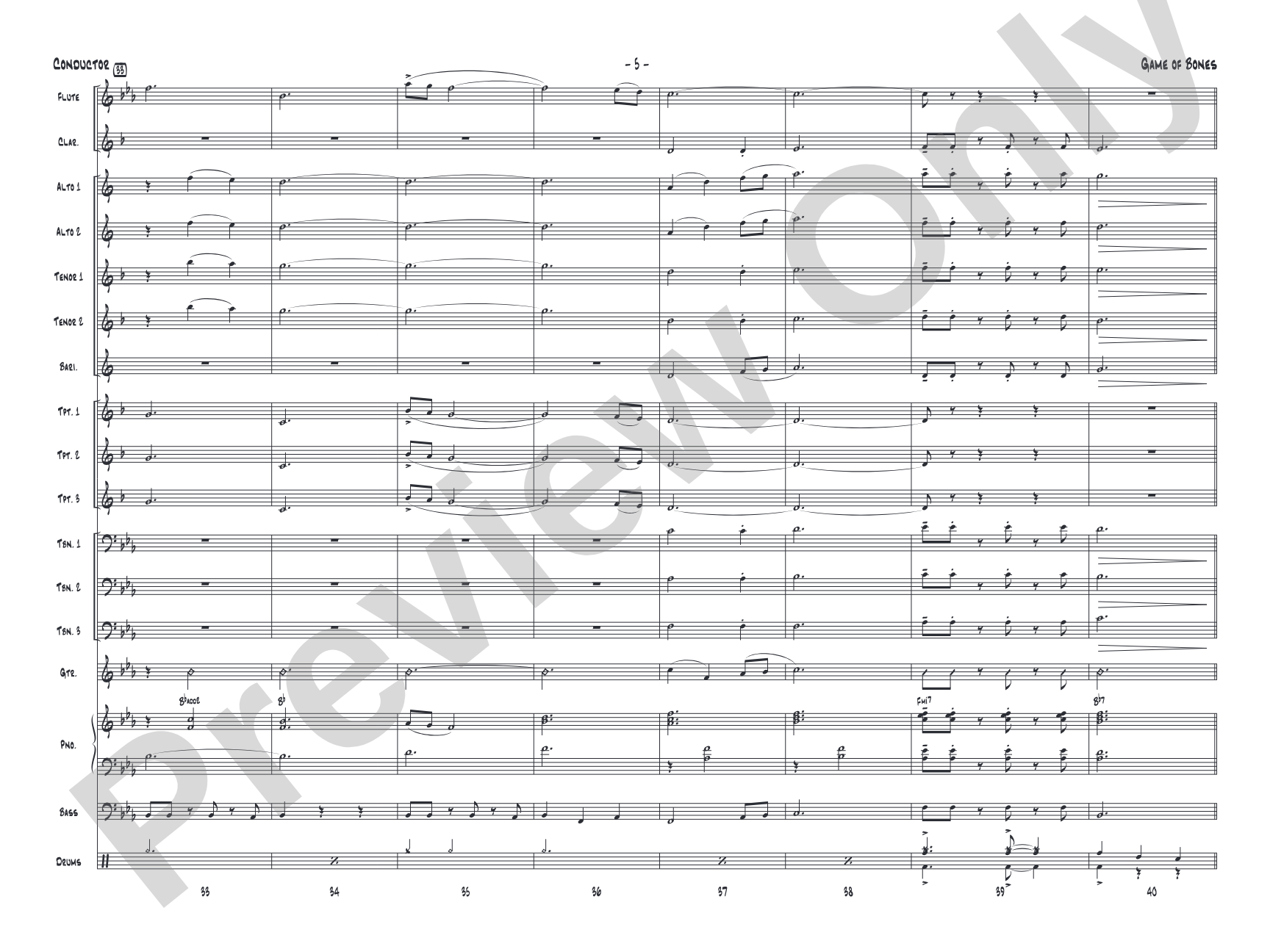
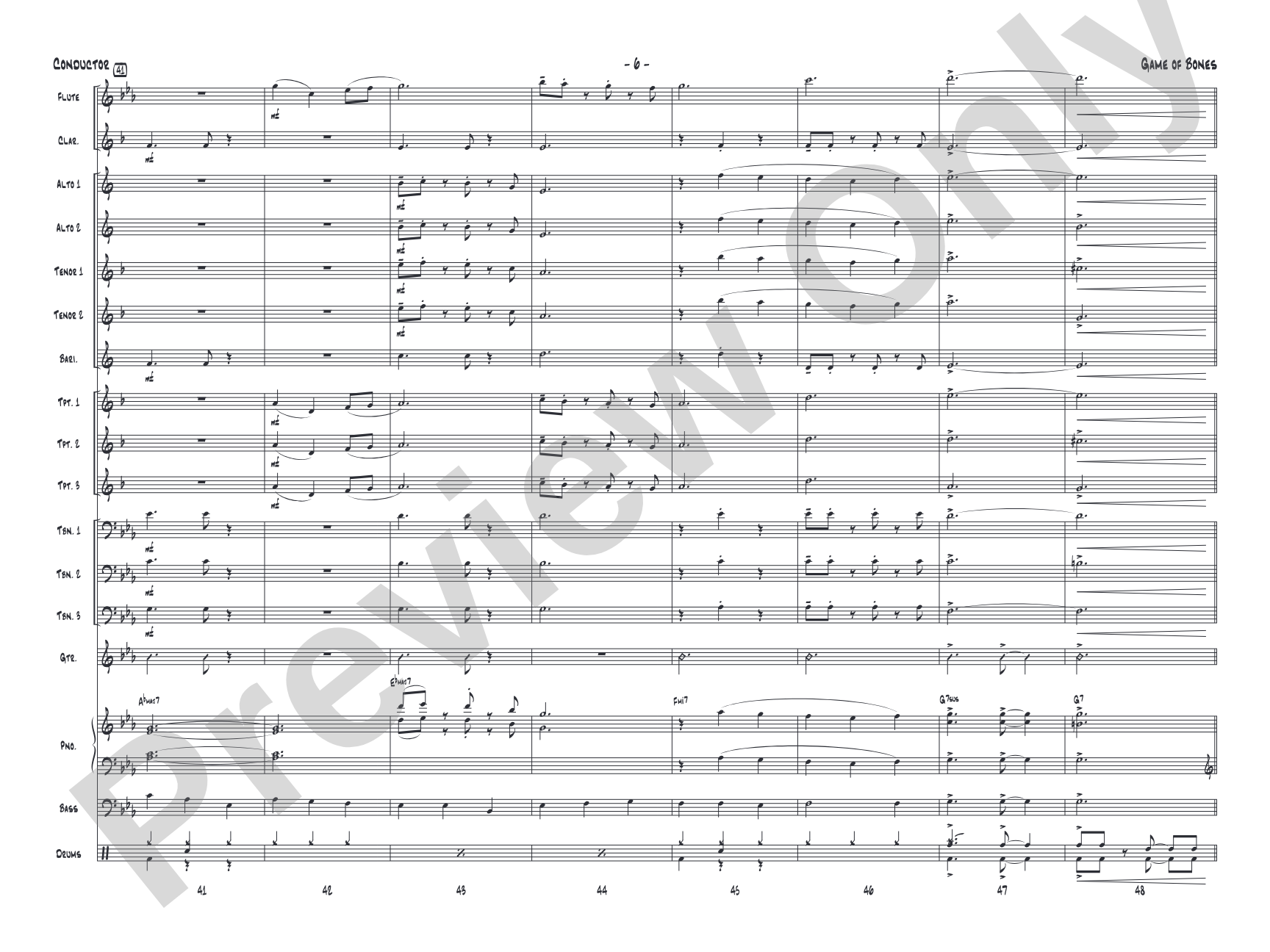
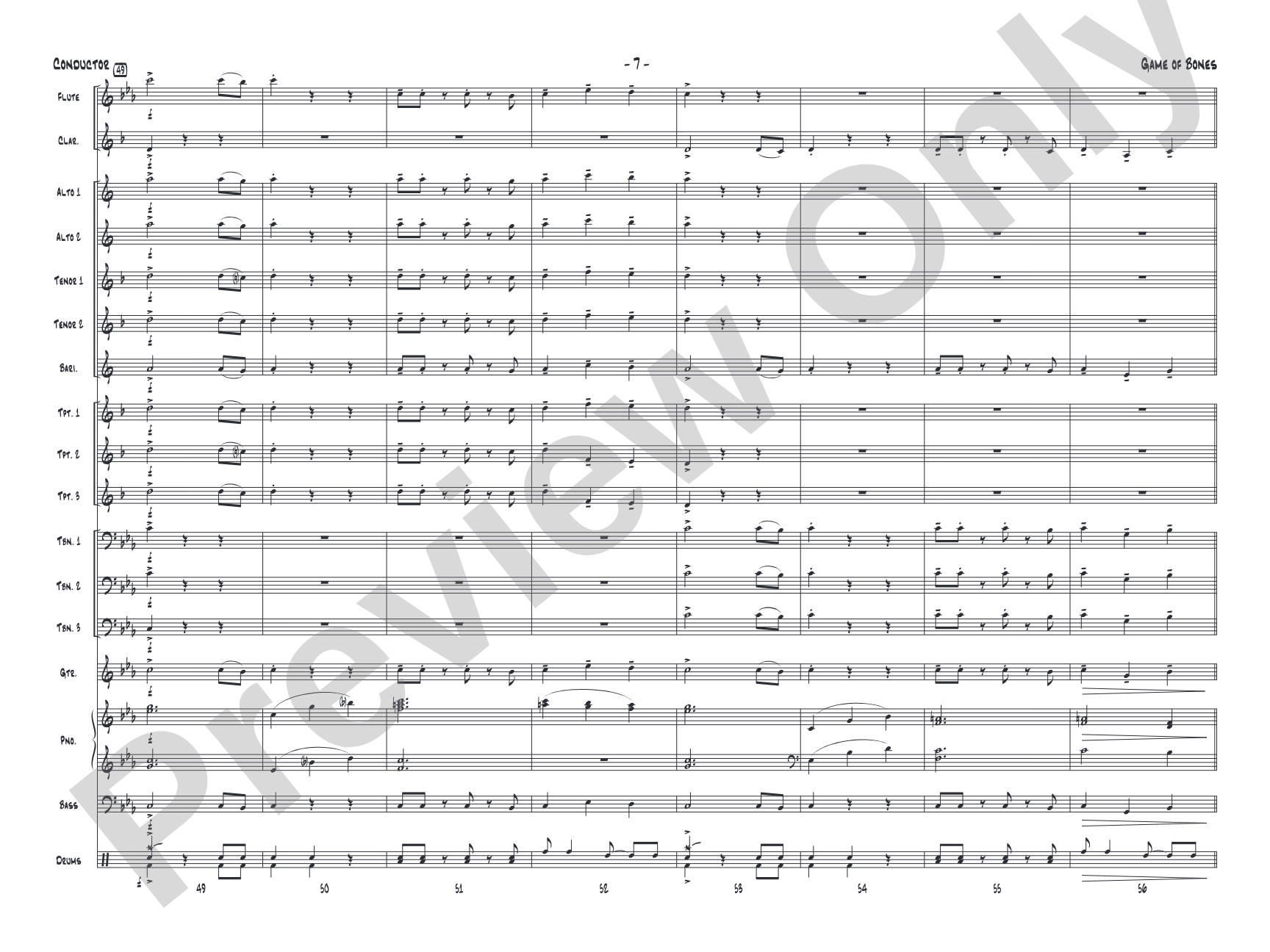
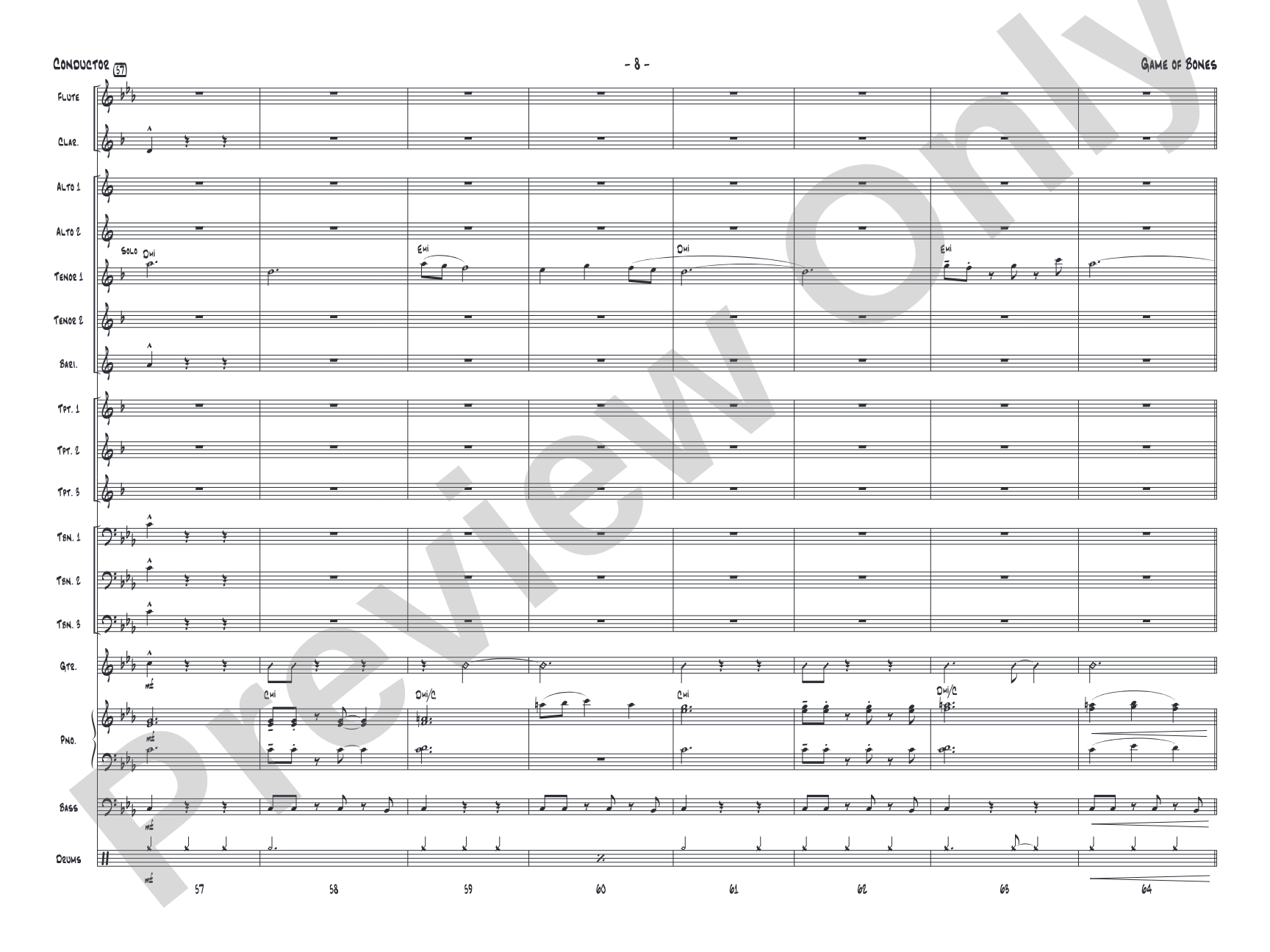
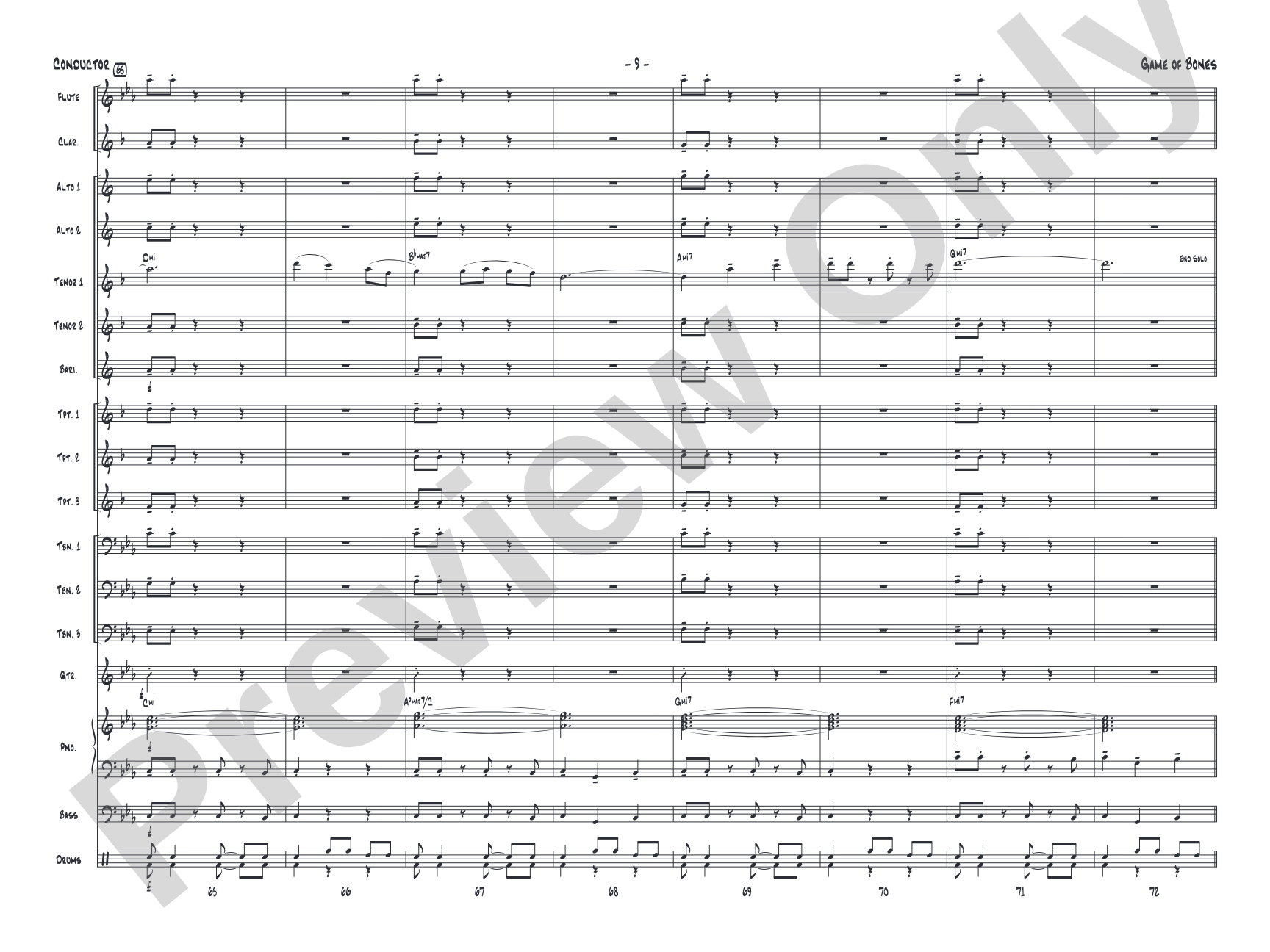
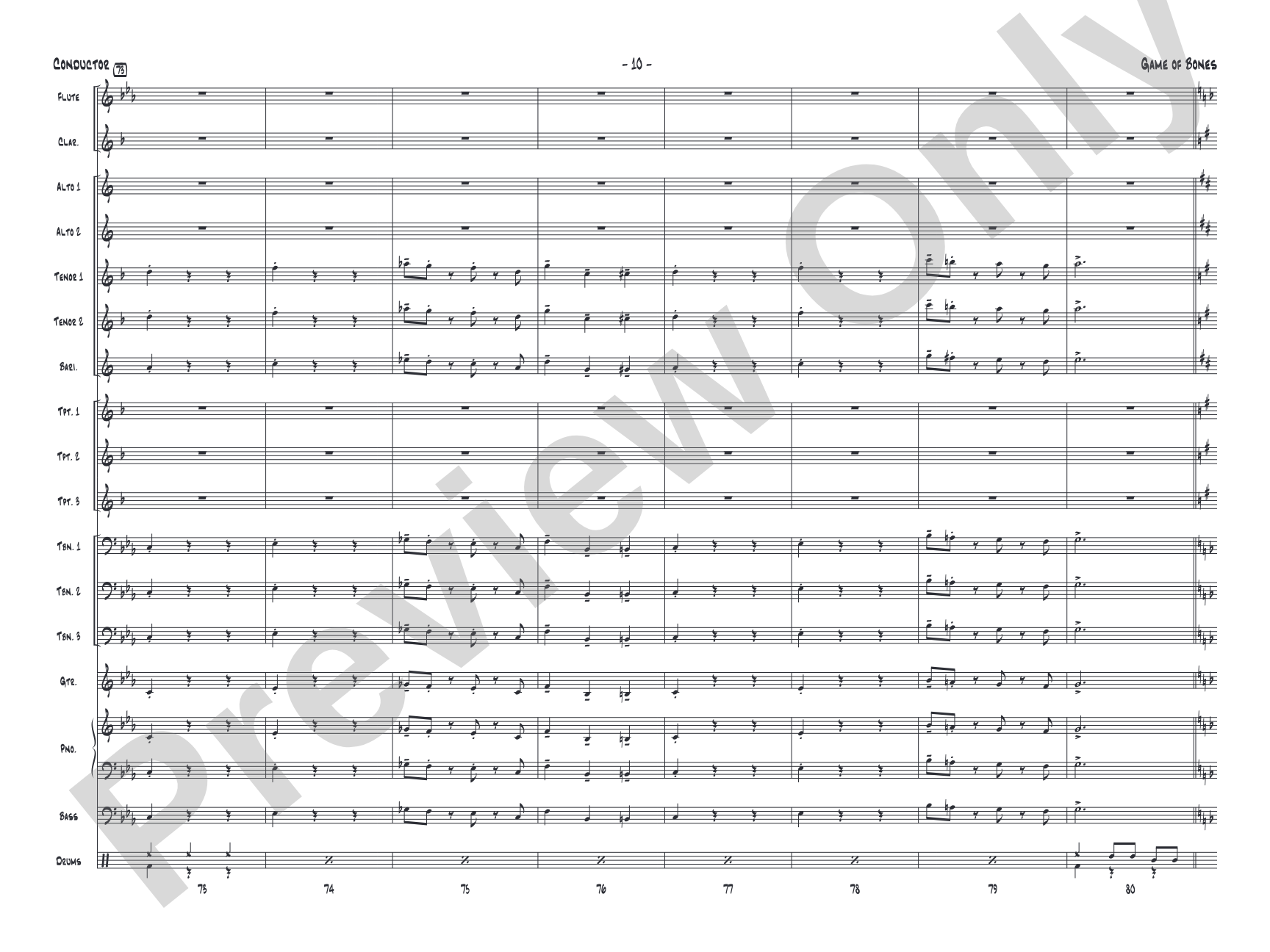
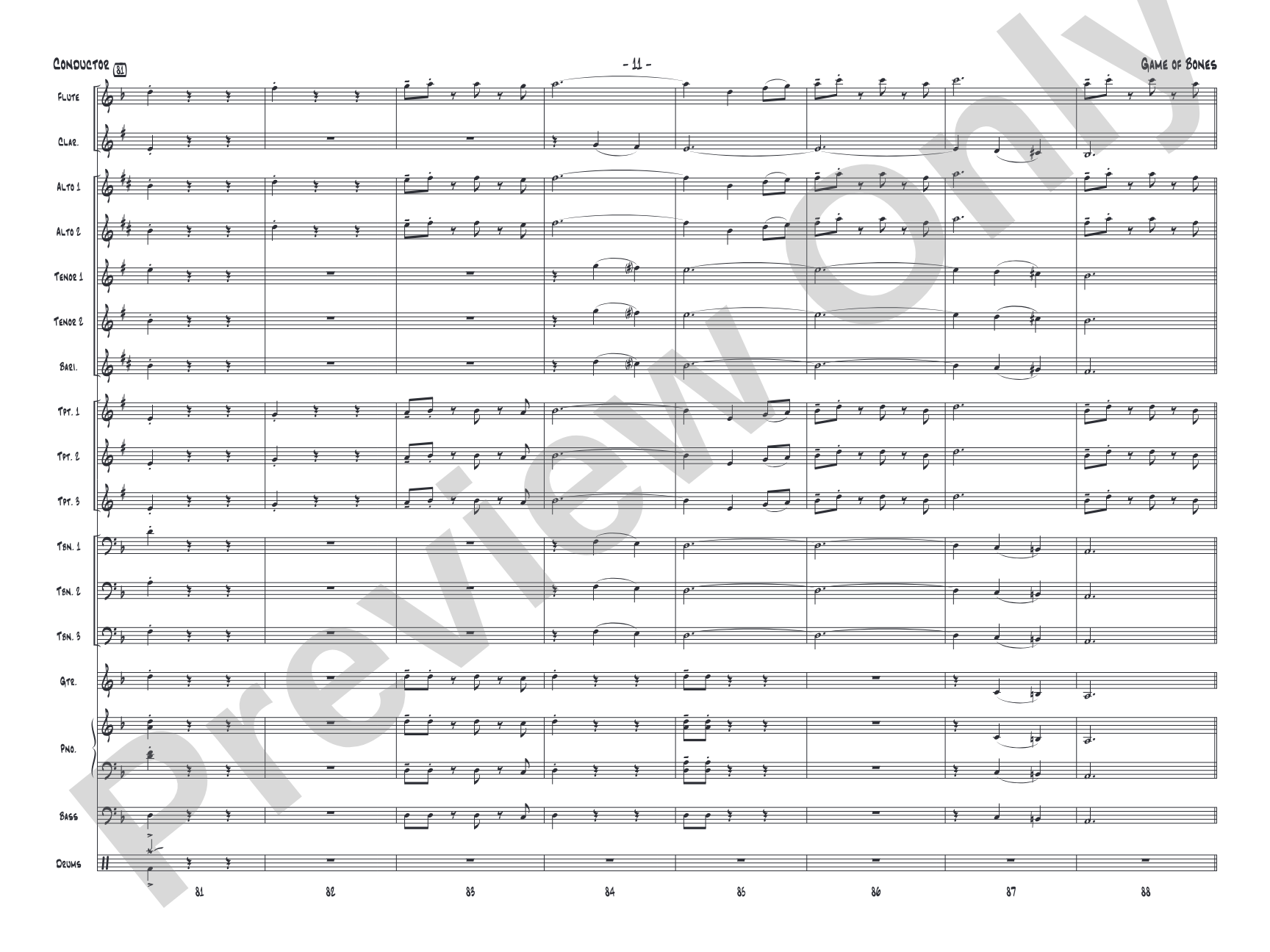
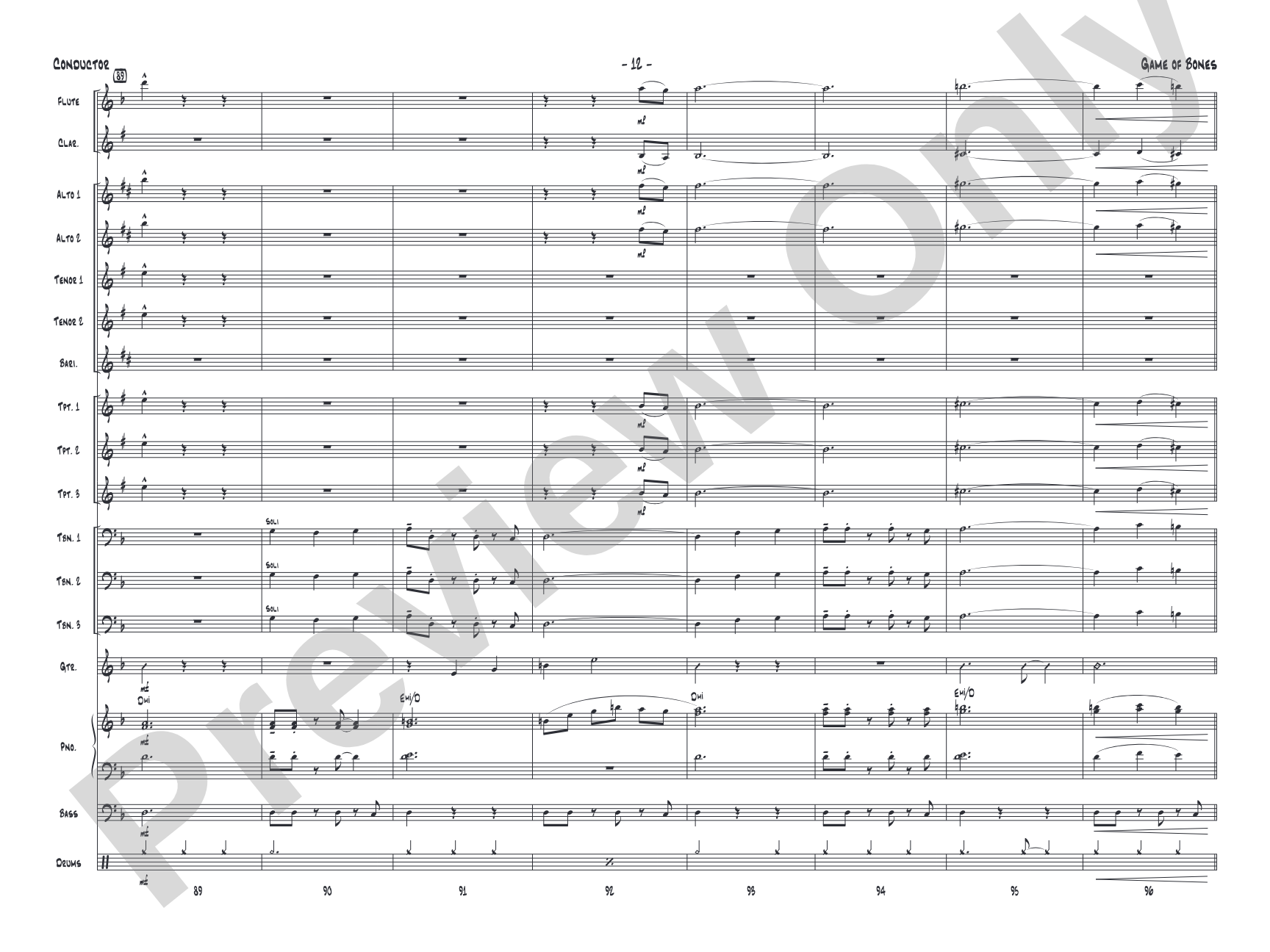
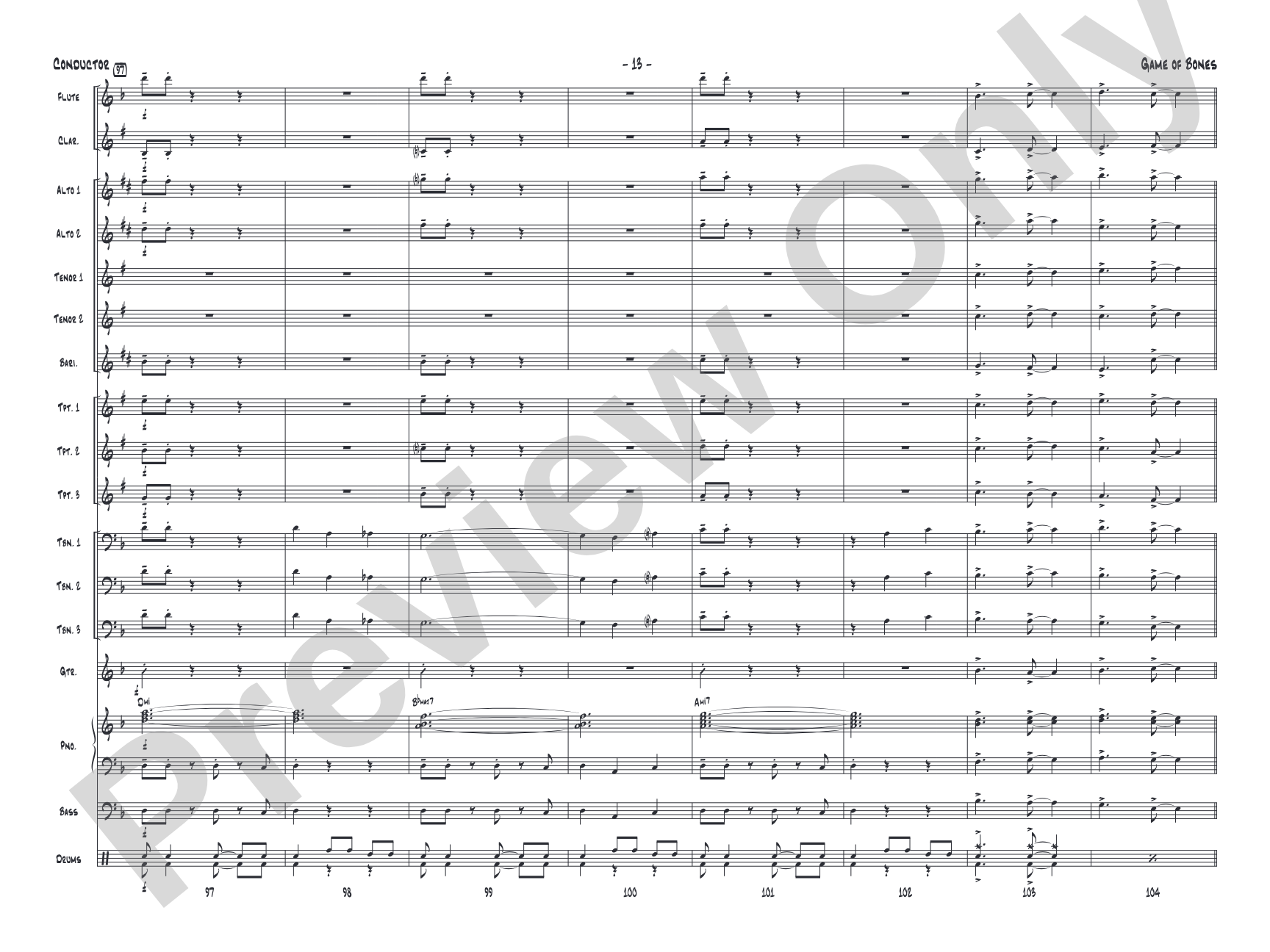
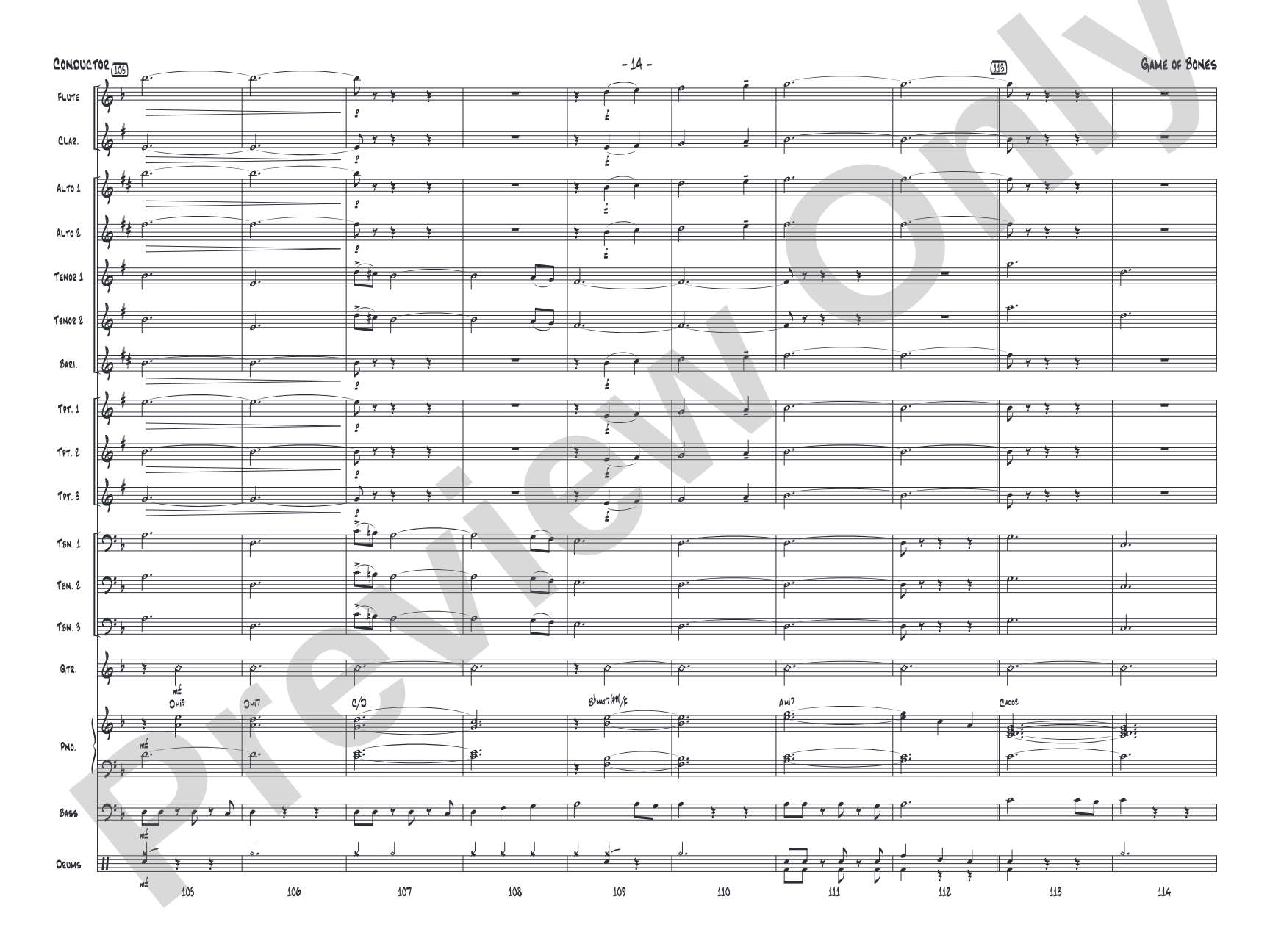
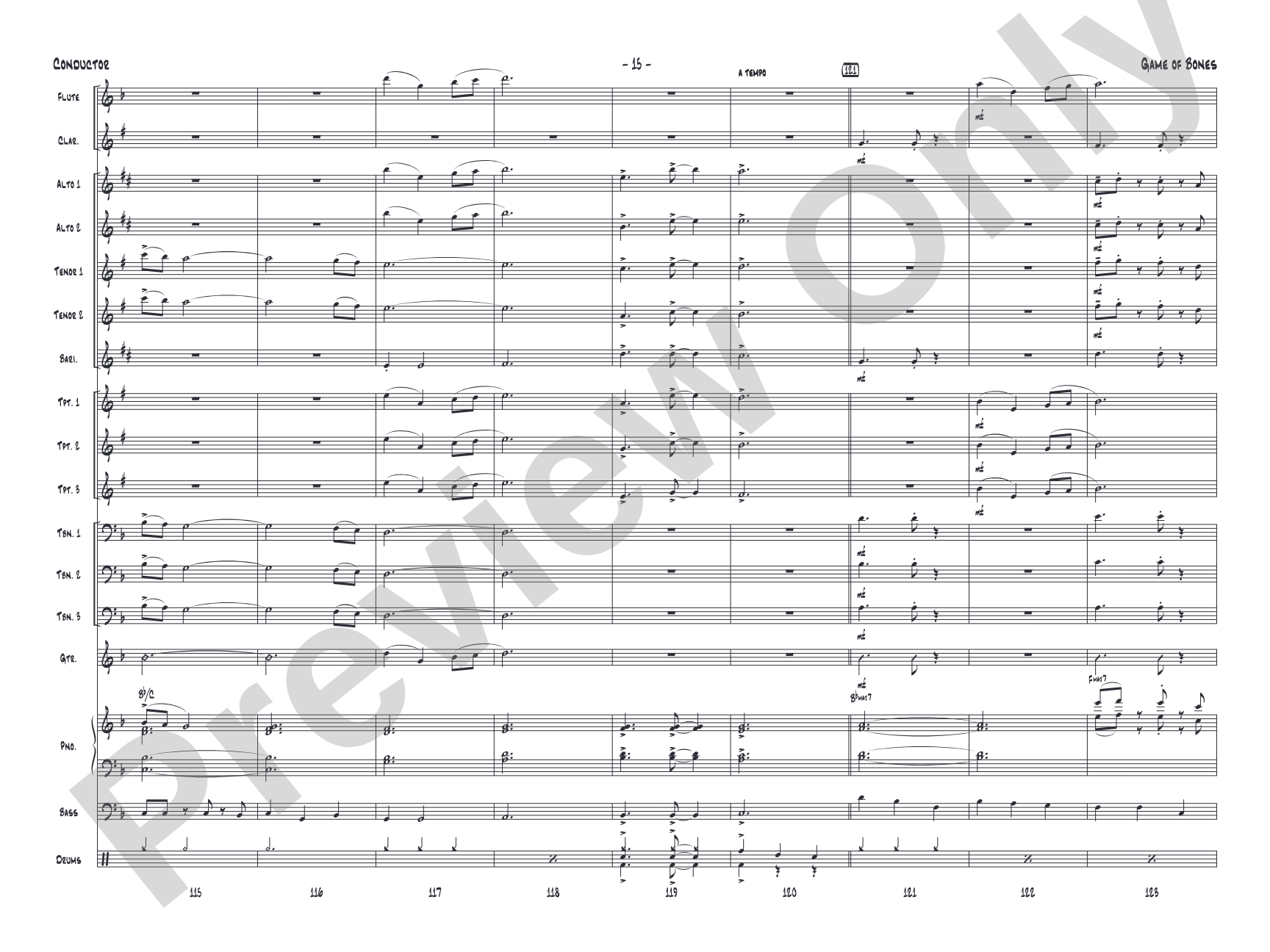
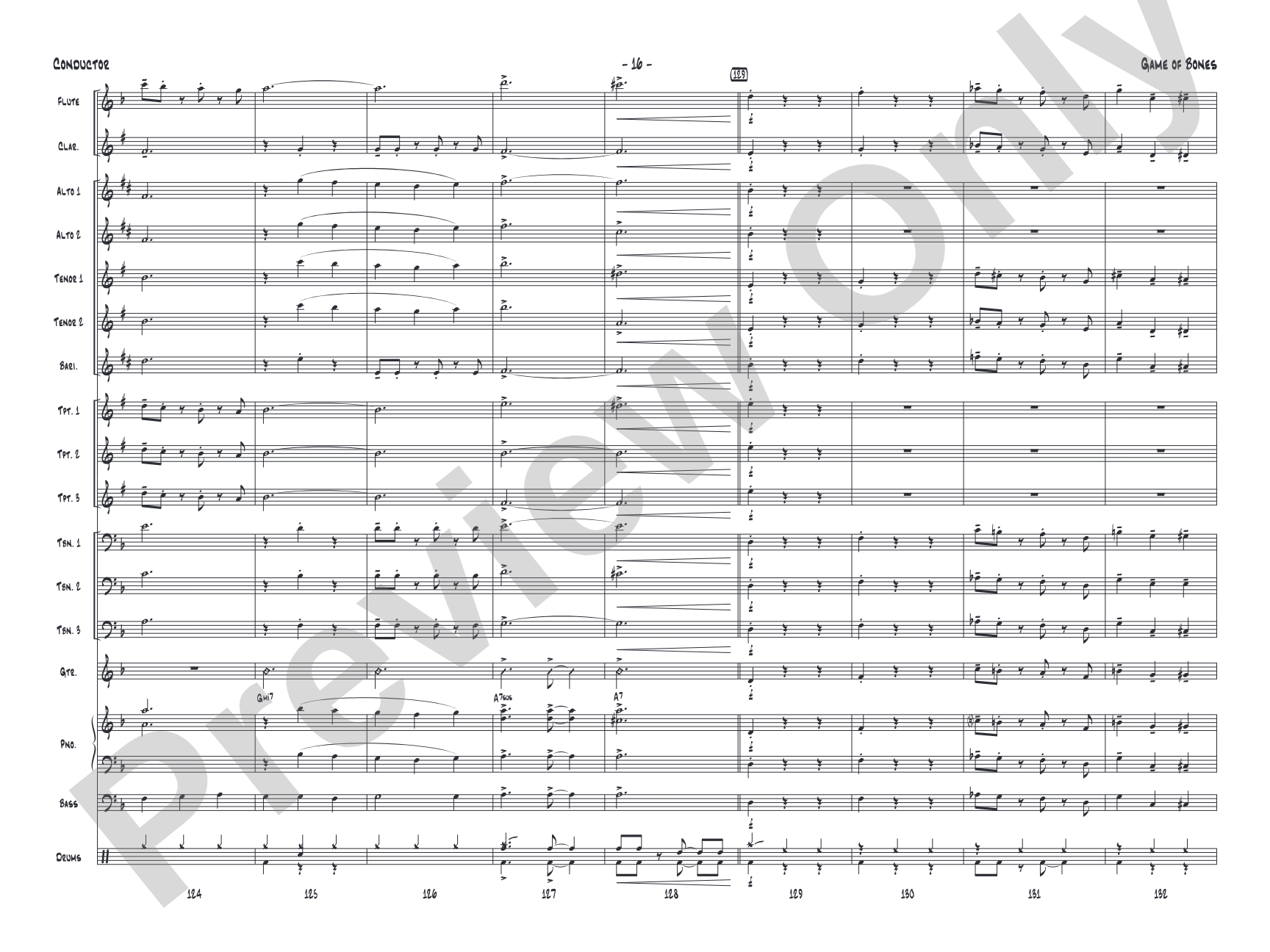
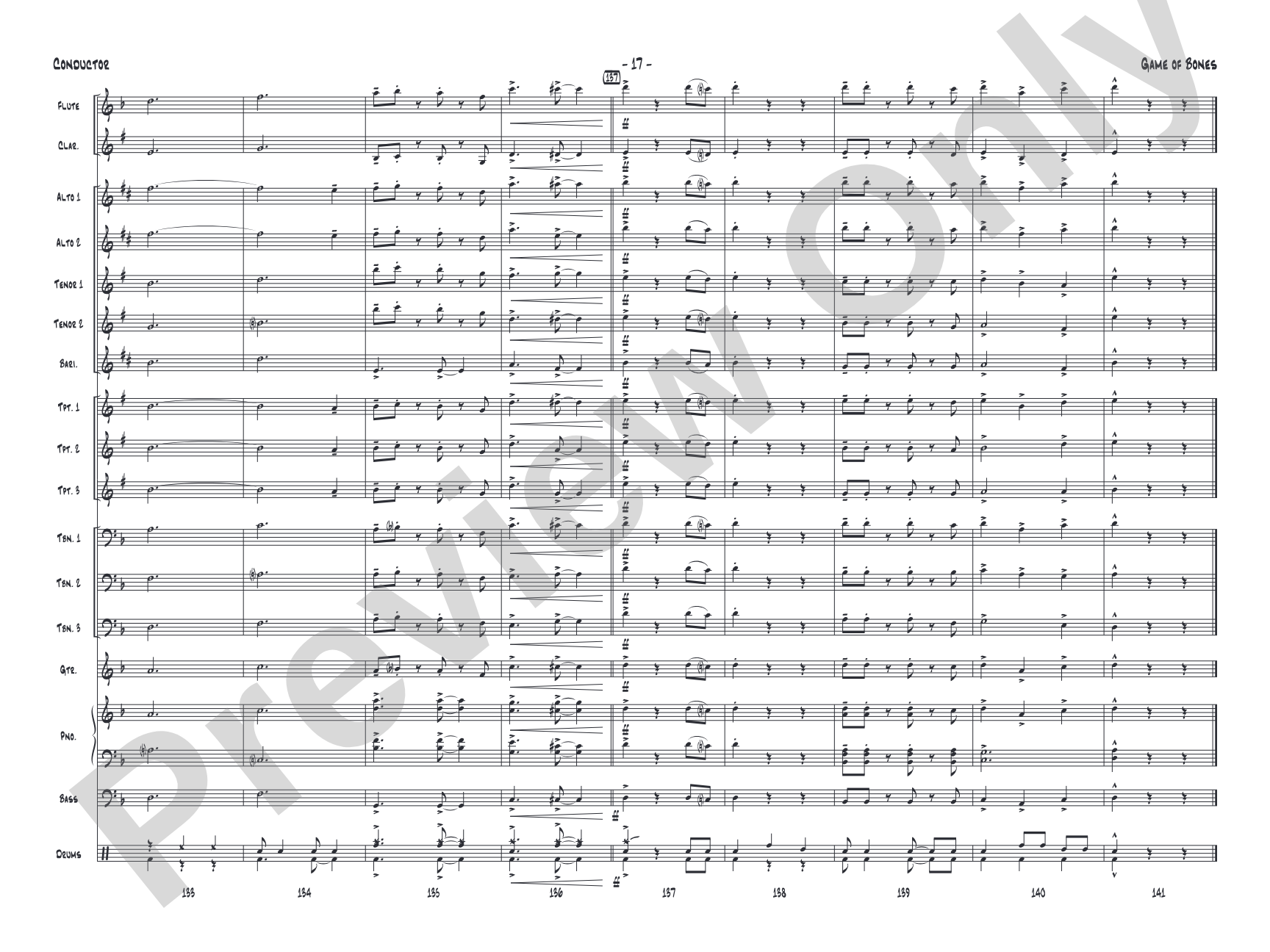

Game of Bones: Jazz Ensemble Conductor Score & Parts
Featuring the Trombone Section
By Vince Gassi
Grade: 1 (Easy)
Item: 00-PK-0007449

$42.00
Pickup currently not available
Buy Extra Parts (Digital PDF Download)
| Product | Price | Quantity |
|---|---|---|
| Game of Bones: Score | $8.00 | |
| Game of Bones: E-flat Alto Saxophone | $3.00 | |
| Game of Bones: 2nd E-flat Alto Saxophone | $3.00 | |
| Game of Bones: B-flat Tenor Saxophone | $3.00 | |
| Game of Bones: 2nd B-flat Tenor Saxophone | $3.00 | |
| Game of Bones: E-flat Baritone Saxophone | $3.00 | |
| Game of Bones: 1st B-flat Trumpet | $3.00 | |
| Game of Bones: 2nd B-flat Trumpet | $3.00 | |
| Game of Bones: 3rd B-flat Trumpet | $3.00 | |
| Game of Bones: 1st Trombone | $3.00 | |
| Game of Bones: 2nd Trombone | $3.00 | |
| Game of Bones: 3rd Trombone | $3.00 | |
| Game of Bones: Guitar Chords | $3.00 | |
| Game of Bones: Guitar | $3.00 | |
| Game of Bones: Piano Accompaniment | $3.00 | |
| Game of Bones: String Bass | $3.00 | |
| Game of Bones: Drums | $3.00 | |
| Game of Bones: Flute | $3.00 | |
| Game of Bones: 1st B-flat Clarinet | $3.00 | |
| Game of Bones: 1st F Horn | $3.00 | |
| Game of Bones: Tuba | $3.00 | |
| Game of Bones: Baritone T.C. | $3.00 | |
| Game of Bones: Vibraphone | $3.00 |
Parts Added to Cart!
Description
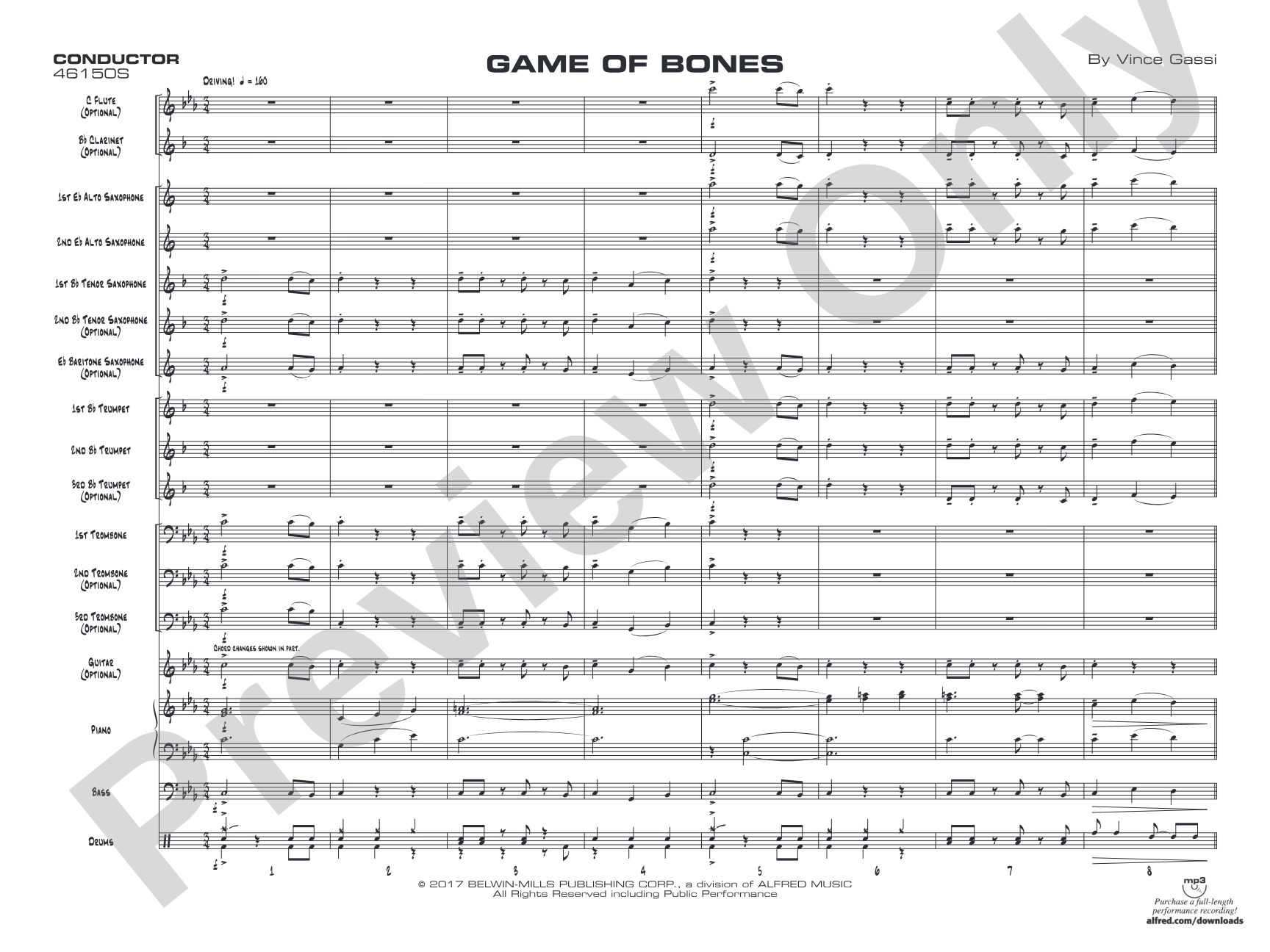
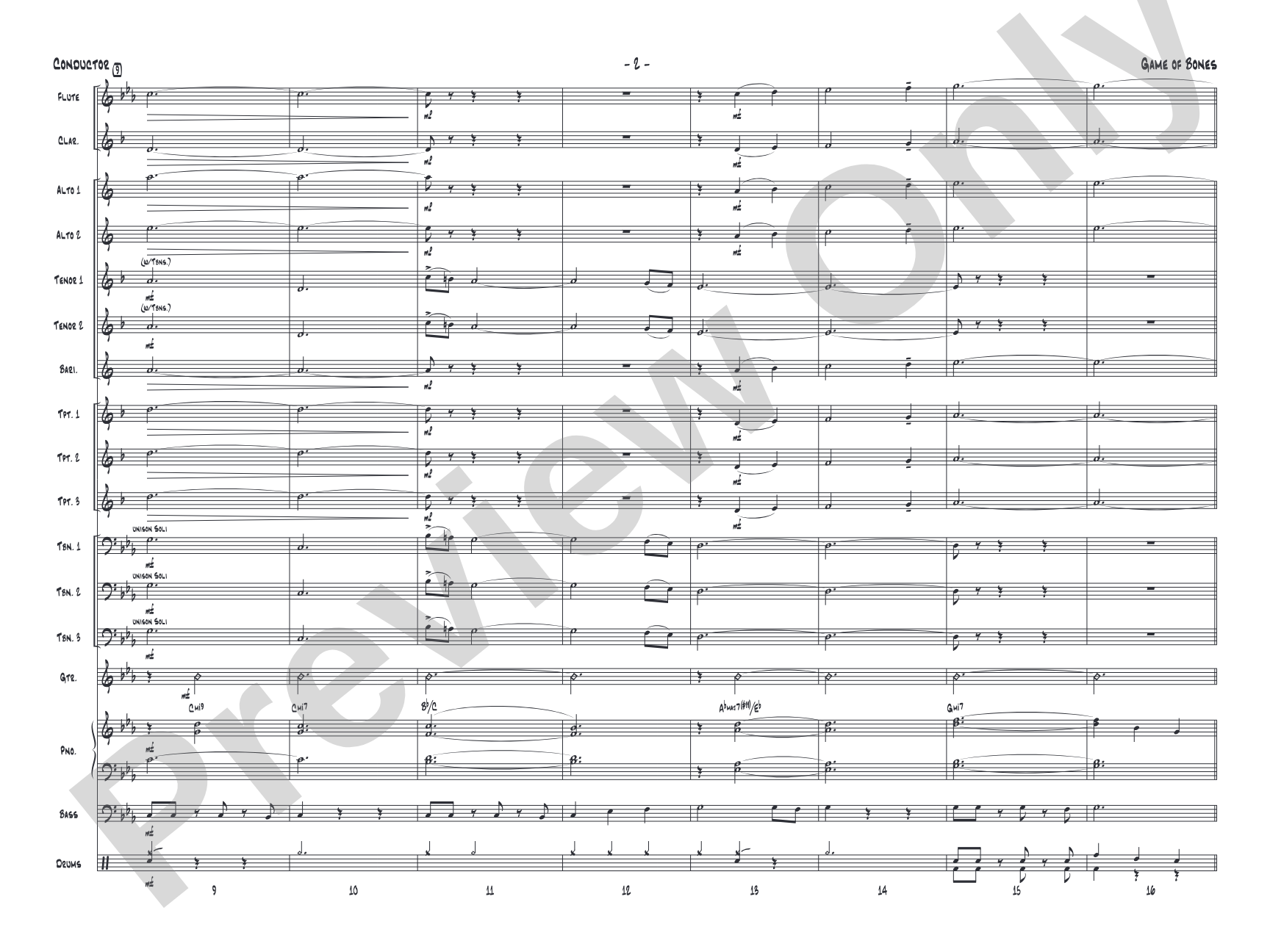
"Game of Bones" by Vince Gassi is a driving jazz waltz played around 158 BPM with a haunting melody that stays with you. Includes a written tenor sax solo, fine ensemble writing, lyrical lines throughout all the while accessible and fun to play. (2:45)


Don't just read it, hear it, play along with it, and watch your students grow with it. In MakeMusic Cloud, Game of Bones: Jazz Ensemble Conductor Score & Parts comes alive with professional accompaniment, adjustable tempo, and built-in practice tools that turn solo practice into real progress.
Open in the Player
Jump straight in and assign it today.
Start Your Free Trial
Open this title and explore the full library in minutes.
Sample Audio
1
Audio File
--:--
0:00
0:00
Sample Video
Additional Details
Series:
First Year Charts for Jazz Ensemble
Publisher:
Alfred Music
Page Count:
90
SKU:
00-PK-0007449
More about this title
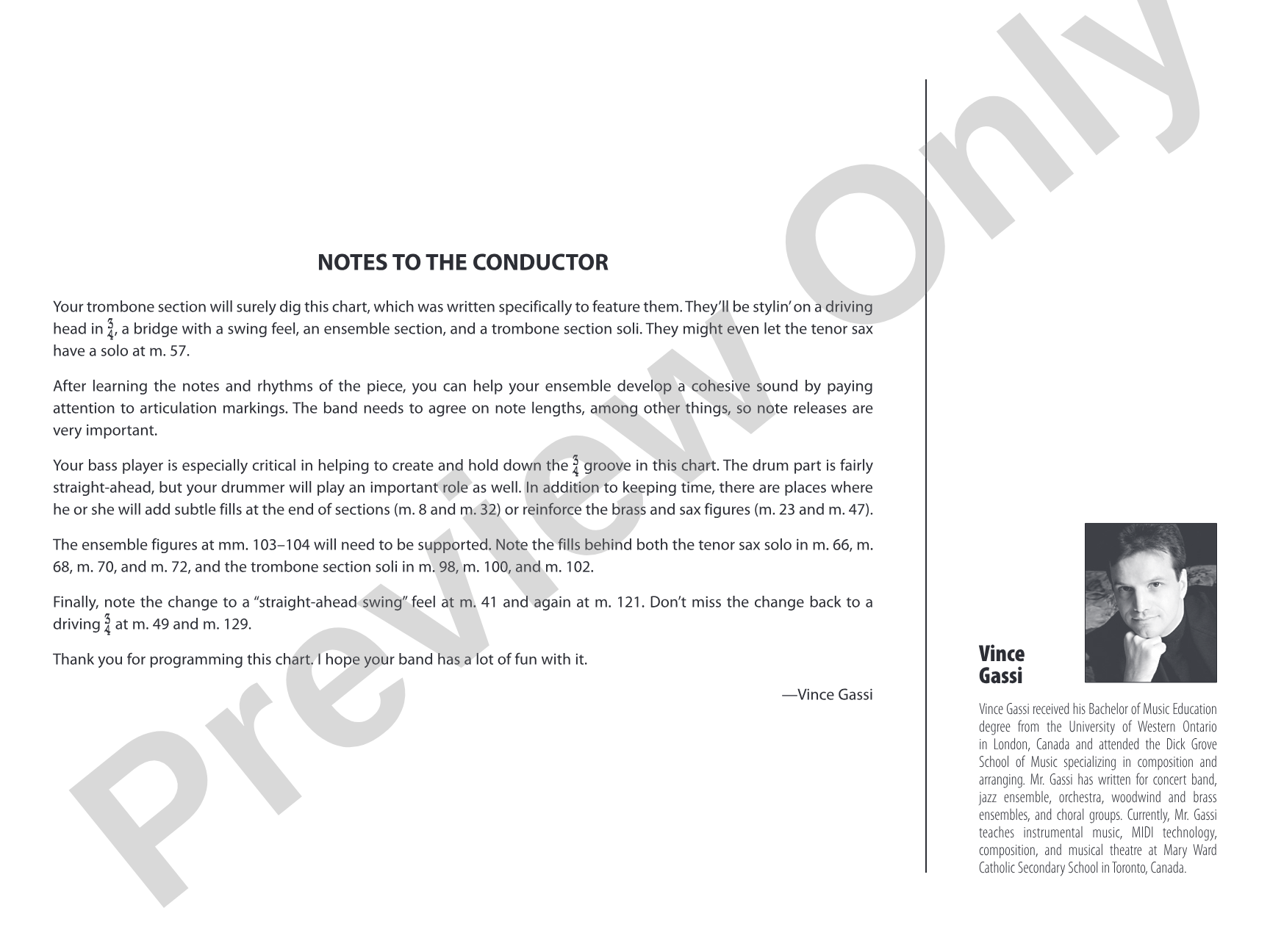
About the Composer: Vince Gassi
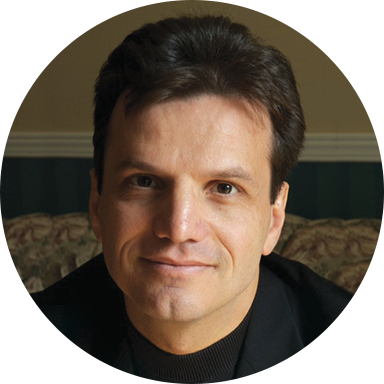
Vince Gassi has been composing and arranging for young ensembles since earning his Bachelor of Music from the University of Western Ontario. His training at the Dick Grove School of Music in Los Angeles sharpened his arranging craft, and he later completed a Ph.D. at York University in Toronto, bringing both creative depth and scholarly rigor to his work.
With more than 100 published titles across multiple genres, Gassi has built a reputation for writing music that engages without compromising musicality. His 25 years teaching instrumental music at the K-12 level inform every score he writes. He conducts clinics and adjudication throughout North America and leads workshops on creative engagement and digital workflows for music directors. His compositions regularly appear on festival and contest programs internationally.
Why we love this
Gassi writes accessibility without sacrifice. The jazz waltz meter and lilting melody give this chart unmistakable character, while the Grade 1 level means ensemble reading stays manageable even as the saxophone section gets a legitimate solo vehicle. The novelty element and memorable hook make it exactly the kind of opener or closer that reminds students why they showed up to rehearsal.
What to expect
A swaying, playful piece with darker undercurrents in that haunting melody. At 158 BPM the waltz feels fresh and propulsive, never sluggish, with enough ensemble detail to keep every section engaged while the saxophone hook gives the chart its memorable personality.
Who it's for
First-year jazz ensemble directors who need repertoire that sounds sophisticated but stays playable for developing musicians. The Grade 1 level and strong melodic writing make it ideal for programs building jazz literacy from the ground up, whether this is students' first encounter with swing feel or their entry into festival experience.
How to get the most out of it
- Lock the waltz feel early. The written tenor sax solo sits best when the rhythm section has internalized the three-beat pulse at 158 BPM, so isolate the drums and bass first and let the soloist enter once that foundation is solid.
- Shape the melody across the full ensemble. Gassi's lyrical lines ask players to listen across sections, not just within them. Mark dynamic contours in parts and check that phrasing breathes together.
- Balance the saxophone solo against ensemble texture. A tenor sax at this tempo can disappear under full band or vanish if underplayed. Run a few measures before and after the solo to find where the accompaniment sits.
How to use it
Open a concert with it to set an energetic but musical tone, or use it as the palate-cleanser between heavier charts. At 2:45 it's concise enough for festival setlists and the novelty element works well when you're programming a mix of styles or introducing jazz standards alongside original writing.
Skills your students will build
- Waltz feel and three-beat pulse at tempo
- Reading and playing swing eighth notes
- Listening across section lines for ensemble balance
- Supporting and accompanying a featured soloist
- Sustaining ensemble tone in supporting parts while a melody carries