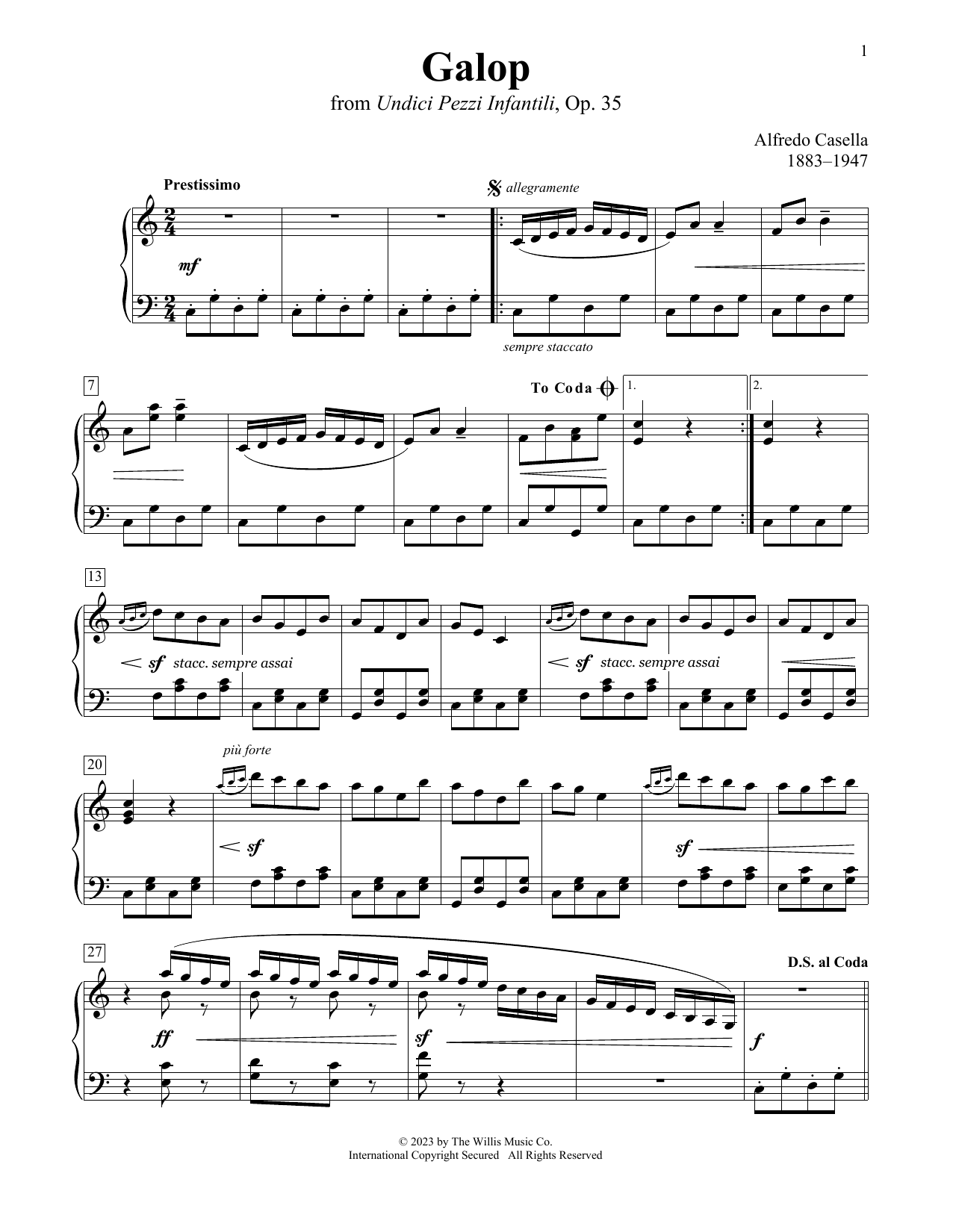
A galop delivers exactly what students need at the intermediate stage: a piece that demands rhythmic precision without excessive technical complexity. The two-page format makes it approachable for practice while maintaining genuine musicality and forward momentum.
What to expect
A galop captures the spirited energy of a ballroom dance, propelled by bright rhythmic figures and a melody that skips along with infectious joy. The piece maintains forward motion from beginning to end, inviting the performer to match its natural buoyancy.
Who it's for
Intermediate piano students ready to tackle Romantic-era dance forms with confidence. This works for students who have solid technique but need repertoire that builds stamina and rhythmic independence between the hands.
How to get the most out of it
Establish a steady tempo before beginning; galops lose their character when the pulse wavers. Use a metronome for all practice sessions.
Articulate the faster passages with clarity without sacrificing legato in sustained lines. Each note must speak distinctly.
Balance both hands equally so the accompaniment figures don't overshadow the melody. This creates a unified, energetic texture.
How to use it
Include this as a standalone recital piece for a student making progress through intermediate repertoire, or pair it with other classical miniatures to create a thematic concert set. Its modest length and high engagement factor also make it ideal for student showcases and informal performance opportunities.
Skills your students will build
Rhythmic independence between hands in a fast tempo
Articulation and clarity in rapid passage work
Maintaining steady pulse in duple meter at a brisk tempo
Dynamic control and shaping within repeated figures
You May Also Like
Scan to Complete Your Purchase
Use your phone's camera to scan the code below
You'll log in on your phone and the order will be added to your account