
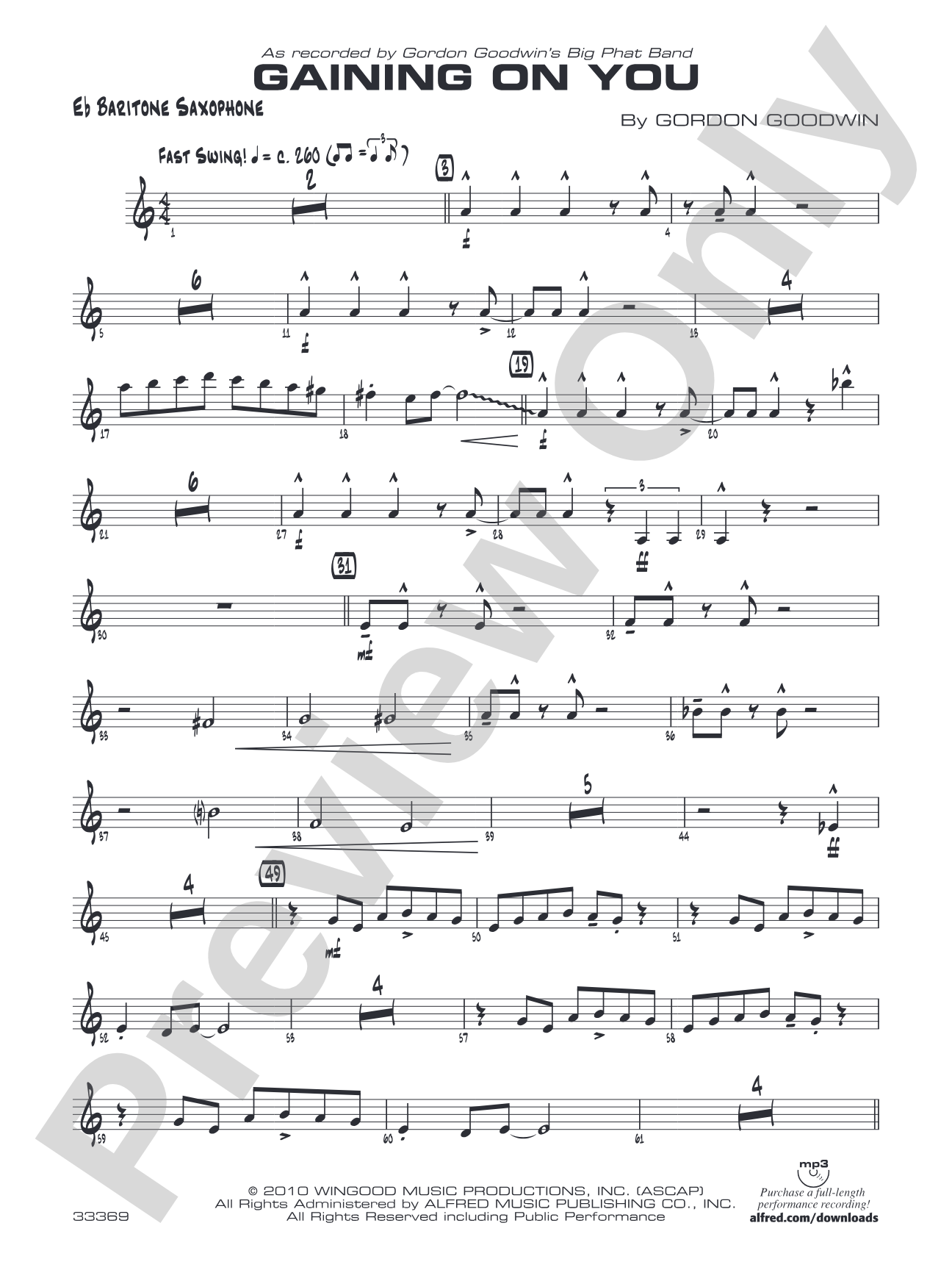

Gaining On You: E-flat Baritone Saxophone
By Gordon Goodwin
Grade: 6 (Professional / Very Advanced)
Item: 00-PC-0017178_BTX
$3.00
Pickup currently not available
Description
This title is available in MakeMusic Cloud.


Don't just read it, hear it, play along with it, and watch your students grow with it. In MakeMusic Cloud, Gaining On You: E-flat Baritone Saxophone comes alive with professional accompaniment, adjustable tempo, and built-in practice tools that turn solo practice into real progress.
Open in the Player
Jump straight in and assign it today.
Start Your Free Trial
Open this title and explore the full library in minutes.
Sample Audio
1
Audio File
--:--
0:00
0:00
Sample Video
No sample videos found.
Additional Details
Series:
Gordon Goodwin Series
Publisher:
Alfred Music
Page Count:
76
SKU:
00-PC-0017178_BTX
More about this title
About the Composer: Gordon Goodwin

Gordon Goodwin heard complete compositions in his head from childhood, writing them down with remarkable clarity before his teens. His first big band chart, Hang Loose, was composed when he was just 13 years old. This early gift for orchestration caught the attention of Hollywood's top music supervisors, launching a career that would span film scoring, television production, and live performance alongside some of jazz and pop's most celebrated artists.
As a three-time Emmy Award winner and multiple Grammy nominee, Goodwin has scored major films including Bad Boys II, Con Air, Remember the Titans, and Star Trek: Nemesis. He has written for and performed with everyone from Quincy Jones and Ray Charles to Christina Aguilera and David Foster. Since 2000, Goodwin has led Gordon Goodwin's Big Phat Band, one of Los Angeles's premier big band ensembles, and continues to conduct with major symphony orchestras across North America and Europe.
Why we love this
Goodwin writes for jazz ensemble with the cinematic sweep and precision of a film composer, which means every section has purpose and clarity. Gaining On You demands professional musicianship from your ensemble, but the payoff is a chart that sounds and feels genuinely exciting, not just technically demanding. This is the kind of piece that reminds players why they fell in love with jazz in the first place.
What to expect
Gaining On You carries the energy and precision you hear in a film soundtrack, with memorable melodies layered over intricate harmonies and tight ensemble work. The piece builds and releases tension with cinematic intent, keeping listeners engaged through its development. It swings with confidence and sophistication, projecting the kind of polish and musicality associated with working big bands.
Who it's for
Advanced jazz ensemble directors and their students who are ready for sophisticated, professional-level material. This chart demands strong fundamentals in jazz style, good sight-reading skills, and disciplined ensemble playing. It's ideal for select jazz groups, festival performances, or ensembles preparing repertoire that matches the skill of players who have serious jazz training.
How to get the most out of it
- Study the conductor score thoroughly before rehearsal; Goodwin's orchestrations reward attention to detail in dynamics, articulation, and balance across the ensemble.
- Lock the ensemble's sense of swing feel early; this chart requires unified interpretation of groove and time feel from top to bottom.
- Pay close attention to section writing and counterpoint, especially in passages where multiple lines move independently; clarity here prevents the arrangement from becoming muddy.
- Balance soloists carefully within the ensemble texture; Goodwin's backgrounds are written to support but never overwhelm featured players.
How to use it
Program this alongside other contemporary jazz ensemble works for a concert that showcases your ensemble's technical maturity and musicianship. It works particularly well as a closer or featured piece at jazz festivals where adjudicators expect to hear advanced arranging and ensemble precision. This chart also makes an excellent audition or showcase piece for college jazz programs evaluating prospective students.
Skills your students will build
- Swing feel and groove in a professional big band context
- Reading complex harmonic structures and section writing
- Balancing articulation and dynamics across multiple ensemble lines
- Interpreting cinematic phrasing and dynamics in jazz arrangement
- Ensemble coordination in passages with independent section movement
- Understanding contemporary jazz orchestration and voice leading