
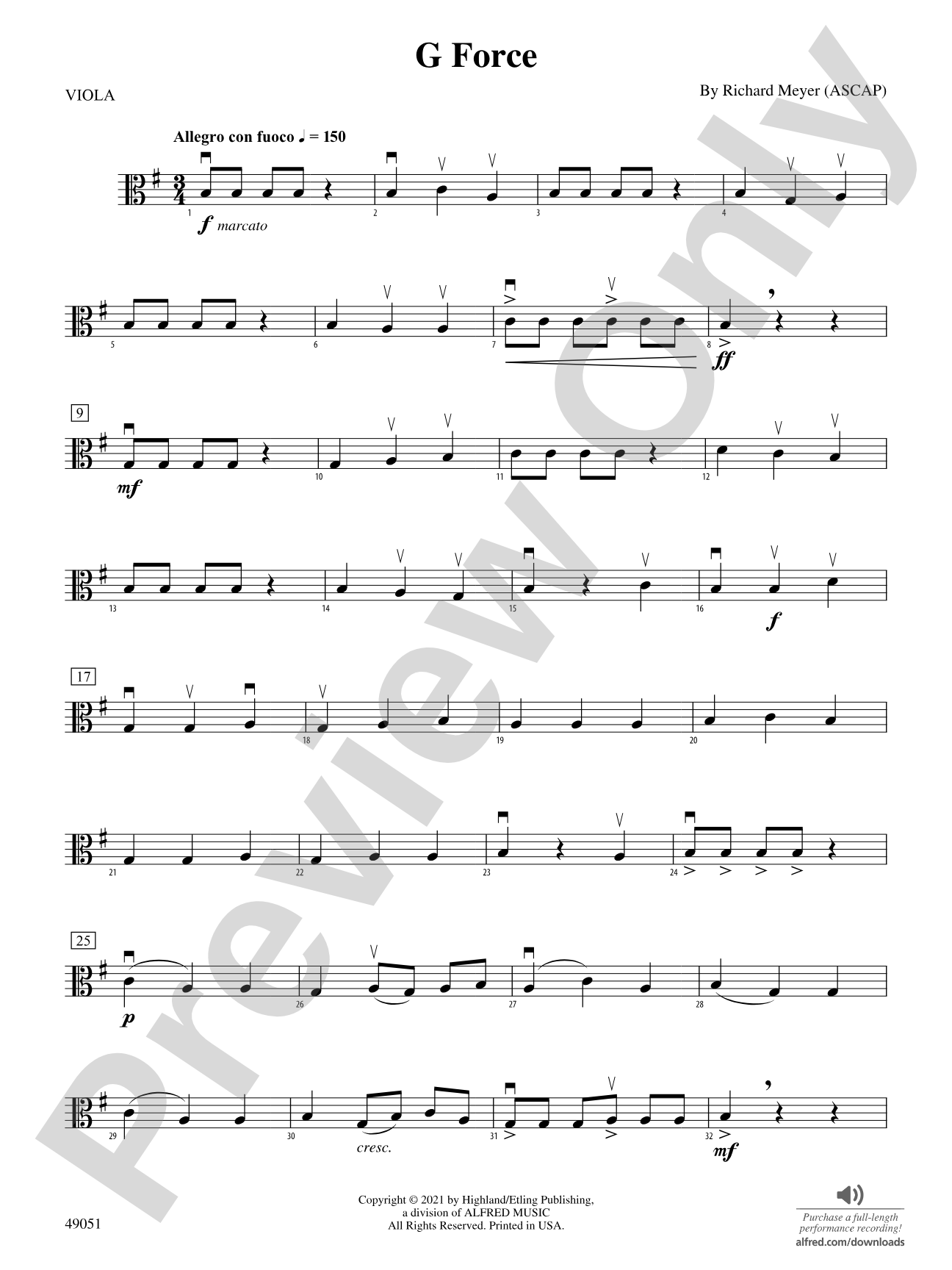

G Force: Viola
By Richard Meyer
Grade: 2
Item: 00-PC-0018651_VA1
$3.00
Pickup currently not available
Description
This title features Alfred Music's String Orchestra FLEX options. That means that every part in this set is now transposed into every other part, so you can play this title with any combination of like- or mixed-string ensemble. After purchasing this set, decide what additional parts you need to meet the unique needs of your ensemble, then download and print them for free at alfred.com/supplemental---free of charge.
This energetic, modern-sounding selection was written to improve your students' reading of notes on the G string and is focused on this often-neglected lower range of the instruments. The minor and modal harmonies, hard-driving rhythms, and stunning dynamic contrasts all combine to give the piece a primal and primitive sound that students will love. A slow, introspective middle section provides a dramatic contrast to the piece's initial surge and will help develop bow control and steady pizzicato pulse. G Force by Richard Meyer is perfect for festival or contest! (2:50) This title is available in MakeMusic Cloud.


This energetic, modern-sounding selection was written to improve your students' reading of notes on the G string and is focused on this often-neglected lower range of the instruments. The minor and modal harmonies, hard-driving rhythms, and stunning dynamic contrasts all combine to give the piece a primal and primitive sound that students will love. A slow, introspective middle section provides a dramatic contrast to the piece's initial surge and will help develop bow control and steady pizzicato pulse. G Force by Richard Meyer is perfect for festival or contest! (2:50) This title is available in MakeMusic Cloud.
Don't just read it, hear it, play along with it, and watch your students grow with it. In MakeMusic Cloud, G Force: Viola comes alive with professional accompaniment, adjustable tempo, and built-in practice tools that turn solo practice into real progress.
Open in the Player
Jump straight in and assign it today.
Start Your Free Trial
Open this title and explore the full library in minutes.
Sample Audio
1
Audio File
--:--
0:00
0:00
Sample Video
Additional Details
Series:
Sound Innovations for String Orchestra
Publisher:
Alfred Music
Page Count:
95
SKU:
00-PC-0018651_VA1
More about this title
About the Composer: Richard Meyer

Richard Meyer brings three decades of classroom experience to his composing and conducting work. He spent 22 years leading the orchestra program at Oak Avenue Intermediate School in Temple City, California, where he expanded the ensemble from 29 students to 200, while also overseeing the district's elementary string instruction. His "Giving Bach" initiative, launched in 2009, has earned national recognition for using interactive concerts to reach students with special needs and underserved communities throughout Southern California.
Beyond the classroom, Meyer has shaped string education as a clinician at the A.S.T.A. National Conference, Texas Orchestra Directors' Association Conference, and regional workshops at major universities. He conducted the Pasadena Youth Symphony Orchestra for 16 years and has guest-conducted All-State ensembles across multiple states. As a composer and arranger, he has published over 190 works and served as string editor for Alfred Publishing Company for 16 years, including co-authorship of the String Explorer Series and Sight-read It for Strings.
Why we love this
Meyer writes with deep knowledge of what middle school string players actually need to work on, and this piece targets the G string with purpose rather than accident. The flexible instrumentation system means you can assign parts strategically based on your section's current strengths and weaknesses, adapting the arrangement without purchasing multiple versions.
What to expect
The opening surges with driving rhythms and modal color, creating an edgy, contemporary energy that appeals to young musicians. A striking contrast arrives in the middle section, where the texture becomes contemplative and introspective, demanding focus and control before the piece regains its primal intensity.
Who it's for
String orchestra directors at the middle school level who need accessible material that develops technique while maintaining student engagement. This work suits ensembles preparing for festival or contest competition, particularly those looking to strengthen lower-string facility and confidence.
How to get the most out of it
- Isolate the slow middle section for bow control work before running the full piece; the shift from energetic opening to introspective texture requires careful weight management and steady tone production.
- Lock the pizzicato pulse during the midsection by having players count aloud in rehearsal first, then switch to silent counting while playing to maintain rhythmic precision without visual conductor cues.
- Build dynamic contrast incrementally through the opening; mark specific dynamic arrival points in parts so students understand where the intensity peaks rather than rushing to fortissimo too early.
How to use it
Program this as a concert opener to establish energy and modern sound alongside traditional repertoire, or reserve it for your festival entry where the contest-ready structure and clear pedagogical focus will earn adjudicator recognition. The 2:50 duration fits efficiently into concert programs while the flexible parts system makes it a practical choice when your string sections are uneven in size.
Skills your students will build
- Reading and performing confidently on the G string across multiple registers
- Executing minor and modal harmonic contexts with secure intonation
- Controlling bow weight and tone production in contrasting dynamic ranges
- Maintaining steady pizzicato pulse and rhythmic precision in ensemble
- Responding to dramatic shifts between energetic and introspective musical textures