
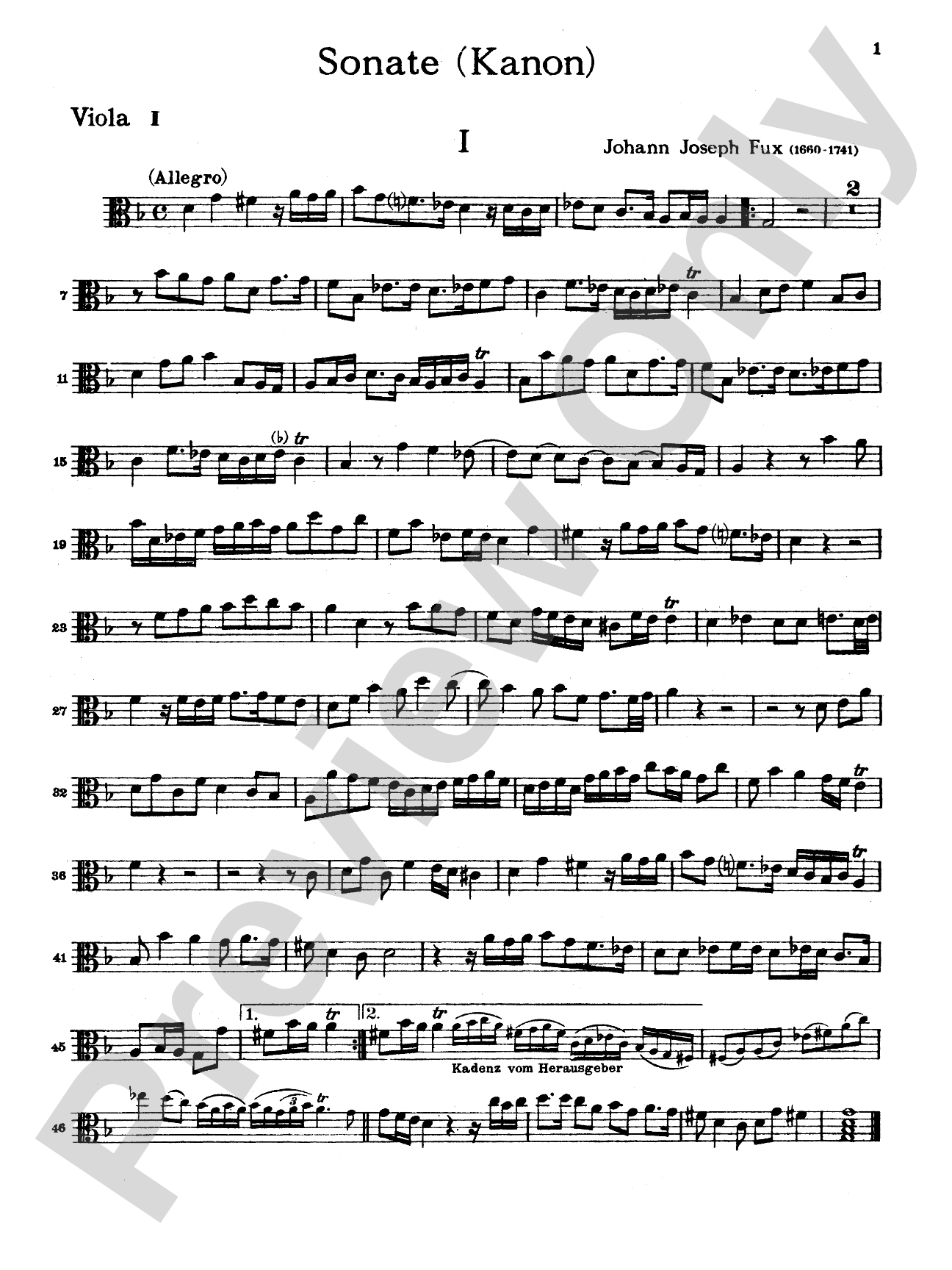
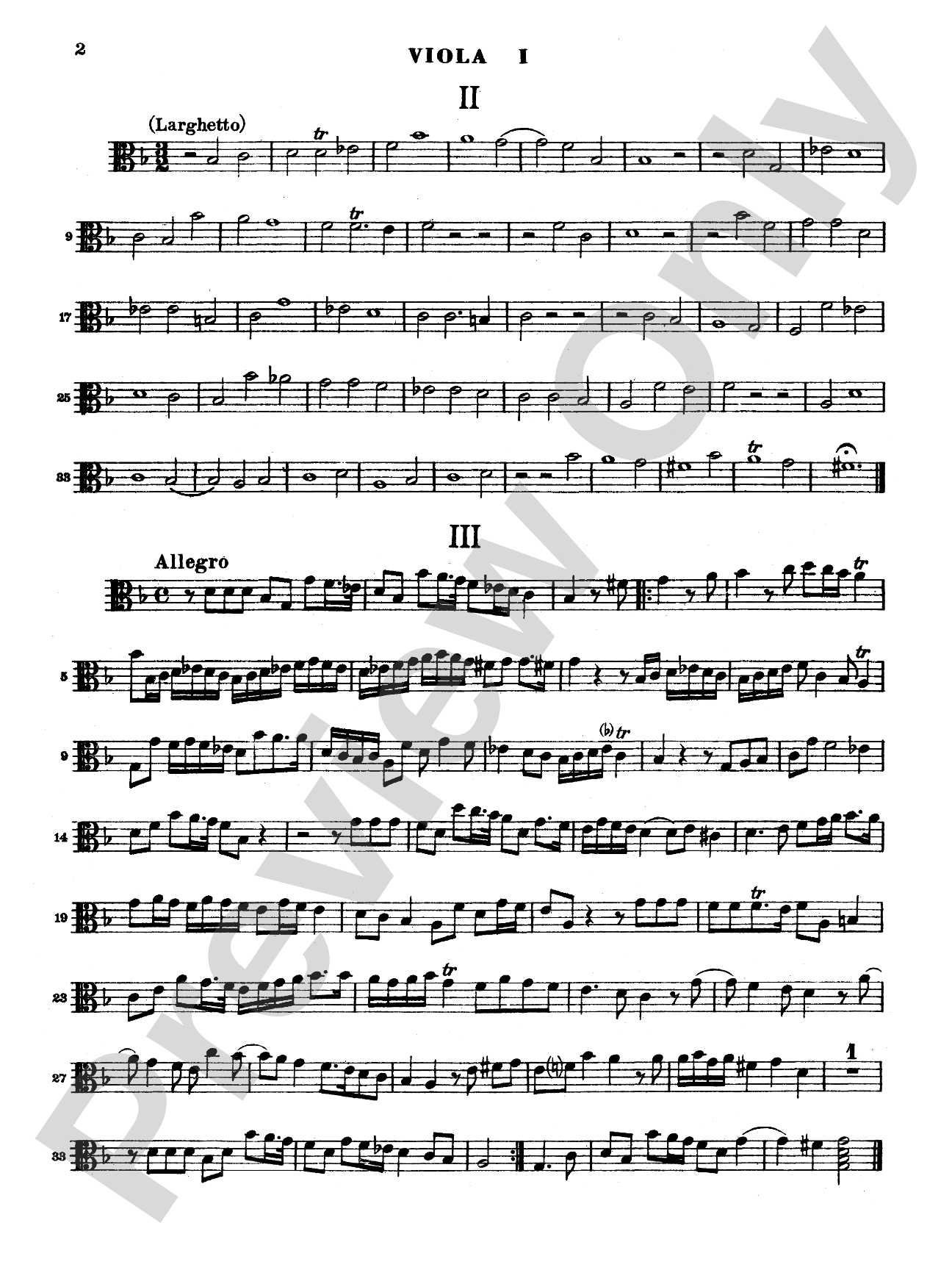

Fux: Sonata (Canon) for Two Violas and Basso Continuo: String Trio Book
By Johann Joseph Fux
Item: 00-PK-0003609

$7.99
Pickup currently not available
Buy Extra Parts (Digital PDF Download)
Parts Added to Cart!
Related Items
Sonata (Canon) for Two Violas and Basso Continuo: String Trio Book |
$7.95
|
View |
Description
A string trio for 2 Violas and Basso Continuocomposed by Johann Joseph Fux.


Don't just read it, hear it, play along with it, and watch your students grow with it. In MakeMusic Cloud, Fux: Sonata (Canon) for Two Violas and Basso Continuo: String Trio Book comes alive with professional accompaniment, adjustable tempo, and built-in practice tools that turn solo practice into real progress.
Open in the Player
Jump straight in and assign it today.
Start Your Free Trial
Open this title and explore the full library in minutes.
Sample Audio
No sample audio found.
Sample Video
No sample videos found.
Additional Details
Series:
Kalmus Edition
Publisher:
Alfred Music
Page Count:
14
SKU:
00-PK-0003609
Instrumentation:
2 Violas & Basso Continuo
More about this title
About the Composer: Johann Joseph Fux
Johann Joseph Fux (1660-1741) served as Kapellmeister at the Habsburg court in Vienna and became one of the most influential composers of the late Baroque period. His treatise Gradus ad Parnassum, published in 1725, codified the rules of counterpoint and remained the standard pedagogical text for generations of composers.
Fux's compositional output spanned sacred music, opera, and instrumental works. His mastery of contrapuntal writing shaped the aesthetic of Central European Baroque music and influenced major composers including Beethoven and Brahms, who both studied his theoretical writings.
Why we love this
Fux's chamber writing for violas offers a refreshing alternative to the violin-dominated trio repertoire of the era. The two viola texture creates a rich, blended sonority that challenges players to listen integrally rather than competing for prominence, and the basso continuo part anchors the harmonic language with the clarity typical of Fux's finest work.
What to expect
The piece unfolds with the architectural clarity and contrapuntal rigor that define Fux's style. The two violas engage in elegant dialogue, alternating between complementary figuration and parallel motion, while the basso continuo provides a harmonic scaffold that feels both grounded and spacious.
Who it's for
This sonata suits advanced viola students and professional chamber musicians seeking substantial Baroque repertoire that lies outside the standard violin trio canon. Ensembles preparing for competitions or chamber music festivals will find it musically rigorous and historically authoritative.
How to get the most out of it
- Balance the two viola lines by thinking of them as a unified harmonic entity rather than separate melodic voices; coordinate phrasing and vibrato to blend the timbres.
- Work with your continuo player to establish a steady harmonic foundation that allows the violas freedom to shape phrases without rushing or dragging.
- Pay close attention to the figured bass figures; they often indicate important harmonic progressions that should be voiced transparently rather than filled in thickly.
- Shape longer note values with subtle dynamic shape rather than static tone; Baroque style demands active listening and musical conversation among all three parts.
How to use it
Program this alongside other Baroque trio literature to showcase the diversity of chamber writing available beyond the standard violin trio format. It works particularly well on a recital focused on Austro-German Baroque composers or as a concert piece demonstrating the sophistication of earlier string writing.
Skills your students will build
- Baroque counterpoint and voice leading
- Blend and balance in same-instrument duets
- Reading and realizing figured bass notation
- Stylistically informed articulation and phrasing in the Baroque idiom
- Sustained ensemble listening across all three parts