
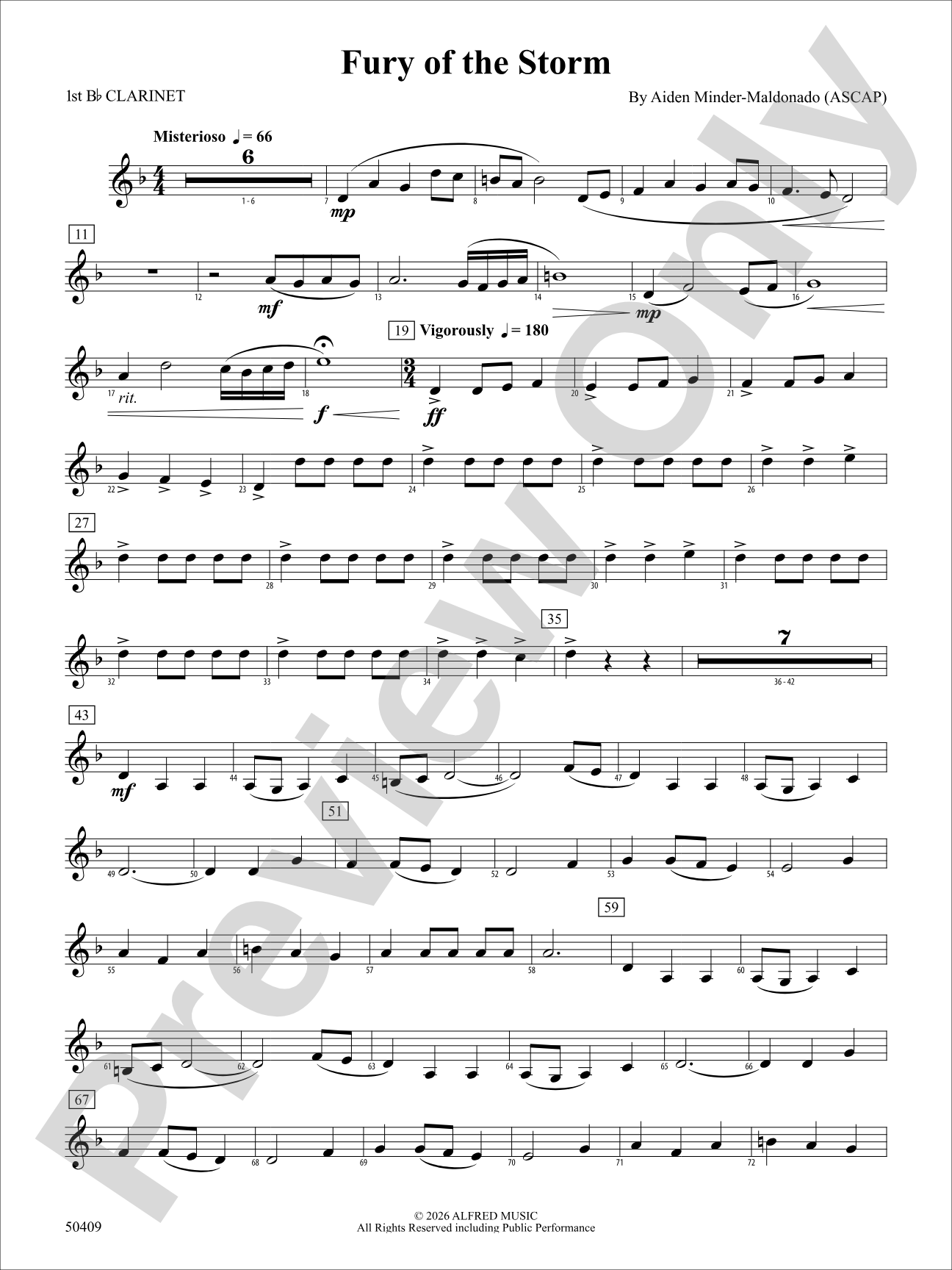

Fury of the Storm: 1st B-flat Clarinet
By Aiden Minder-Maldonado
Grade: 2.5
Item: 00-PC-0019678_C1
$3.00
Pickup currently not available
Description
Fury of the Storm, by Aiden Minder-Maldonado, is an exciting and dynamic piece that depicts a boat ride through an intense tropical storm. The piece starts slowly, representing the calm before the storm hits. It then starts building and building until it reaches a faster tempo, representing the rough intensity of the storm. Eventually, it reaches the eye of the storm, a sense of peace, then rises back into the craziness of the storm until the end. A perfect concert opener, closer, or festival piece!


Don't just read it, hear it, play along with it, and watch your students grow with it. In MakeMusic Cloud, Fury of the Storm: 1st B-flat Clarinet comes alive with professional accompaniment, adjustable tempo, and built-in practice tools that turn solo practice into real progress.
Open in the Player
Jump straight in and assign it today.
Start Your Free Trial
Open this title and explore the full library in minutes.
Sample Audio
1
Audio File
--:--
0:00
0:00
Sample Video
Additional Details
Series:
Young Symphonic Series
Publisher:
Alfred Music
SKU:
00-PC-0019678_C1
More about this title
About the Composer: Aiden Minder-Maldonado

Aiden Minder-Maldonado discovered his musical voice early, picking up percussion in middle school and quickly moving into jazz band work on drums. By 8th grade, he was already composing, and his school band premiered four of his original pieces at local concerts, giving him direct experience in hearing his ideas come to life on stage. His middle school band director, Tammy Levi, became a key influence in shaping his creative path.
Now a 9th grader at Freedom High School in Oakley, California, Minder-Maldonado balances his growing composing practice with a passion for performance across multiple disciplines. He actively participates in local musical theater productions and attends theater festivals in Atlanta and Sacramento, broadening his artistic perspective beyond the concert hall. He aspires to pursue degrees in both composition and theater in college, reflecting his commitment to creative storytelling across different mediums.
Why we love this
Minder-Maldonado crafts a narrative arc that feels earned rather than contrived; the journey from calm to chaos to the eye of the storm to renewed intensity creates genuine dramatic stakes without relying on gimmicks. At Grade 2.5, the piece respects your students' developing musicianship while giving them something genuinely exciting to sink their teeth into. It's the kind of piece that makes a band sound and feel accomplished.
What to expect
You're on a boat as the weather turns. The opening sits in eerie stillness, clouds gathering on the horizon. Then the first winds arrive, then rain, then the full force of the storm pounds around you. There's a moment of strange, almost frightening calm at the eye where you can see sky again. Then the back side hits with renewed fury until the storm finally exhausts itself.
Who it's for
This piece speaks to conductors looking for a strong opening or closing number that connects with audiences immediately through its narrative clarity. Grade 2.5 bands with solid fundamentals and the ability to shape longer musical lines will find it rewarding; it challenges young musicians to think dramatically without overwhelming technical demands.
How to get the most out of it
- Shape the opening section with restraint; the calm before the storm lands harder when it's truly quiet and focused, making the gradual buildup feel inevitable rather than abrupt.
- Coordinate the transition into the faster tempo with clear gestures and possibly a brief breath point; your band needs to understand exactly when intensity takes over so the shift reads as a deliberate storm arrival rather than a tempo change.
- Treat the eye of the storm as genuine repose. Resist the urge to rush this section; it's the emotional center of the piece and gives your audience (and your players) room to absorb the contrast before the final push.
- The final climb back into chaos demands stamina and commitment. Rehearse it as a sustained crescendo where every section is adding energy, not just playing louder.
How to use it
Open a concert with this piece to immediately establish energy and forward momentum, or close one to leave audiences exhilarated. It also works beautifully as a festival entry; its dramatic journey and accessible technical level make it competitive while remaining engaging to adjudicators who tire of predictable programming.
Skills your students will build
- Controlling tempo transitions and managing sustained crescendos
- Dynamic contrast and shaping longer musical phrases with narrative intent
- Balance and blend while layering independent rhythmic figures
- Responding to gestural direction through dramatic section transitions