Für Elise - Piano Duo (2 Pianos, 4 Hands) Sheet Music Preview

Für Elise - Piano Duo (2 Pianos, 4 Hands): Piano Duets & Four Hands

By Ludwig van Beethoven / arr. E. L. Lancaster and Kenon D. Renfrow

Level: Late Intermediate

Item: 00-PB-0000654

Digital Download
$6.99
Description
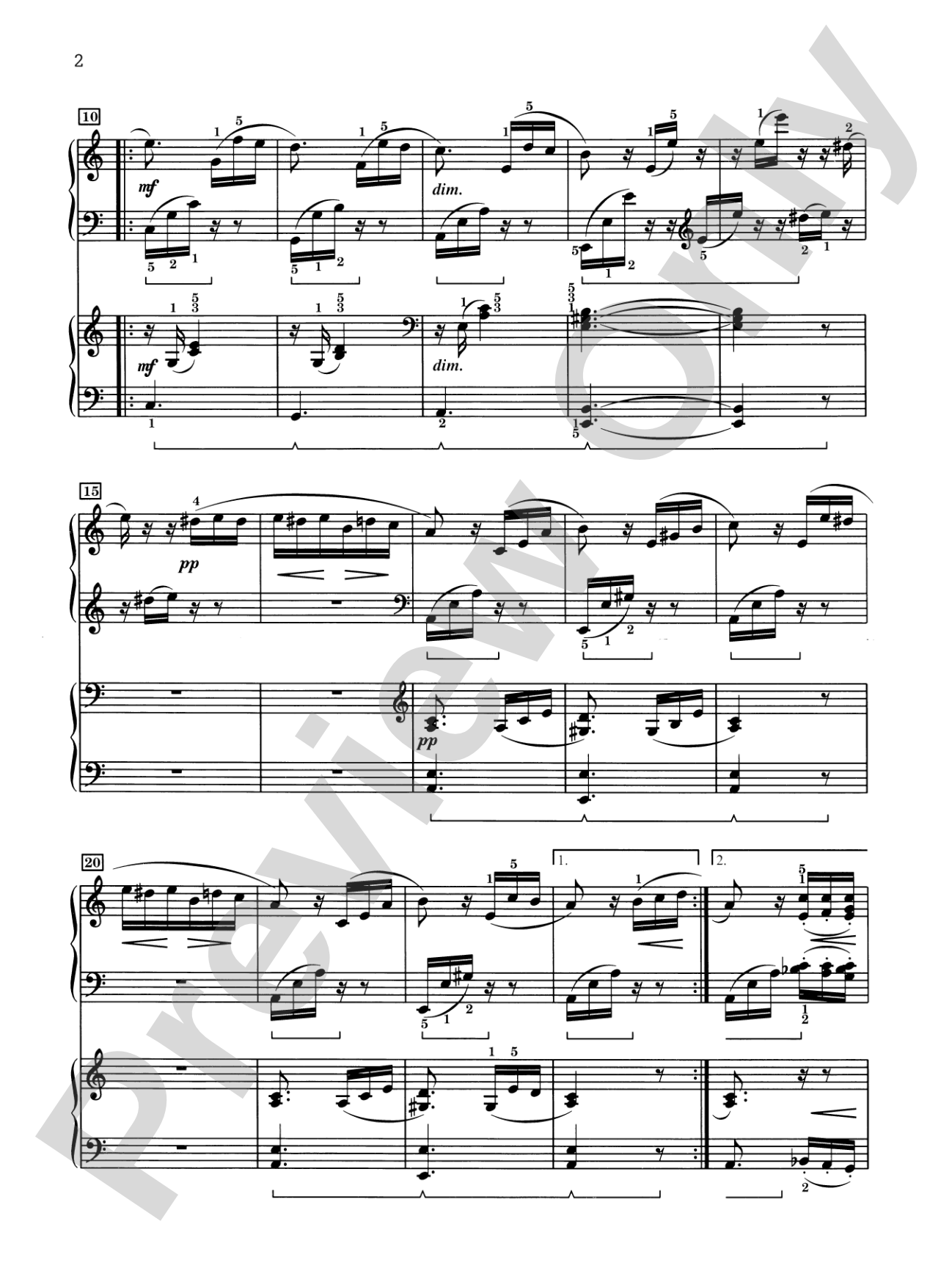
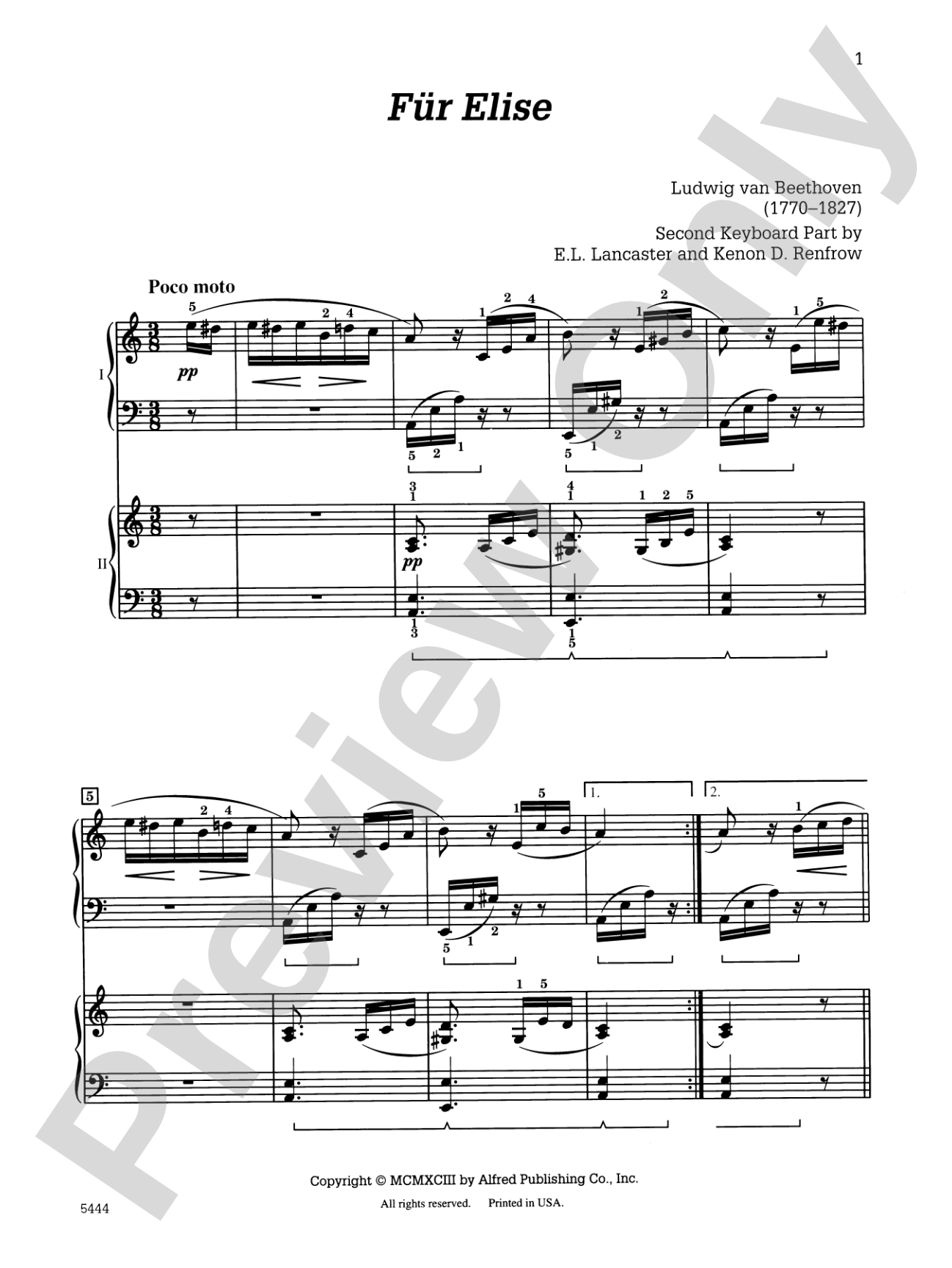
The well-known piano solo by Beethoven is enhanced with a second keyboard part in this late intermediate two-piano, four-hand arrangement. The second piano part written by E. L. Lancaster and Kenon Renfrow reinforces the harmonic progressions in the piece and adds dramatic motion to the middle sections with repeated chords in the right-hand and broken octaves in the left-hand. A Federation Festivals 2024-2028 selection.

Für Elise - Piano Duo (2 Pianos, 4 Hands): Piano Duets & Four Hands isn't in MakeMusic Cloud just yet...but it could be. Let us know you'd like to see it, and you'll help shape what comes next. In the meantime, start a free trial and dive into thousands of interactive titles your students can play along with today.

Sample Audio
No sample audio found.
Sample Video
Additional Details
Series: The Alfred Ensemble Series
Publisher: Alfred Music
Page Count: 16
SKU: 00-PB-0000654

More about this title

About the Composer: Ludwig van Beethoven

Beethoven's deafness forced him to imagine music internally with extraordinary precision, and that clarity of vision shaped every note he wrote. His late intermediate works balance technical accessibility with genuine compositional substance, making them ideal for advancing students who are ready to wrestle with real musical ideas rather than simplified versions of them.

For pianists, Beethoven's writing demands control of dynamics, textural clarity, and emotional directness. His pieces refuse sentimentality; they require players to think architecturally about how phrases connect and support each other. This shapes how students approach their own practice and listening.

Why we love this

Lancaster and Renfrow have transformed what's typically a solo vehicle into a genuine collaborative experience without drowning out Beethoven's voice. The second piano part enriches the harmonic foundation and drives the middle sections with kinetic energy, which gives both players something substantial to do. This arrangement stays true to the original's character while unlocking new pedagogical possibilities for duet playing.

What to expect

Beethoven's restless energy moves beneath a deceptively graceful surface. The piece unfolds with moments of lyrical calm interrupted by driving momentum, especially once both pianos lock into the middle section's propulsive rhythms. There's an intimacy to playing duet arrangements of masterworks; you're hearing the architecture of the composition made visible through the division of labor between two keyboards.

Who it's for

Late intermediate pianists ready to play substantial chamber music with a partner, or teachers building duet repertoire that doesn't compromise on musical content. It works equally well for advancing students taking their first steps into two-piano repertoire or for experienced players who want to revisit a familiar work through a different lens.

How to get the most out of it

  • Balance the parts so the first piano's lyrical line remains audible over the second piano's harmonic reinforcement; rehearse separately before attempting together.
  • The repeated chords and broken octaves in Piano II's middle section need rhythmic precision without sounding mechanical; find the pulse together before worrying about dynamics.
  • Let the harmonic progressions breathe slightly at phrase endings; too much tempo consistency flattens the emotional contour that Beethoven embedded in the harmony.
  • Mark all the dynamic shifts between the two parts beforehand so neither player surprises the other when the texture changes.

How to use it

This arrangement works beautifully on a recital that mixes solo and ensemble repertoire, or as a milestone moment in a chamber music concert where advanced duet pairs take equal billing with soloists. Program it alongside other classical arrangements to frame a set that explores how composers' original intentions translate across different ensemble configurations.

Skills your students will build

  • Balancing lyrical and accompaniment voices across two keyboards
  • Rhythmic independence and ensemble listening
  • Handling repeated harmonic patterns without mechanical execution
  • Coordinating dynamic shapes between two separate instruments
  • Reading and performing classical harmonic language at the keyboard

You May Also Like