Fur Elise Sheet Music Preview

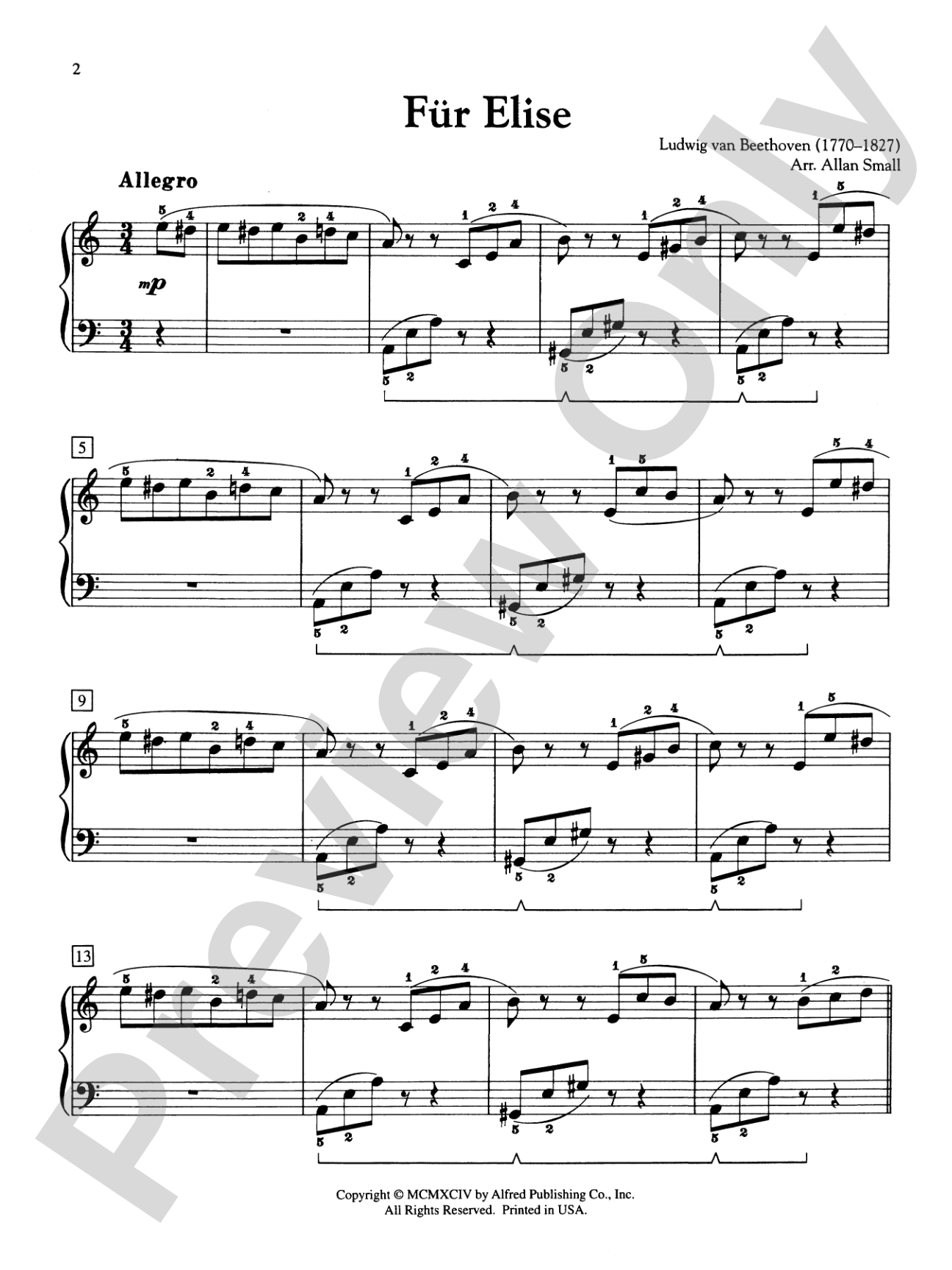
Fur Elise: Piano

By Ludwig van Beethoven / arr. Allan Small

Level: Late Elementary

Item: 00-PS-0012745

Digital Download
$4.99
Description
Simplified Masterwork Solo.

Fur Elise: Piano isn't in MakeMusic Cloud just yet...but it could be. Let us know you'd like to see it, and you'll help shape what comes next. In the meantime, start a free trial and dive into thousands of interactive titles your students can play along with today.

Sample Audio
No sample audio found.
Sample Video
Additional Details
Series: Simply Classics Solos
Publisher: Alfred Music
Page Count: 4
SKU: 00-PS-0012745

More about this title

About the Composer: Ludwig van Beethoven

Ludwig van Beethoven (1770-1827) stands as a towering figure in Western music history, bridging the Classical and Romantic eras through his radical expansion of harmonic language, formal structure, and expressive range. A master of instrumental forms, he composed nine symphonies, 32 piano sonatas, 16 string quartets, and numerous other works that fundamentally changed what music could express. His influence on music education runs deep; his works appear in curricula worldwide because they model how technical mastery serves emotional depth.

Why we love this

Beethoven's "Für Elise" is the gateway piece that makes students believe they can play "real" classical music. Allan Small's arrangement respects the original's essential melodic and harmonic character while stripping away the technical obstacles, so students encounter genuine Beethoven rather than a skeletal outline. For a late elementary student, this is the moment when a piece stops being an exercise and becomes a concert work worth performing.

What to expect

Intimate and yearning, with a quietly romantic quality that feels both timeless and deeply personal. The piece moves between gentle introspection and moments of subtle intensity, creating a journey that rewards careful listening and thoughtful playing.

Who it's for

Late elementary pianists who are ready to tackle a recognizable classical masterwork but need an accessible entry point. This arrangement welcomes students who've built solid note-reading skills and basic hand independence and want to perform something their families will recognize and celebrate.

How to get the most out of it

  • Shape the A section with subtle dynamic contrasts. The familiar opening melody invites gentle phrasing rather than metronomic evenness; let the musicality breathe.
  • Balance the left hand accompaniment so it supports without overpowering. The broken-chord patterns need clarity but should never steal focus from the right-hand line.
  • Approach the B section with a slightly different character. The key relationships in this section create a natural moment to shift tone; a touch more energy here makes the return to A feel earned.
  • Prepare the hand crossings and position shifts in advance so they feel seamless in performance. Smooth transitions preserve the piece's lyrical flow.

How to use it

Use this in a student recital to anchor a classical era set or as a showpiece when you want to demonstrate the musical growth of your late elementary students. It pairs well alongside contemporary pieces of similar difficulty, proving that classical music and modern repertoire can coexist on the same program.

Skills your students will build

  • Reading key signatures and navigating the A minor tonality
  • Managing broken-chord patterns in the left hand while maintaining melodic independence in the right
  • Shaping long melodic lines with dynamic control and subtle phrasing
  • Hand position management across the keyboard and basic hand coordination

You May Also Like