
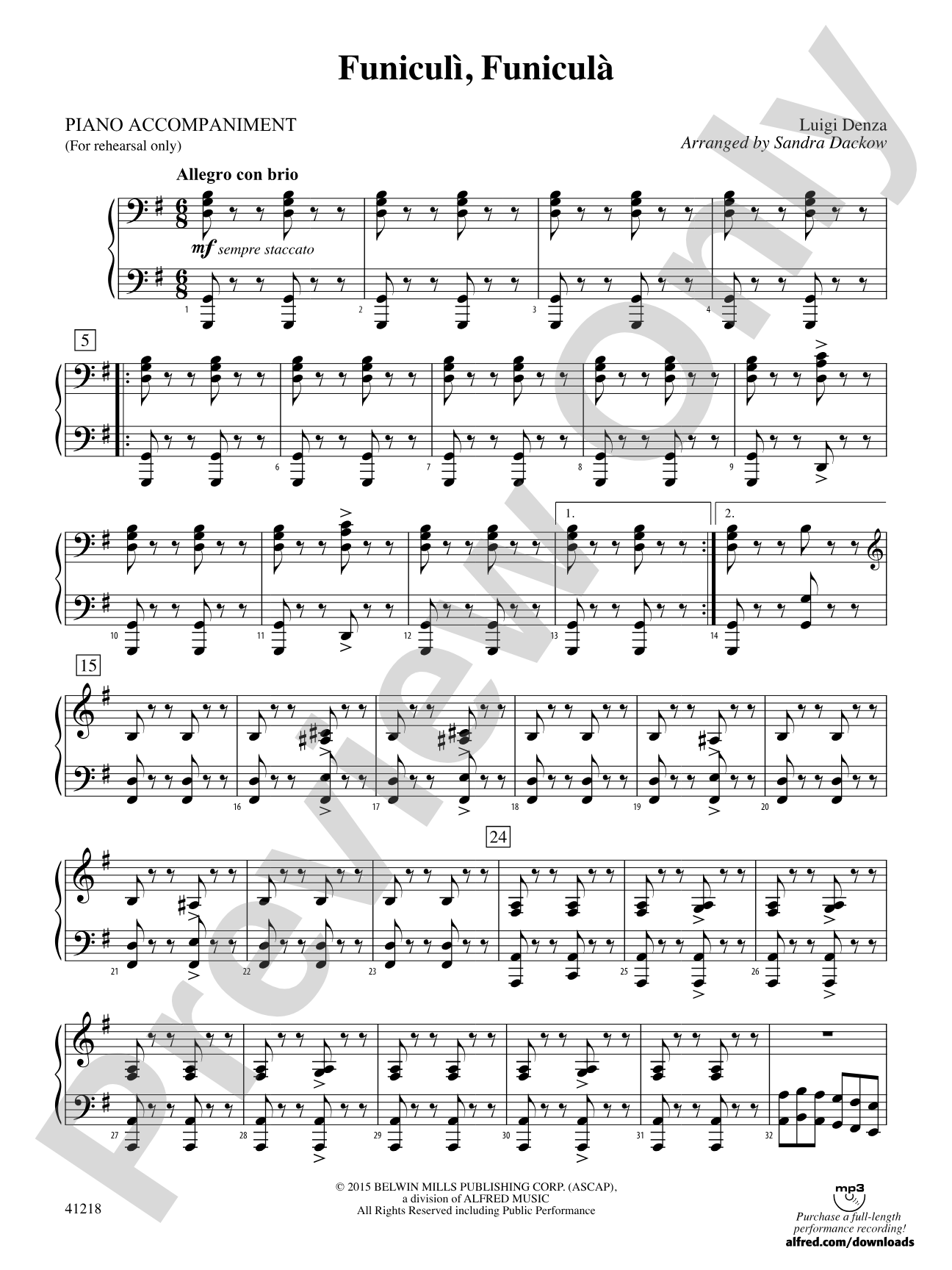

Funiculì, Funiculà: Piano Accompaniment
By Luigi Denza / arr. Sandra Dackow
Grade: 2.5
Item: 00-PC-0016705_K
$5.99
Pickup currently not available
Description
It was always fun to sing this Italian song in elementary school music classes---who could resist the swinging tarantella rhythms, which made you want to sing and dance together? No need to resist, join the fun! (3:10)


Don't just read it, hear it, play along with it, and watch your students grow with it. In MakeMusic Cloud, Funiculì, Funiculà: Piano Accompaniment comes alive with professional accompaniment, adjustable tempo, and built-in practice tools that turn solo practice into real progress.
Open in the Player
Jump straight in and assign it today.
Start Your Free Trial
Open this title and explore the full library in minutes.
Sample Audio
1
Audio File
--:--
0:00
0:00
Sample Video
No sample videos found.
Additional Details
Series:
Orchestra Expressions
Publisher:
Alfred Music
Page Count:
152
SKU:
00-PC-0016705_K
More about this title
About the Composer: Luigi Denza
Luigi Denza (1846–1900) was an Italian composer and songwriter whose gift for memorable melody and theatrical flair made him a fixture of 19th-century popular music. Born in Castellammare di Stabia, he spent much of his career in Naples and later Paris, where he collaborated with librettists and contributed to operettas and songs that captured the spirit of his era. Funiculì, Funiculà remains his most enduring work, a song so infectious that it has been arranged, adapted, and performed in countless styles across more than a century.
Though he composed operas and church music, Denza is remembered primarily for his gift at writing melodies that lodge instantly in the ear and feel destined for folk tradition. Funiculì, Funiculà exemplifies this talent: its tarantella rhythms and straightforward harmonic language made it beloved in schools and concert halls worldwide, proving that a song need not be complex to be unforgettable.
Why we love this
This arrangement captures everything that makes Funiculì, Funiculà work in the classroom and concert hall: the irresistible forward momentum, the clear rhythmic identity, and the joy that spreads the moment students recognize the tune. Dackow's orchestration stays transparent and playable at this level while preserving the song's character, giving young string players a piece that rewards their effort with immediate musical gratification and audience delight.
What to expect
Bright, energetic, and irresistibly dance-like. The tarantella rhythms propel the piece forward with an almost folk-like simplicity that feels natural under the fingers, while the straightforward major-key harmonies and memorable melody create an immediate sense of joy and celebration. It's the musical equivalent of a sunny Italian afternoon.
Who it's for
String orchestras in grades 2-4 looking for a piece that combines approachability with genuine musicianship and audience appeal. This works equally well for middle school ensembles seeking a concert staple that engages both players and listeners, and for schools that want to introduce students to a beloved piece of music history without heavy technical demands.
How to get the most out of it
- Establish the tarantella pulse early in rehearsal; the rhythmic swing of this piece carries everything, so lock in the feels before worrying about intonation details.
- Shape the melodic line with gentle dynamic arches rather than playing through at one level; even at this grade, the tune benefits from a singer's sense of phrasing.
- Watch the conductor carefully during rhythmic passages where ensemble precision matters; a steady beat from the podium will keep everyone together and confident.
- Balance the first violin melody against the accompaniment figures; the tune should sing clearly without the supporting voices fading into the background.
How to use it
Program this as a lighter concert piece to balance works of greater technical or emotional weight; its brevity (3:10) and uplifting character make it an ideal encore or a bridge between contrasting selections. It also serves as an excellent teaching repertoire for introducing ensemble musicianship concepts like rhythmic precision, balance, and phrasing in a context where students already want to play well.
Skills your students will build
- Executing tarantella rhythmic patterns with precision and consistency
- Balancing melody and accompaniment texture within a string section
- Reading standard orchestral string parts (violin I, violin II, viola, cello, bass)
- Responding to conductor cues in rhythmically driven passages
- Shaping a melodic line with dynamic awareness and phrasing