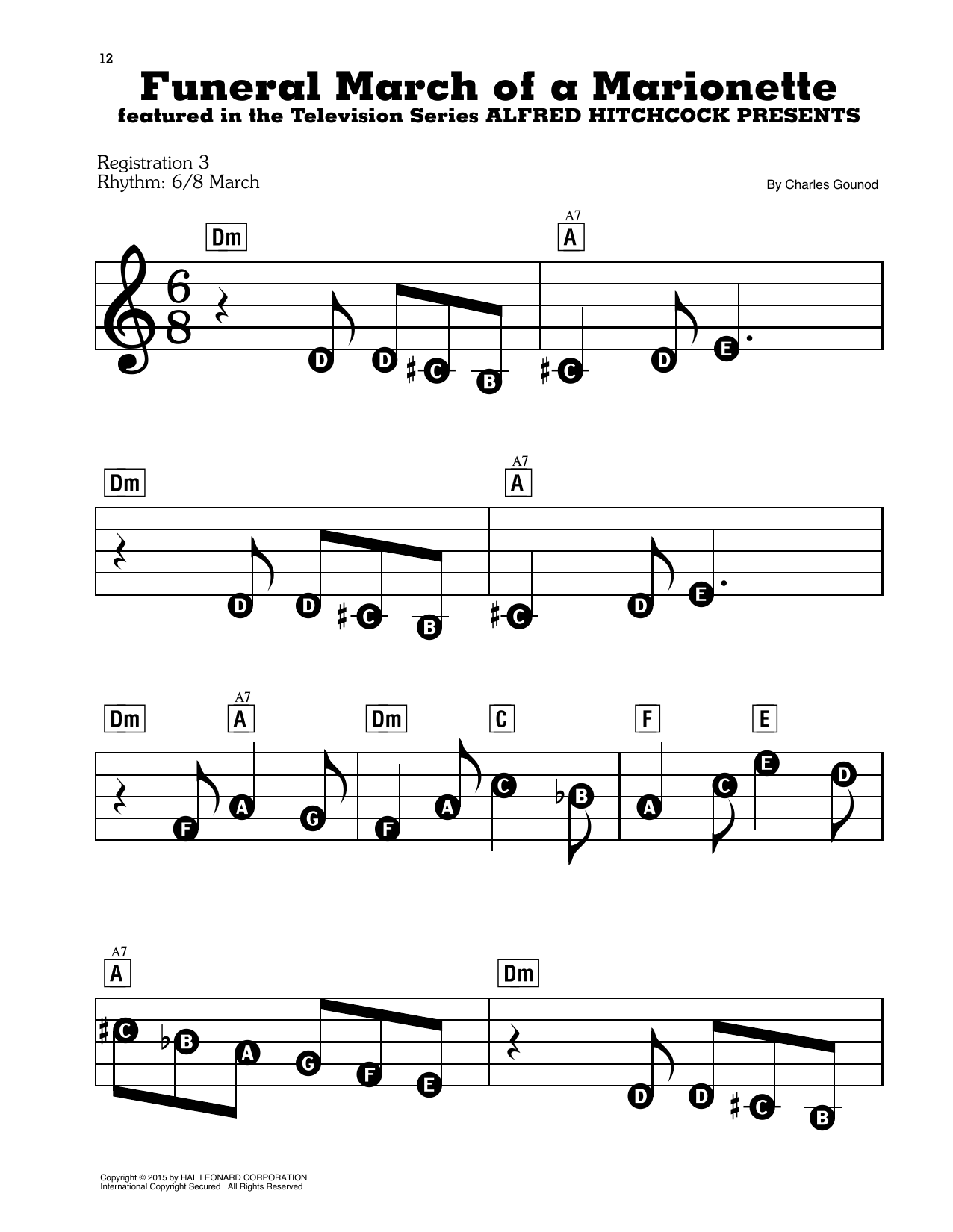
Funeral March Of A Marionette Sheet Music Preview

Funeral March Of A Marionette: E-Z Play Today

Item: 35-DS00733857

Digital Download
$4.99
Description

Funeral March Of A Marionette: E-Z Play Today isn't in MakeMusic Cloud just yet...but it could be. Let us know you'd like to see it, and you'll help shape what comes next. In the meantime, start a free trial and dive into thousands of interactive titles your students can play along with today.

Sample Audio
No sample audio found.
Sample Video
Additional Details
Publisher: Hal Leonard
Page Count: 3
SKU: 35-DS00733857

More about this title

About the Creator: Charles Gounod

Charles Gounod (1818-1893) was a French composer whose gift for melody shaped the operatic landscape of the 19th century. Though he's best remembered for his operas, including the enduring Faust, Gounod wrote orchestral and keyboard works that showcased his talent for dramatic expression and sophisticated harmony.

Gounod composed Funeral March of a Marionette as incidental music for a French play, but the piece soon took on a life of its own. Its darkly comic character and unforgettable melodic hook made it a concert favorite, and generations of musicians have found in it the perfect blend of theatrical flair and genuine musical substance.

Why we love this

This E-Z Play arrangement captures the mischievous, theatrical spirit of the original without demanding advanced technique. Young pianists get to play a piece with genuine character and cultural recognition, something that builds confidence far more than generic exercise material.

What to expect

A musical procession of sorts, marked by minor-key darkness and an almost comical march rhythm. There's something simultaneously eerie and playful in the character, as if watching a grand ceremony conducted by wooden figures. The melody lodges immediately in the ear and refuses to leave.

Who it's for

Beginning to early intermediate pianists looking for repertoire with personality and character. This arrangement works especially well for students who respond to theatrical music and want a piece that feels substantial without overwhelming technical demands.

How to get the most out of it

  • Keep the main theme crisp and articulate; the marionette quality comes from rhythmic precision rather than pedal blur.
  • Watch the dynamic contrast between sections. The shifts from soft to emphatic make the darkly comedic character land effectively.
  • Let the accompaniment patterns breathe rather than rushing them. Steady tempo supports the mechanical, puppet-like quality.

How to use it

Program this around Halloween or late October for a light-hearted concert moment that engages audiences beyond traditional music students. It also works beautifully as a novelty encore or as part of a thematic program exploring music associated with theater and costume.

Skills your students will build

  • articulate staccato and legato contrasts
  • maintaining steady tempo through repeated rhythmic figures
  • dynamic shaping across contrasting sections
  • reading in a minor key
  • balancing melody with accompaniment patterns

You May Also Like